




Amina Galal’s Summer Collection Begins With Ghawazi Women’s Histories
Amina Galal’s Summer Collection 2026 revisits the histories of Egypt’s Ghawazi women through a contemporary story of freedom.

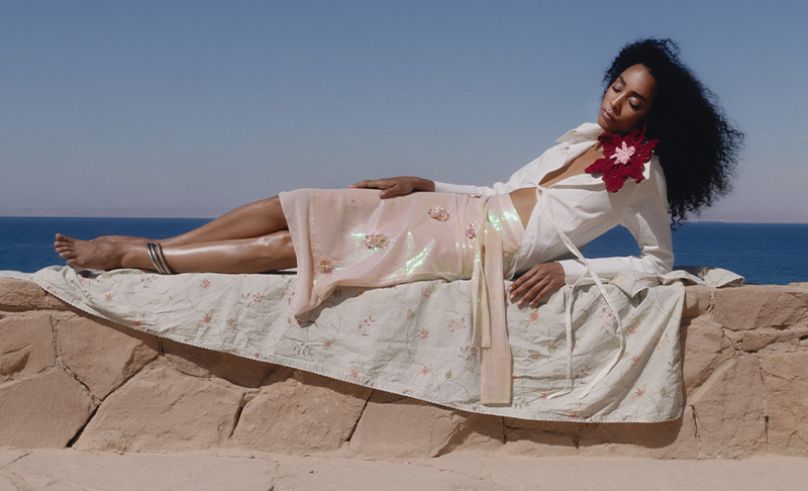
For Egyptian designer Amina Galal, looking back is a way of making sense of the present. Her collections often begin as acts of archival research, revisiting Egyptian histories and unpacking the sartorial codes that have been reshaped or erased over time.
Arriving in time for summer, The Archive Vol. 2 turns to the Ghawazi women of Egypt, famed traveling female dancers who earned their living performing at weddings and street celebrations. As Galal searched the archives, she encountered countless narratives from Western travellers’ accounts dating back to the 18th century that often fetishised these women and reduced them to mere symbols of exoticism. Galal uses this distorted history as a starting point for a wider conversation around representation, freedom, womanhood, and self-expression. That tension is translated into her most recent collection exploring fabrics designed for movement and silhouettes made to move between structure and softness.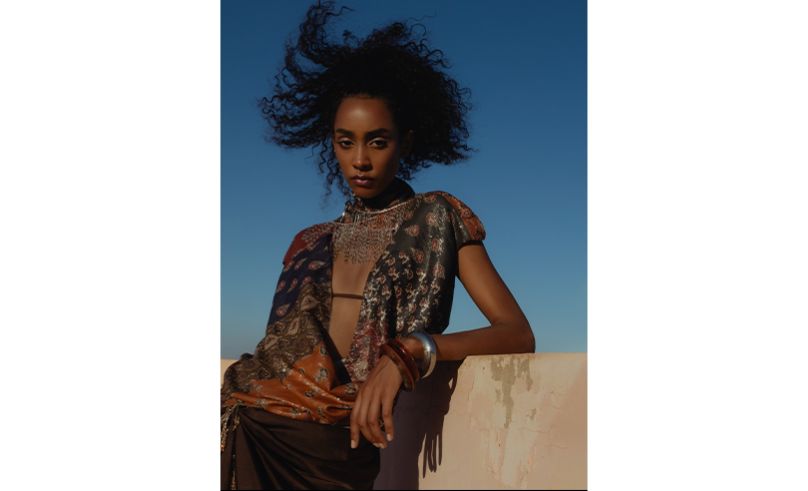 Q: What was the initial inspiration behind the Summer 2026 collection, and how did it evolve during the design process?
The Archive as a project began with a simple question: Who gets to write history? Much of the history we inherit has been documented through colonial perspectives rather than our own, shaping the way cultures, identities, and people are remembered. For The Archive Vol. 2, I became particularly interested in the Ghawazi women of Egypt and the way they were represented throughout history. Many of the images and accounts that survive today were produced through an orientalist lens, while the realities of their lives, agency, and cultural significance were overlooked. I was interested in looking beyond those inherited images and asking what stories might exist underneath them.
As the collection evolved, it moved away from literal historical references and became more focused on ideas of movement, freedom, womanhood and self-expression. Rather than recreating a past image, the goal became reclaiming a narrative and translating its spirit into a contemporary language. The silhouettes are more fluid, the colours more vibrant, and the overall mood more celebratory, creating a summer wardrobe that feels both thoughtful and instinctive.
The collection also marks an important milestone for the brand with the introduction of swimwear for the first time. Rather than existing separately from the collection’s narrative, these pieces extend the world of The Archive into new spaces while remaining connected to the same conversation around identity, expression, and contemporary Arab womanhood.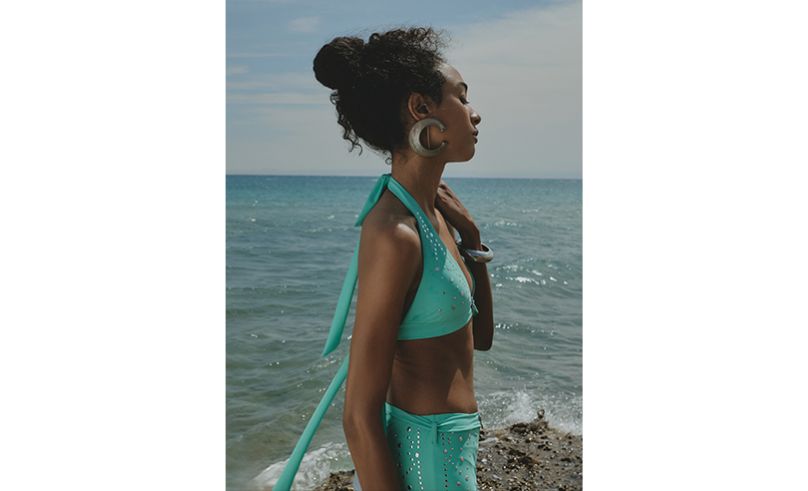 Q: Were there any specific fabrics, colours or silhouettes that became central to the collection?
Movement became one of the collection’s defining principles, so fabrics played a key role in shaping the garments. Lightweight cottons, linens, jerseys, chiffons and deadstock voiles were selected for their ability to move freely with the body and create a sense of fluidity.
The colour palette balances faded blues, warm neutrals, vibrant stripes, and rich burgundy accents, drawing from both archival imagery and the atmosphere of an Egyptian summer. Silhouettes often move between structure and softness through asymmetrical hems, draped backs, sculptural necklines and pieces that feel transformed by movement.
Craftsmanship was equally important to the collection. Hand embroidery appears throughout the season, reinterpreting arabesque motifs and decorative traditions through a contemporary lens. Crochet continues to be an integral part of the brand’s language, connecting the collection to local craft practices and handmade production. Patchwork and textile manipulation were also central, particularly in pieces created from deadstock fabric remnants that were pieced together to form entirely new textiles. Across the collection, these techniques serve not only as decorative elements but as a way of preserving stories, celebrating craftsmanship and exploring how fragments can come together to create something new.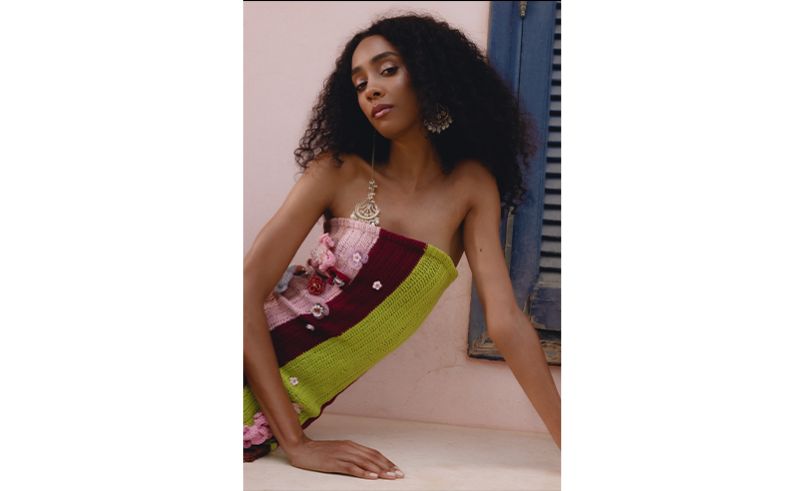 Q: What mood or story do you want people to feel when they wear the collection?
I hope people feel a sense of freedom, confidence and curiosity. At its heart, this collection is about reclaiming narratives and creating space for more nuanced representations of womanhood.
The Ghawazi became an important symbol within that story because they exist at the intersection of admiration and misunderstanding. They were celebrated, judged, documented, and mythologised, often by people observing them from the outside. Through this collection, I wanted to move beyond those inherited perceptions and focus instead on themes of resilience, self-expression, joy and presence. Ultimately, I want the wearer to feel connected to a story that is still unfolding rather than one that has already been written for them.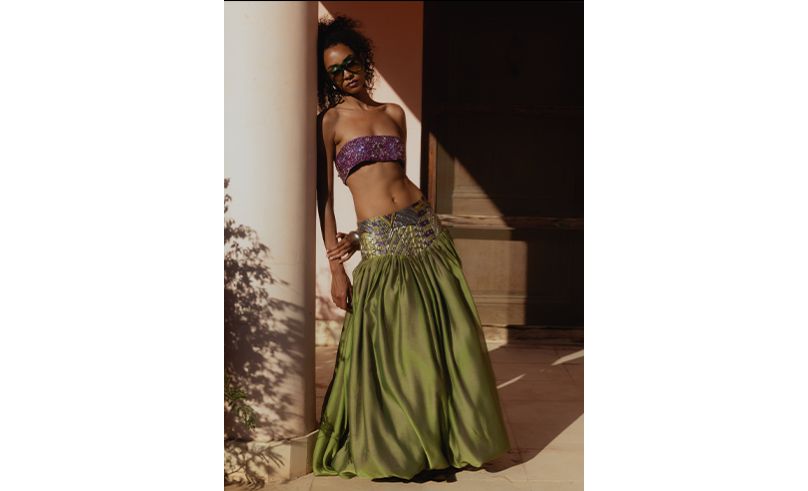 Q: Is there one piece or look from the collection that best captures the spirit of the Summer 2026 collection?
The LAYL top is perhaps the piece that best captures the spirit of The Archive Vol. 2. Constructed in a lightweight lurex voile with a dramatically draped back and crystal fringe detailing, it embodies many of the themes that shaped the collection. What I love about the piece is the way it transforms with the body. It is designed to be experienced in motion, with the drape and fringe responding to the wearer rather than remaining static. In that sense, it became a subtle nod to dance and the expressive power of movement that inspired much of the collection.
For me, the LAYL top also represents the balance that defines this season. It feels sensual yet effortless, contemporary yet connected to a deeper cultural conversation.
- Previous Article SceneNoise x Amsterdam Dance Event Present CROSSFADE: Egypt
- Next Article The Intricate Beauty of Ben Youssef Madrasa