





Inside Paris' Jihan: A Home for African & West Asian Design
Inside a temporary Marais concept store, Jihan gathers designers, books, olive oil and ceramics from Africa and West Asia into a retail space built around memory and conversation.
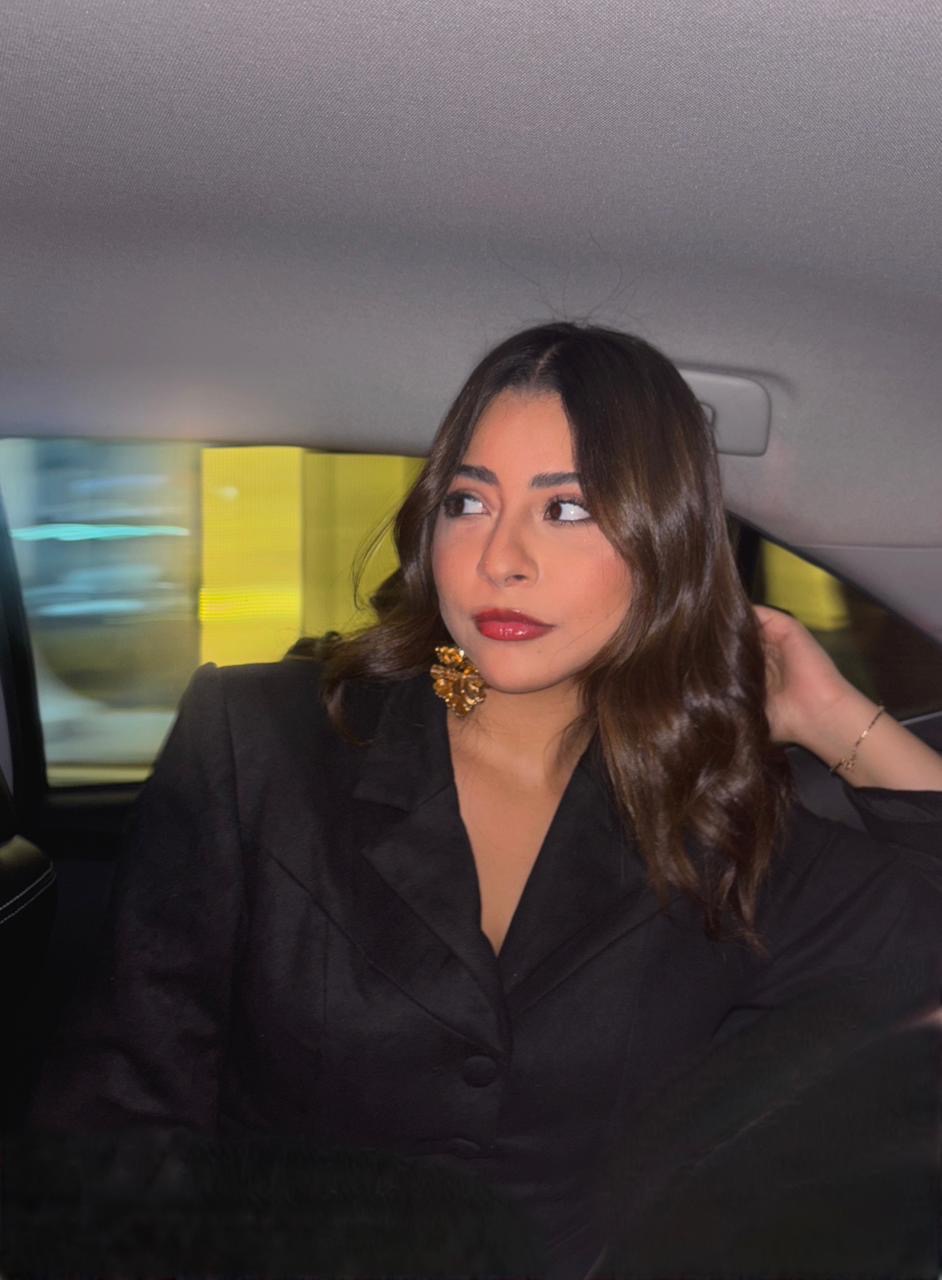
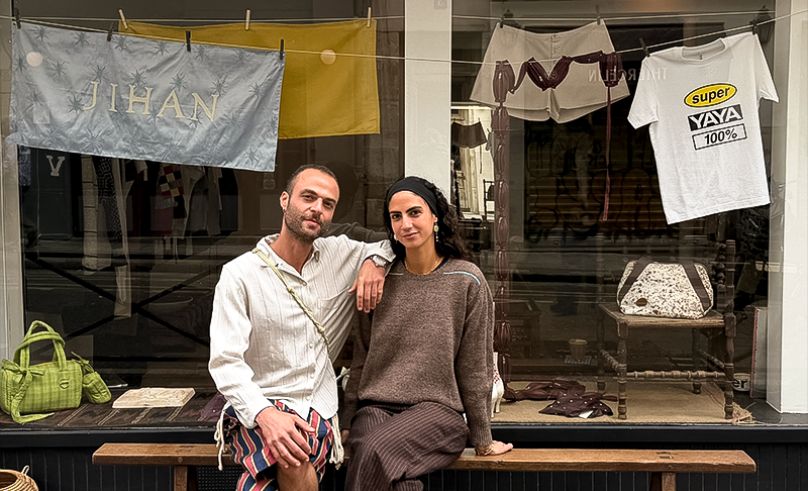
Jihan, the new Paris concept space founded by Mariam El Gendy, with Youssef El Sayed as Director of Business Development, had three days to take shape. The two were handed the keys on the first of the month, and by the third, the door had to open. Between those two dates stood a bare room on Rue Charles-François Dupuis, in the Marais, and 72 hours in which to turn it into a space of books, objects, and gathering, and a reason for anyone to stay longer than it takes to browse. The walls were repainted and the furniture wheeled in, and carpets were unrolled across the floor. "When you are very true to your aesthetic, things just land," El Sayed says, although he admits to spending much of that window prelaunch quite terrified, in a room filled with "so much and nothing at the same time."
"It's a home, really," El Sayed says of the one-of-a-kind concept space. Having opened in Paris this June, it will run as a pop-up until the second of July, with e-commerce to follow in mid-July. The brief the two set themselves was to make a visitor want to come in, settle and stay. Both Egyptian, they have filled the room with fashion, jewellery, homeware, beauty and pantry goods sourced from across Africa and West Asia and a unique roster that runs from Super Yaya and Renaissance Renaissance to Paria Farzaneh, Kotn and the olive-oil label Kaia. Around all of it, they have built a cultural programme of film screenings and reading rooms so that a visitor can shop Jihan and also have an attempt at properly reading the region.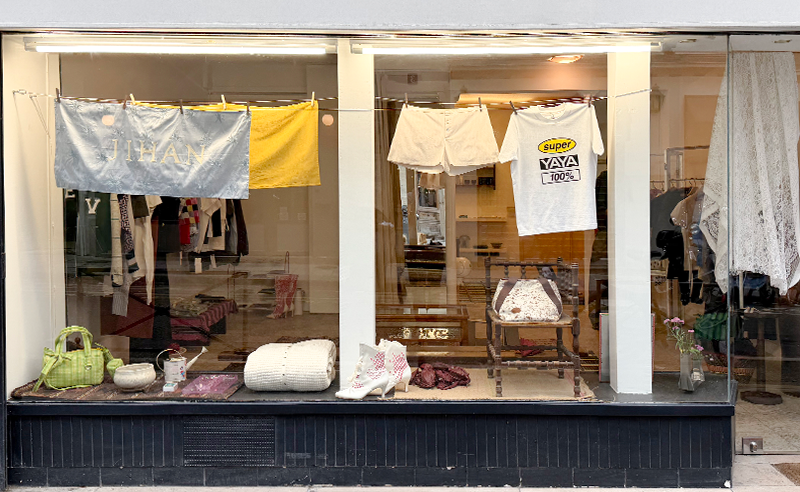 Jihan is the name of founder Mariam El Gendy's mother. It also means "universe" in Persian and Turkish languages, an adequate starting point for a concept place created as a tiny world of objects, people and stories. El Gendy has been building towards it for the better part of a decade; it started as her university thesis, and before that as folders on her computer, labelled Africa and Asia, where she kept the designers, photographers and references she loved. She and El Sayed have been close friends and collaborators for around 10 years, and roughly a year ago they decided the moment had finally arrived. “For a while, I think we thought we wanted different things professionally, but we realised we were actually very aligned. When Mariam presented the idea as something much larger than a retail space, that was when I could see myself in it,” El Sayed tells SceneStyled.
“African and West Asian design is vast,” El Gendy says, “full of histories and ways of making, and almost nowhere was it being gathered on its own contemporary terms. It wasn’t just a gap I felt just in Paris. I felt that, more broadly, there wasn’t really a space bringing together designers and artists from this part of the world in this way.”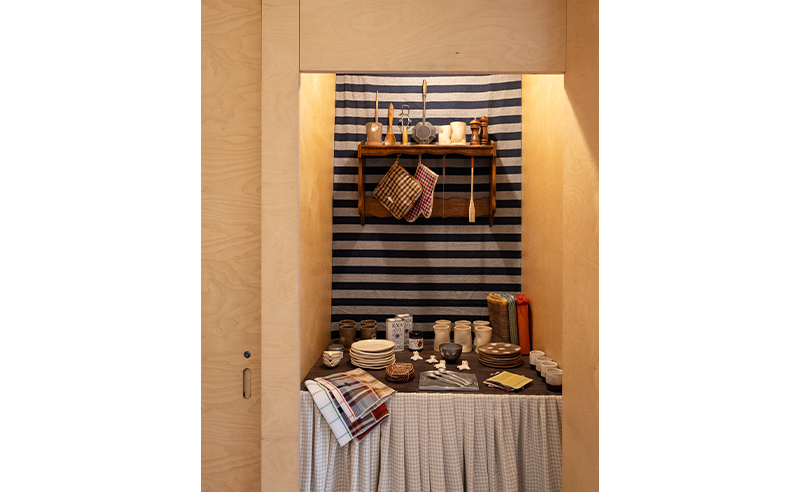 For El Sayed, that absence runs both in geography and tonality. "Often, when people are unfamiliar with the region, they imagine something more craft-led or old-world," El Sayed says. "But we know how modern it can be." The region is brimming with independent designers building their own languages in their own markets, and Jihan set out to hold the range of that together, the young and the established, the widely shown and the barely seen. "As Egyptians, it felt natural for us to think across both geographies," El Gendy says, "because Egypt sits between Africa and Asia."
The tipping came with Paria Farzaneh, whose work El Gendy had admired for years. When they finally met and they described Jihan to her, Farzaneh’s response made the project feel more than merely a private conviction. “That was the moment I felt that other people wanted this as much as we did,” El Gendy says.
El Gendy and El Sayed are from the region, and they are still wary of claiming to represent it. "We are not trying to represent anyone," El Gendy says. "Every designer here has their own ideas, their own creations, their own world. Jihan is a space that houses them. It is not here to speak for them.”
El Gendy largely built the room through instinct and intuition. "It's a bit like moving into an apartment," she says. "You don't always know exactly where everything will go, but at some point, you feel this belongs here, and that belongs there." 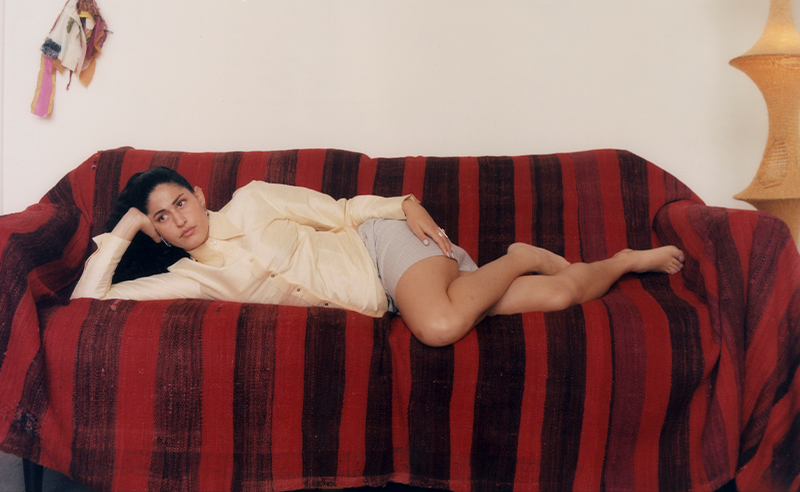 The clothing rails run along the walls and the pantry goods are staged in small kitchen scenes, so you can picture them in use. Meaning, El Sayed argues, is cumulative. "I don't think you can communicate context through a single object. It happens through accumulation, through the layers, the way things sit next to each other." You stay long enough at Jihan and the room unfolds, a photograph on the wall leading to a description, a description to a book, one object to the next.
"Some pieces are so culturally strong that, if someone is interested, they naturally start asking questions," El Gendy says. "It becomes a conversation."
These conversations are further formalised through Worldly Matters by Jihan, the cultural program accompanying the retail place. During Chapter I, they have organised a reading room with the platform HIKMA, residency with Storm Books and a film screening curated by Sara El Adl for SHASHA Movies that traced political disorientation and economic rupture in Egypt, moving from the aftermath of the open-door era through Youssef Chahine and Dawood Abdel Sayed to contemporary artists such as Marianne Fahmy and Bahar Noorizadeh. The same purpose is laid in the project economics. Since its offset, Jihan provides five per cent of its profits for activities supporting the economic independence of women, and during this chapter it cooperates with Misr El Kheir Foundation in Egypt to provide women artisans with tools and training.
At Jihan, sales are tracked on Shopify, but the founders are after another kind of measure too. One example came during a HIKMA reading room built around Iraqi and Mesopotamian memory, when the space opened into a longer conversation about books and preservation. For El Gendy and El Sayed, that is the ambition: “An attempt to put those people in one room, and then to do it again somewhere else.”
- Previous Article SceneNoise x Amsterdam Dance Event Present CROSSFADE: Egypt
- Next Article Bonne Chose Drift Inward on Hypnotic Single '3ayshin 3al Amal'
Related Articles
Trending This Week
-
-
 Oct 15, 2026
 -

-