





The Iraqi Cave Rewriting the Story of the Neanderthals
Cut into the Bradost Mountains near Rawanduz in Iraqi Kurdistan, Shanidar Cave has produced Neanderthal remains that reshaped ideas about care and burial.

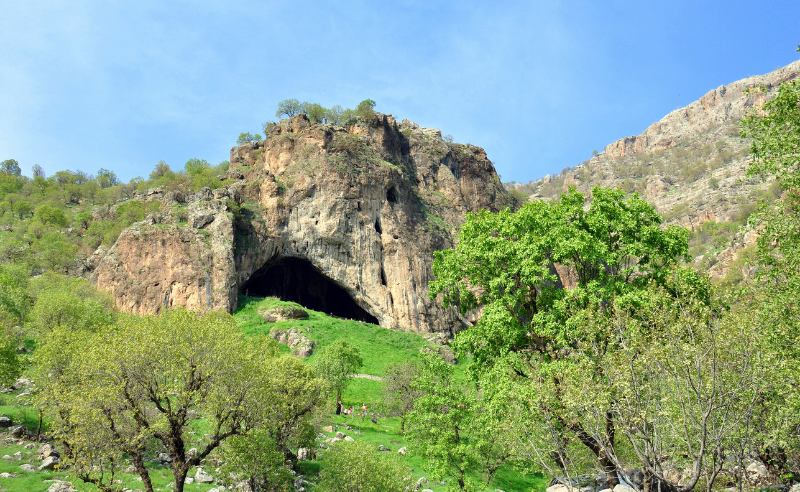
It wasn't long ago that Neanderthals were understood to be slow-witted, hunched brutes, capable of little beyond survival. That reading has been steadily undone by a cave in the north of Iraq, cut into a limestone cliff face in the Bradost Mountains not far from the town of Rawanduz.
Getting there means driving out of Erbil and into Iraqi Kurdistan's mountain country, then continuing on foot along a rocky approach until the cave mouth comes into view, wide enough to be spotted from some distance across the surrounding valleys. There is no museum building waiting at the entrance, no ticket booth, no café. Shanidar Cave is still an active excavation site, and that fact alone shapes the whole experience of visiting it.
American archaeologist Ralph Solecki excavated the cave between 1951 and 1960, digging a trench that eventually reached about 14 metres below the cave floor. Within its layers, he found the partial remains of 10 Neanderthals: men, women and children who had used the cave, in some cases, tens of thousands of years apart.
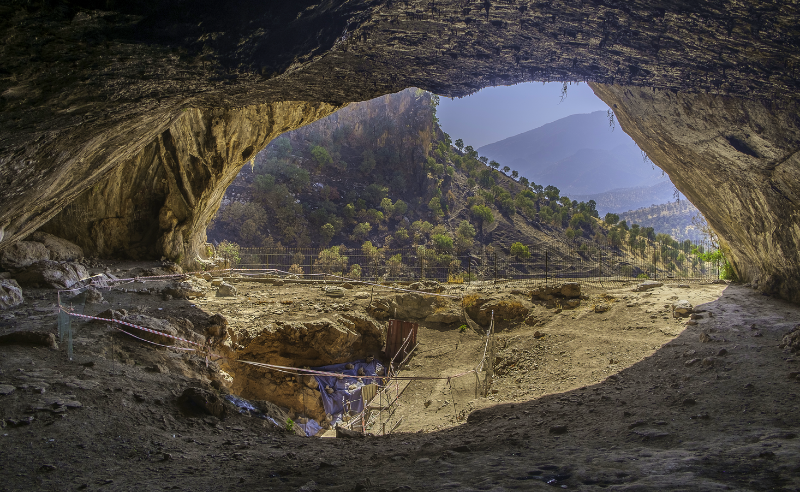 One set of remains, known as Shanidar 1, belonged to a man with serious injuries, including trauma to the head and damage to one arm, who nonetheless lived to a relatively advanced age. His survival has been read as evidence that others in his group helped care for him. Another, Shanidar 3, had a puncture wound to the rib, possibly from a projectile; whether it resulted from an accident or a deliberate act has not been settled.
But the most widely-known case is that of Shanidar 4. Pollen recovered near the remains led Solecki and archaeologist Arlette Leroi-Gourhan to propose that flowers had been placed around the body, a detail that shaped decades of popular writing about Neanderthal burial practices. A 2023 reassessment complicated that reading: the pollen concentrations could also be explained by nesting solitary bees, though a deliberate association with plant material has not been ruled out. What the same research affirmed was that Shanidar 4 belongs to a cluster of unusually complete Neanderthal remains positioned close together in one part of the cave, which keeps the underlying question of intentional burial open.
The story kept going well after Solecki packed up. In 2015, a renewed excavation by Cambridge began, working with the Kurdistan Directorate of Antiquities. In 2016, researchers uncovered a rib, then a vertebra, then the bones of a clenched hand. By 2018, an articulated upper body and a crushed skull had emerged, later identified as an older adult female, Shanidar Z, who lived around 75,000 years ago. Her skull was reconstructed from hundreds of fragments after being flattened by millennia of sediment and rockfall. She appears to have been laid in a gully shaped by running water and modified by hand, her body positioned on her side, one hand curled beneath her head, with a rock behind it that may have functioned as a support.
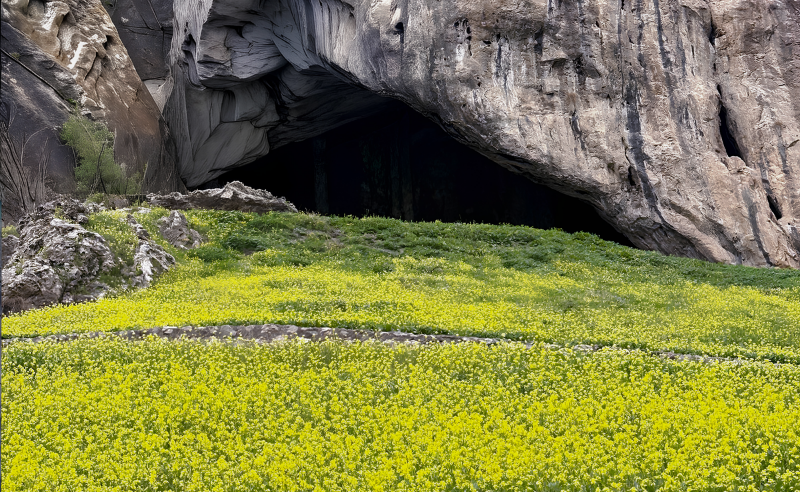 Traces of charred seeds, nuts and grasses have also turned up in the sediment near the remains, suggesting that food was prepared close to where the dead lay. Rather than a burial ground kept separate from daily life, Shanidar appears to have been a place where both activities overlapped, and where the same location was returned to across generations for reasons that remain unclear.
None of this is signposted on site, which is where a guide earns their keep. Shanidar sits within the wider Soran area, a drive from Erbil that makes more sense as part of a planned route through Kurdistan than as a same-day trip from the city, and a local driver and guide is the most practical way to reach the site and make sense of it once there. Sturdy walking shoes are needed for the uneven terrain on the approach, along with water, particularly in summer, when the mountain heat is considerable. Spring and early autumn are more comfortable seasons for the walk. Because excavation is ongoing, access arrangements can shift, and confirming conditions locally before travelling is more reliable than any fixed schedule found online.
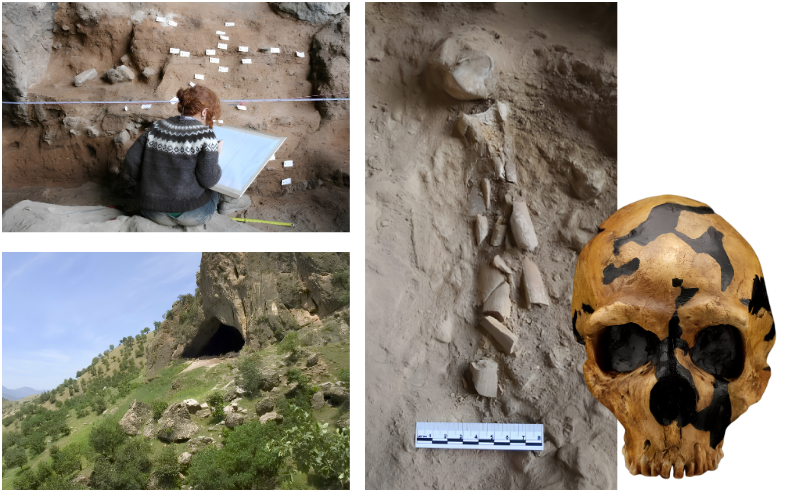 It is worth building a longer day, or two, around the visit rather than treating the cave as an isolated stop. Rawanduz Canyon and the mountain roads nearby extend naturally from Shanidar, and the historic Hamilton Road, with its waterfalls and viewpoints, is close enough to combine into the same trip. Together, the cave and its surrounding landscape make for a route built as much around the Zagros Mountains as around the archaeology inside them.
Shanidar has no reconstructed prehistoric village and no single object built for viewing. There is layered ground instead: the trench Solecki dug, the gully where Shanidar Z was found, the sediment still being read for what it can tell about how Neanderthals treated their dead. Whether the flowers at Shanidar 4 were placed there deliberately or left by nesting bees remains unresolved, as does the broader question of why this particular spot was used and reused over so many generations.
For a visitor standing at the cave mouth, that unresolved quality is part of the site itself, a place still being worked out rather than one already explained.
- Previous Article SceneNoise to Host Panels on Egypt & Lebanon's Electronic Scene at ADE
- Next Article GBM Launches UAE’s First Cisco-NVIDIA AI Lab