


This Tiny Tunisian Village Is One Giant Open Air Art Gallery
Once a quiet fig-tree village on Djerba Island, Erriadh became Djerbahood in 2014, when over 150 artists covered its walls with murals, turning daily life into a living, ageing gallery.
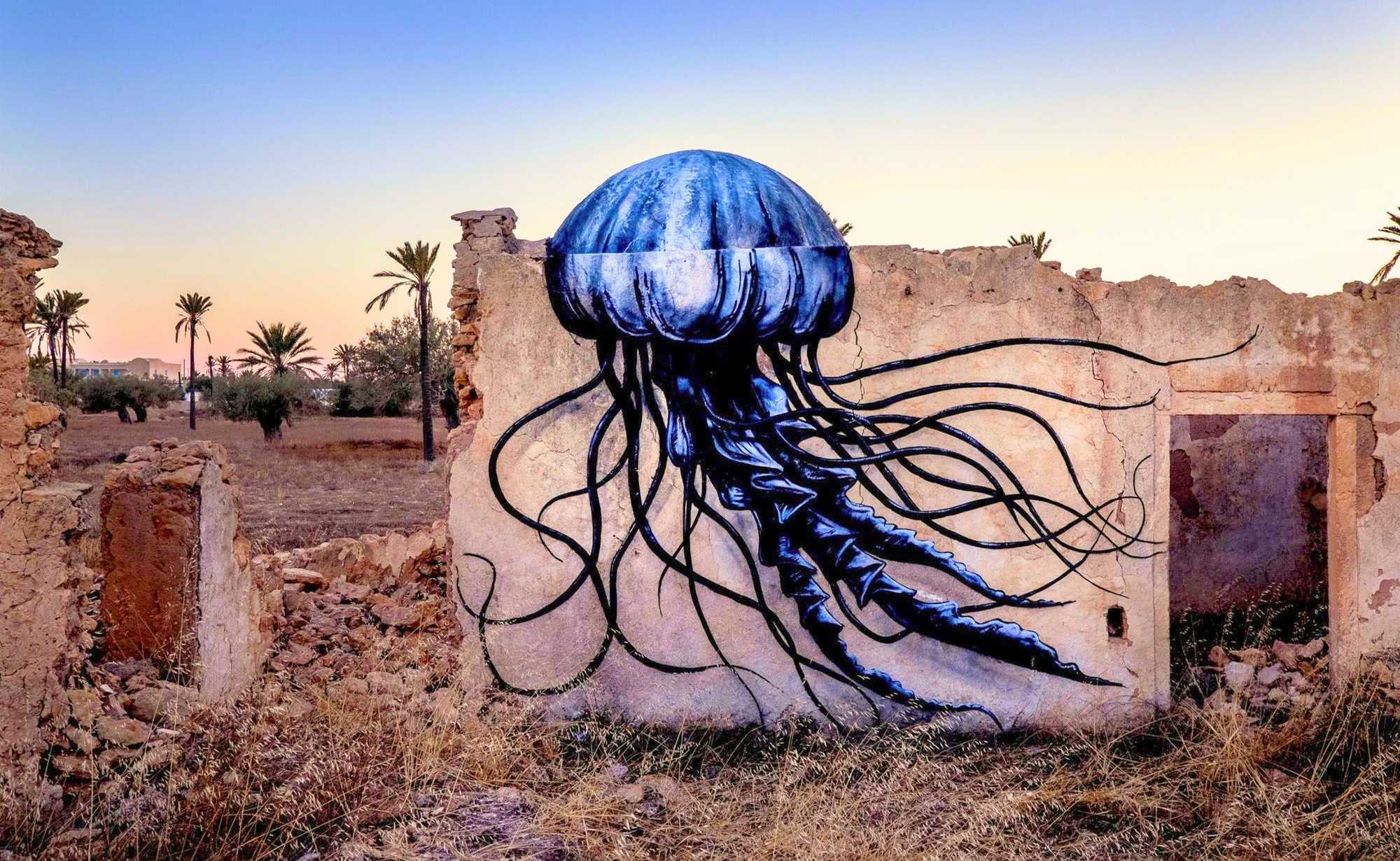
Before it became one of the most photographed villages in North Africa, Erriadh's biggest claim to fame was being extremely good at minding its own business. Tucked into the middle of Tunisia's Djerba Island, it was all low, cube-shaped houses in chalky white, narrow lanes that led nowhere in particular, and courtyards where fig trees did most of the talking. The loudest thing to happen on a given afternoon in Erriadh was hearing a rooster lose an argument with a cat, and the only village celebrity was El Ghriba, the oldest synagogue in North Africa. That was until a Franco-Tunisian gallerist with a fondness for very tall ladders turned up in 2014 with what can only be described as a mad idea - and the village has never been quiet since.
 Mehdi Ben Cheikh wasn't a random chancer with a spray can and a dream; he had already turned a condemned ten-storey building in France into one of Europe’s biggest street art shows, asking villagers to take a leap of faith and offer up their walls to more than a hundred artists from around the world. With the promise of turning Erriadh into something closer to a proper museum (complete with lighting and curated routes), Ben Cheikh invited over 150 artists from thirty-odd countries. Though it was in the middle of June, they descended on the village and simply didn't stop, painting through the kind of heat that makes most people give up and find shade. Somewhere in the madness, a giant sign reading THE HOOD went up at the entrance, half joke, half declaration, and the name 'Djerbahood' stuck before anyone had time to vote on it.
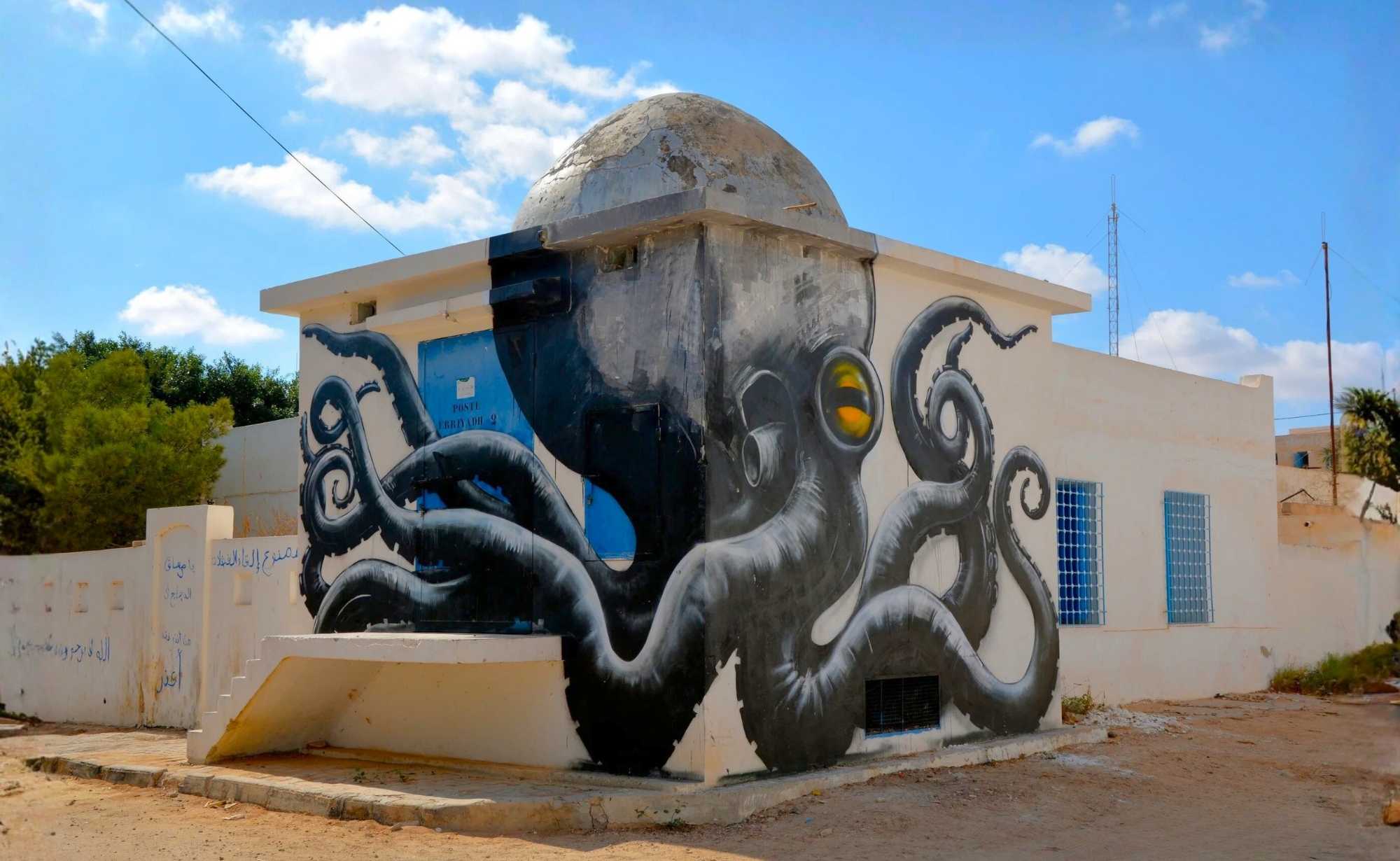 When the ladders finally came down, 250 murals had taken over the village, wall after wall after wall, until there was barely a surface left untouched. And it hasn’t stopped since; new murals still turn up every few years, as if the village caught a taste for it and never quite kicked the habit. The desert, meanwhile, has been doing its own editing, with the sirocco spending a decade sandblasting the older pieces, fading away some of the 2014 and leaving nothing but bare stone where a bird used to be. Locals will point at an empty wall and describe exactly what used to live there, like they're talking about an old friend who moved away. It gives Djerbahood a strange heartbeat, becoming a museum that ages like the rest of us instead of one sitting behind glass, pretending time doesn’t exist.
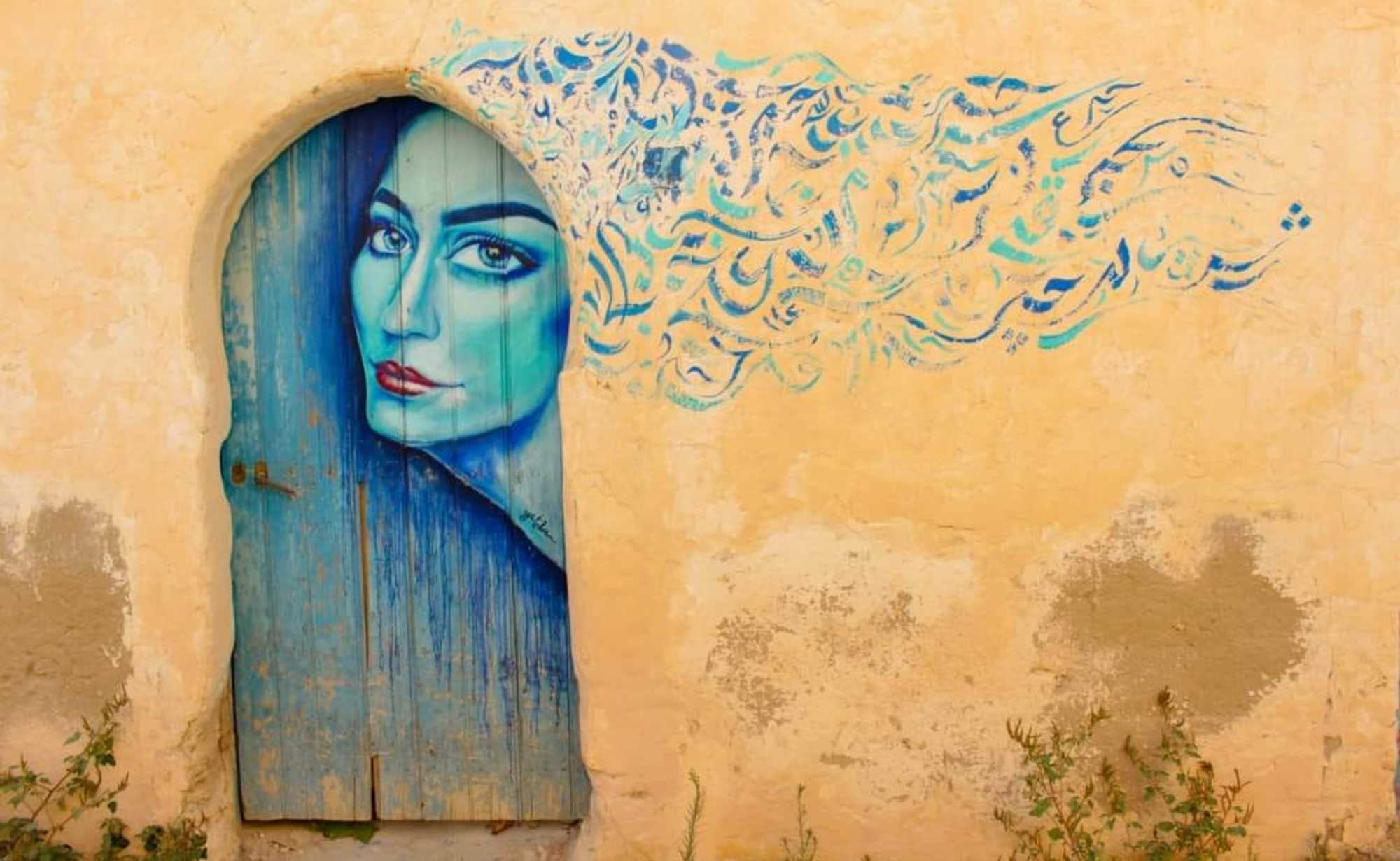
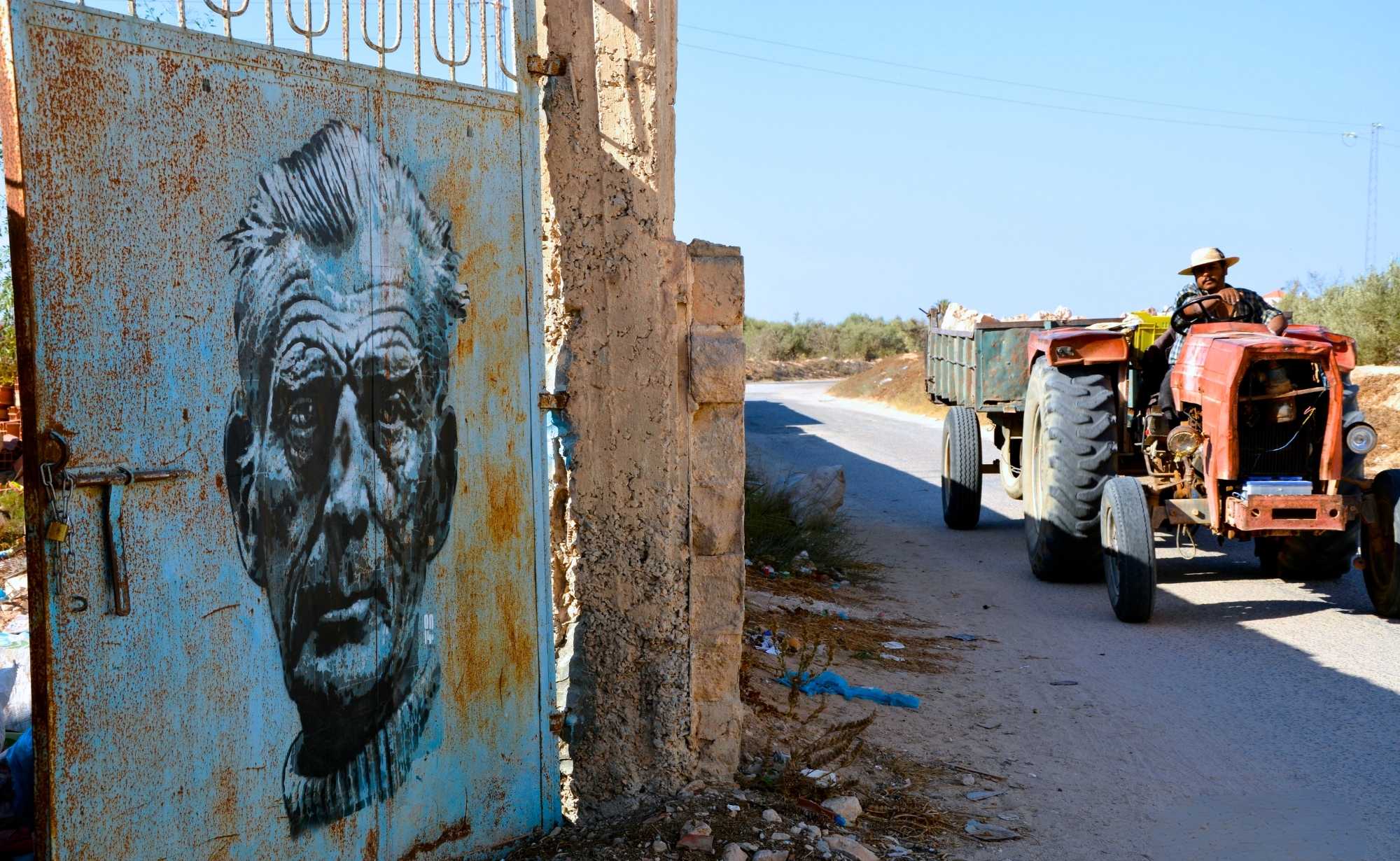 Wandering the village today is a bit like flipping through someone else's dream journal. Round one corner, Lebanese artist Yazan Halwani's flowing calligraphic portraits stare out from a wall; round the next, something wonderfully unhinged from Mexican surrealist Curiot. An owl might be watching you from a windowsill. A cat, mid-stretch, might be painted so convincingly across a doorway that you'll double-check it isn't real. Artists from France, Poland, Belgium, Saudi Arabia, Egypt, and Tunisia itself have all left something behind, some pieces purely for the joy of colour, others quietly wrestling with identity, migration, or the centuries of coexistence the village is built on.
What really makes Djerbahood sing, though, has nothing to do with the murals themselves. It's the way daily life just carries on regardless of the infiltration. You’ll still be walking past someone's grandmother sweeping her doorstep under a two-storey fresco, and find mint tea served twenty feet from a wall painted by someone who flew in from Seoul just to leave their mark.
- Previous Article SceneNoise x Amsterdam Dance Event Present CROSSFADE: Egypt
- Next Article Inside the Billion-Dollar Race to Digitise Morocco’s Small Shops