





Artist Armen Agop Will Represent Egypt at the 61st Venice Biennale
The Egyptian-Armenian artist will represent Egypt at the 61st Art Exhibition of the Venice Biennale, transforming the Egyptian Pavilion into what he calls "a space for listening."
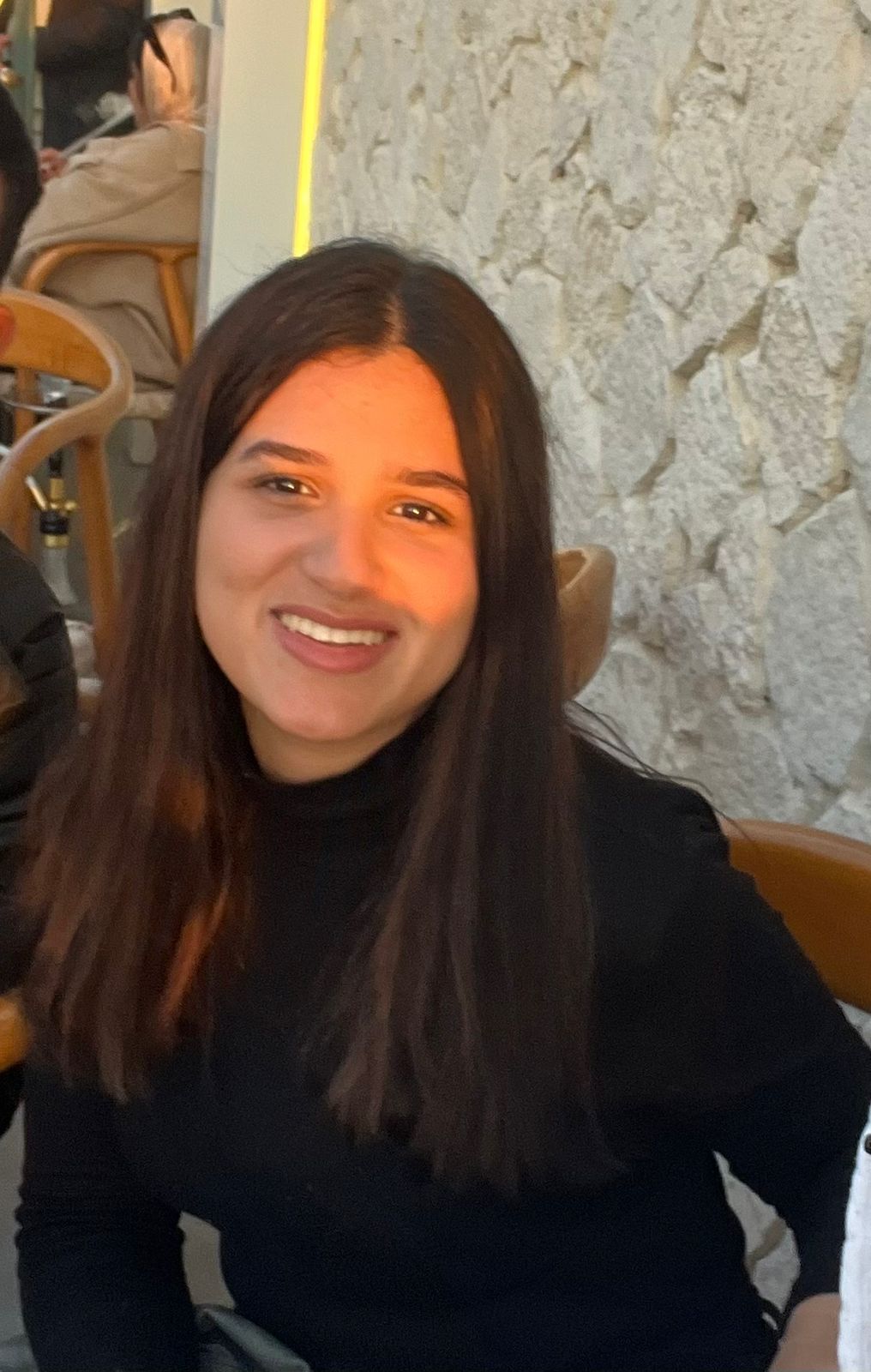

Armen Agop first said no to the Venice Biennale in the spring of 2011. The invitation had arrived, formal and promising, but the streets of Cairo were running with a different kind of energy. People were spilling into Tahrir Square demanding change, and Agop watched from his studio, a space he had carved out on the desert's edge, surrounded by blocks of granite that had taught him patience. He had spent years learning to listen to stone. Now the revolution was asking Egyptians to listen to each other. His work, he believed, had nothing to offer at that moment.
"It is a great responsibility to represent Egypt," he says now. "I did not want to consider it only as a career opportunity when I did not feel it was the time for my voice." So he declined.
Fifteen years later, that same invitation has returned. In May 2026, Agop will represent Egypt at the 61st International Art Exhibition of La Biennale di Venezia. The Egyptian Pavilion in the Giardini, a building designed in 1932 that has housed the country's presence since 1952, will become what he calls "a space for listening." Visitors will be asked not to speak and not to take photographs. They will move through three rooms - from the intangible to the tangible to the mystic invisible - and encounter sculptures and paintings created specifically for the light and architecture of that space. Agop describes what they will find as "precise ambiguities."
Agop’s work has won the Prix de Rome, the Umberto Mastroianni Award and the Italian Presidential Medal. But awards aren’t what animate his practice. What matters is the unseen: the internal energy a piece transmits, the spirituality it silently embodies. For Agop, form is a threshold. “A sculpture,” he says, “is not a story, I do not have messages in my pieces. It’s a presence."
The path from that first no to this eventual yes runs through decades of work that has never been interested in the immediate. Born in Cairo to Armenian parents, grandson of a genocide survivor who arrived in Egypt as a refugee, Agop grew up in a country that, as he puts it, "has always been generous with foreigners." That hospitality shaped his understanding of identity as something layered. "Egypt developed a cultural open-mindedness that contributed to the rich layers of identity," he says. Representing Egypt now, for him, carries symbolic weight beyond national pride. "It is a demonstration of cultural coexistence that transcends geography. I believe we are more human in unity than in separation."
The Biennale's curatorial vision for 2026, conceived by the late Koyo Kouoh before her death last December, calls for attention to what appears minor in tone but becomes immense in meaning. Titled In Minor Keys, it proposes a rhythm grounded in attention and endurance. Agop had never met Kouoh. He did not know her work. But when he read her theme, he recognised something. "For many years my work has been concerned with slowness, soberness and internal energy," he says. "Being in agreement regardless of distance demonstrates a common value in our cultural condition. What appears minor can be immense in meaning." This alignment, arriving after 15 years of waiting, is recognition well earned. Agop does not describe it that way. He is not given to that kind of language. But he does say this: "I do not see art as entertainment. I believe it can offer values beyond that and does not need to be reduced to a reactionary activity. I think that is the core of Kouoh's vision."
For the pavilion, he is making new work. The three rooms will guide visitors through an encounter that resists explanation. "I believe art is beyond meaning," he says. "Art can open hidden pathways that lead us to the core of ourselves beyond the intellectual reaction the public is used to having. I suggest toning down the mind and experiencing a unity with the self, which in a way is a unity with the whole universe. Each one of us is a whole universe, whether aware of it or not."
Last year, Agop attended the opening of the Egyptian Pavilion at the Architecture Biennale, where friends were presenting. He was there to share the work, the enthusiasm, the stress and the success. "Little did I know that after a few months I would be invited to the same space."
The symmetry is not lost on him. From observer to exhibitor, from no to yes - the journey has been patient, circuitous, utterly in keeping with his nature. Because for Agop, this is simply what happens when one follows an instinctive drive. "I think it is a life choice to either live as a reaction to others, or to live fulfilling our own being," he says. "Art is simply a way of being. My work is not a position or a reaction. It is what happens when I follow my instinctive drive. I do not know any other way to be."
The desert, he often says, does not hurry. It simply is. For 15 years, his work has existed in that stillness, accumulating slowly, asking nothing of the moment. Now the moment has come to meet it. In Venice, in a pavilion where visitors will be asked to put down their phones and stop speaking, his granite forms will wait in half-light. His canvases will pulse with the accumulated labour of months. And people will enter, and they will be invited to do nothing but be present.
That, for Agop, is enough. "I am not interested in expressing myself," he says. "I am interested in exploring myself. I am here to disappear into the work."