


From Riyadh to the World: Lulwah Al Homoud is Turning Calligraphy Into
“I never thought people would actually like some black lines whose meaning they don’t understand on white paper — but they did… they felt it.”
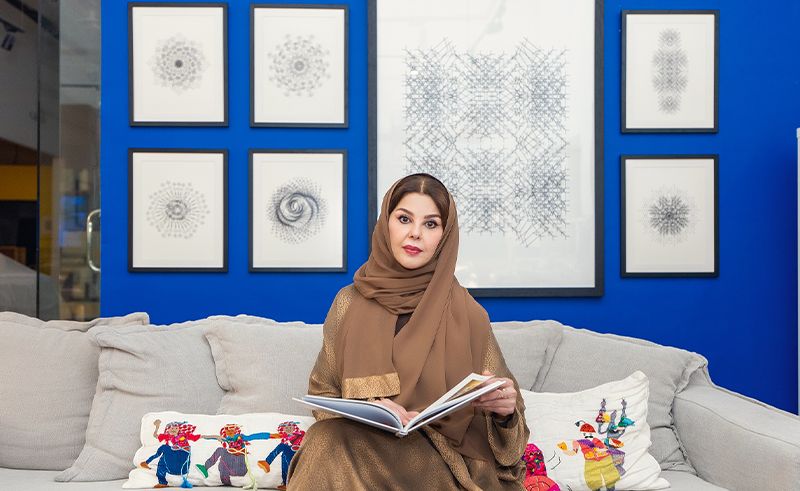
Ever paused to wonder what the intricate geometric patterns on mosque walls are really saying? To many they're simply beautiful decorations. But to Saudi artist Lulwah Al Homoud, they sparked her lifelong journey into Islamic art.
Al Homoud started her career curating exhibitions for Middle Eastern calligraphers in London, which later opened the door for her work to be seen by the entire world. In 2008, during the ‘Edge of the Arabia’ exhibition in London, someone took a look at her sketchbook, and insisted she join the lineup as a participating artist. “I never thought people would actually like some black lines whose meaning they don’t understand on white paper" Al Homoud tells SceneNowSaudi. "But they did… they felt it. Two of my paintings got sold in that exhibition and that’s when it all started.” 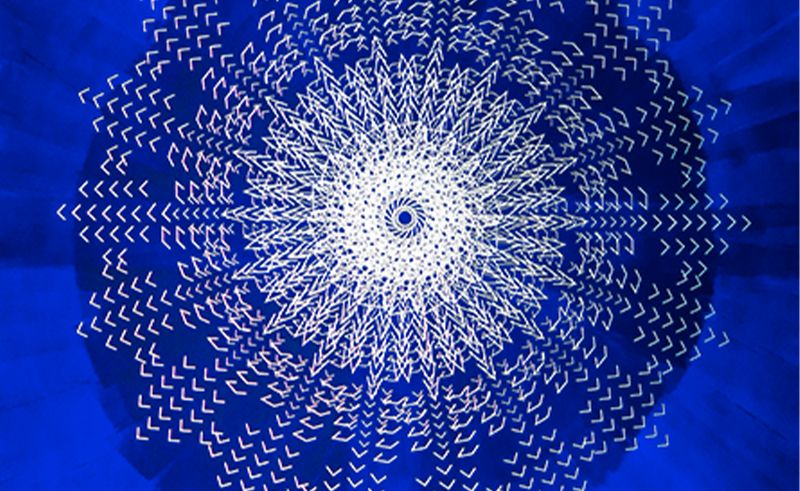
Like Islamic artists before her who used geometry as a contemplative focus, Al Homoud doesn’t just write a few words in a beautiful Ruq’a handwriting. She has a unique process that uses mathematical equations to break down Arabic letters into geometric building blocks, putting them together and creating complex abstract patterns. In essence, she created her own visual language, which she calls 'The language of existence'. “I prefer visual ambiguity, everything I do is not readable from the first time,” says Al Homoud. “It’s an invitation to take some time to observe and contemplate the artwork.”
Having lived most of her life abroad, Al Homoud was eager to learn more about her culture. She became the first Saudi woman to earn her Masters in Islamic Arts from the Central Saint Martins College of Art and Design. “When I first dug into Islamic art and studied the sophisticated meanings behind it, that it wasn’t merely some beautiful decorations on walls, I instantly fell in love,” she says. “It felt like one universal language where art and science meet.” 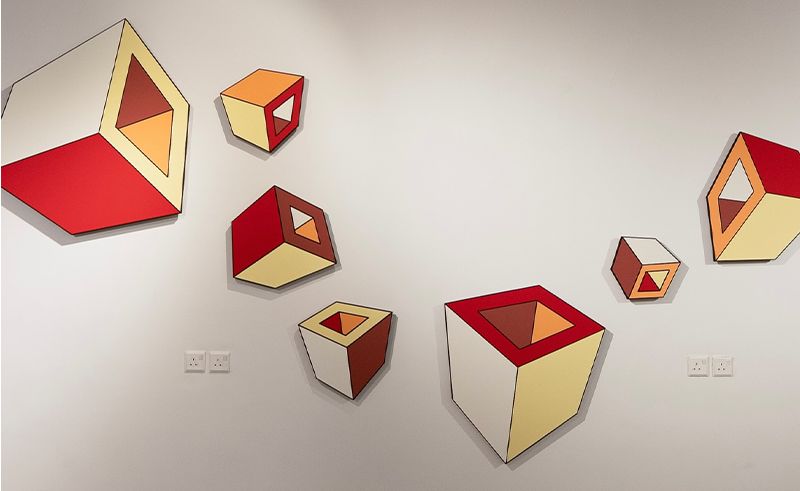
For Al Homoud, her art represents her faith, not her feelings. She tries as much as she can for her art to be all about her relationship with the world as a whole and how she contemplates it, and not just a reaction to it. “We live in such a crazy world, and I don’t want that to affect my art,” she says.
When we asked Al Homoud about the goal of her art, she answered with a single word: peace. She paused for a moment, then added, “I just want people to feel peaceful when they look at my work because that’s how I feel creating it.” 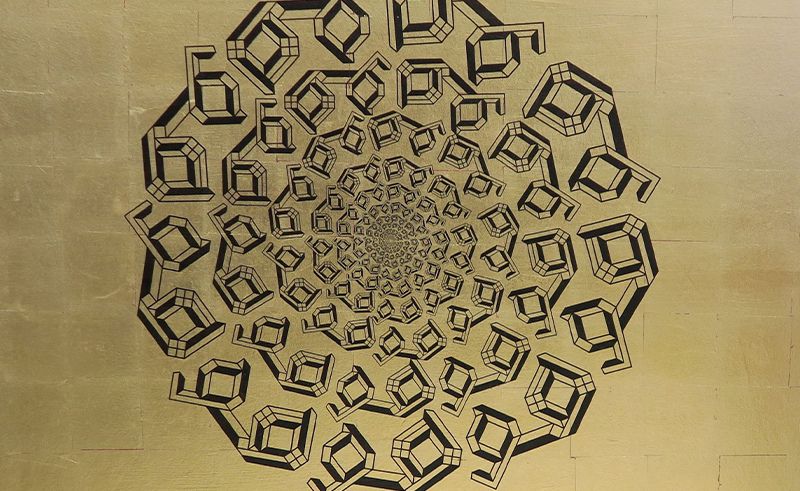
Al Homoud is not only focused on creating extraordinary art, she is also keen on passing it on to the younger Arab generations, and give them the same chance she was given when she first started her journey. She founded Isdar Art Center in Riyadh, and now curates exhibitions featuring young artists from around the region.
“I just believe art shouldn’t be hidden," Al Homoud says. "It must be shared and allowed to be felt by people in whatever way it resonates with them."
- Previous Article WATCH: Building a Modern Legacy at the GEM
- Next Article Egypt & Saudi Arabia Partner to Localise Medical Supplies Production