






'Hatshepsut: Her Story' Unwraps the Myths Behind Egypt's Female King
A new documentary by Curtis Ryan Woodside, and co-produced by Egyptologists Dr. Zahi Hawass and Sofia Aziz - challenges modern preconceptions on one of Egypt’s most prolific leaders.

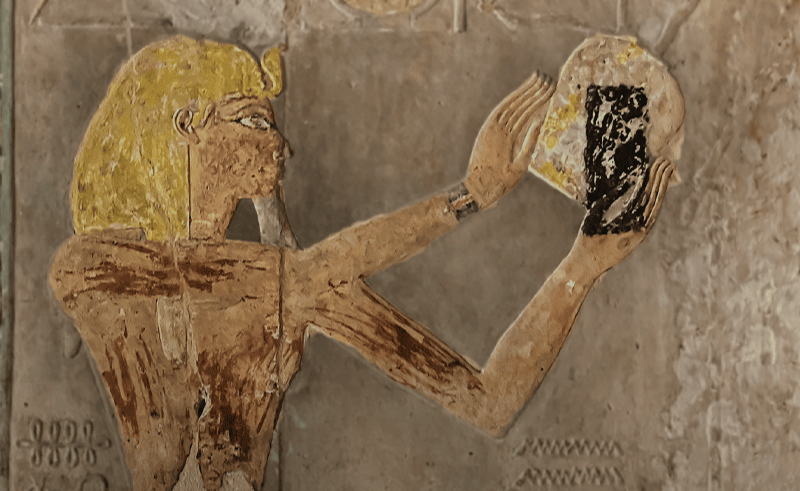
We know the name Hatshepsut as one of ancient Egypt’s few female pharaohs, and perhaps the most prolific and influential of them all. But when the question concerns who she was - a caring aunt or a wicked stepmother, an insidious usurper or a great ruler erased from history due to her womanhood - it is often marred by modern labels and preconceptions. Just who was Hatshepsut, really?
Before deciding to create his new documentary, ‘Hatshepsut: Her Story’, Curtis Ryan Woodside - a filmmaker whose work highlights ancient Egyptian history and often features prolific Egyptologists - sat down with former Minister of State for Antiquities Affairs of Egypt Zahi Hawass, where the discussion drifted towards the topic of a claim that had briefly taken over social media: that Hatshepsut was a transgender man. Such claims invite controversy, but in reality, as the script was developed and filmed, it became clear that the claim was simply the latest in a trend as old as archaeology itself: the propensity to project modern ideas onto ancient societies. It's not just that Hatshepsut was working within a different culture that saw gender in its own way - even in her own era and her own nation, her gender was a political topic in a way it was for nobody else during her lifetime.
"We say it so many times in the film, we can not apply our modern standards to ancient Egypt at all. Different time, different religion, different cultural norms," Curtis Ryan Woodside tells CairoScene. "Trying to box Hatshepsut into a modern category of gender nonconformity does not make sense. She still referred to herself as a woman, but culturally she had to wear the dress of the pharaoh, which just happened to be masculine in form. Like Prince Charles wearing his mother's, the Queen's, purple cape, it's a symbol of power, not gender."
“It’s easy to imagine that ancient Egypt was rigidly patriarchal in the way we understand the word today, but the reality was far more flexible,” Sofia Aziz, an Egyptologist who co-produced the film alongside Dr. Zahi Hawass, says. “Egyptian women could own property, run businesses, act as witnesses in court and hold religious titles. So while the throne was normally passed through men, a woman stepping into power wasn’t automatically seen as unnatural or scandalous. It was unusual, yes, but not impossible.”
HER STORY BEGINS
Curtis Ryan Woodside's film 'Hatshepsut: Her Story' invites guest speakers and archaeologists Dr. Zahi Hawass, Sofia Aziz, Dr. Salima Ikram, Dr. Colleen Darnell, Elizabeth Norena, Kayleigh During and Ahmed Lamey Darwish to illuminate the historical backdrop leading to Hatshepsut's rise to power, which begins with her father, Thutmose I.
Thutmose I was the third pharaoh of the 18th Dynasty, which expelled the Hyksos from Lower Egypt, restored the country to native rule, and marked the birth of the New Kingdom era. Thutmose I had three children with Queen Ahmose, the Great Royal Wife. Two of these children died young, while one grew to become Hatshepsut. Thutmose I then had a son with a lesser wife, Mutnofret, who would become Thutmose II. When Thutmose I died, he became the first ruler to be buried in the Valley of the Kings.
Because of the difference in status between their mothers, Thutmose II was considered a lesser son of Thutmose I, while his half-sister Hatshepsut was considered to be fully royal. To secure his reign, Thutmose II was married to Hatshepsut. Together they produced a daughter, Neferure. Thutmose II also had a lesser wife, Isetnofret, with whom he had a son, Thutmose III. Thutmose II passed away early in his life, and the tangled genealogy of the royal family helped determine who would take the throne as his successor. Thutmose III was the only male heir - but he was a small child and could not rule alone. As the only adult of full royal blood, it became Hatshepsut's duty to serve as a co-regent alongside the underaged Thutmose III.
Seven years into her joint reign with Thutmose III, Hatshepsut took an unprecedented step: she crowned herself King of Upper and Lower Egypt, fully adopting the role of the Pharaoh and effectively restarting the reign under her own name, while Thutmose III became relegated to a junior position. Depictions of the coronation show Hatshepsut with a female body dressed in male regalia, including the pharaoh's false beard and the Wings of Horus armor. Through the coronation, she is heavily associated with Horus, and has her rule legitimised through her father Thutmose I.
TO BE A KING IN THE EYES OF MEN
“Hatshepsut’s challenge wasn’t that she was a woman. It was that she was a woman claiming the full, formal role of pharaoh,” Sofia Aziz explains. “What’s striking is that her inscriptions never hide the fact she was female. They simply present her as a king who happened to be a woman. That tells us her audience could hold both ideas at once without discomfort.”
Hatshepsut's role is often described as that of a 'king', rather than the feminine 'queen' or even the more gender-neutral 'leader' or 'ruler'. In ancient Egypt, the view of who could serve as a ruler was narrowed by cultural and religious precedents. The king was not just the ruler of a nation; he was the head priest of every temple and, most importantly, the manifestation of a god. Specifically, Horus and Osiris, in life and in death respectively, both of whom are male. And the king is associated with those male gods even if he is actually a woman, a tradition that was carried forward all the way through to Cleopatra VII, who herself had a Horus name to signify her legitimacy as a ruler.
The surviving historical record only definitely confirms one previous female pharaoh before Hatshepsut: Sobekneferu, who ruled briefly as the last pharaoh of the 12th Dynasty and the Middle Kingdom as a whole. The circumstances of her ascension are not well understood. One other woman, Nitocris, may have been pharaoh in the Sixth Dynasty during the Old Kingdom, although many historians speculate she may have been a regent or a figure of legend.
Though the evidence suggests she took the throne with the consent of the nobility, with little record of any formal objection, it must have been clear to Hatshepsut that she was only able to ascend due to the extenuating circumstances of her husband's death and his son's youth. The titles, the official garb, the royal record and even the very religion itself all assume she should have been a man. And indeed most depictions of Hatshepsut as a male, or as someone who is male in appearance, were made by others who either by habit or by intent propagate that assumption. In the end that is a reflection on Hatshepsut’s office, not on her own self-image. What does Hatshepsut herself have to say about it? Do you need to be Horus to be a ruler of Egypt? Does the nation and the faith need to prioritise a man to fulfil this divine role?
TO BE A GOD IN THE EYES OF MEN
The Mortuary Temple of Hatshepsut in Luxor is considered one of the greatest architectural achievements of the ancient world. The documentary carries us through key points in the complex, where Hatshepsut is depicted across murals serving and honouring Hathor, the goddess of love, beauty and womanhood who at different points of Egyptian history is either Horus' wife or his mother, which strongly associated her with kingship and royal rule. A special shrine dedicated to Hathor is present at the southern end of the complex. One mural shows Hatshepsut as a child being nursed by Hathor in the form of a cow, which may represent Hatshepsut being confirmed as the goddess' chosen daughter and inheriting the goddess's maternal and protective powers. It is through imagery such as these that many historians see Hathor being elevated during Hatshepsut's reign, becoming more directly linked with the female king's divine claim to rule.
“What makes her stand out is the way she also brought feminine divinity into the picture,” Sofia Aziz says. “At her temple at Deir el‑Bahri, Hathor is everywhere. By placing herself under Hathor’s protection, Hatshepsut wasn’t rejecting the usual male framework of power. She was expanding it. She allowed her femininity to sit comfortably alongside the traditional male-coded imagery of rule. The result is a ruler who didn’t feel the need to choose between masculine and feminine models of authority. She used both, and in doing so presented herself as someone who could embody the full range of divine power expected of a pharaoh. It was clever, confident and completely in tune with how Egyptian religion actually worked.”
At the north ramp, a special mural known as the Colonnade of Birth depicts Amun-Re, the omnipresent king of the gods, visiting Hatshepsut's mother Ahmose during the night while in disguise as Thutmose I. The mural makes the claim that Hatshepsut, a woman, was divinely fathered by the great god and therefore divinely ordained to rule. It is a shift in the narrative of the state religion that was made to justify this rare instance of a female king.
“Hatshepsut knew that every Egyptian ruler had to be anchored in the divine world, so she stepped straight into the religious language that had always defined kingship,” Sofia Aziz explains. “As pharaoh, she was linked to male gods like Horus and Osiris, just as her predecessors were. This wasn’t her trying to ‘become a man’ but simply taking on the traditional roles expected of a king. In temple scenes she appears as the chosen child of Amun, the rightful heir of Horus, and the living representative of Osiris on earth. That was the standard script for ruling Egypt.”
While the 18th Dynasty would eventually produce figures such as Akhenaten, who is perhaps the most infamous for rewriting the script on Egyptian religion by becoming monotheistic and worshipping Aten the sun god, we can see how the intertwining of faith and politics would necessitate such spiritual innovations during Hatshepsut's reign. Perhaps it wasn't just a matter of legitimising her own rule; some historians postulate that she may have been laying the groundwork for other women to become king as well.
“This is one of the most debated questions about Hatshepsut, and the honest answer is that the evidence can be read in more than one way. What we can say with confidence is that she used religious imagery very cleverly to explain why she, a woman, had the right to sit on the throne,” Sofia Aziz says. “Where the debate begins is in how far she pushed that idea. Some historians argue that by emphasising her divine birth so strongly, and by giving her daughter Neferure such a prominent public role, she may have been trying to open the door for future female rulers. Others see it as a more straightforward move: she was legitimising her own reign in the only language that made sense in ancient Egypt. What’s clear is that Hatshepsut didn’t try to rewrite the religion itself. She worked within the existing system, but she used it with a confidence and creativity that allowed her to claim a place on the throne without pretending to be something she wasn’t.”
"She had to prove she was worthy of being a pharaoh," Curtis Ryan Woodside adds. "Of course she knew one day Thutmoses III would become sole pharaoh, she never denied him his rights. But it's likely that she did want greater things for her fully royal daughter. It's unfortunate that Neferure died before her mother. Many future female pharaohs would strongly be influenced by Hatshepsut." Amongst these female leaders were Arsinoe, a female Greek pharaoh who some historians believe built a small shrine in Hatshepsut's mortuary temple in order to be connected to her.
TO BE A WOMAN IN THE EYES OF MEN
The common understanding of Hatshepsut's story is that she was expunged from the official record due to the shame of being a woman. While her successors did work to chisel her name out of many murals and buildings, that does not necessarily mean the memory of Hatshepsut's reign was forcibly wiped out.
“The idea that Hatshepsut vanished completely from history is a powerful story, but it isn’t quite true,” Sofia Aziz explains. ”Parts of her legacy were damaged after her death, mostly for political reasons, but she was never fully erased. Her monuments at Deir el‑Bahri, Karnak and elsewhere continued to stand, and many of her inscriptions survived well enough for later visitors to recognise that a woman had once ruled Egypt.”
Even though future rulers such as Ramses the Great and Seti would not include her in the official list of kings, treating her as a regent in favour of Thutmose III, they did not forget her either. Ramses the Great repaired the Mortuary Temple of Hatshepsut after it was damaged by Akhenaten's followers, and even added his name next to hers at the temple as well as at the rock-cut temple at Minya.
As the documentary goes into detail regarding Hatshepsut’s achievements as a ruler, we also hear about the many misconceptions of Hatshepsut based on modern views of gender - not just where it concerns gender nonconformity such as transgenderism, but where it concerns traditional and often specifically Western views of womanhood as well. The phrase 'Wicked Stepmother' comes up frequently in the film, referencing how historians saw her relationship with Thutmose III through the eyes of European folklore, and inferring through these preconceptions that Thutmose III must have resented Hatshepsut for usurping his position.
"We find this in so many older books about her," Curtis Ryan Woodside says. "I do believe that modern cultural norms seep into Egyptology, with stereotypes of archaeologists from certain countries applying their feelings to a subject. The reality is, Hatshepsut was revered!"
The documentary addresses the 'Wicked Stepmother' stereotype by examining Hatshepsut's relationship with Thutmose III more closely, and finding for example how Hatshepsut often included Thutmose III in her campaigns, and constructed a massive garden for him filled with foreign plants that he admired.
Throughout the documentary, we see evidence that suggests that Hatshepsut’s reign was stable and prosperous, which usually means that the population as a whole accepted her authority. The film also scratches a little deeper, giving us some insight on Hatshepsut as an individual, as the aunt to a young king-to-be, and as a close confidante - and, according to speculation, a secret lover - to Senenmut, an important architect who worked on many of Hatshepsut's projects, including the iconic Mortuary Temple of Hatshepsut itself.
The documentary makes a point not to take any cultural biases for granted in examining each aspect of Hatshepsut's personal life. Even a piece of graffiti depicting Hatshepsut and Senenmut in a carnal act - a shocking image in the eyes of many, and what one may assume is meant to be derogatory - is discussed within its context, exploring the possibility that it is intentionally placed in relation to a Festival of Drunkenness, a tradition that Hatshepsut revived in honour of Hathor and the goddess of war Sekhmet which often involved loud music, dancing and even sexual permissiveness. While there is no official evidence to suggest that Hatshepsut personally participated in any orgies, as pharaohs take on a more administrative role in such proceedings, placing the graffiti within this context explores the possibility that the intent behind the art may have held a different significance than what we may have assumed.
The documentary does not make a definite judgement on the intent of the graffiti - after everything is considered, it may still be reasonable to conclude that it is in fact a rude satirical work, one that may only reflect the opinion of a lone contemptuous artist rather than the general consensus of the era. What's important is the process: the attempt to immerse oneself fully in the many possibilities of cultural differences between the present and the ancient past, where sex itself can be part of religious ritual and not held to the same taboos we hold now, and to work through these possibilities within its own context.
Only by doing so could we perhaps fully appreciate the varied nuances of Hatshepsut's reign and reputation rather than falling into a one-sided narrative of female shame made by modern men. Even theories meant to empower one's views of gender nonconformity may be constructed by those who were only exposed to and informed by such narratives, which ultimately take for granted what a woman in ancient Egypt may be capable of, and how a woman like Hatshepsut may be remembered when the weight of history is against her.
In describing the many perspectives that helped give shape to the documentary, Curtis Ryan Woodside said, "All of the guest are experts in their own fields, and bringing them together created a more complete story... I love and respect everyone featured in this film, from my dear friend Sofia Aziz who is a wealth of wisdom, Dr Salima Ikram who I grew up watching, Colleen Danrell who brings out the facts, Elizabeth Norena who contributed so much about the symbols of Hatshepsut, Lamy Drwish to give us perspective of the Egyptian people, Kayleigh Durning to give us the views of a modern woman, and Sarah Janes giving a masterful voice to Hatshespsut. They all have something unique and important to add."
'Hatshepsut: Her Story' is now available to watch for free at Curtis Ryan Woodside's official YouTube channel.
Related Articles
Trending This Week
-
 Oct 06, 2026
 -
-
-