





Mohamed Abdel Wahab Museum Is Open to Public for Free Until March 12th
The initiative marks the composer’s birth anniversary month and introduces visitors to his legacy.

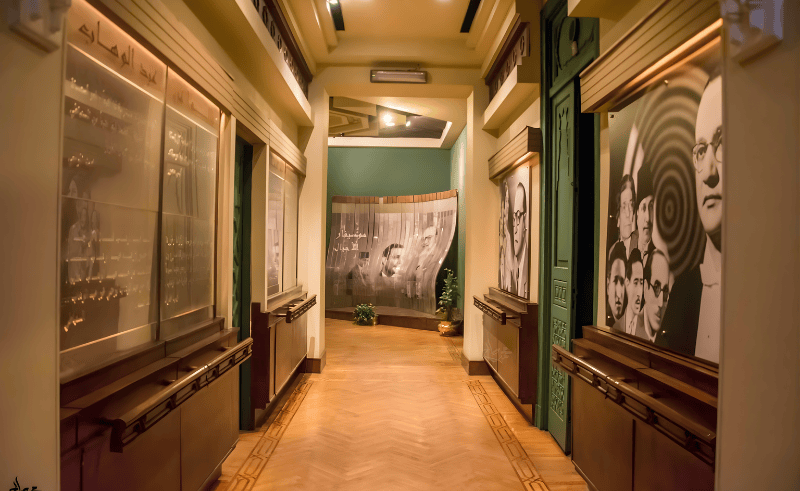
The Cairo Opera House has opened the Mohamed Abdel Wahab Museum and the Musical Instruments Museum to the public free of charge from March 8th to 12th, 2026.
The initiative takes place at the Arabic Music Institute and forms part of an annual programme marking the birth anniversary month of Egyptian composer Mohamed Abdel Wahab.
The Mohamed Abdel Wahab Museum traces the composer’s life and career across several exhibition halls. A Memories Hall is divided into two sections: one documenting his childhood, early steps in Arabic music and Egyptian cinema, his collaborations with writers and artists, and the awards and honours he received; and another displaying items from his home, including his bedroom, private office, furniture and personal belongings donated to the Opera House by his widow, Nahla El Qudsi.
The museum also includes a cinema hall screening films in which Abdel Wahab appeared, alongside a listening and viewing hall containing a digital archive of his songs, recordings and photo albums accessible through touchscreen stations. Alongside the composer’s museum, the Musical Instruments Museum presents a collection of historic instruments discovered during restoration work at the institute building.
The instruments have been restored and arranged by type across strings, wind and percussion, with each accompanied by an information panel and an audio device that demonstrates its sound.
Among the rare instruments on display are a three-quarter-tone piano designed for oriental compositions, a Japanese koto, an Indian sitar and a santoor. The collection also includes the metal mandolin played by Abdel Wahab in the song ‘Aasheq El Rouh’ from the film 'Ghazal El Banat'.
Abdel Wahab was born on March 13th in Cairo’s Bab El Shaariyah. He began performing in 1917 and later studied oud at the Arabic Music Institute in 1920.
His career extended into cinema from 1933 and radio from 1934, and he collaborated with leading Arab singers including Umm Kulthum, Laila Mourad, Abdel Halim Hafez, Nagat Al-Saghira, Faiza Ahmed, Warda Al-Jazairia, Fairuz, Asmahan and Talal Maddah.
The composer died on May 4th, 1991, leaving behind a body of work that remains central to the history of Arabic music.