





Nour Mobarak Turns Lost Opera into Sculptures That Sing Rare Languages
"The English language is so impoverished sonically. And yet, most people speak it."
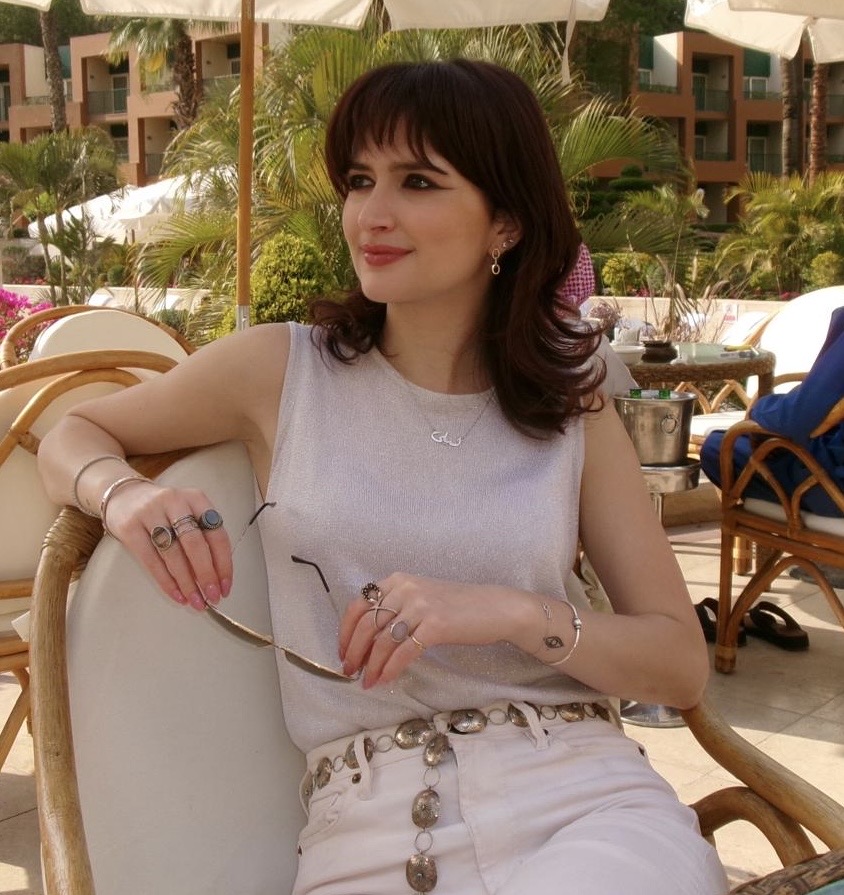
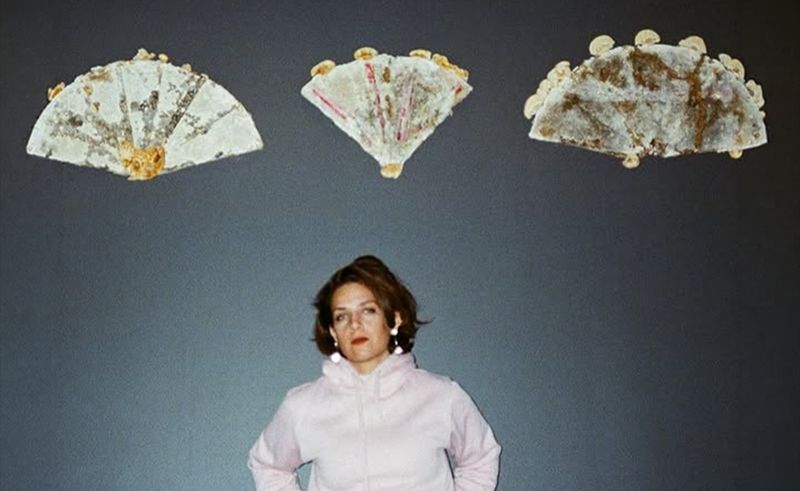
Lebanese-American artist Nour Mobarak’s installation at the Diriyah Biennale transforms the first known opera, La Dafne (1598), into 15 sculptures that sing in languages whose expressive and sonic complexity surpass that of English.
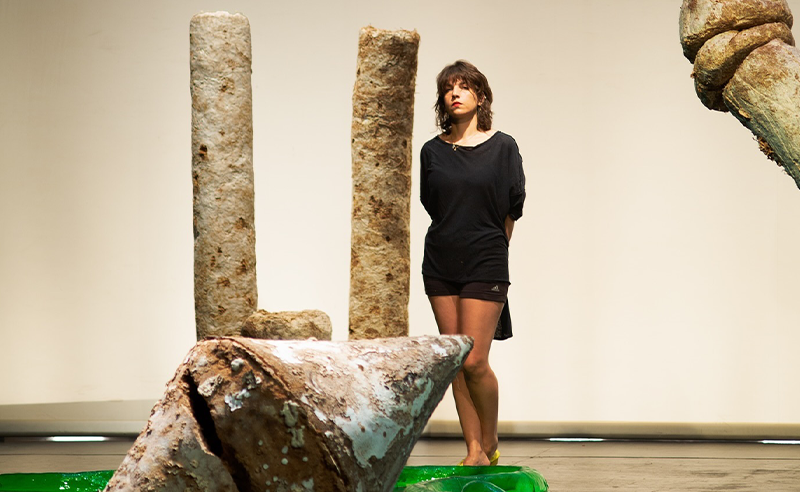
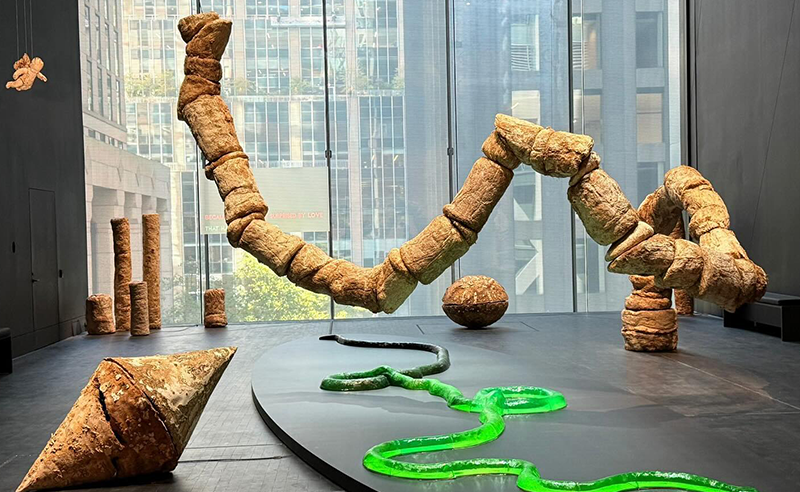
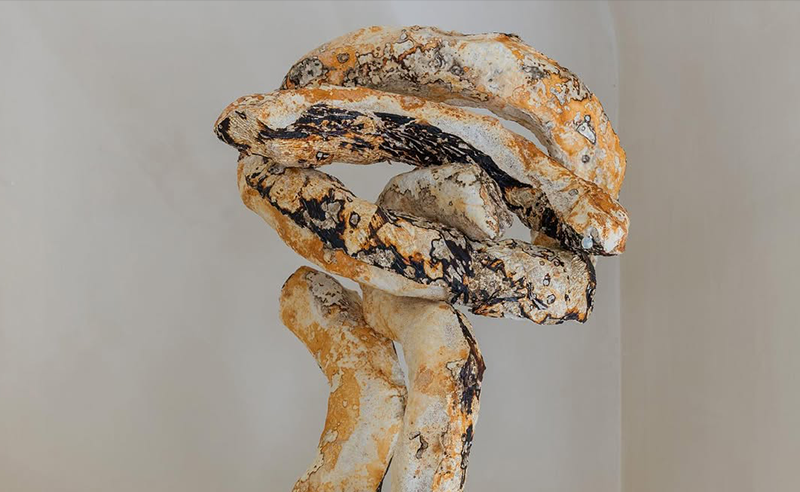
Stepping inside ‘Dafne Photo’, you’ll find a collection of geometric and figurative forms crafted from mycelium, the root form of the mushroom. The character of Dafne may be the most eye-catching—what looks like a long, winding tree-trunk hanging from the ceiling. She is the nymph in the ancient Greek myth the opera is based on—Ovid’s myth from Metamosphoses—a story of unrequited love where Dafne must turn herself into a tree to escape the god Apollo’s pursuit.
“I explore the full range of the human voice and its potential as my medium,” Mobarak said. “I wanted to make an opera with the widest palette of vocal sounds.”
Since the original music of Jacopo Peri and Ottavio Rinuccini’s opera was lost, Mobarak worked with scholars to translate the Italian libretto first into English. And from there, into rare languages that contain a wider range of vocal sounds: Abkhaz, San Juan Quiahije sign language, Eastern Chatino, whistled language Silbo Gomero, Latin and the click language !Xoon—which is only spoken by around 2,000 people.
“I assigned each of those languages to a different character in the opera,” Mobarak explained. “You hear all of these different languages in one opera, which expands the range of understanding human vocalization.”
“The English language is so impoverished sonically. And yet, most people speak it,” she continued, asking, “So what does it mean that we're now speaking with fewer sounds, considering that sound is a medium that transmits emotion most efficiently? Is that affecting our ability to communicate with each other at our fullest range of empathy?”
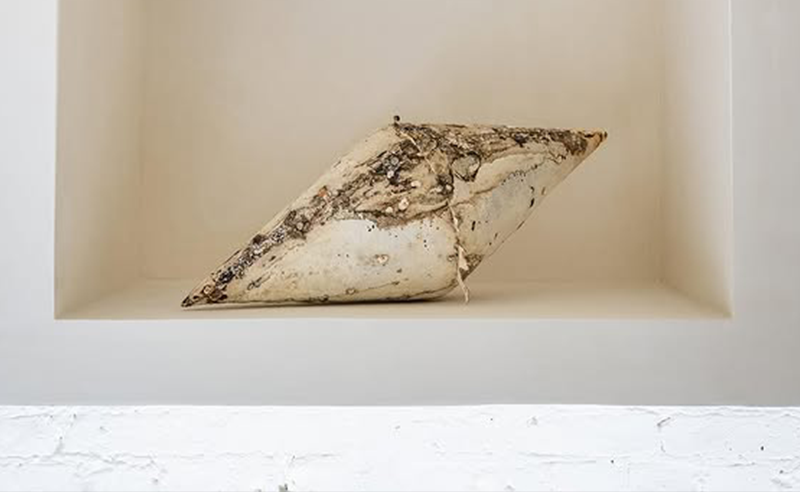
Mobarak’s choice of fungus as the sculptures’ medium represents the proliferation of language through migration, globalization, and territorial acquisition. Mobarak herself is a child of the diaspora. She was born in Cairo to Lebanese parents and grew up in Italy and the US.
“Growing up, I'd hear a lot of languages that I didn't understand,” Mobarak said. Her father spoke French, Arabic, Italian and English. “I would focus on the sound and try to understand meaning,” she added, “not through fully understanding the language, but by understanding the emotion translated through sound.”
Mobarak’s ‘Dafne Phono’ will be on display at the Diriyah Biennale until May 2nd, 2026.
- Previous Article Mo Salah’s Record-Breaking Liverpool Legacy in Numbers
- Next Article Where to Get Home-Style Meals Without Cooking in Egypt