





Review: ‘I’m Glad You’re Dead Now’ Is a Profound Meditation on Grief
Memory is not shown as something that heals, but as something that helps us cope.

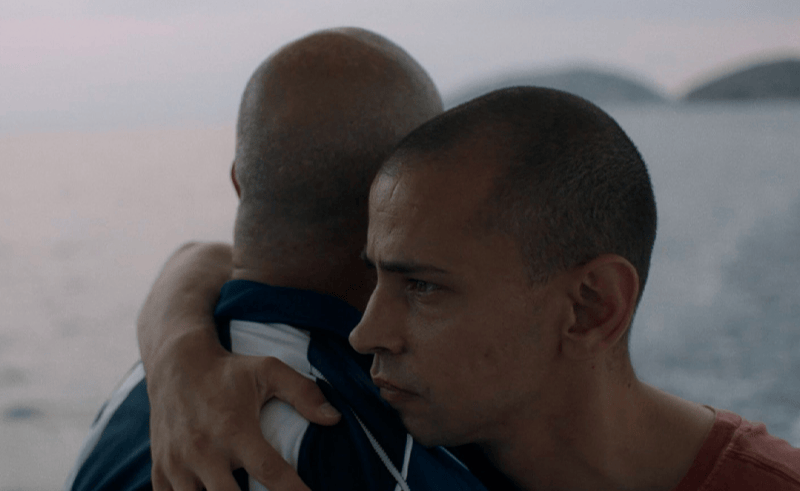
Palestinian Tawfeek Barhom directed, wrote and co-stars in “I’m Glad You’re Dead Now”. The film previously won Cannes Film Festival’s short film Palme d’Or last year and is screening for the first time in the U.S here at Sundance. In a show of solidarity with the Palestinian cause, Joaquin Phoenix and Rooney Mara came on board as executive producers. In a recent statement Phoenix said, “This is a film that confronts memory, trauma, and reconciliation in a way that feels urgent and necessary today. I’m proud to be part of its future.” Of the film, Mara added the following, “From the moment I saw ‘I’m Glad You’re Dead Now,’ its emotional weight and restrained power stayed with me. I am honoured to support Tawfeek’s vision and the film’s continuing journey.”
The story follows two brothers who return to the island where they grew up. There, long-buried secrets and unresolved tensions resurface. They are forced to confront a past that continues to simultaneously bind and haunt them. In just thirteen minutes, the film gradually sheds narrative certainty and comes to resemble a visual poem. It is guided less by explanation and more by mood and affect. Its images evoke emotional states that are not easy to put into words. It is among the most quietly profound meditations on grief to emerge in recent years.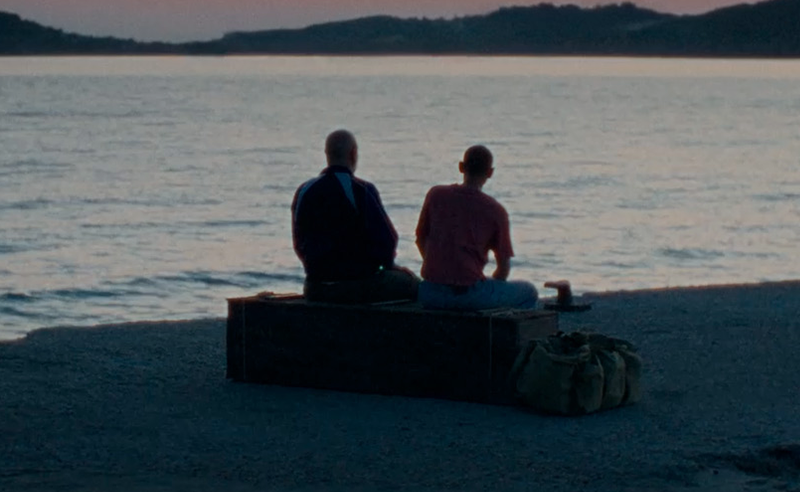 The film suggests that love does not erase harm, and that death does not automatically grant moral closure. In the brief exchange between the brothers, what remains unsaid carries as much weight as what is spoken. The film becomes an exploration of the burden of living with withheld words, unresolved anger, and the knowledge that reconciliation is not always possible. Grief here is not softened or sanitised; it is shown as something unforgiving.
Rather than offering absolution, the film gives form to a thought cinema rarely tackles: the coexistence of tenderness and damage within acts of mourning. By refusing emotional resolution, it quietly but forcefully challenges dominant cultural narratives of grief that insist on healing, forgiveness, or closure. I found this to be so refreshing, and still find myself thinking about its themes at random moments throughout the day.
It trusts the viewer to sit with uncertainty rather than guiding them toward a clear emotional takeaway. What has stayed with me is a specific image. It’s that of a lemon being bitten into. One brother, whose psychological condition disrupts his ability to remember, insists that the other loves lemons. The response is quietly devastating. He tells him that it’s the exact opposite. He reminds him that they once consumed it deliberately, as a way of washing away the bitterness of life. The moment functions as more than metaphor.
In this exchange, the film suggests that some repeated behaviour can outlast their original meaning. By focusing on an ordinary sensory detail, taste becomes a ways of living with what can't be fully resolved.
“I’m Glad You’re Dead Now” achieves something quietly extraordinary. With rare confidence, Barhom strips cinema of reassurance and lets ambiguity leave the imprint of a suspended moment in time. If you allow the film to wash over you, it will stay with you long after the credits roll. You won’t see me biting into a lemon to wash away its taste. This one, you’ll want to savour as long as you can. After all, some tastes are meant to stay.
- Previous Article Is Hamza AbdelKarim’s Barcelona Move a Shift For Egyptian Footballers?
- Next Article Dopa Drops is Where Coffee Meets Your Happy Chemical