

Azimut's 1.2 Million Investors Tell the Story of a Changing Egypt
The firm's regulated, institutional frameworks shows that long-term wealth creation for what it truly is: a disciplined, measurable and manageable process.
For years, professional investment management in Egypt was largely the preserve of institutions. Government entities, sovereign institutions and large corporates had access to investment products and professional asset management, while individual investors had far fewer options beyond traditional banking products.
That picture has changed. New investment products, regulatory changes and digital platforms have opened up the market to a much wider audience, giving individual investors more ways to put their savings to work. Azimut Egypt's own evolution reflects that wider shift, moving from a business focused largely on institutional clients to one serving more than 1.2 million investors today.
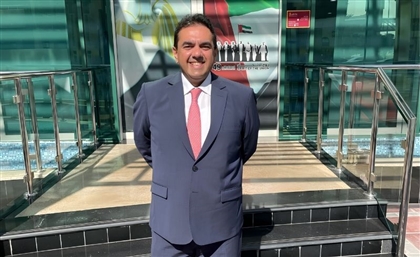
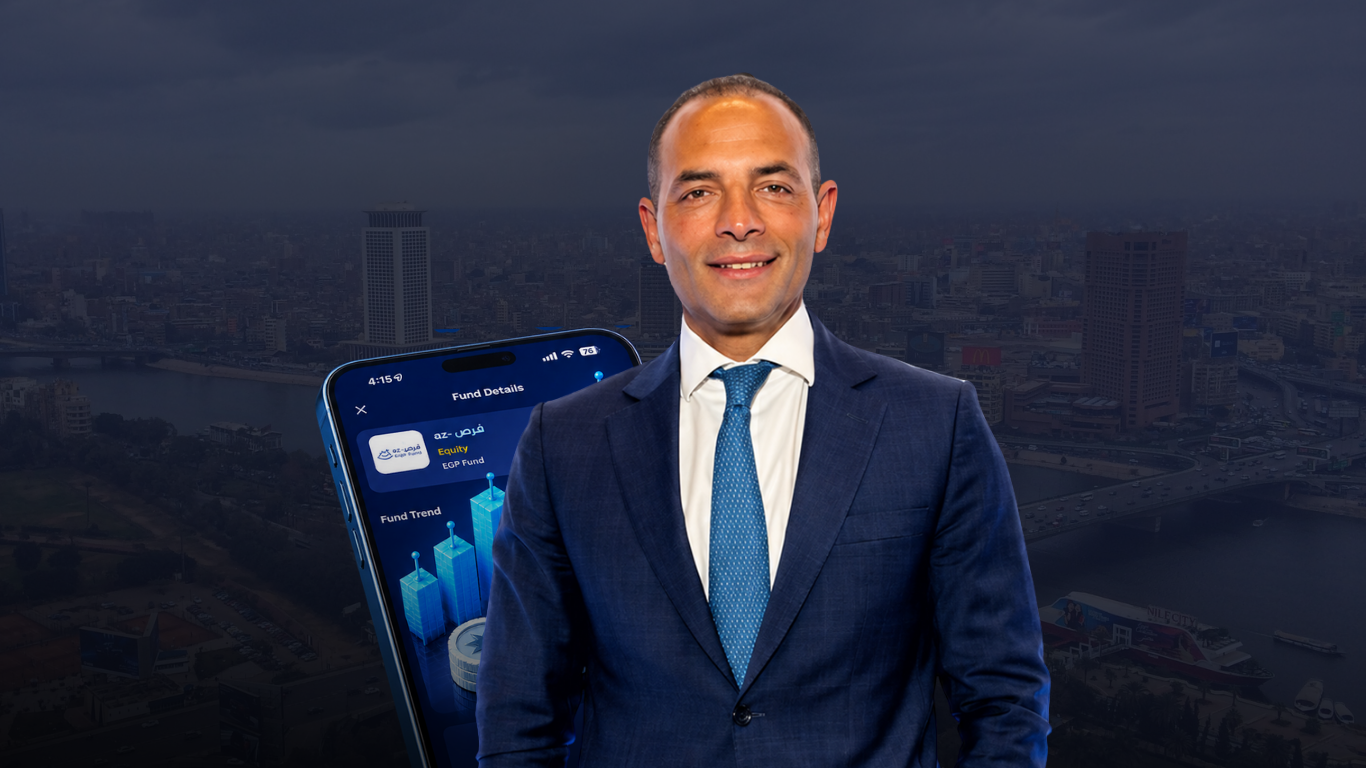
As CEO of Azimut Investments Egypt and Head of Regional Asset Management for MENA & Turkey, Ahmed Abou El-Saad has watched that change firsthand. He joined the business in 2008, when it was operating as Rasmala Egypt Asset Management, and his work was focused primarily on institutional portfolios.
“Banks were the dominant distribution channel and, under the regulatory framework at the time, they were effectively the institutions through which investment funds were launched and distributed,” he recalls.
For individual investors, that left relatively few routes into professional asset management beyond the traditional banking products they were already familiar with. The challenge wasn’t necessarily in creating more investment products, but changing the channels through which people could access them.
When Abou El-Saad successfully invited Azimut to enter the Egyptian market in 2019, that challenge was still embedded in the regulatory framework.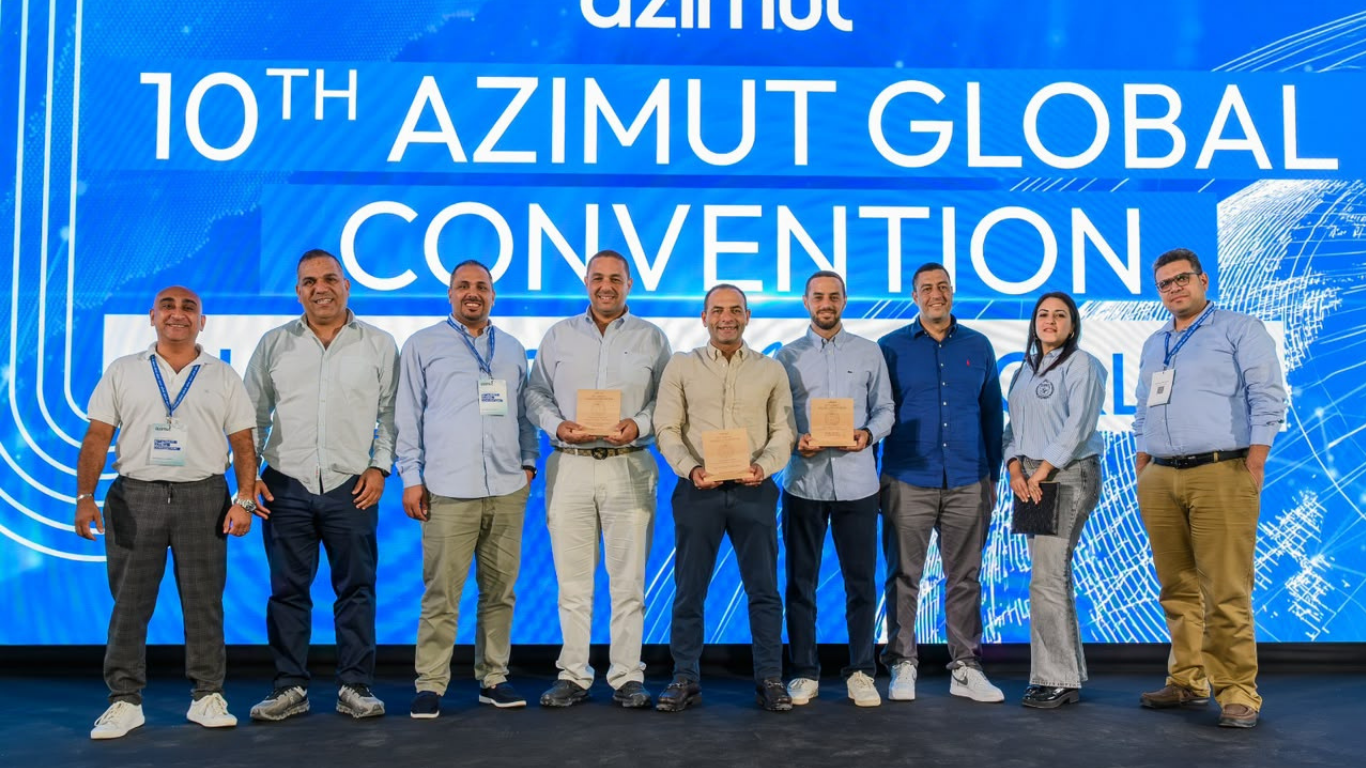
Investment funds were largely restricted to banks and insurance companies, prompting Azimut to advocate for specialised asset managers to be allowed to launch funds. Following the regulatory changes, it became the first licensed asset manager in Egypt to do so outside the traditional banking and insurance sectors.
That opening gave Azimut room to build a much broader investment offering. Since then, it has launched more than 20 funds spanning money market, fixed income, equities, US dollar-denominated investments, Sharia-compliant strategies and precious metals, while expanding into areas including real estate, private equity and venture capital.
But the expansion has been driven by a broader objective than simply increasing the number of products available.
“For us, innovation has never been about being first for the sake of being first,” says Abou El-Saad. “The real objective has always been to broaden the investment universe available to Egyptian investors and, equally importantly, to make those opportunities accessible to a much wider segment of the population.”
That philosophy is particularly evident in the way Azimut has approached unfamiliar asset classes. The launch of Egypt's first gold investment fund, for example, took an asset already deeply familiar to Egyptian savers and placed it within a regulated investment structure, giving investors exposure without the logistical considerations of buying and storing physical gold.
The same thinking is now being applied to real estate. Property has long been an important store of wealth in Egypt, but direct ownership can require substantial capital and leave investors heavily concentrated. Professionally managed and fractional structures offer another route into an asset class that many Egyptians already understand.
For Abou El-Saad, then, deciding whether to introduce a new product starts with the problem it is intended to solve.
“We never launch a product simply because it is innovative or because we want to be the first,” he says. “There has to be a genuine investor need behind it, and then it becomes a question of choosing the right timing, ensuring the appropriate regulatory framework is in place, and making sure investors are ready to understand and use the product effectively.”
That approach has also shaped the sequence in which new investment options have been introduced. Rather than asking investors to make a leap into unfamiliar territory, Azimut has gradually expanded the range of assets available to them. “In many ways, we have taken Egyptian investors through a gradual learning curve,” Abou El-Saad explains.
-7bf80b1b-fb8a-4a11-a792-cc9d2f0a668f.png)
As investors became more comfortable diversifying beyond traditional products, the company could move further into alternatives, including the gold fund and now real estate. Technology has been central to making that broader investment universe accessible.
AZ Invest, described as Egypt's first digital mutual fund platform by Azimut Investments Egypt, provides digital onboarding through E-KYC, smart contracts and e-register forms. Through the app, investors can access fund prices, buy and sell funds, and build and manage their portfolios without relying on the physical processes that traditionally accompanied investment.
The push towards digital investing was accelerated by a moment Abou El-Saad witnessed at Azimut's Global Convention in China in 2019. During a demonstration, the CEO of Azimut China and the chief strategist of one of China's super apps showed how a customer could access financing through an app, invest directly into an Azimut fund and see the entire transaction reflected in their account statement within around 20 seconds.
“I remember watching that and thinking: this is exactly what the Egyptian market needs.”
The experience changed the way Azimut approached distribution in Egypt. Rather than trying to build every element of the digital experience itself, the company began looking for ways to combine its investment-management capabilities with the technology and reach of financial-services partners.
“We realised that we did not necessarily need to build everything ourselves,” says Abou El-Saad. “Instead, we could combine our investment-management capabilities with the technology, customer reach and innovation of fintech and financial-services partners.”
That thinking has led to partnerships with platforms including Thndr, Menthum, Valu, MNT-Halan, Fawry and Telda, alongside other fintech collaborations. The ambition behind these relationships goes beyond putting investment products on a phone. It is about reducing the distance between professional asset management and the people who might otherwise consider it too complicated or inaccessible.
“The gap we are ultimately trying to fill is the gap between professional asset management and the everyday investor,” says Abou El-Saad. “Historically, investing could feel complicated, inaccessible and distant from people's daily financial lives. Technology can remove much of that friction.”
The shift in accessibility coincided with a change in investor behaviour. COVID-19 accelerated digital adoption across financial services, while periods of high inflation and currency pressure made more Egyptians conscious of the need to protect their savings and look beyond traditional deposits.
Abou El-Saad points out, however, that developments did more than change how people transact - they altered what people expected their savings to do.
“I believe the combination of these factors created a structural change in the Egyptian investor mindset,” he says. “People became more willing to look beyond traditional savings products and actively allocate their money across different asset classes.”
The result is a market in which investors can now choose from a significantly wider range of strategies. Treasuries and private allocators can deploy capital into diversified vehicles such as the fixed-income AZ-Idkhar fund, while the Maashy pension fund is designed for structured long-term savings. AZ-Gold provides exposure to precious metals through a regulated investment structure, while AZ-Foras offers an equity-focused route to diversified market opportunities. Sharia-compliant funds provide value-aligned investment options, while the ATAA Charity Fund allows investors to align financial participation with charitable giving.
At the core of this scientific approach is the execution of intentional diversification, a strategy managed through these digital channels. Instead of attempting to forecast unpredictable macroeconomics, modern asset management builds a financial firewall designed to manage volatility. Azimut Egypt implements this by distributing capital across different asset classes, with downward pressure on equities counterbalanced by the resilience of fixed-income instruments, treasury solutions or precious metals. The objective is not to eliminate market movements, but to construct portfolios that are better positioned to withstand them.
-57fde624-49d1-4dda-bc51-2dd1dad3b360.png)
Achieving this level of confidence also requires a strict evaluation of a financial partner's regulatory compliance. The Egyptian financial landscape has evolved significantly since the highly speculative, unregulated wealth-utilisation schemes of the late twentieth century, which operated completely outside the law with zero fiduciary accountability. Today, the modern financial ecosystem relies on institutional discipline, with local mutual funds managing over EGP 470 billion under the direct supervision of the Financial Regulatory Authority (FRA). This regulatory framework is the benchmark of Azimut Egypt’s digital and physical operations, providing the baseline of safety required to protect capital before a transaction even takes place.
While regulation provides the infrastructure, financial awareness remains another important part of making investment more accessible. Investors need to understand not only what they are buying, but how different strategies fit into their broader financial plans. That means moving away from the idea that investing requires constant trading or trying to predict the next winning asset.
“For most people, it is about starting early, investing consistently over time, diversifying appropriately and allowing professional investment managers to help them navigate different market cycles,” he says.
The broader objective is to make professional asset management feel less exclusive – something that can be incorporated into ordinary financial planning rather than reserved for people with significant wealth or specialist knowledge. And it is perhaps Azimut Egypt's 1.2 million-investor milestone that best illustrates how far that ambition has travelled - but for Abou El-Saad, the significance lies less in the number and more in what it represents.
“Behind those 1.2 million investors are 1.2 million people with different ambitions and different life goals,” he says. “We are not simply managing money, we are helping people translate their savings into real-life objectives. Azimut helps investors secure their children’s future, plan for retirement, build long-term wealth, and prepare for life’s milestones."
It’s a significant departure from the institutional market that once dominated asset management in Egypt, where the focus was on managing capital for a relatively small number of large organisations. That shift also points to where the market could go next - from simply giving more Egyptians access to investment products to making investing a more routine part of how they plan for their financial futures.
For corporate treasuries and private investors looking to navigate shifting market cycles, the transition to professional asset management is increasingly about having access to the right tools, information and investment structures. Long-term wealth creation is less about predicting every market movement than building a strategy that can withstand them.
The next chapter for Azimut is likely to extend that framework into alternative investments and private markets.
“I see Azimut's next chapter as being increasingly focused on alternative investments and private markets,” says Abou El-Saad.
Real estate could be the beginning, followed by greater access to private equity, venture capital and other alternative investment solutions. The objective is once again to bring asset classes that have historically been available mainly to institutions, sophisticated investors or individuals with significant capital to a wider audience. Abou El-Saad sees asset management as a potential link between household savings and the businesses, entrepreneurs, real estate projects and other productive economic activities that need long-term capital to grow.
In that sense, making investment more accessible could have implications beyond individual wealth creation. It could also change how household savings participate in the wider economy, giving more Egyptians a greater stake in the country’s future and reflecting a simple idea that Abou El-Saad returns to: "a better future starts with a plan today."
“If we can help Egyptians become investors in their own economy - not simply savers within it - I think that would be one of the most meaningful contributions Azimut could make in the years ahead.”