






10,000-Year-Old Rock Art Discovered in Southern Sinai
Rock shelter on Umm Arak Plateau preserves layers of human activity from prehistory to the medieval period.

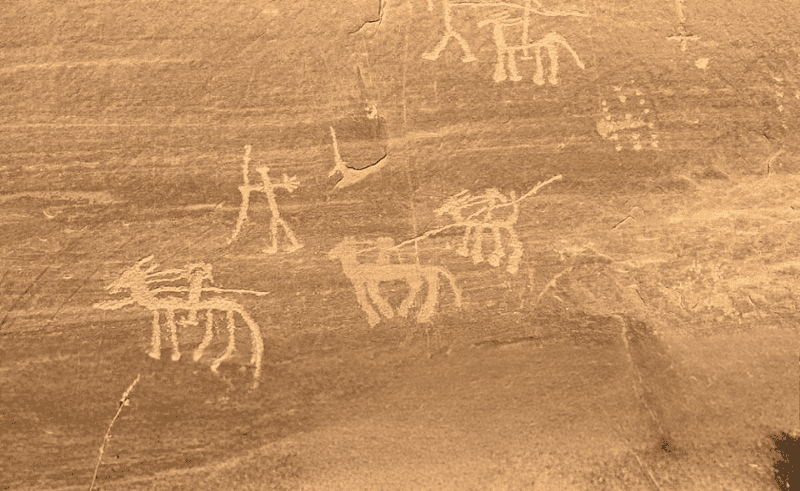
Archaeologists working in Egypt’s southern Sinai have identified a large sandstone rock shelter on the Umm Arak Plateau preserving nearly 10,000 years of human activity.
The site lies about 5 kilometres northeast of the Temple of Serabit el-Khadim, close to ancient copper and turquoise mining zones, and was documented by a mission from the Supreme Council of Antiquities during a regional survey guided by local resident Sheikh Rabie Barakat.
The shelter extends for more than 100 metres along the eastern edge of the plateau and reaches a depth of approximately 2 to 3 metres. Its ceiling height decreases from around 1.5 metres at the entrance to roughly half a metre further inside. From this elevated position, the plateau overlooks a wide plain stretching north toward the Tih Plateau.
Researchers believe the location functioned as both a lookout point and a resting place across different historical periods. The earliest images appear near the entrance and are dated, based on stylistic and technical analysis, to between 10,000 and 5,500 BCE. Many are painted in red pigment across the ceiling and depict animals common to the region in prehistoric times.
One engraved scene carved in sunken relief shows a hunter drawing a bow toward an ibex, accompanied by several hunting dogs. Subsequent layers of imagery introduce camels and horses ridden by armed figures.
Several inscriptions are attributed to the Nabataeans, active between approximately 400 BCE and 200 CE. Additional drawings and inscriptions date from late antiquity through the medieval period, between the sixth and fifteenth centuries CE.
Geometric motifs including X-shapes, squares, ovals and crescents appear throughout the shelter, created using varied tools and techniques. Excavations within the shelter revealed thick accumulations of animal dung, indicating later use as a refuge for both people and livestock during periods of rain and cold.
Archaeologists also recorded low stone partitions forming small living units, with ash layers and burned material suggesting repeated hearth use. Flint tools and pottery fragments confirm extended occupation. Some ceramics are thought to date to Egypt’s Middle Kingdom, while others correspond to the third century CE under Roman rule.
Officials have described the Umm Arak Plateau discovery as one of the most significant recent rock art finds in Sinai. Ongoing analysis aims to refine the dating of the different image groups and establish a long-term plan for documentation and site protection.
Related Articles

Trending This Week
-
 Apr 26, 2026
 -

-
-