





Egyptian Brand Klekthaus Draws Its Symbolism From Raw Materials
For founder Ammar Heider, every stone is a symbol, every style a narrator, and every product a story.

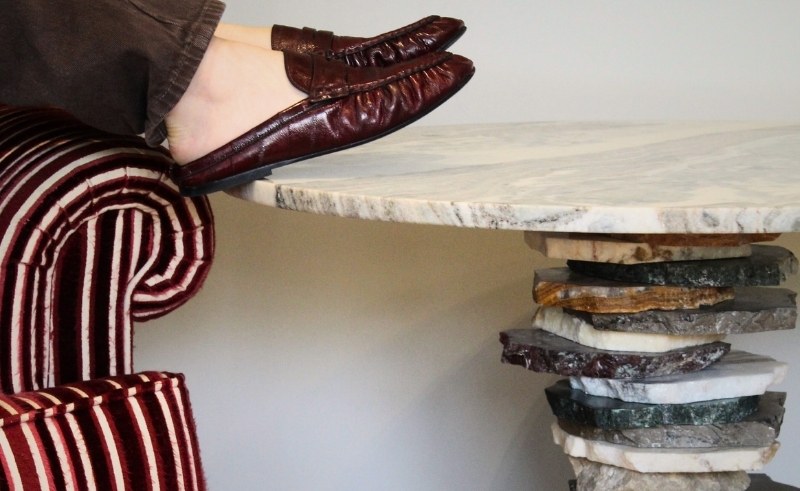
Egyptian brand Klekthaus builds furniture from materials that rarely appear together in conventional design. Broken marble fragments become structural supports, oxidised metal is left deliberately rusted, and raw wood sits beneath glass surfaces designed to function as display vitrines. Across its early pieces, stone, metal, and wood are not simply finishes but the structural language of the objects themselves.
Rather than concealing imperfections, Klekthaus incorporates them into the design. Marble offcuts are stacked into sculptural bases, metal is aged through controlled oxidation, and surfaces retain visible texture. The resulting pieces feel assembled rather than manufactured, allowing the character of each material to remain visible in the final form.
The brand was launched only a few months ago by Egyptian designer Ammar Heider, though the ideas behind it have been developing for years. At the centre of Klekthaus is an interest in combining contrasting design languages into a single object.
“I’m really interested in blending different materials and layering different styles,” Heider says. “I’ve never been interested in pieces that speak in only one design language. Modern, classic, contemporary, industrial – each has its own beauty, but what fascinates me is the moment they come together to create something unexpected.”
This philosophy is reflected in the brand’s name. “Klekt, from eclectic,” refers to the merging of contrasting elements, while “Haus” references the homes where these pieces ultimately live.
For Heider, the goal is not simply to produce functional furniture. “I want to create statement pieces – ones that say something about whoever owns them.”
Behind this approach lies a longstanding fascination with storytelling.
“I’ve always been drawn to storytelling – it carries the echoes of my late beloved grandmother, whose stories became part of the way I see, feel, and remember the world.”
That influence runs quietly through Klekthaus, where materials are often used to explore broader ideas about experience, time, and transformation.
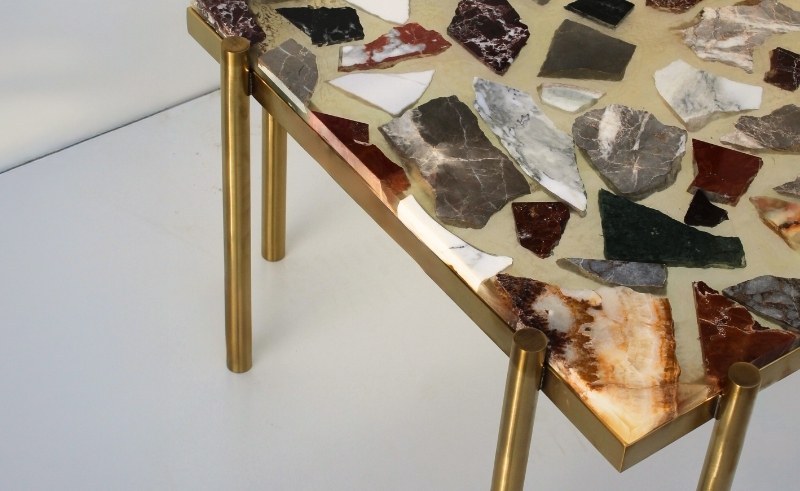
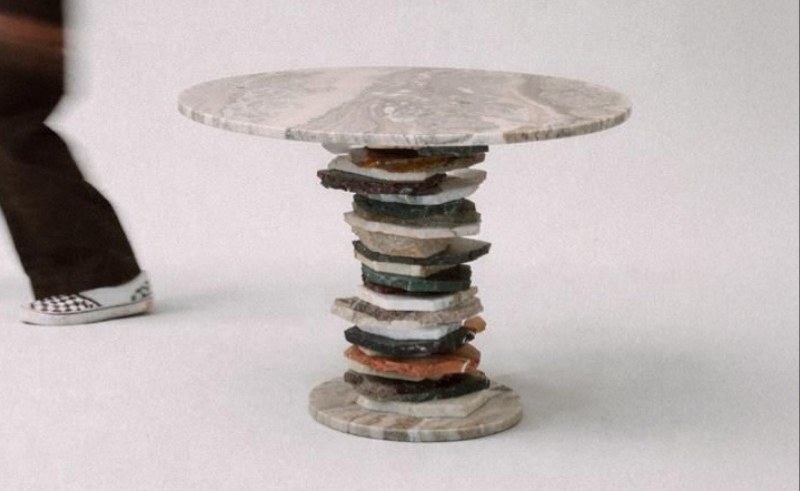
One of the brand’s earliest pieces, the ‘STAQ’D Table’, features a circular tabletop supported by irregular fragments of marble stacked on top of one another. Each piece varies in shape, colour, and size, forming a layered structure from materials that might otherwise have been discarded.
According to Heider, the table reflects the accumulation of experience. “Everyone we have ever met, every moment we have lived – no matter how small – has helped shape the person we are today.” The stacked marble fragments symbolise this idea: individual pieces that gain meaning when assembled together. “It’s my way of saying nothing is useless,” he says. “Every experience matters.”
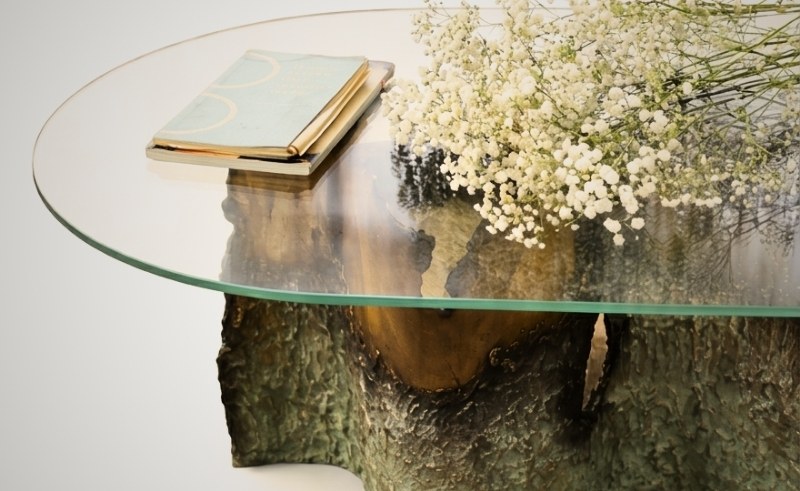
Another piece explores a different theme. The ‘SCORCHED Coffee Table’ consists of a glass top supported by a curved strip of metal that has been deliberately rusted through oxidation, leaving the surface aged and uneven.
“The story, as cliché as it sounds, is about ageing,” Heider explains. “There is a unique beauty in ageing, there are experiences to be told.”
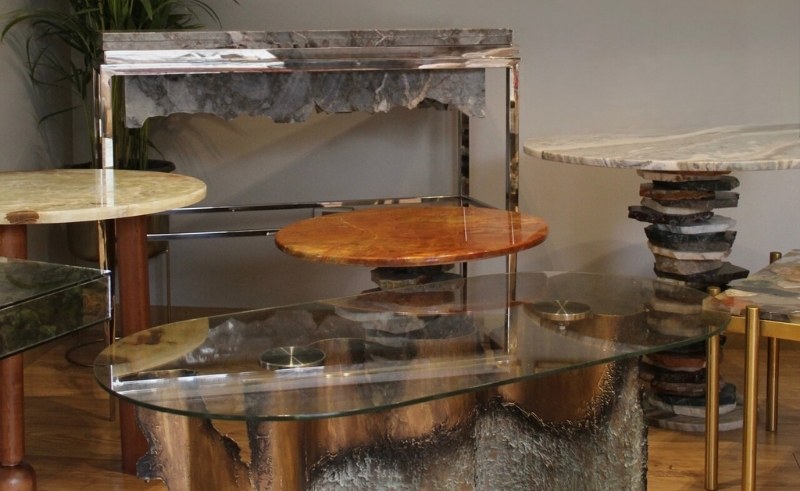
Both works appear in Klekthaus’s first collection, titled ‘Just Like Us’. The collection explores how objects can mirror the complexity of human experience, carrying visible traces of transformation within their materials.
Much of the design process behind these pieces begins without a fixed plan. Rather than starting with detailed drawings, Heider develops ideas through direct experimentation with materials.
“Most of my designs don’t begin with a sketch,” he says. “They emerge through experimentation. I move materials around, test different compositions, play around, and voilà – the table reveals itself.”
This approach often leaves the materials themselves guiding the final outcome. Surfaces remain raw, compositions shift as pieces are assembled, and unexpected combinations emerge through trial rather than strict design rules.
“I’m not following guidelines or proceeding by the book,” Heider says. “It’s all passion-driven. No restrictions, no guidelines – it’s just me doing my thing.”
That experimental process is especially visible in the ‘BLOQ’D Coffee Table’, part of Klekthaus’s newer collection, ‘Earth Rhapsody’.
Heider initially imagined the piece as a minimal marble block table with clean lines and polished edges. But when the prototype was finished, he found it uninteresting.
“Being an eclectic brand by design, it was simply boring,” he says.
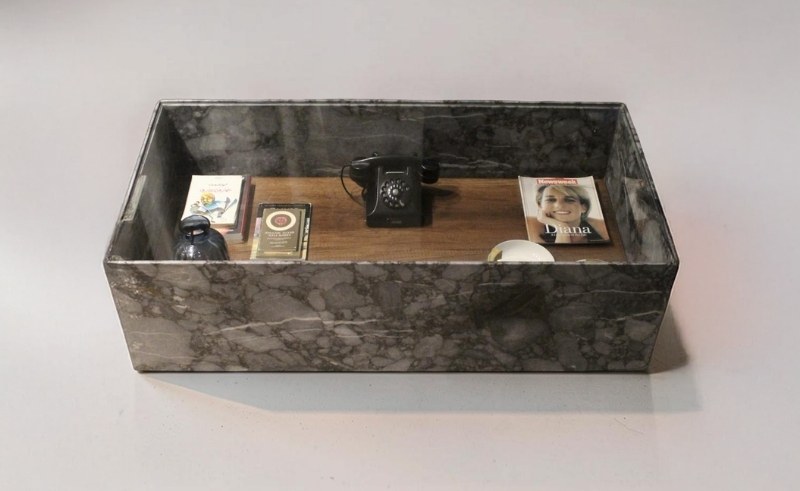
The solution came through rethinking the structure. Instead of leaving the marble block untouched, the design was adapted to include a wooden base visible beneath a glass tabletop.
“That way,” Heider explains, “it becomes both a coffee table and a setting for display.”
The result functions almost like an open vitrine. Objects placed inside the table become part of the composition, allowing owners to shape the piece over time.
“You’re styling your own table in your way,” Heider says. “You can add your story with the elements you choose, with your accessories, with the things you love. I’m giving you the stage – now you set the scene the way you want it.”
This sense of authorship extends beyond the design itself. Most Klekthaus pieces are made by Heider personally.
“I don’t mean by a factory,” he says. “I mean physically by me.”
From sourcing raw materials to assembling the final object, he remains closely involved in each step of the process. Even delivery is handled directly.
“I have to be hands-on, regardless of how big or small the order is. I have to be there and deliver every product to the client myself.”
Although the brand launched only recently, the path to Klekthaus took several years of experimentation before fully taking shape.
“When I’m in the factory, working hands-on, I am in my peak element,” Heider says.
Looking ahead, he hopes to expand the brand gradually throughout the region, though growth is not his primary motivation.
“I don’t want to ever consider it as only a business,” he explains. “I want it always to remain my passion. I would never take Klekthaus in a direction that would make it burdening or overwhelming.”
For Heider, each step in building the brand remains meaningful.
“The day I launched, the day the first product was released, the day I dropped my first collection, or received my first order – these are all milestones and moments that I truly appreciate.”
For now, Klekthaus continues to grow one piece at a time, with each design adding another layer to the evolving language of materials, experimentation, and story.