





Byzantine City Discovered in Dakhla Oasis
Archaeologists uncover a Byzantine city in Dakhla Oasis with basilica, homes, coins, and ostraca.

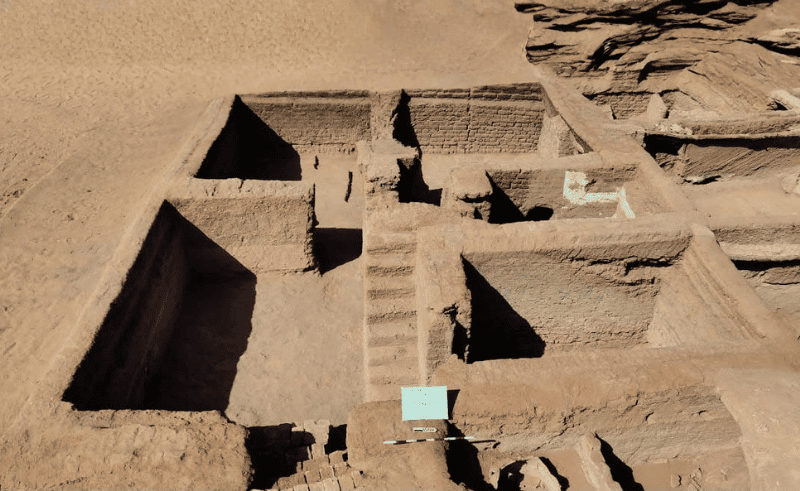
An Egyptian archaeological mission has uncovered a Byzantine-era city at Ain al-Sabeel in Dakhla Oasis, revealing a well-preserved settlement that offers new insight into life in Egypt during the 4th century CE.
Built primarily from mudbrick, the city includes a basilica church, fortified walls, watchtowers, and residential buildings fitted with vaulted ceilings, kitchens and bread ovens, pointing to a well-organised community in the Western Desert.
Archaeologists also identified several notable buildings, including the house of 'Tisos', a church deacon who lived during the late 4th century, and the house of 'Tabibos', which researchers believe served as a domestic church before the construction of the basilica.
Among the artefacts recovered were pottery vessels, oil and perfume containers, lamps and grinding tools, alongside nearly 200 ostraca inscribed in Coptic and Greek. The inscriptions document financial transactions, correspondence and aspects of everyday life within the settlement.
The excavation also yielded bronze coins bearing the images of Byzantine emperors and Christian symbols, as well as gold coins dating to the reign of Emperor Constantius II between 337 and 361 CE.
According to the Supreme Council of Antiquities, the discovery provides valuable evidence of the social and economic life of Dakhla Oasis during the Byzantine period and contributes to a broader understanding of settlement patterns in Egypt's Western Desert.