






Far Away and Well Adjusted: Kid Fourteen on Finding His Anchor in Pop
The Lebanese artist opens up about dismantling a decade of noise-punk armour to embrace pop on his latest album, Far Away and Well Adjusted.

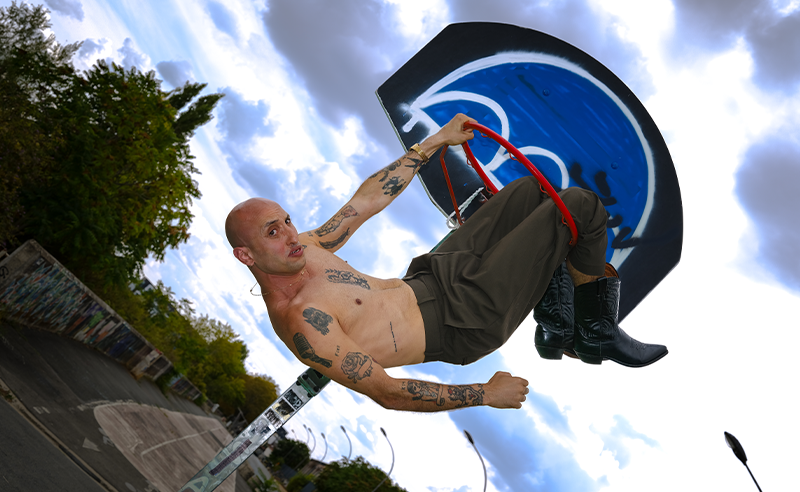
In Beirut’s underground music scene of the early 2010s, Khodor Ellaik channelled the raw, unruly energy of a city’s underground into something entirely his own. Having fronted noise and punk outfits like Beirut Scum Society and Friendly Faces, his performances were intense, cathartic exorcisms, swallowed in waves of distortion, pounding drum machines and post-punk friction. Under his solo moniker, Kid Fourteen, that sonic volatility evolved into something darker and harder to pin down. Across a decade of releases, he has carved out a singular niche in the Arab underground, with a sound that brings together dark electronic textures, haunting synth-pop, industrial grit and exploratory saxophone.
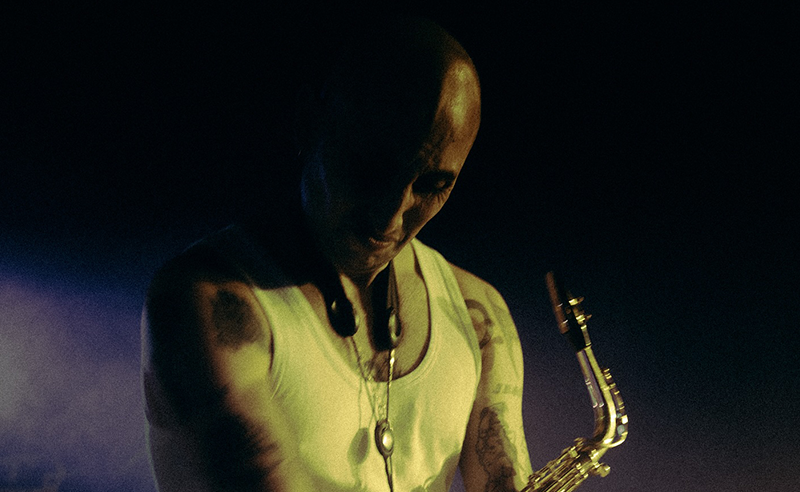
"In a band, the guitar player is the guitar player and the drummer is the drummer, but as a solo artist... you are the star of the show. I felt that was so demanding," Ellaik admits of that transition period. "I’d be on stage trying to sing these songs thinking, 'Who is that? I’m not that person.' I wished I could hide behind my saxophone and play so no one would see me. The saxophone is the only instrument I truly relate to. I feel the saxophone sounds like the sadness in my heart. That’s what my grief sounds like."
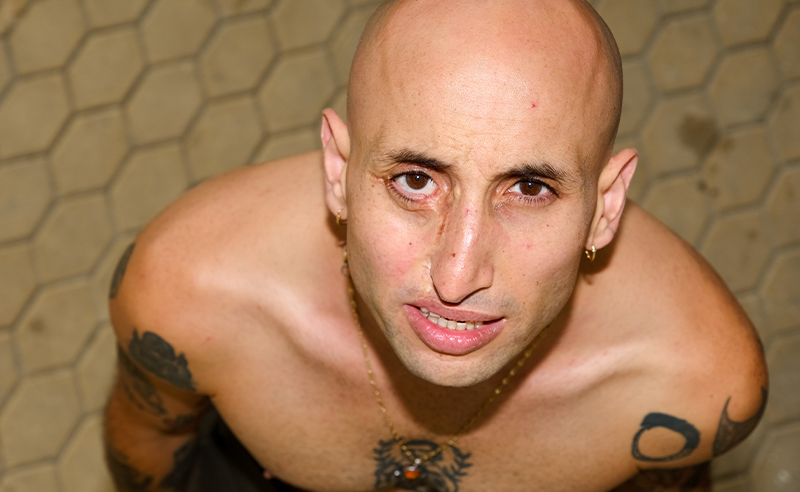
But as Kid Fourteen’s artistic sensibility evolved across six studio albums, those familiar modes of expression began to feel less like his own. “I stopped relating to my older self, and it was like a growth period where I needed to go through labour and trouble either to accept it or get rid of it,” he says.
Having spent years pushing sound to the most obscure motifs and its atmospheric limits - culminating in expansive, twilight ambient works in 2022 and 2024 - Khodor realised that the ultimate frontier for his musical identity wasn’t more distortion or complex arrangements. It was complete, unvarnished directness.
The turning point came during a frank conversation with his team regarding his standing as an artist: “My manager was telling me that I am not accessible enough as an artist because of the kind of music I make.” He recalls with a wry laugh. “So I was like, here’s pop.”
What started almost as a challenge sparked a profound shift in how Khodor viewed his craft. “I never sit down and say, 'I want to make a pop record' or 'I want to make an experimental record.' I just do, and this is what comes out. But there is always a plan about what I want to say," he explains. “If something doesn’t come out naturally, I cannot do it. That’s why it took me 10 years to write this album [Far Away and Well Adjusted] because only now am I convinced that I want to write a pop record.”
Released earlier this month, Far Away and Well Adjusted redefines Kid Fourteen’s stature as an artist. He has completely dismantled his long-held creative habits. Abandoning his usual practice of stepping up to a studio microphone to improvise lyrics on the fly, he sat down with pen and paper for the first time in his life. For three weeks, he forced himself into a relentless routine: writing ten to twelve hours a day, stripping away poetic embellishments until only the raw truth remained.
"I wanted to get rid of my judgmental self, that voice saying, 'What you’re doing is too fake, too unoriginal, or too simple,” he says. "The first time I started writing this way, it was so painful," Ellaik reflects. "I was dying. I was trying to say what I really wanted to say; I wasn’t trying to be poetic. I didn’t care. The painful part was trying to say what I really wanted to say; that’s facing your demons. It’s harder to just say things straight up - because most of the time, they’re covered in poetry and other influences and genre.”
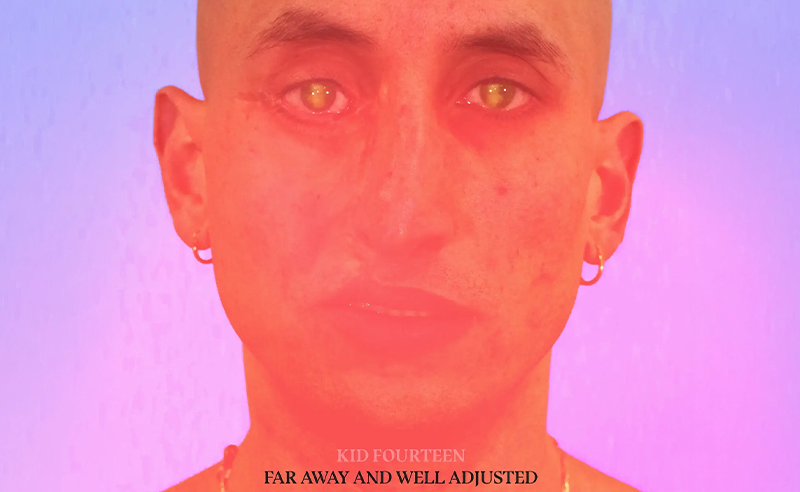
This new commitment to vulnerability and clarity manifests across the sonic landscape of Far Away and Well Adjusted.
Across the eleven tracks of the LP, Kid Fourteen embraces a rather utterly simple approach to lyricism; more direct, and confrontational, and less interested in abstraction, something that is very new for someone who built a career out of complex, experimental sound.
The album’s thesis comes alive in 'Love Reformer', where an intricate, funk-infused bassline and syncopated electronic grooves carry a striking lyrical conceit: framing the demands of love through legal and judicial metaphors that are rather simple and direct rather than abstracted. Ellaik opens the track intoning, "The best love reformers hold you on trial / You are held in contempt guilty as charged," before confronting the cost of romantic devotion ("Look, look what you've done to love... Love waits for no man"). Musically, the piece balances groovy, danceable pop rhythms with a persistent underlying buzz, using dramatic melodic swells and vocal layering to evoke the feeling of standing exposed before a judge.
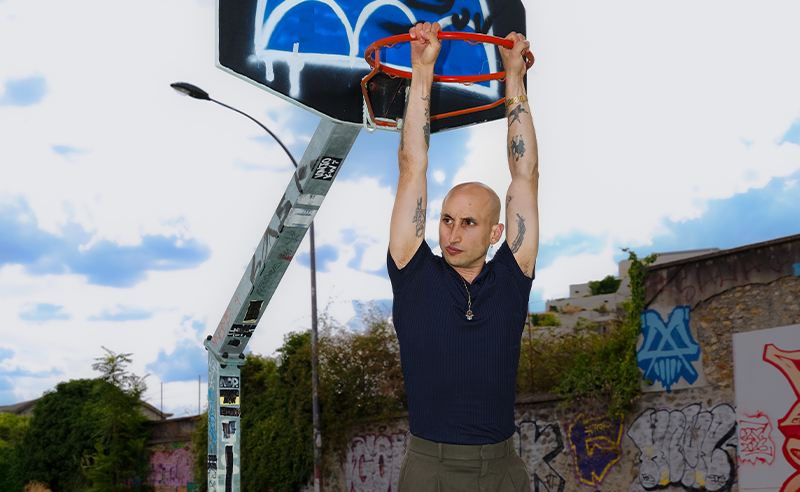
‘Future Beats’, however, is a buoyant synth-pop anthem driven by infectious rhythmic keys and soaring chord progressions. Beneath its vibrant, danceable surface lies a meditation on accountability and shared fate. The track showcases Ellaik’s ability to deliver high-energy pop hooks while grounding the narrative in deeply felt emotion, bridging romantic devotion and existential resolve.
In contrast, 'Secret Hells', mixed by Jad Atoui, anchors the album’s darker, internal friction. Here, atmospheric production and subtle industrial undertones evoke the heavy weight of lingering past trauma. The song captures the ongoing struggle of relationship repair, building a dense sonic landscape where internal guilt and external reality collide before resolving into moments of quiet, haunting clarity.
Ellaik’s refusal to hide behind aesthetic tropes extends to how he navigates his identity as an artist now living in the diaspora. Having relocated from Beirut to Paris, he found himself confronting two distinct cultural pressures. From one side, there is the assumption that leaving a troubled home country automatically means moving on.
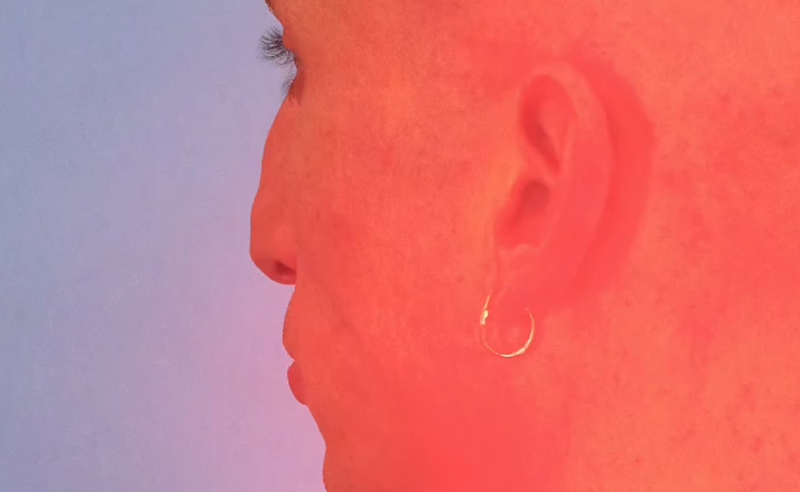
"People think that you just immigrated to live in Paris and you’re okay," Ellaik notes, pointing out how social media flattens complex human realities. "They can judge maybe from Instagram or something like that, and they stop even letting you express yourself because they think, Oh, well, you left us here, and you’re privileged. You don’t get to talk about our experiences or trauma."
On the other side, Western cultural institutions often try to pigeonhole artists from the SWANA (Southwest Asia and North Africa) region, expecting them to deliver explicitly political trauma narratives rather than allowing them artistic autonomy. Ellaik fiercely rejects being reduced to a geopolitical archetype.
The move towards pop also puts Ellaik at odds with the expectations placed on Arab artists in the West, where personal stories are often filtered through the politics of where they come from. For an album rooted in intimacy, romantic relationships and personal trauma, that leaves little room for the ordinary complexities he is trying to write about.
“They want me to talk about war, and it’s a very bad stereotype,” he says. “Someone in New York can do an abstract album about a mouse or something, but I'm not allowed to do that because it is not relevant.”
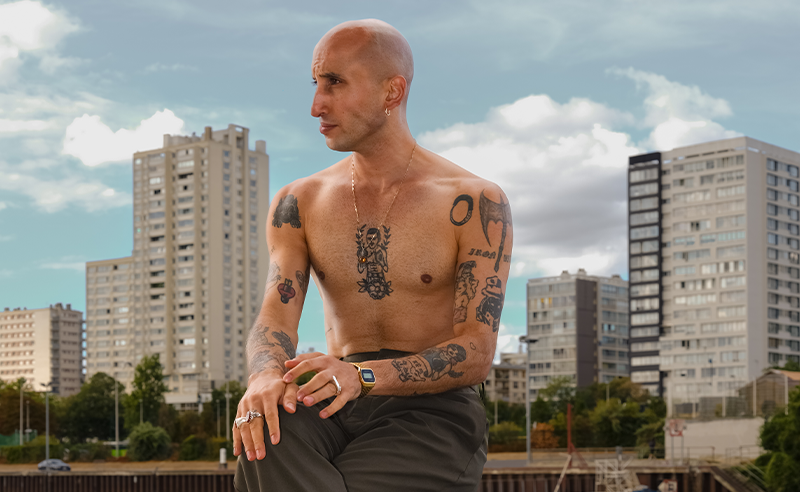
He has little patience for the expectation that his music should double as an introduction to Lebanon. “It’s not my job to educate you through songs. If you want to know, read the news.”
By asserting his right to write about intimacy, marriage, personal regret, and recovery within a pop format, Ellaik isn't pivoting away from his experimental roots; he is maturing them. “This album is about intimacy. But also about dealing with a lot of trauma from my past, yet there is this arc of hope in it. You’re experiencing the healing process."
With this project, Ellaik has completely untethered himself from external expectations or self-imposed constraints. “With this album, I finally decided: F**k it, I don’t care if it is too soft. I am not trying to make something revolutionary, just trying to express my emotions. I want to do exactly how I feel."
Ultimately, Kid Fourteen’s legacy has always been about radical honesty, regardless of the sonic medium. Whether blasting feedback through a Beirut basement speaker or crafting bright synth-pop hooks in a Paris studio, he remains an artist who demands total control over his own narrative. In stepping out from behind the noise and deliberately pursuing pop irrespective of the general negative consensus surrounding it, he proves that simplicity is not a compromise or a lack of sophistication, but an earned mastery, the shortest, bravest path toward genuine feeling.
- Previous Article Andiamo Brings Its Italian Trattoria to Downtown Cairo
- Next Article BY Venture Partners Closes $60 Million Fund III for AI Startups
Related Articles

Trending This Week
-
 Oct 24, 2026
-
 Oct 28, 2026
-

-