





From Scene to Industry: Inside SONY Publishing to Rewire MENA Music
In a deep dive with SONY Music Publishing MENA team, SceneNoise explores publishing as the missing piece, sync as a new revenue engine, and the admin work wiring the ecosystem together.


For decades, Egyptian pop was a regional powerhouse. The machinery around it looked like a classic record business: CDs and cassettes flying off shelves, big label advances, satellite TV breaking hits. However, that bubble burst with a bustling bootleg cassettes market and online piracy in the 2000s and never really reinflated with the shift to streaming. The cash that once moved through physical sales and tightly managed catalogues leaked out into MP3 blogs, Bluetooth swaps, and unmonetised YouTube uploads.
In the twenty-odd years since, everyone has been improvising on the fly. Artists and managers have stitched together careers from live shows, brand deals, and digital drops; producers have bounced between advertising work and passion projects. As labels navigate how to evolve older deal structures for an era where a TikTok clip can at times matter more than an album.
There is still plenty of music, but the old architecture has cracked, and a new one is only half-built. To understand what’s needed, and what a new, more formal music industry ecosystem might look like, you have to start with how money moves through music locally, and – most importantly – how often it doesn’t.
Three Revenue Streams, One Leaky System
Strip it down and the money in music comes from three main places: live shows, recordings, and publishing. Everything else – brand campaigns and content deals – just orbit around those three.
Live is everything that happens on stage: tickets sold, festival slots, club shows, private gigs, and the fees artists earn from physically showing up and performing. Recordings are the finished tracks themselves – the “masters” – and the money they make from streams, downloads, YouTube, and licensing those recordings. Publishing is the management, licensing and monetization of the musical composition – meaning the melody and lyrics – not the final recording. Music publishers ensure that songwriters are properly credited, their works protected and that there is correct compensation whenever their songs are used, be that on streaming platforms, radio and live performances, synchronisation etc.
Egypt’s Musical Paradox
The result is a strange imbalance.
Songs circulate widely, scenes proliferate, and local sounds travel across the region and beyond, but the systems that are supposed to turn that cultural output into long-term, fairly distributed income – clear rights ownership, functioning collection, robust venue networks, professionalised studios – are incomplete or lacking. It’s within this context, rather than in a vacuum, that any conversation about music publishing in Egypt, and the role of regional players within it, has to begin.
Publishing, the Missing Piece
This is the landscape Sony Music Publishing MENA walks into: a region full of songs, but with little publishing muscle on the ground until two years ago, when the company opened its hub in Dubai.
Since then, the local SMP team have begun signing writers, developing catalogues, and slowly building a presence in Egypt and across the wider region. The question – for them, and for everyone working in and around the scene – is what a global publisher can realistically do in a market where so much of the music economy is informal, and where the pipes of rights and royalties in the region are still being laid or reworked from the original radio and TV era.
A Five-Year Bet, Not a Quick Grab
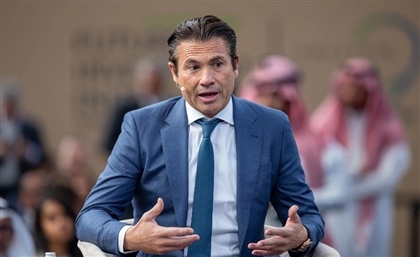
For now, they’re thinking in years, not quarters. As Dounia Chaaban, Managing Director of SMP Mena puts it, this is a five-year play: “First introduction and education, then relationship building, then trust, then deals, then a properly established business.” The logic is basic but crucial in a region where publishing has been either misunderstood or completely missing.
For their team, the first phase is about both signing and administering catalogues, with a priority on educating songwriters - explaining contracts, rights splits, and how money moves. A few weeks ago, they held their first Publishing 101 Workshop in Cairo, bringing local songwriters and producers into the same room as the MENA publishing team; led by the admin, sync and A&R departments, it was a practical walk-through of rights, collection and licensing rather than a theoretical panel.
This education-first posture is also a way of acknowledging the damage done. Chaaban talks openly about “resistance” and how the region’s lack of knowledge “has been taken advantage of in way too many ways.” If you’ve heard stories about rights being signed away for pennies, you’re not going to rush into another opaque agreement with a multinational. Building trust, in her framing, is slow work: lots of meetings, lots of explaining, lots of saying no to quick wins that would confirm people’s suspicions.
The subtext is clear – publishing only works if it speaks the local language. For Chaaban, localisation isn’t a slogan; it’s the whole job. “If I’m going to go to Egypt,” she says, “I’m going to have to adapt to Egypt, not the opposite.” That means understanding how a mahraganat hit moves through weddings and YouTube, how a Khaleeji ballad is used in Gulf TV, how North African writers think about splits compared to Levant rappers. The ambition is twofold: to connect those scenes to each other regionally and also expand to the global system.
At the same time, she’s trying to nudge everyone toward “international standards” – basic things like split sheets, clear ownership and proper registrations. Crucially, she keeps circling back to alignment of incentives: the company that truly benefits from a songwriter’s growth is the publisher. If publishing does its job in the region, the upside is simple – local writers actually getting paid, consistently, for songs that already move the region.
Selling the Soundtrack: Sync as Proof of Concept
If Chaaban’s focus is leading their strategy, Nader Bou Nader, Sync Manager, SMP MENA, is on sync deals that can translate into concrete revenue. Any time a song is paired with a visual – an ad, film, series, game, or branded social campaign – it is a synchronisation use, and it should generate fees on both the master and publishing sides. The widespread notion that “under ten seconds is free” is a myth, Nader warns. If a brand or business is using music, even for a second, it should be licensed.
In a region where many high-profile artists were unaware that they could earn from streaming, radio or TV, sync becomes a tangible way to show why publishing matters. It turns ubiquitous usage into a traceable, billable asset rather than free ambience.
From there, the conversation widens to the new regional markets artists can tap into. Saudi Arabia and the UAE are rapidly expanding their screen, advertising and live sectors, and with that growth comes a steady rise in briefs. While brands still tend to default to international repertoire, SMP Mena’s sync team is actively building and pitching Arabic catalogue into that space. “We’re in constant contact with production companies and agencies, sending newsletters: new writers, new genres, new music from across sixty territories. When a brief comes in, we use our internal pitch system and curate around the scene or product – that’s my favourite part of the job,” shares Nader.
In creating these catalogues he’s noticed that pop continues to dominate, but hip-hop, indie and Arabic electronics are gaining ground, and so-called “third-culture” tracks that blend Arabic and international elements are increasingly attractive. For Gulf brands particularly, that have a growing cross-cultural population, one multi-lingual song can speak to Emiratis, Egyptians, Lebanese and expats all at the same time.
On paper, it is an ideal moment for artists from the region to grow, but in practice, the ability to capture that value depends on infrastructure.
The MENA map for collection is fragmented. The UAE has only recently launched a rights society, parts of the GCC still operate without one, and elsewhere the job is split between state CMAs, private entities and broadcasters that don’t always talk to each other. Digital royalties are typically collected in some form, but income from live performance and background music in venues or hospitality often has no clear collection pathway and therefore never reaches writers. Nader is careful to frame the publisher not as a replacement for societies but as a partner that connects them – standardising metadata, registering works correctly, and linking writers to the appropriate organisations across territories.
A&R in a Market Still Learning Publishing
If strategy and sync are about where the money flows, A&R is where the catalogue actually begins. At SMP MENA, A&R Manager Babel Sadek works in classic upstream territory – scouting writers and producers, bringing their catalogues in, and working hard to develop them. In her version of the job, publishing isn’t about marketing finished releases so much as ‘creating those opportunities and projects and cultivating that creative space’ long before a song hits DSPs or radio.
Alongside educating artists about the publishing ecosystem, Sadek leads a more hands-on form of ecosystem work: taking people out of their usual bubbles and putting them in rooms they would never normally share. Sometimes it is as simple as connecting two local writers who had never thought to collaborate; other times it means connecting international writers and producers with regional talent in structured camps.
In Cairo, that thinking recently took shape in SMP MENA’s first writing camp: a three-day workshop across two studios, with two sessions a day in each of the four rooms, and constantly shifting combinations of artists, writers and producers. Sadek started by reaching out to international offices in Spain, Poland, Nigeria, and elsewhere to identify writers who would make sense sonically and culturally, then mixed them with local signees and potential signees in small, focused groups.
The scale was deliberately tight-knit – it is the first camp of its kind from a MENA publishing office, in a region where ten-day US-style camps are still rare and studio infrastructure has its limits. The goal is twofold: to normalise a collaborative, camp-based studio culture that can uplift the entire scene, and to generate concrete outcomes in the form of demos that can be pitched on to artists, labels and sync clients. In a context where some writers are more used to only trading beats and lyrics over WhatsApp, these publishing-led sessions model a more intentional, repeatable way of making records together.
From her vantage point, the missing pieces are not only creative but structural. At the foundation sits IP law: clear regulations, standardised enough to give creators confidence, actually implemented and enforced across territories. On top of that, Sadek stresses the mindset – of writers, artists and teams – as a critical lever. The goal is not to dilute the region’s identity but almost the opposite: to insist that the “Arabic sound is special for a reason” and should remain central. In practice, A&R becomes a kind of translation layer between very local creative habits and a global publishing framework that expects documentation, splits and repeatable processes.
As with Dounia and Nader, her definition of success is focused in the short term and infrastructural in the long term: more creative collaboration opportunities, more functioning societies on the ground – and, as she puts it, the day when writers in the region can explain to her what she is currently explaining to them. In other words, A&R in this context is not just about finding the next hit writer; it is about seeding a creative environment where Arabic music can remain fully itself while operating at the standards required to participate in – and profit from – the global publishing ecosystem.
Admin Piecing it All Together
On paper, admin is the driest part of the story; in reality, it’s the bit that ensures songwriters get paid for their work. At SMP MENA, that job lands on Ghali Bouzouba, who oversees the administration side: managing relationships with collection societies, handling warranties and copyrights, tracking and registering works. It is, as he notes, “way less sexy,” but it effectively functions as “the backbone of the industry, not only on the publishing side, but on the music industry itself.”
The first challenge, in his view, is not just the patchwork of societies, but the state of the metadata arriving at them. Across Egypt and the wider region, the majority of writers are independent, often self-releasing and might not have heard of ISCR, ISWC, or UPC codes.These identifiers are what allow societies and DSPs to attribute royalties correctly. When songs are registered by copy-pasting a YouTube title, or left unregistered altogether, income is not just delayed; it can simply never be matched to the right work.
On the digital side, the basic collection models are relatively standardised, but tracking Arabic-language repertoire introduces its own complications: titles in Arabic script can be difficult for international systems to read and match. Part of SMP MENA’s admin work, Bouzoubaa explains, is to transliterate and translate titles, attach original and Latin-script versions, and standardise entries so that societies and DSPs worldwide track payments accurately. The immediate goal is simple: clean registrations, in multiple forms where needed, before a song is even released.
For individual writers, Bouzoubaa stresses, the point is not to turn them into quasi-lawyers, but to give them enough understanding to have a real conversation with their teams – and then step back while those teams handle the heavy lifting. In principle, the publisher’s role is to surround them with experts who handle administration, tracking and revenue audits “with the same efforts that you gave to your songs,” so that the back end matches the care taken in the studio.
Taken together, Bouzoubaa’s view of administration reframes it from a dry necessity to the precondition for everything else in the piece: A&R only makes sense if the resulting works are properly documented; sync only generates meaningful income if those uses can be tracked and attributed; education only sticks if the systems writers plug into are coherent. In a market where infrastructure is still being assembled, good admin is not the footnote to the story, it’s the part that decides whether anything upstream actually pays out.
Building an Ecosystem, Not a Hero Brand
For Egypt – and the wider region – the implications are less about one company “fixing” the system than about a shift in how writers understand their own leverage. Mohamed Saeed, a singer, songwriter and producer who came up through mahraganat and now runs his own label, admits he “didn’t know publishing was here in the MENA region before signing with SMP MENA”. He comes back to the same point when asked what the scene needs most: “Knowledge… we all have to know what our rights are.”
The work Sony Music Publishing MENA is doing sits inside that broader shift from intuition to information: from a scene that runs on word-of-mouth to an industry where writers can read a statement, question a contract, and trace where their songs are earning.
Crucially, Chaaban is explicit that this only works if others join in. “Competition is welcome,” she says. “It proves the market is growing, and it elevates the industry as a whole, which ultimately serves our writers.” In that sense, SMP’s role in Egypt is not to be the sole architect of a new publishing order, but to be one of several pressure points pushing the region toward something more durable: an ecosystem where Arabic music can circulate as freely as it already does – and finally be paid for on the same terms.
- Previous Article Mo Salah’s Record-Breaking Liverpool Legacy in Numbers
- Next Article ‘Hekayet Narges’ Blurs Criminal & Victim