






This Club Wants You to Stop Doomscrolling to Stroll in Old Dubai
Every Sunday until the heat finally wins, the Anti‑Doomscroll Stroll Club hands strangers a paper map inviting them to stroll, making awkward small talk that turns into friendship.
Me and you both are no strangers to the doom-scroll. First thing in the morning and last thing before you sleep. You are most definitely reading this on a screen, and perhaps you even have several open. Perhaps your thumb has already twitched towards another tab, notification, another small hit of something that feels like information but acts like sedatives. Phones are meticulously designed to make us guilty for looking and yet so anxious for looking away.
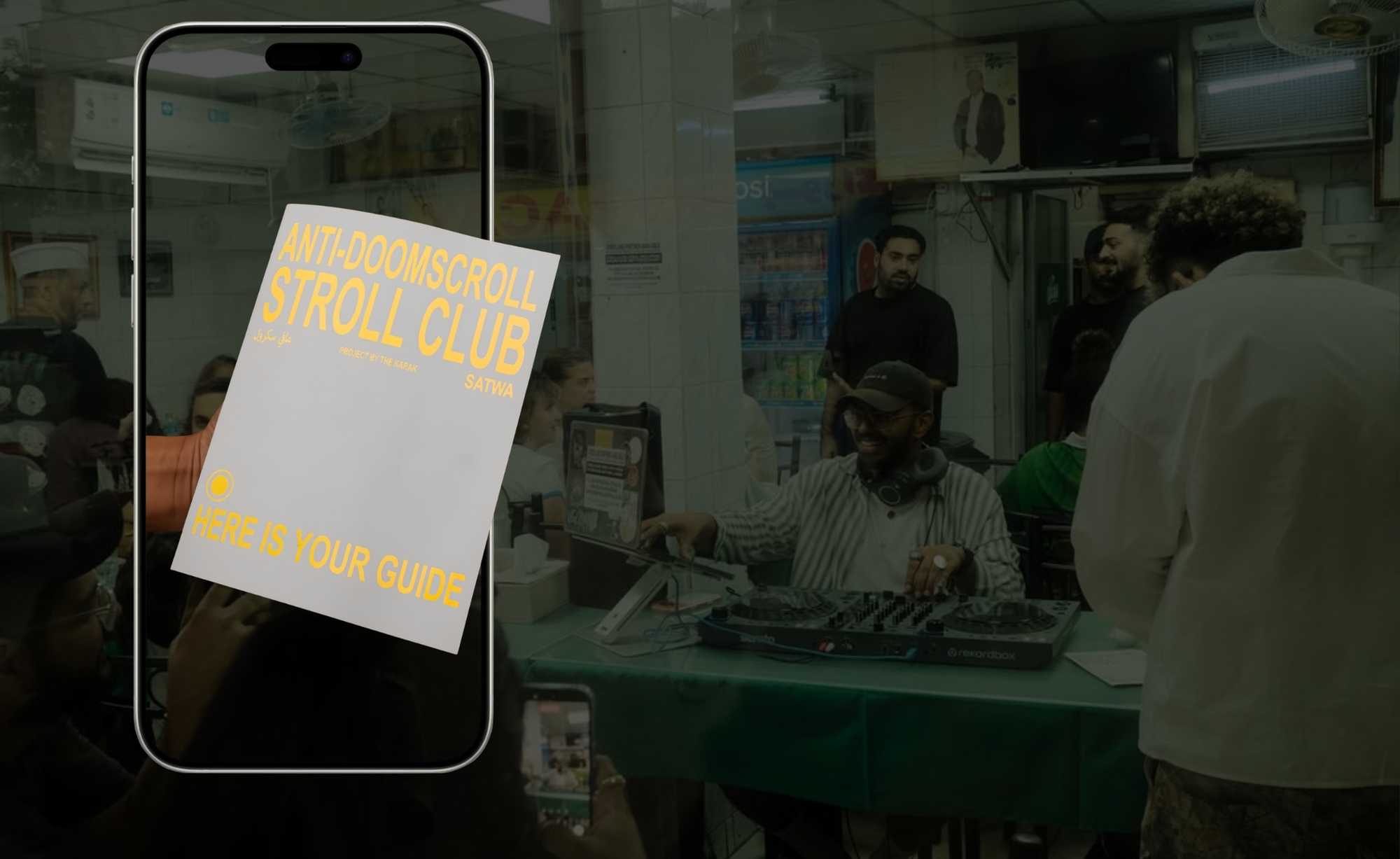
The Anti-doomscroll Stroll Club is the rebuttal: a paper map, a meeting point in old Dubai, and a simple invitation to walk. Strangers gather every Sunday to thread past neighbourhood bakeries and coffee shops without once checking their phones, and somewhere along the way, they might accidentally make a friend. "Essentially, this is a way of exploring older parts of Dubai," says founder Faizal Razak. "Starting with Satwa. This is the place where I was born and raised. I lived here my entire life, and I still live here right now. This is where I get all my inspiration from."
Faizal Razak designs retail and commercial spaces by day. He also runs Karak, the platform he started six years ago during the COVID-19 lockdown, when unpaid leave left him with time and a restlessness he didn't know what to do with. "My ex-business partner and I thought of trying to do something to showcase people that grew up like us," he says. The idea was to turn people's heads from looking outwards to looking inwards, to appreciate the talent already in Dubai through podcasts, hosting events where artists get paid actual money not only exposure. After spending half a decade building a machine for connection, the Anti‑Doomscroll Stroll Club – the latest and perhaps strangest addition to the Karak family – is its natural continuation.
 It all started when Ramadan put a pause to Faizal’s events work. He spent five days inside his Dubai flat, curtains drawn, the outside world reduced to a rectangle of light. He collapsed into the soft geometry of his sofa. Instagram fed him a war, then a recipe, then a friend's engagement, then another war. "We were getting a lot of work, and then everything stopped," he tells SceneNowUAE. "I started seeing myself go downhill. I wasn't going out, so the anxiety and fear just sat in my head.”
He needed an antidote, which was as simple as going out for a walk. “I've always loved walking. But in Dubai, you can't really walk for half the year – it's too hot. As I started walking, I noticed my mental health getting better. I found coffee shops I didn't know existed. I realised Satwa has a lot of history. And when I spoke to friends, I realised a lot of people were going through the same thing. So, I thought: let me just gather a group of friends, and let's go for walks."
He put up a story. A few lines, no fuss. People showed interest, so he created a Telegram channel expecting 10 friends, maybe 12. "A small little club," he says. A hundred and fifty people joined the Telegram channel within hours, catching him completely off guard.
It all started when Ramadan put a pause to Faizal’s events work. He spent five days inside his Dubai flat, curtains drawn, the outside world reduced to a rectangle of light. He collapsed into the soft geometry of his sofa. Instagram fed him a war, then a recipe, then a friend's engagement, then another war. "We were getting a lot of work, and then everything stopped," he tells SceneNowUAE. "I started seeing myself go downhill. I wasn't going out, so the anxiety and fear just sat in my head.”
He needed an antidote, which was as simple as going out for a walk. “I've always loved walking. But in Dubai, you can't really walk for half the year – it's too hot. As I started walking, I noticed my mental health getting better. I found coffee shops I didn't know existed. I realised Satwa has a lot of history. And when I spoke to friends, I realised a lot of people were going through the same thing. So, I thought: let me just gather a group of friends, and let's go for walks."
He put up a story. A few lines, no fuss. People showed interest, so he created a Telegram channel expecting 10 friends, maybe 12. "A small little club," he says. A hundred and fifty people joined the Telegram channel within hours, catching him completely off guard.
 Faizal had the route and the infrastructure in his head. Karak had spent six years building an RSVP system, a team that knew how to guide a crowd without making it feel like a tour. He set a date, updated the 150 people, and waited to see who would actually leave their sofa. "I guess it's not an event, people are just coming to buy a map."
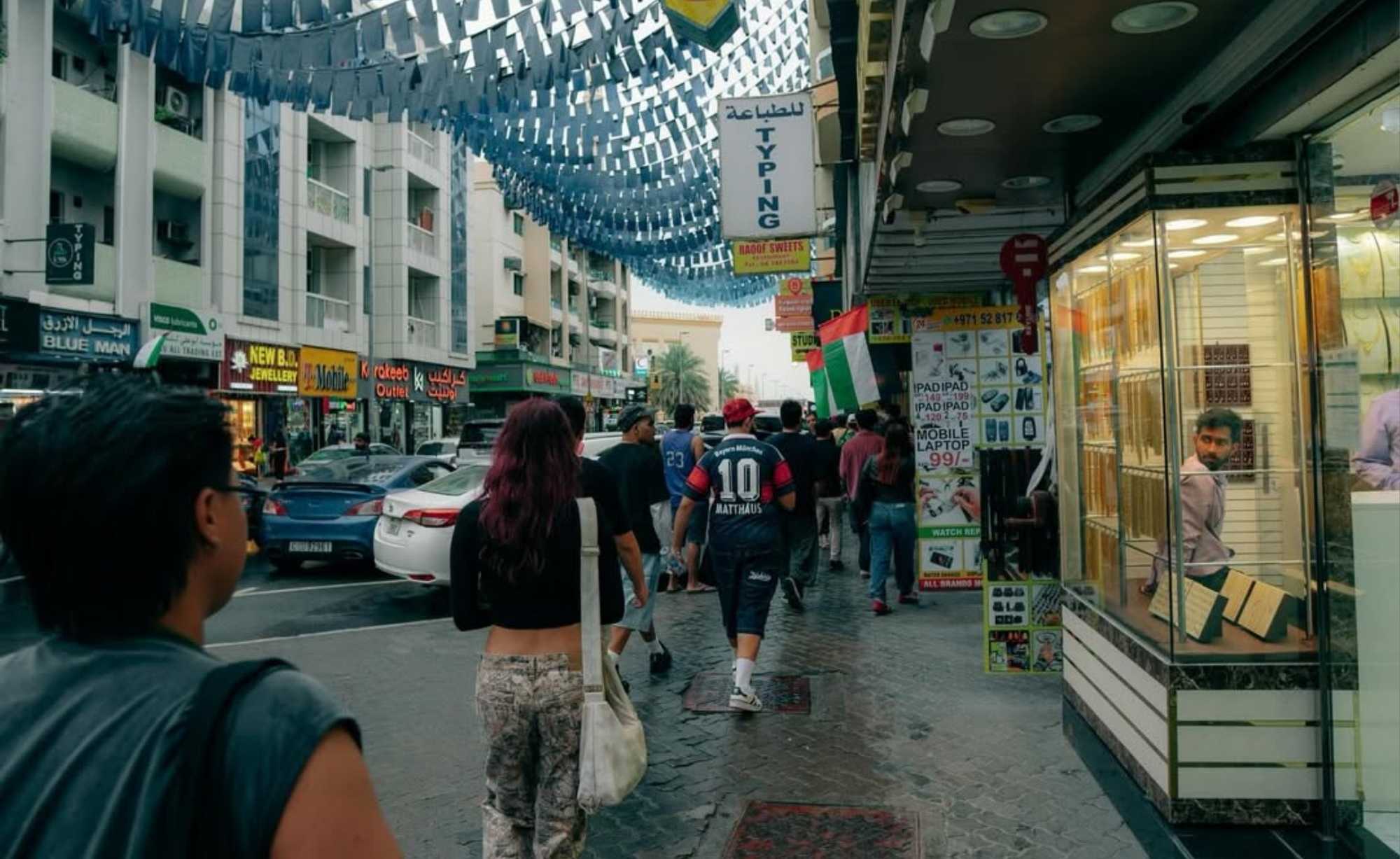
The map is deliberately analogue, deliberately vague. Just paper and ink, a dotted line, and the suggestion that you might want to put your thumb down and actually touch the corner of that wall, that shopfront, that bread shop where the man still knows your face after one visit. Faizal picked his own neighbourhood, Satwa, where he was born and raised, a warren of old villas, auto repair shops, Iranian bakeries that have not updated their signs since the 1980s, and one house shaped like a Japanese castle. The castle was built 40 years ago by a roti seller with no architectural drawings, only a carpenter and a stack of magazine clippings. "You don't see a lot of this in other parts of Dubai, that's the whole point," Faizal says. "Everything is very new. But here? Generations are running these places. Most don't have an online presence. They aren't on Google Maps. Some of them don't accept card payments. For a lot of people in Dubai, that's a foreign experience."
Faizal had the route and the infrastructure in his head. Karak had spent six years building an RSVP system, a team that knew how to guide a crowd without making it feel like a tour. He set a date, updated the 150 people, and waited to see who would actually leave their sofa. "I guess it's not an event, people are just coming to buy a map."
The map is deliberately analogue, deliberately vague. Just paper and ink, a dotted line, and the suggestion that you might want to put your thumb down and actually touch the corner of that wall, that shopfront, that bread shop where the man still knows your face after one visit. Faizal picked his own neighbourhood, Satwa, where he was born and raised, a warren of old villas, auto repair shops, Iranian bakeries that have not updated their signs since the 1980s, and one house shaped like a Japanese castle. The castle was built 40 years ago by a roti seller with no architectural drawings, only a carpenter and a stack of magazine clippings. "You don't see a lot of this in other parts of Dubai, that's the whole point," Faizal says. "Everything is very new. But here? Generations are running these places. Most don't have an online presence. They aren't on Google Maps. Some of them don't accept card payments. For a lot of people in Dubai, that's a foreign experience."
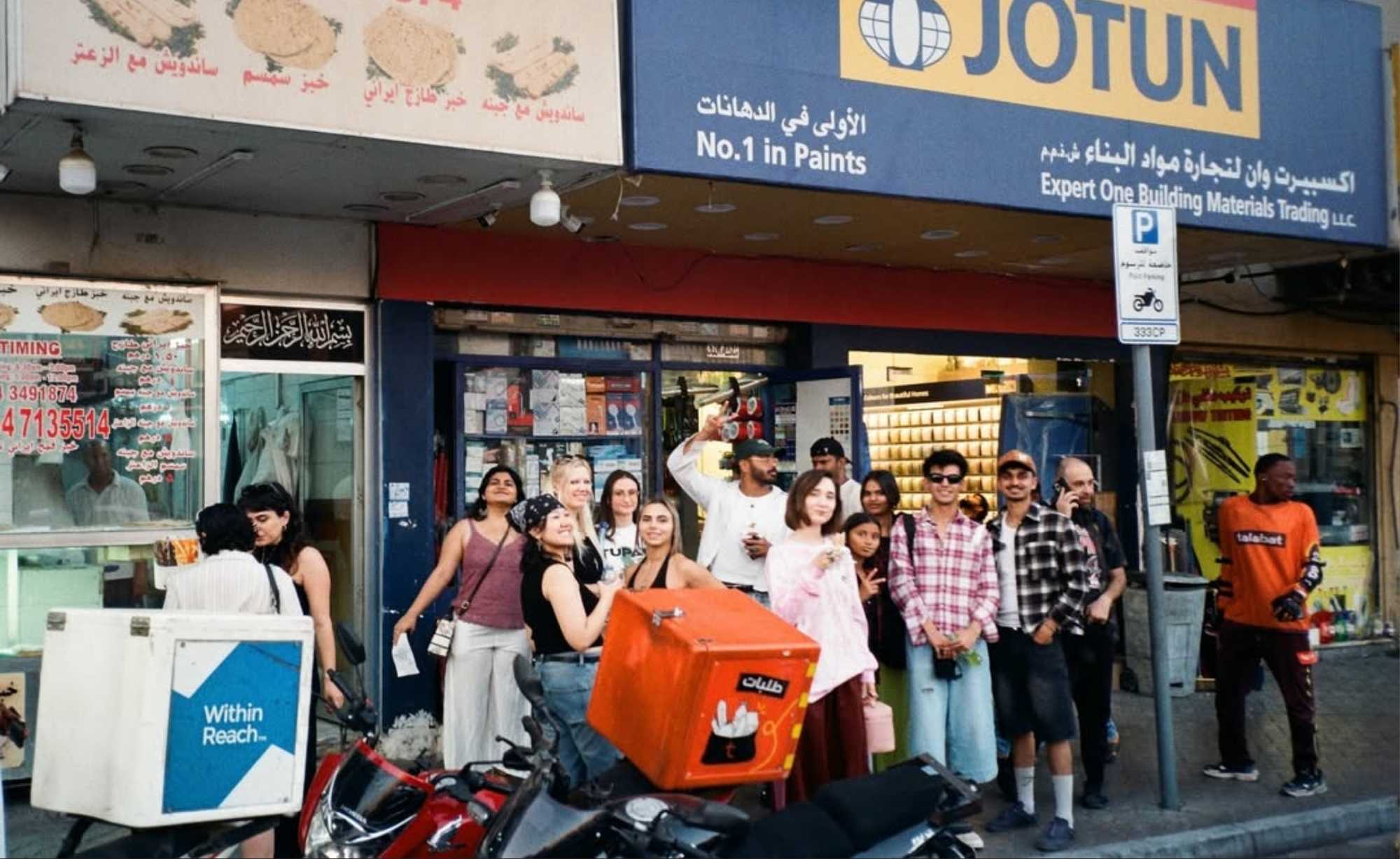 That foreignness is precisely what he wanted to share. The first walk was a trial. He picked a route, told the group chat, and watched 50 people materialise on a Sunday afternoon. "I wanted to see what would go wrong," he admits. Nothing did. They ended at a bar called Boston, nearly 30 years old, and ordered beers. The strangers who had been awkwardly nodding at each other 10 minutes into the walk were now swapping numbers. "When you walk together, it's such a natural icebreaker," Faizal says. "You're kind of stuck together in this random place. By the time we got to the bar, everyone had made at least one new friend."
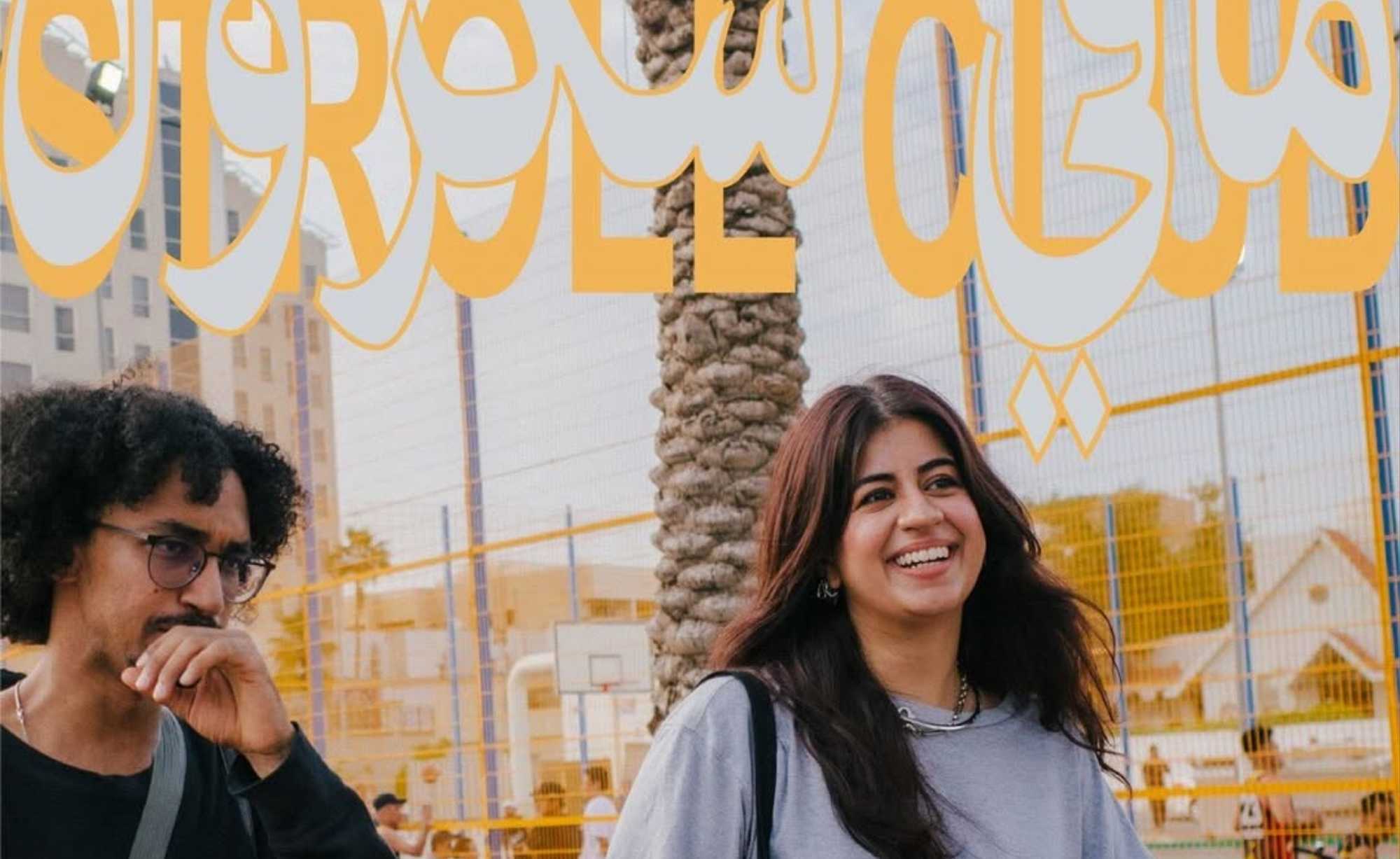
He posted photos. The Anti‑Doomscroll Stroll Club Instagram page had 50 followers. Overnight, it climbed into the thousands. He started recognising faces from his other Karak events – the same people who come alone to parties because they know they'll leave with company. But then came the families, the kids, the ones who had never heard of Karak at all. The second official walk drew 150 people. They gathered outside his brother's barbershop, which became the de facto headquarters – a place to buy the map, to say hello, to turn a transaction into a greeting.
That foreignness is precisely what he wanted to share. The first walk was a trial. He picked a route, told the group chat, and watched 50 people materialise on a Sunday afternoon. "I wanted to see what would go wrong," he admits. Nothing did. They ended at a bar called Boston, nearly 30 years old, and ordered beers. The strangers who had been awkwardly nodding at each other 10 minutes into the walk were now swapping numbers. "When you walk together, it's such a natural icebreaker," Faizal says. "You're kind of stuck together in this random place. By the time we got to the bar, everyone had made at least one new friend."
He posted photos. The Anti‑Doomscroll Stroll Club Instagram page had 50 followers. Overnight, it climbed into the thousands. He started recognising faces from his other Karak events – the same people who come alone to parties because they know they'll leave with company. But then came the families, the kids, the ones who had never heard of Karak at all. The second official walk drew 150 people. They gathered outside his brother's barbershop, which became the de facto headquarters – a place to buy the map, to say hello, to turn a transaction into a greeting.
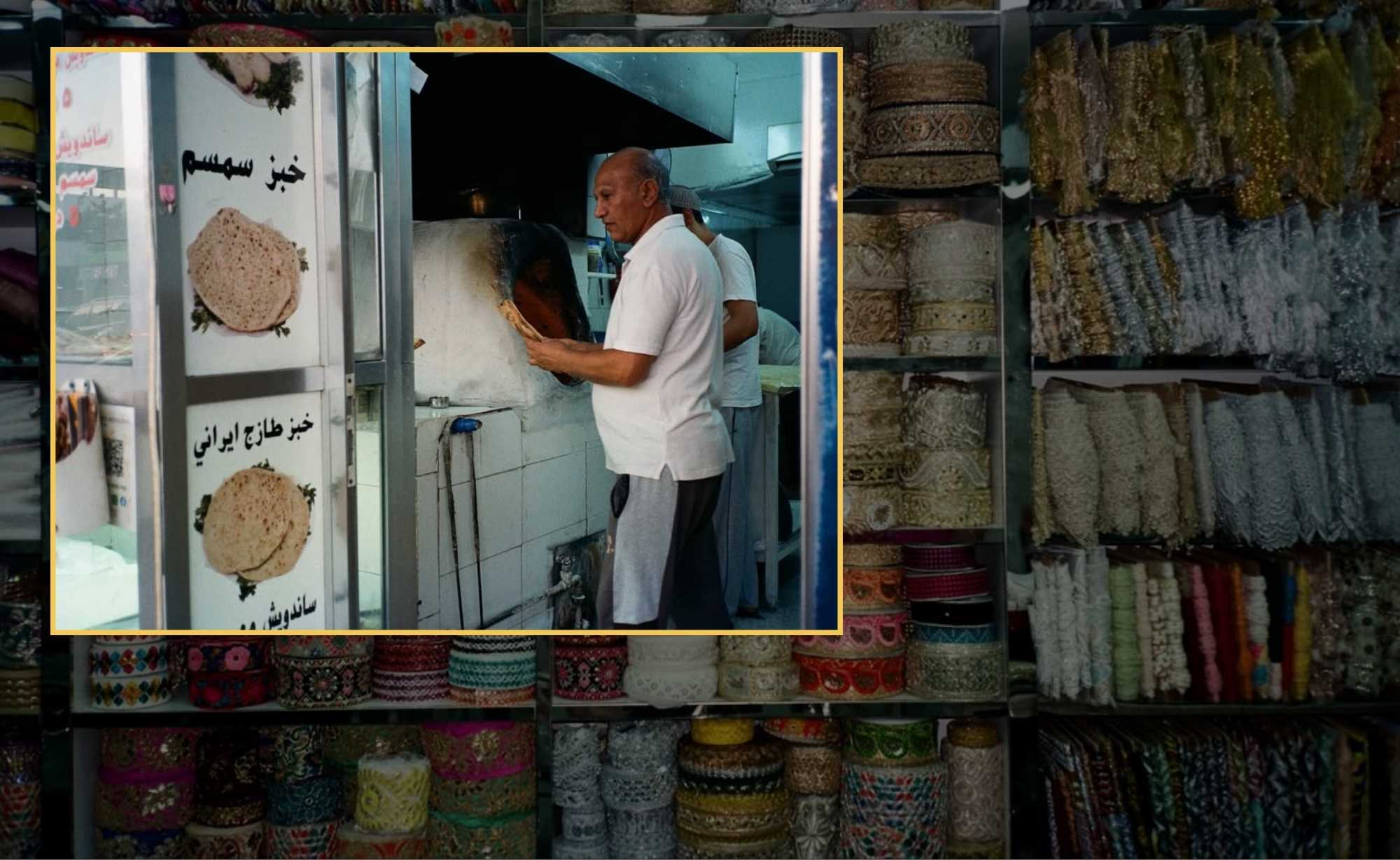 There is a deeper current running underneath this. Faizal calls himself a third‑culture kid – raised in Dubai with Indian heritage, belonging nowhere entirely. The stroll club is a quiet attempt to build belonging at walking pace, street by street, through neighbourhoods old enough to have stories but not shiny enough to make it onto the tourist maps. "The bigger goal is to preserve a lot of the architecture that exists over here that wouldn't be seen as glamorous but is part of the third‑culture fabric. I want to do this in a lot of older neighbourhoods – Karama, Bur Dubai, Al Satwa. There are so many areas that are 40, 50, 60 years old with local faces that are the heart of the city, but people don't know about them."
The pay‑what‑you‑feel model is the same logic he runs through all of Karak's events: low barriers, honest exchange, artists getting paid. "AED 50 or AED 75, one drink included," he says. "That's the only thing you have to do, so we can keep funding this and pay the artists. There's been this culture of brands saying, we'll pay you with exposure. So, for us, it's about building a culture where we say, at least there's some type of exchange." That exchange extends to the stroll. You pay what you can, or what you feel, or nothing at all. The map is the same either way.
The doomscroll waits. It always does. The screen will be there when you get back, bright and hungry. But the walk also waits, every Sunday, until it gets too hot. A paper map. A barber shop. The quiet, ridiculous, entirely serious act of putting one foot in front of the other, surrounded by people who also decided that a rectangle of light is not the same as a life.
There is a deeper current running underneath this. Faizal calls himself a third‑culture kid – raised in Dubai with Indian heritage, belonging nowhere entirely. The stroll club is a quiet attempt to build belonging at walking pace, street by street, through neighbourhoods old enough to have stories but not shiny enough to make it onto the tourist maps. "The bigger goal is to preserve a lot of the architecture that exists over here that wouldn't be seen as glamorous but is part of the third‑culture fabric. I want to do this in a lot of older neighbourhoods – Karama, Bur Dubai, Al Satwa. There are so many areas that are 40, 50, 60 years old with local faces that are the heart of the city, but people don't know about them."
The pay‑what‑you‑feel model is the same logic he runs through all of Karak's events: low barriers, honest exchange, artists getting paid. "AED 50 or AED 75, one drink included," he says. "That's the only thing you have to do, so we can keep funding this and pay the artists. There's been this culture of brands saying, we'll pay you with exposure. So, for us, it's about building a culture where we say, at least there's some type of exchange." That exchange extends to the stroll. You pay what you can, or what you feel, or nothing at all. The map is the same either way.
The doomscroll waits. It always does. The screen will be there when you get back, bright and hungry. But the walk also waits, every Sunday, until it gets too hot. A paper map. A barber shop. The quiet, ridiculous, entirely serious act of putting one foot in front of the other, surrounded by people who also decided that a rectangle of light is not the same as a life.
- Previous Article SceneNoise x Amsterdam Dance Event Present CROSSFADE: Egypt
- Next Article This Hotel in Fez Was Once a 14th-Century Palace
Related Articles


Trending This Week
-

-
 Sep 10, 2026
 -
 Sep 10, 2026
 -