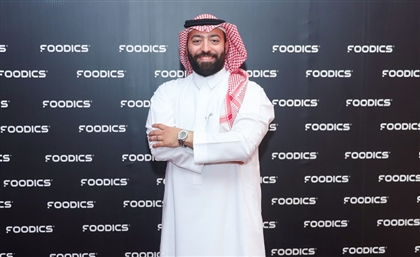






Zaid Kadhim's Supper Club Serves the Food Dubai Actually Eats
Zaid Kadhim won't cook anything without a story behind it. His bakery sold one pastry and produced a mixtape, and his supper club is an argument about whose food counts as Emirati
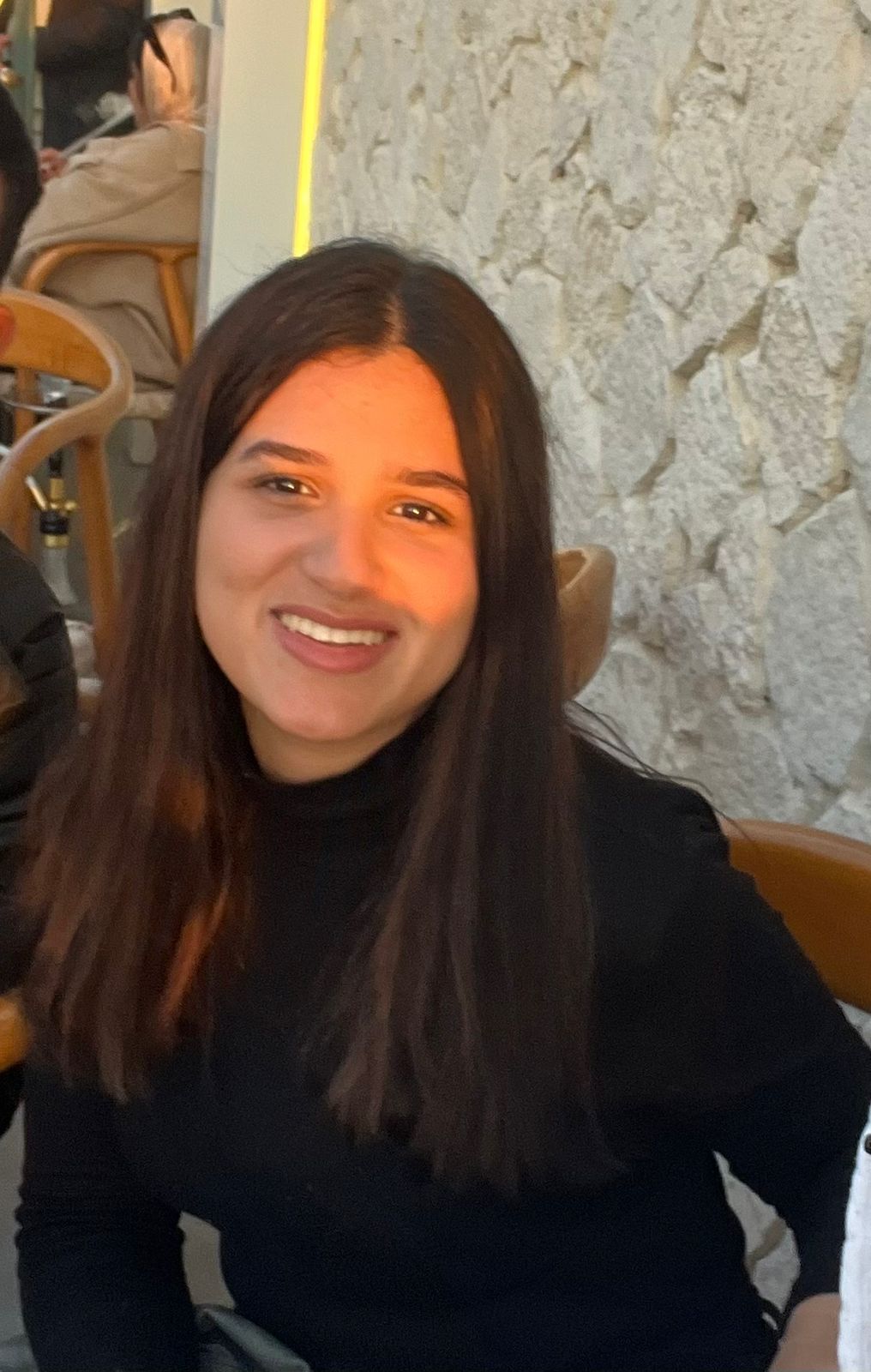
Ask Zaid Kadhim which piece of art best explains his cooking and he doesn't reach for anything he's plated himself. He reaches for a Dalí photograph: langoustines and lobsters piled onto a metal tray so violently that they appear to be climbing back out of it, alive, mid-escape, a female figure crowning the top of the pile.
It comes from Les Dîners de Gala, from the chapter Dalí titled Les cannibalismes de l'automne. Kadhim calls it Langoustine Jenga.
"It's grotesque," he says. "There are dead bodies at the bottom, and I don't know why I find it comforting. I'd never cook anything like it. I just want to shock you as much as it does."
That single answer is a decent map of the man. Kadhim is Iraqi by blood and Dubai by every other measure. He trained as a chef in Barcelona, cooked through a Michelin kitchen in Madrid where the only Spanish he ever properly learned was kitchen Spanish, and still spends most weekends at a potter's wheel making things nobody commissioned.
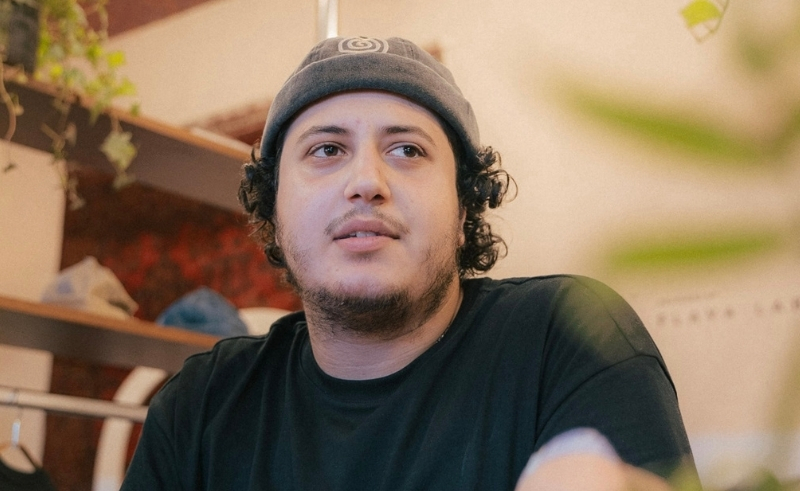 He calls himself both artist and chef, which raises the question of what the word artist covers that cooking doesn't.
"Cooking is art, full stop," he says. "But I also just make art, ceramics, sculpture. I don't put much of it out there. If it's satisfying enough just for me, that's fine."
Ask him to pick a lane and he'll politely decline. He never has.
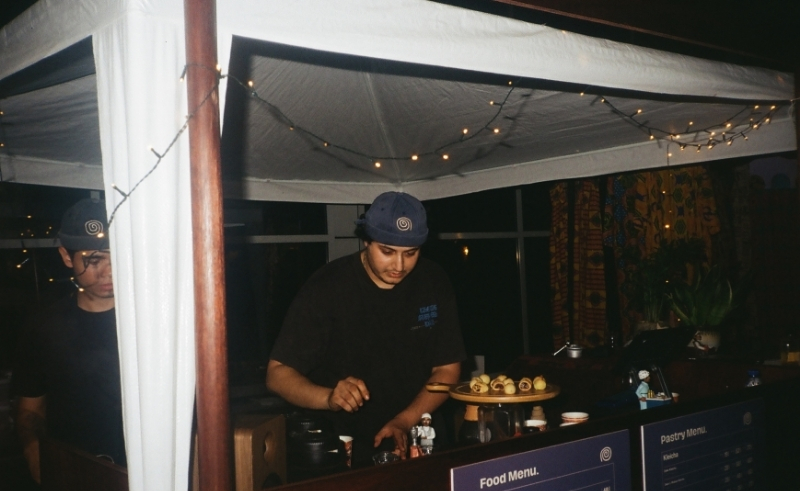
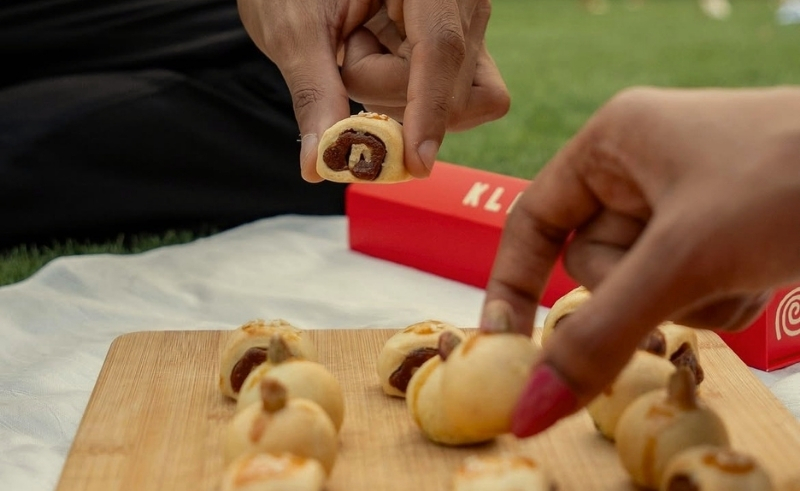
For a couple of years the lane was a bakery. It was called Kleicha, after the Iraqi date pastry it reworked, made softer and more generous than the dry, forgettable version he grew up half-avoiding, in flavours no grandmother sanctioned: pistachio, salted caramel walnut, coconut.
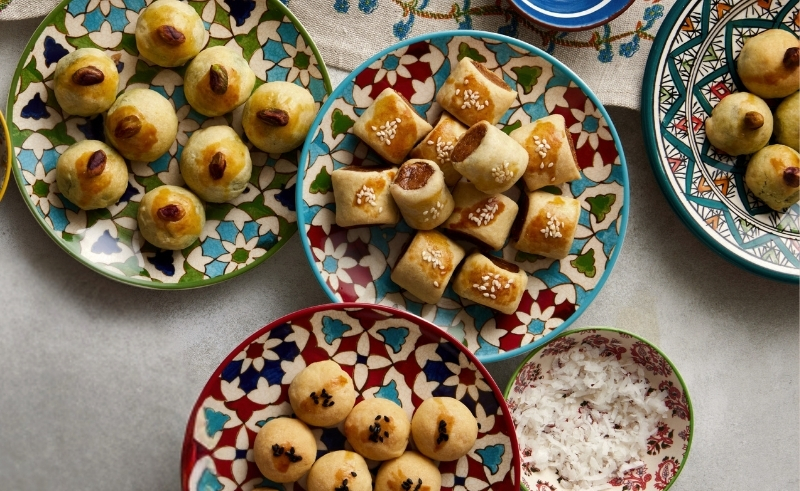 It ran out of a ghost kitchen with no dining room and somehow still produced a residency at Alserkal Avenue, a run of city-wide pop-ups, a clothing line featuring a pair of jeans with forty pockets and another with a hundred, and a mixtape pressed to cassette and CD, built with fifteen-odd producers from around the world in six weeks flat, mostly because a DJ friend thought it would be funny to try.
"There was so much work put into that story that we never even released," Kadhim says. "At the end of the day, it was kind of just a pastry shop selling six flavours of one pastry. But we went crazy with the storytelling."
That's the whole philosophy. The story is the reason the dish exists, and he's suspicious of technique for its own sake, the tasting-menu habit of doing something because a kitchen can.
"You can take a potato and make it five different ways," he says. "Mash, foam, crisp, whatever. But what's the point? Why are you doing that?"
 It's also why he tells people, flatly, not to become chefs. "I'd say, bro, just don't do it. You're on your feet fourteen hours a day, six days a week. It's gonna break your back and you're gonna hate your life at forty."
He watched classmates peel off into what he calls "the influencer route" and understood the appeal without wanting it. "I couldn't imagine being on camera, cracking jokes for a video. I'm there to make the food."
Which is a mildly cruel sentence to have said aloud, given that the food has mostly been replaced by a desk. Kadhim works in sales at Deliveroo, watching the city's appetite from the wrong side of the app.
"I'd rather go peel a thousand asparagus right now than send a few contracts," he says, thinking back to the Madrid kitchen where he washed six hundred eggs a day and peeled a thousand asparagus a week, literally. "I feel more connected to the world doing that."
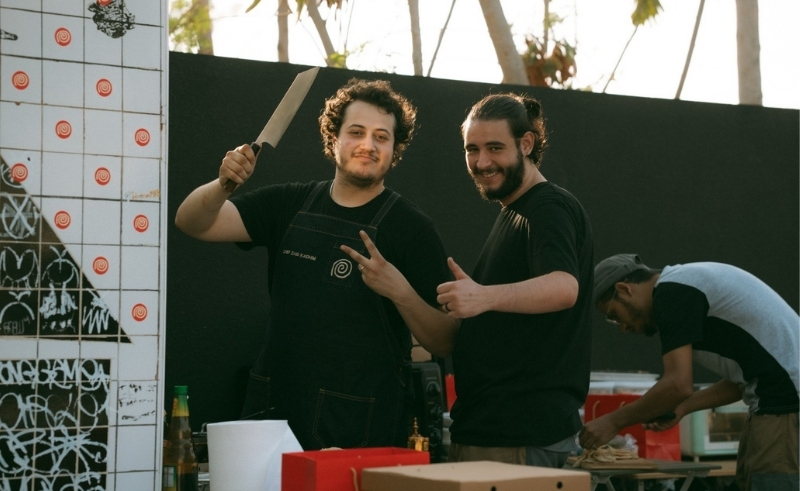 The cooking hasn't stopped, it has shrunk to ten seats at a time.
His supper club runs on an argument. The food of the UAE, as it is actually eaten, is cooked by the Filipino, Iranian, Indian and Pakistani communities who make it daily and rarely get credited for it, and Kadhim wants it treated as a cuisine in its own right rather than a footnote to someone else's.
"I call this city my home," he says. "I wasn't born Emirati, but this is very much home to me."
Attached to it is a rule closer to a dare. Ninety-nine per cent of ingredients grown in the UAE, spices exempted. An Al Ain mushroom farm, a local tomato grower, an east-coast oyster operation, chicken he insists is better than its reputation. He wants the rule to be invisible on the plate.
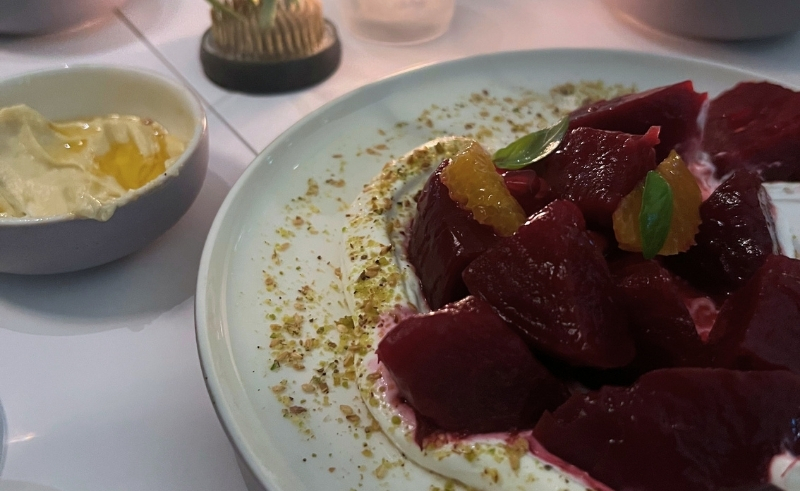 "You try it and you're not thinking, oh, this is sustainable," he says. "You're just thinking, my God, this is good."
His most cherished experiment predates all of it. Years ago, deep in his Barcelona training, he built an entire supper club around Salvador Dalí, specifically around Les Dîners de Gala, the surrealist cookbook Dalí wrote after being told, repeatedly, that he should never have tried to cook.
"Everyone told him, don't be a chef, your food's not good," Kadhim says. "And it's true, his food was awful. Absolutely awful. But he wrote a gorgeous cookbook."
Kadhim's menu retold individual images as courses. A frozen egg filled with liver pâté that cracked open to look, by design, like something newly and unpleasantly alive. "Bloody, like an embryo, nasty, but that's the painting." Alongside it, a slow-roast pigeon in duck and pomegranate, his own quiet insertion of home into someone else's fever dream.
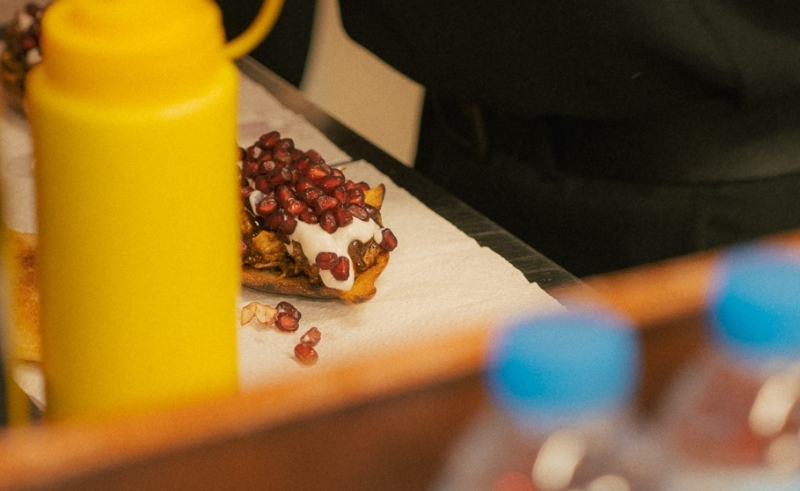 Ask if he'll write his own cookbook one day, the way his mother did, hers took a decade and he spent that decade eating the leftovers off her photo shoots, and he doesn't say no. He says he isn't ready.
"I'm still experimenting, still figuring it out. Maybe one day I'll wake up thinking I'm old and wise now, let me start writing." He laughs. "Inshallah."
Related Articles

Trending This Week
-
-
 Oct 15, 2026
 -
-