


Seif Abousenna Turned His Passion for Padel Into a Regional Movement
How Seif Abousenna helped build padel’s rise from Egypt’s early courts to a thriving movement across the Gulf.
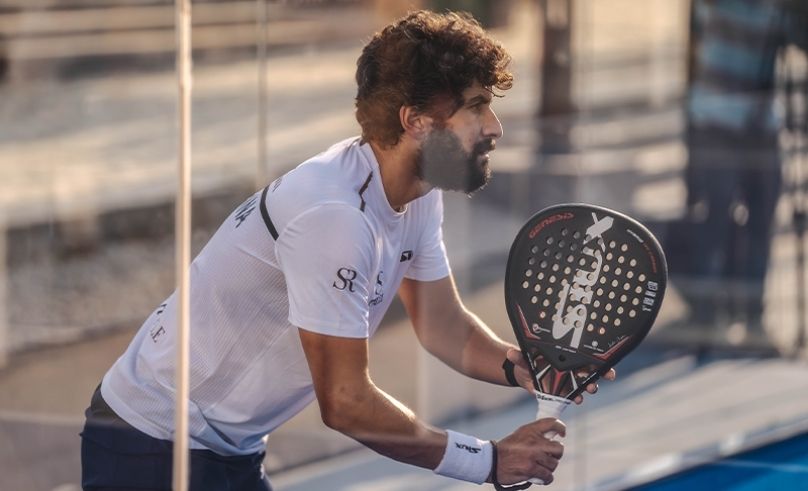
Some of life’s greatest passions have a way of finding us when we’re not even looking. For Seif Abousenna, padel wasn’t a carefully mapped-out ambition; it was an unexpected discovery after returning from Berlin, just as the sport was beginning to find its footing in Egypt. Back then, padel courts were rare, tucked inside compounds, and the game itself was more of a casual pastime than a fully realised sport. But from the very first swing, something clicked. When asked about his start with padel, he exclaimed, “I tried it once and I fell in love with it immediately!”
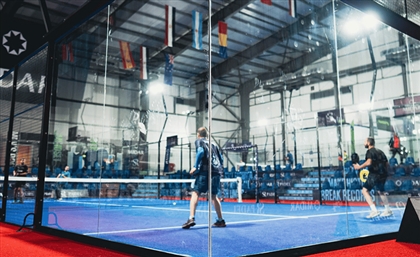
He explained that padel arrived in Egypt through JPadel and GoPadel in the spring of 2014. At the time, there were only a handful of courts in New Cairo, and the sport was played almost entirely for recreation. Yet within those early gatherings, Abousenna found not only a sport, but the person who would help shape his entire journey. “At the time, we were a tiny community of maybe 10 players, we would gather and play. One of them was Khaled Nagy, who would later become my co-founder and business partner.”-ad2882c4-2caf-4dc7-940e-1741359913b3.jpg) From that point on, Abousenna and Nagy became inseparable. They were teammates chasing what felt like an ambitious dream: becoming professional padel players. “We decided to test ourselves properly, somehow, we made it to the second round… and then got completely battered by a top 40 team, 6-0, 6-0. People were genuinely confused about what we were even doing there.”
From that point on, Abousenna and Nagy became inseparable. They were teammates chasing what felt like an ambitious dream: becoming professional padel players. “We decided to test ourselves properly, somehow, we made it to the second round… and then got completely battered by a top 40 team, 6-0, 6-0. People were genuinely confused about what we were even doing there.”
That experience reshaped how he viewed his future in the sport. Rather than focusing solely on becoming elite players, they began thinking bigger. “After guidance and coaching from Coach Bruno Aguiyar, we made a different decision: if we couldn’t build our future only as players, we would build the sport itself. So we went to Lisbon, got certified as professional coaches, and came back determined to grow padel in Egypt.” Seif’s gratitude toward Aguiyar was immediate and heartfelt. “I owe him a lot.”-cbf9c28a-a175-4d8b-b5c9-79b0dd59cb23.jpg) And with that, the mission became crystal clear: build a true padel ecosystem in Egypt. That vision gave birth to SR Padel in 2017, establishing full-scale padel facilities and services across the country.
And with that, the mission became crystal clear: build a true padel ecosystem in Egypt. That vision gave birth to SR Padel in 2017, establishing full-scale padel facilities and services across the country.
When they turned to the International Padel Federation (FIP) for advice on how to truly grow padel in Egypt, the answer they received would shape their entire business philosophy. “They advised us to not focus on marketing the sport, rather on building more courts.” They listened. Today, SR Padel has expanded to 67 courts across 19 locations in Egypt. “They believed that once people stepped onto a court and experienced padel firsthand, that alone would be enough. They were absolutely right.” -b7a855c7-c84a-4e86-8772-32624700c986.jpg) When asked about what caused padel’s sudden explosion in Egypt, Abousenna didn’t hesitate. For him, the answer wasn’t hype; it was infrastructure. “The turning point came when the sport finally had structure. The Egypt Padel Tour created a full tournament calendar, with organized competitions throughout the year. Suddenly, players weren’t just playing casually, they had something to train for.”
When asked about what caused padel’s sudden explosion in Egypt, Abousenna didn’t hesitate. For him, the answer wasn’t hype; it was infrastructure. “The turning point came when the sport finally had structure. The Egypt Padel Tour created a full tournament calendar, with organized competitions throughout the year. Suddenly, players weren’t just playing casually, they had something to train for.”
With rankings, sponsorships, prize money, and genuine professional pathways across the ecosystem, padel transformed from a social hobby into a legitimate career. Egyptian players began looking beyond local courts, competing across the MENA region and Europe alike. “For some people now, padel is genuinely a full-time career.”
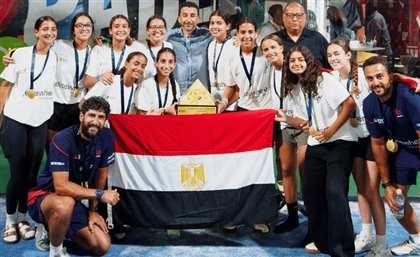
Abousenna’s journey eventually extended beyond entrepreneurship and into national leadership. As Egypt’s national team coach, working closely with juniors between 12 and 18, he witnessed firsthand just how far Egyptian padel had come. “In 2021, we travelled to the Juniors World Cup in Torreón, Mexico, and honestly, we were still at the beginning. We only had six players when the required number was 24.”-725a1d1f-ad95-4015-88bc-d09212a461a3.jpg) “By 2024, we were better prepared and ready,” Abouseena says. The women’s team qualified and finished ninth in the world, while the men narrowly missed qualification. Smiling proudly, he said, “Honestly… ‘El banat be meet ragel,’ a woman is worth a hundred men,” he laughed before explaining that the women were fearless, focused, and left absolutely everything on the court.
When discussing misconceptions around padel in Egypt, Abousenna was quick to dismantle the biggest one: “A lot of people still assume padel is a trend that will eventually fade away. But if you actually look at the industry, you realise how wrong that is.”
“By 2024, we were better prepared and ready,” Abouseena says. The women’s team qualified and finished ninth in the world, while the men narrowly missed qualification. Smiling proudly, he said, “Honestly… ‘El banat be meet ragel,’ a woman is worth a hundred men,” he laughed before explaining that the women were fearless, focused, and left absolutely everything on the court.
When discussing misconceptions around padel in Egypt, Abousenna was quick to dismantle the biggest one: “A lot of people still assume padel is a trend that will eventually fade away. But if you actually look at the industry, you realise how wrong that is.”
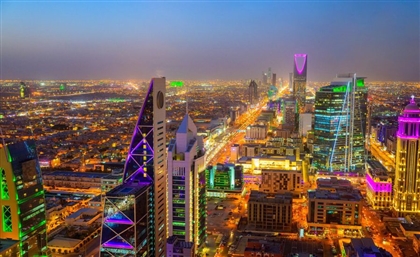
Today, Egypt’s padel scene is no longer defined by novelty. With federations, national leagues, school tours, university circuits, junior systems, international participation, and over 1,500 courts nationwide, the sport has become something far more permanent. Beyond the courts themselves, licensed gear distributors and fully local court manufacturing have created an entire industry around it. “Court construction is now 100% Egyptian. This is no longer a passing trend. It’s a complete ecosystem.”-2d073f93-0fc3-4a69-ad5b-cb4f73681629.jpg) His success soon attracted attention beyond Egypt’s borders, eventually earning him the role of CEO of Padel IN KSA, a Gulf franchise owned by renowned sports figure Saadoun Al Kuwary. Seif walked us through the concept behind Padel IN: “the company has focused on setting high operational and facility standards. From fully indoor premium clubs designed for year-round play, to international-standard courts, academies, tournaments, and community-driven experiences, the objective has always been to elevate the overall padel ecosystem in the Kingdom.”
His success soon attracted attention beyond Egypt’s borders, eventually earning him the role of CEO of Padel IN KSA, a Gulf franchise owned by renowned sports figure Saadoun Al Kuwary. Seif walked us through the concept behind Padel IN: “the company has focused on setting high operational and facility standards. From fully indoor premium clubs designed for year-round play, to international-standard courts, academies, tournaments, and community-driven experiences, the objective has always been to elevate the overall padel ecosystem in the Kingdom.”
When discussing Saudi Arabia’s growing sports ecosystem and Vision 2030, Abousenna made it clear why padel fits naturally into that national strategy. “Padel fits naturally into Saudi Arabia’s Saudi Vision 2030, What makes padel particularly important is how accessible and social it is. Unlike many traditional sports, padel attracts all age groups and skill levels. It encourages active lifestyles, community engagement, and consistent participation, all key pillars within Vision 2030’s Quality of Life Program.”
For him, the region is entering a new chapter. “I believe we are now entering a more mature and developed phase of the sport.” But growth, he explained, depends on several crucial pillars: “developing grassroots expansion and accessibility, more local stakeholders, from coaches to directors, have stronger media coverage & sponsorships around the sport, and continued investment in women’s sports and youth participation.”-1bdfb011-1a97-4f4b-82c3-8a54fd907639.jpg) When SceneSports asked Abousenna about the upcoming events he’s most excited for in padel, his enthusiasm was immediate. At the top of his list is the opening tournament of Padel IN KSA at Jeddah Park. “It will be one of the biggest padel centres in Africa and the Middle East.” He also highlighted the FIP’s Junior Padel Cup, set to take place in Alexandria, Egypt, as well as the upcoming World Championships qualifications at the end of 2026.
When SceneSports asked Abousenna about the upcoming events he’s most excited for in padel, his enthusiasm was immediate. At the top of his list is the opening tournament of Padel IN KSA at Jeddah Park. “It will be one of the biggest padel centres in Africa and the Middle East.” He also highlighted the FIP’s Junior Padel Cup, set to take place in Alexandria, Egypt, as well as the upcoming World Championships qualifications at the end of 2026.
And beyond the milestones still ahead, when asked what advice he’d give someone just stepping onto the court for the first time, his answer felt refreshingly simple, almost poetic in its honesty. “Enjoy the game and stay passionate about it. The players who go the furthest are usually the ones who truly love the sport, not only the results.
From a curious first match to helping shape an entire regional ecosystem, Abousenna’s story mirrors padel’s own evolution, one rooted in community, passion, and possibility: “Padel is a sport that welcomes everyone. The community is one of the most beautiful things about it, and we are lucky to have new generations pushing the sport forward.”