


This Egyptian Jeweller Is Behind the Pin Bella Hadid Wore Non-Stop
Fatma Mostafa's jewellery places hand-embroidered scenes where gemstones would normally sit.
Originally published on April 28th, 2026.
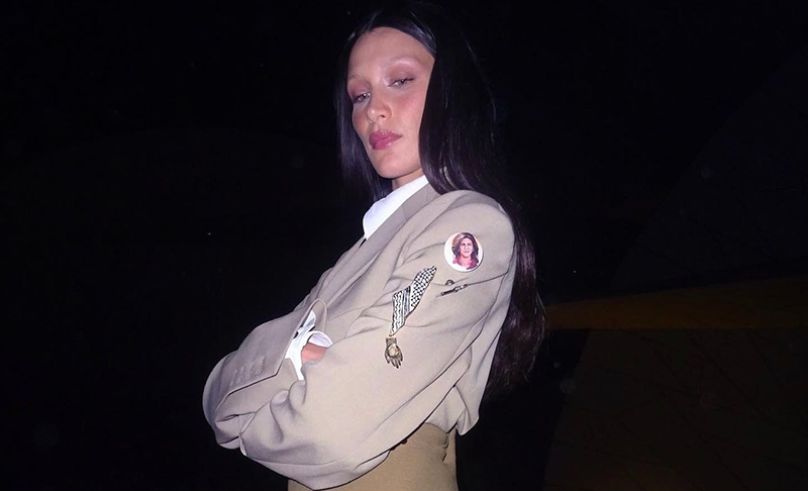
When Bella Hadid stepped out wearing a small pin on her vest, most people wouldn’t have known to look closely. Then she wore it again, this time on her sleeve, tilting forward so people would know to look. And again - cradled in her hand as she is draped in red fabric - eyes closed with a soft smile.
It is a pin of Palestine. Hand-embroidered with black and white thread in the form of a Kufiya, with an open palm dangling beneath it, carrying a simple stone. It is called the ‘to Palestine pin,’ and it was made by Egyptian artist Fatma Mostafa, who had sewn it in 2021 out of a feeling of helplessness, not a desire for fame.
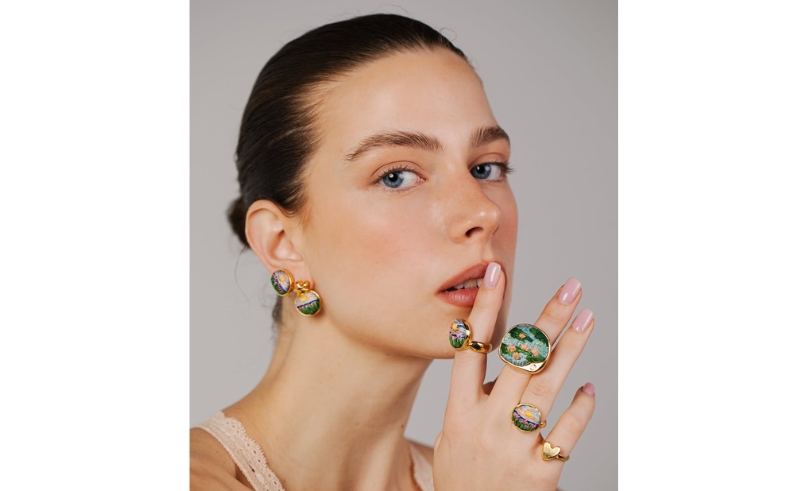
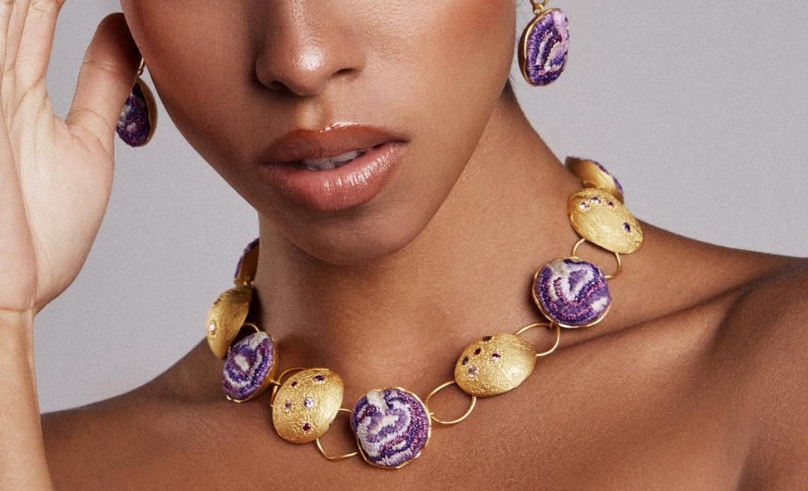
“It was four years ago,” Mostafa says, “but still, every time I think about it today it hits me - oh my God, Bella Hadid wore my pin.” Even more special to her, however, is that she wore this specific pin. The Palestine pin.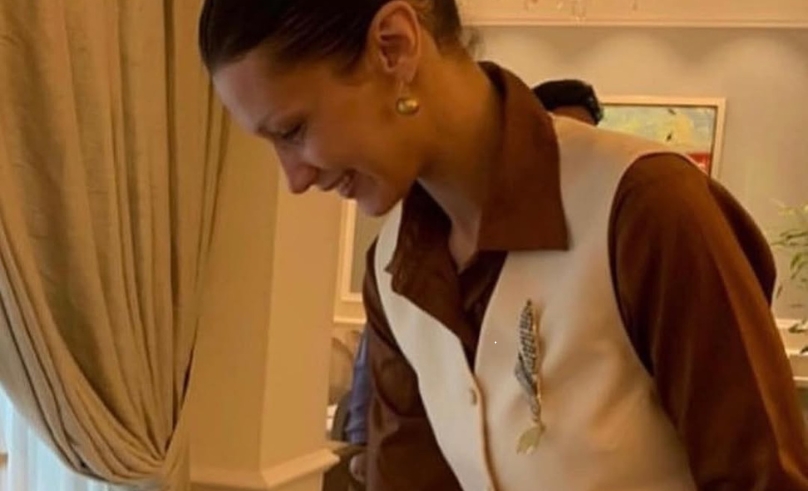 This collision of global visibility and personal meaning captures something essential about Fatma Mosatafa’s work. The pin, and her expansive collection of jewellery, are a blend of her artistry and her personal experiences. In the center of her necklaces, earrings, bracelets, and rings, where a gemstone would normally sit, are small scenes delicately embroidered by hand.
The idea for the Palestine pin first formed in 2021 as Mostafa watched the events in Sheikh Jarrah unfold in front of her eyes. “I just felt so helpless, I didn’t know what I could do,” she remembers. On a walk, Mostafa began to collect stones from the street - the kind of stones Palestinian children have long used to defend themselves against Israeli military forces.
-961ae1a4-209e-4c61-b962-815aa273231f.jpg) "I collected stones from the street, just ordinary stones. Then I started making the hand. This hand is a symbol of resilience - how they fight with only their hands, without anything else. And then the map. Then the Palestinian Kufiya."
"I collected stones from the street, just ordinary stones. Then I started making the hand. This hand is a symbol of resilience - how they fight with only their hands, without anything else. And then the map. Then the Palestinian Kufiya."
The pin shows the whole of historic Palestine, not a post-partition version. "It's the whole map. It's Palestinian land," she says. From there, each element is deliberate: the stones, the open hand, the Kufiya pattern - a compressed political history rendered in embroidered thread and set in metal like a precious stone.
Fatma Mostafa grew up learning embroidery from her mother. She didn't think much of it at the time. It was something mothers taught daughters, a domestic skill tucked away for later.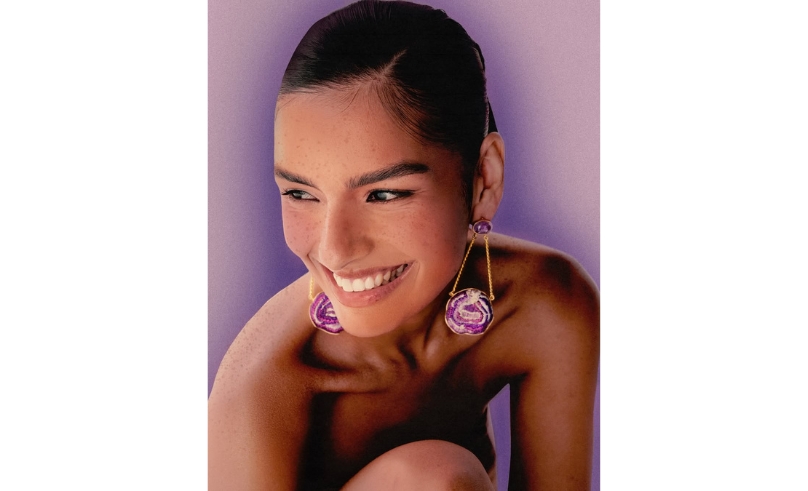 However, later came sooner than expected. When Mostafa enrolled at Cairo's Fine Arts University to study oil painting, she found herself drawn back to needlework experimentally. In her final graduation project, she began combining embroidery with oil paint on the same surface. “I felt like I wanted to come back to something I can make with my hands. I don't know how to explain it, but when you work with something like embroidery, it makes you grounded, it’s something like meditation,” she says.
After graduating, she stripped the oil paint away entirely and worked with embroidery alone. Here, she began merging it with jewellery by mounting miniature embroidered artworks onto frames of brass, and gold and silver.
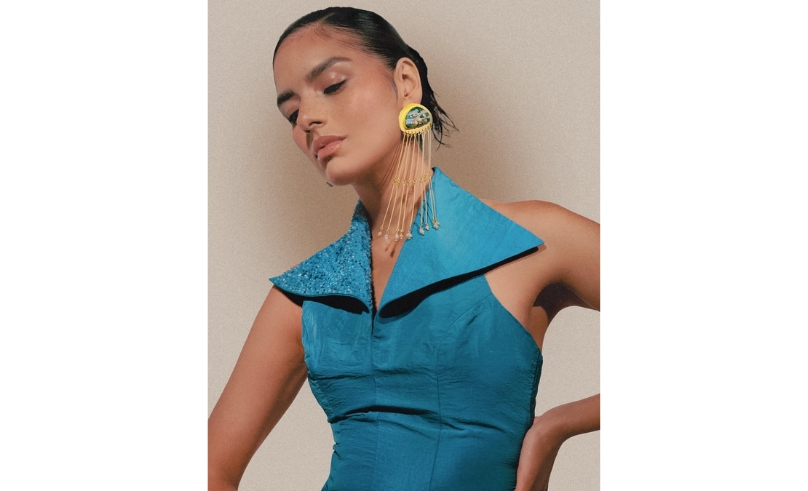 Her process of creation, however, remained very much influenced by painting. A necklace, for example, will usually begin “with an oil painting or watercolour sketch.” The completed embroidered ‘jewel’ often resembles strokes of paint as well, and this is no accident. Mostafa finds herself frequently returning to the great Impressionists for reference - Monet in particular, and his Water Lilies series.
In many pieces, scenes of blues and greens are threaded together by the small stitch of a pink lily flower.
Inspirations for her own landscapes, on the other hand, often come from closer to home. “Here in Egypt, we have so much diversity in our landscape. I love to travel locally - I love Siwa, I love Sinai, I love Aswan. Whenever I go to these places, I try to take my sketchbook with me and my watercolour palette.”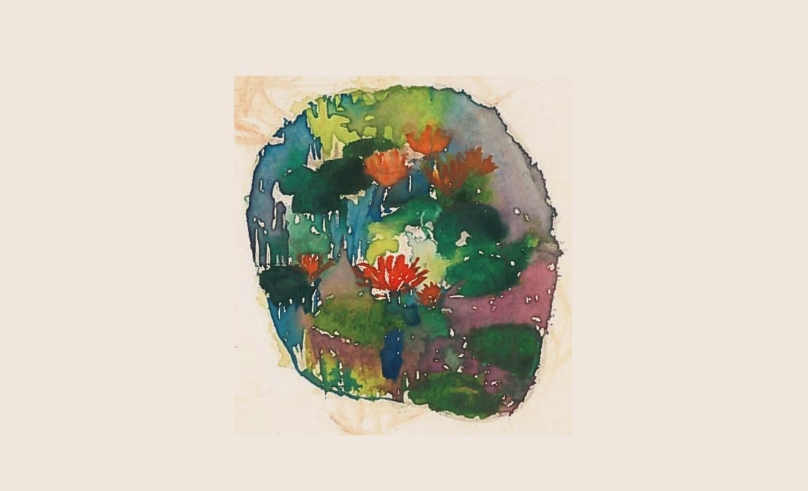 The pace of these places resembles the pace of embroidery; slow, still. To Mostafa, this is a large reason they are so inspiring. “The minute you go outside Cairo, you feel the noises get quieter - it's like you put on noise-cancelling earphones." In places like Siwa, one of her favourites, the pace drops entirely. "You are not in a rush to do anything. You just have your time to do whatever."
Her embroidered jewellery embodies this stillness. Within each mounted frame sits a view of untouched calm. These feelings start first with an experience, then with a sketch, and eventually, the threaded jewel.
 That instinct to translate personal experience into craft traces back to her mother, the woman who taught her the craft. In 2024, she collaborated with Max & Co - part of the Italian luxury group Max Mara - on a special edition collection. She named it ‘Alham’, her mother's name. In Arabic, it also means inspiration.
"For me, she's the cause and the reason behind everything," Mostafa says simply. Her mother's reaction to seeing her own name on the tag of the Italian collection reflects a sense of shared gratitude, telling her daughter, "I taught you how to make embroidery, and you became so much better than me. You took my talent, and you made it better."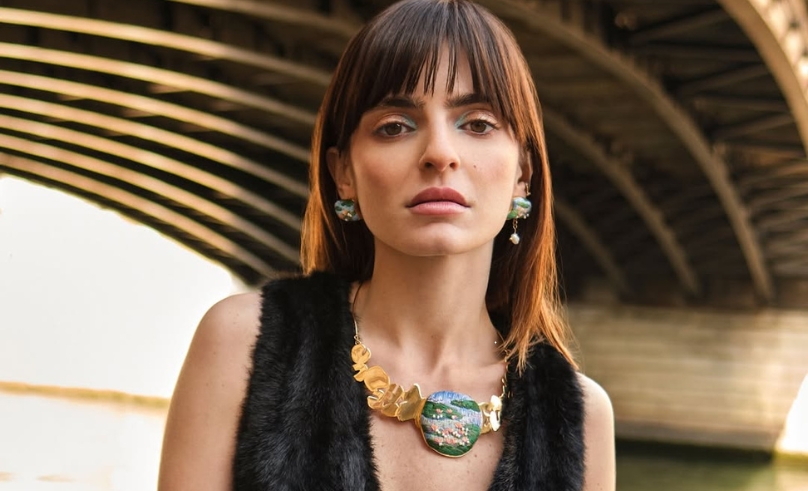 Her latest collection, ‘Sunlight’, marks a quieter kind of ambition. Where her earlier work leaned toward statement pieces - large embroidered emblems mounted on a bold piece of metal - Sunlight is made for the everyday. The embroideries are smaller and more intimate, and the collection is her first to be made entirely in gold. "It was really challenging,” she says, “it's hard already to make larger embroidery, and even harder to make the small ones, to make all those details inside." The challenge, she says, was a welcome one. "In this collection, I want to make something people can wear every day."
Through her intricate jewellery, Mostafa has taken a domestic craft passed between women across generations and has carried it through fine art, political resistance and international collaboration. For this, her work has been recognised internationally; Mostafa has been named on Forbes' 30 Under 30 list, and most recently, has won the Maison Mode Méditerranée Prize for exceptional jewellery and accessories.