



Swim With Turtles & Eat Inside a Waterfall at This Secret UAE Spot
From swimming with sea turtles to eating Lebanese food inside a waterfall, Khorfakkan proves Sharjah deserves the spotlight.

Usually, you don’t skip Dubai. Dubai skips you—or at least, that’s what it feels like when you’ve just handed in your graduation project in Abu Dhabi, your brain is fried, and the idea of another loud, polished, perfectly curated city suddenly feels like too much.
Don’t get me wrong, there’s a certain charm to said perfectly curated cities; you build habits around them, and almost always, there’s a beach nearby. But, no matter what you do, there seems to be something between you and the water: traffic, hotel lobbies, a DJ set you didn’t ask for. The kind of layers that make it hard to fully switch off. So for once, instead of pushing through the JBR crowd, I decided to take a detour from Dubai. Not far, not dramatically; just enough to breathe. That’s how—after a few scrolls on TikTok—I landed on Khorfakkan, a coastal town along the UAE’s eastern edge on the Gulf of Oman. It had everything a city-runaway could ever dream of: a beach, a waterfall, beautiful greenery, and most importantly, a complete lack of skyscrapers and beachside DJs. Within 24 hours of doomscrolling, I was on my way there.
-91ecd709-2f43-4376-9963-a07aebd9112a.jpg) The cab ride from Abu Dhabi was around two and a half hours, past Dubai, then Sharjah, and as we got closer to our awaited destination, the mountains started to close in. For once, there was no city announcing itself from kilometres away, no skyline waiting in the distance. Instead, Khorfakkan revealed itself slowly. Mountains gave way to open coastline, winding roads straightening out, the air shifting as the sea breeze took over.
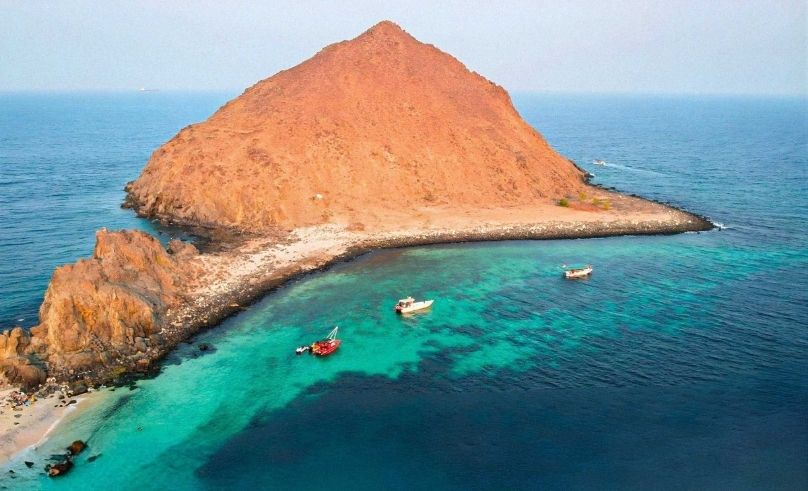
Not even 15 minutes into the drive, I found myself on the corniche. And it’s the kind of place that’s hard to describe without sounding like you’re exaggerating. A long, sweeping stretch that curves around the bay, lined with cafés just opening up for the day, quiet seating areas, soft sand, and right in front of it all, crystal-clear water. It had everything you’d expect from a corniche, but none of the chaos that usually comes with it. Off to one side, I started noticing boats; small ones, gently lined up along the shore. Naturally, I decided to get on one, fully knowing their final destination was called Shark Island.
The cab ride from Abu Dhabi was around two and a half hours, past Dubai, then Sharjah, and as we got closer to our awaited destination, the mountains started to close in. For once, there was no city announcing itself from kilometres away, no skyline waiting in the distance. Instead, Khorfakkan revealed itself slowly. Mountains gave way to open coastline, winding roads straightening out, the air shifting as the sea breeze took over.
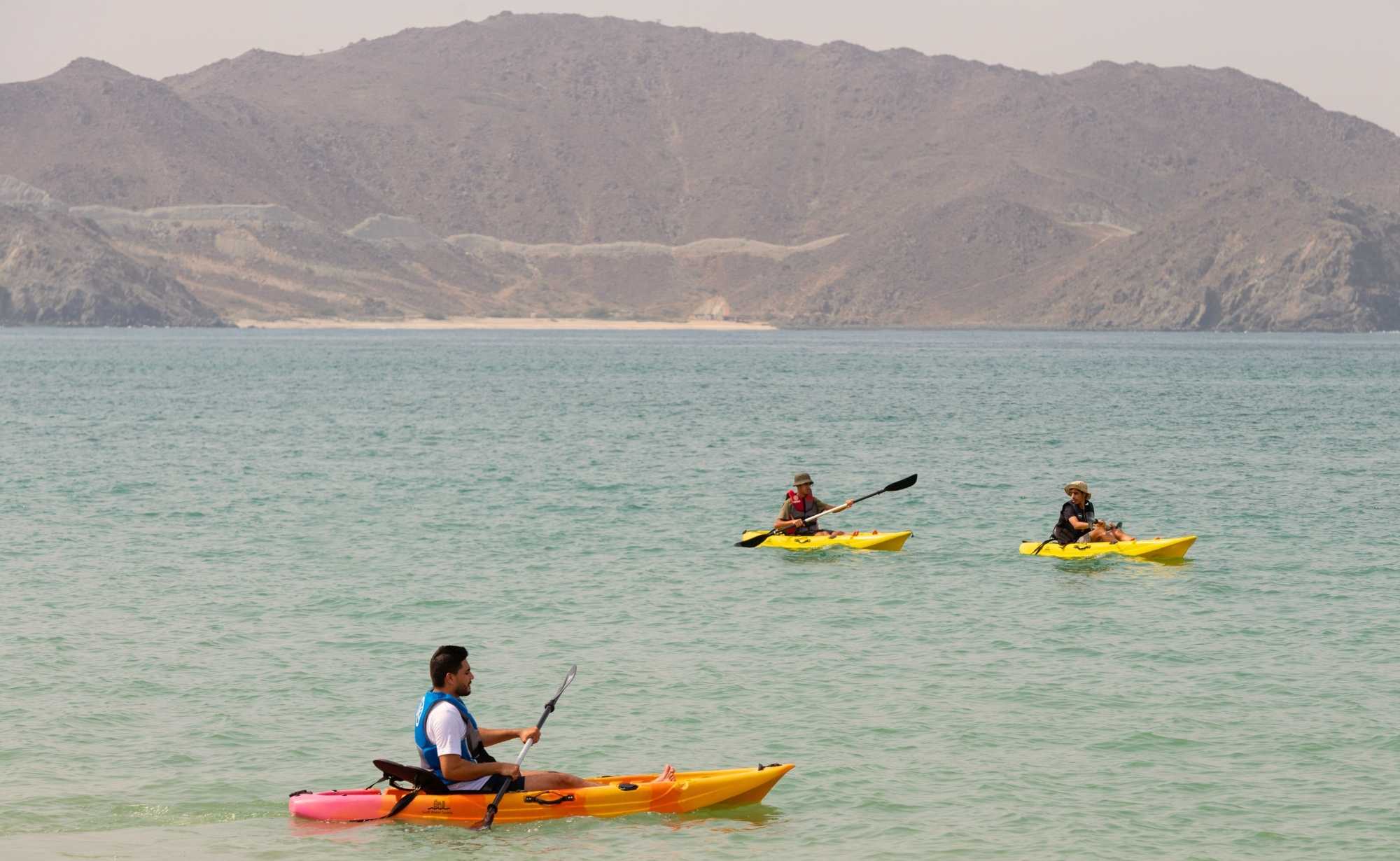
Not even 15 minutes into the drive, I found myself on the corniche. And it’s the kind of place that’s hard to describe without sounding like you’re exaggerating. A long, sweeping stretch that curves around the bay, lined with cafés just opening up for the day, quiet seating areas, soft sand, and right in front of it all, crystal-clear water. It had everything you’d expect from a corniche, but none of the chaos that usually comes with it. Off to one side, I started noticing boats; small ones, gently lined up along the shore. Naturally, I decided to get on one, fully knowing their final destination was called Shark Island. -e82af1b7-d791-4230-95a0-1b50ed342761.jpg) The boat ride itself felt like an extension of everything I had already experienced. Calm, slightly surreal, and quietly beautiful. As we moved further out, the city started to shift behind us. From the sea, the mountains frame Khorfakkan more dramatically, the buildings feel smaller, and everything slows down into something you can actually take in. Every now and then, the water would ripple in a way that wasn’t just the boat cutting through it, and then you’d spot them. Sea turtles, gliding past like they had absolutely nowhere to be.
At some point, curiosity got the best of me, and I asked the boat driver the obvious question: is it actually called Shark Island because there are sharks? He smiled—not a reassuring smile, not a concerning one either—just a very vague, slightly amused smirk. “Occasionally,” he said.
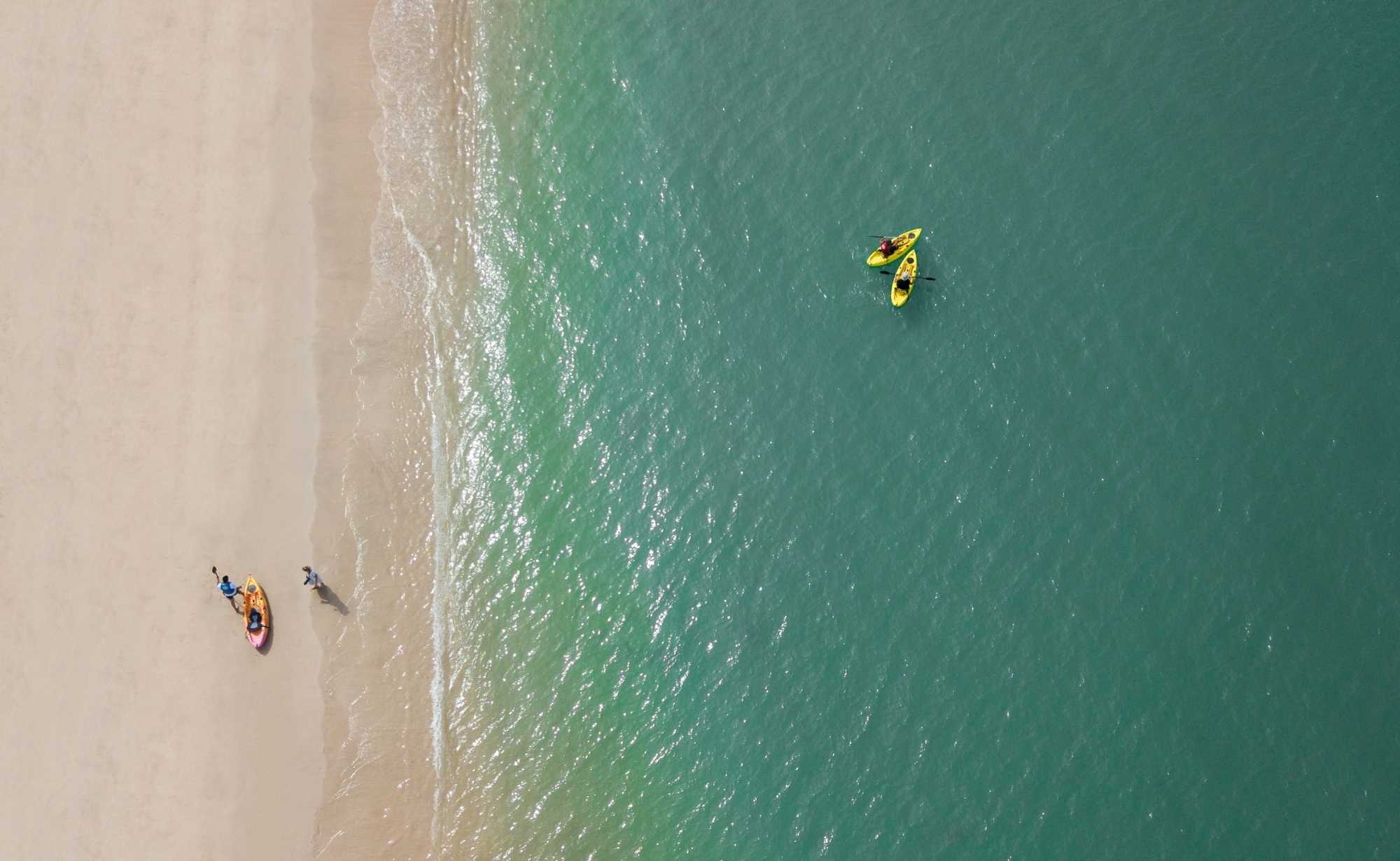
When we reached the island, I was met with a small group of people already in the water, snorkeling, floating, existing in that same slow rhythm the whole place seemed to run on. The island itself is minimal—no overdevelopment, no distractions—just rocky edges, clear water, and, interestingly, a few bins placed around. A small but very real reminder that even in places that feel untouched, there’s still an effort to keep them that way.
The boat ride itself felt like an extension of everything I had already experienced. Calm, slightly surreal, and quietly beautiful. As we moved further out, the city started to shift behind us. From the sea, the mountains frame Khorfakkan more dramatically, the buildings feel smaller, and everything slows down into something you can actually take in. Every now and then, the water would ripple in a way that wasn’t just the boat cutting through it, and then you’d spot them. Sea turtles, gliding past like they had absolutely nowhere to be.
At some point, curiosity got the best of me, and I asked the boat driver the obvious question: is it actually called Shark Island because there are sharks? He smiled—not a reassuring smile, not a concerning one either—just a very vague, slightly amused smirk. “Occasionally,” he said.
When we reached the island, I was met with a small group of people already in the water, snorkeling, floating, existing in that same slow rhythm the whole place seemed to run on. The island itself is minimal—no overdevelopment, no distractions—just rocky edges, clear water, and, interestingly, a few bins placed around. A small but very real reminder that even in places that feel untouched, there’s still an effort to keep them that way.
I stayed for about an hour, maybe a little more. Time felt irrelevant out there. Just snorkeling, drifting, watching small fish move in clusters beneath the surface, completely unaware of the small audience above them. When I was done, my very patient boat driver was exactly where I left him, and for 100 AED—a little steep, maybe—he took me back to the corniche.
 On the way back, with the island slowly shrinking behind us, I asked him about Khorfakkan, and to no one’s surprise, he was much more well-informed about the place than I was. Apparently, long before it became the lowkey weekend escape it is now, Khorfakkan was a strategic port town because of its natural deep-water harbour. And, since it was one of the most important maritime points along the Gulf of Oman, it was occupied by the Portuguese in the 16th century as they were moving through the Indian Ocean to control key trade routes. You can even see remnants of their fortifications and spot some Portuguese influences across the entire town. Over time, it became tied to Sharjah’s rule, despite being geographically separated—just one of those cartographic quirks.
After my quick—and overdue—history lesson, I was finally back at the corniche. And the moment I stepped onto solid ground, I was immediately face-to-face with the waterfall I’d been seeing all over TikTok. And to my absolute delight, perched right there in the cascade was a full-on Lebanese restaurant that would save me from my post-beach hunger: Habib Beirut.
I took the elevator up to the only other accessible floor, “Top”, and stepped into a space that genuinely took my breath away. Floor-to-ceiling windows framed the city, the sea, and, yes, the waterfall itself. I could see water tumbling down just a few meters from my table, the mist catching sunlight, while the city stretched out behind it. The best part? The food was surprisingly delicious and affordable given the location. I devoured Lebanese fatteh and hummus with ras asfour, as the hum of conversation mingled with the distant sound of cascading water. It felt touristy, but in a different way. No regular tourist would stumble upon this place; you had to live in the UAE to know, or at least have the kind of curiosity that leads you off the usual beaten path.
On the way back, with the island slowly shrinking behind us, I asked him about Khorfakkan, and to no one’s surprise, he was much more well-informed about the place than I was. Apparently, long before it became the lowkey weekend escape it is now, Khorfakkan was a strategic port town because of its natural deep-water harbour. And, since it was one of the most important maritime points along the Gulf of Oman, it was occupied by the Portuguese in the 16th century as they were moving through the Indian Ocean to control key trade routes. You can even see remnants of their fortifications and spot some Portuguese influences across the entire town. Over time, it became tied to Sharjah’s rule, despite being geographically separated—just one of those cartographic quirks.
After my quick—and overdue—history lesson, I was finally back at the corniche. And the moment I stepped onto solid ground, I was immediately face-to-face with the waterfall I’d been seeing all over TikTok. And to my absolute delight, perched right there in the cascade was a full-on Lebanese restaurant that would save me from my post-beach hunger: Habib Beirut.
I took the elevator up to the only other accessible floor, “Top”, and stepped into a space that genuinely took my breath away. Floor-to-ceiling windows framed the city, the sea, and, yes, the waterfall itself. I could see water tumbling down just a few meters from my table, the mist catching sunlight, while the city stretched out behind it. The best part? The food was surprisingly delicious and affordable given the location. I devoured Lebanese fatteh and hummus with ras asfour, as the hum of conversation mingled with the distant sound of cascading water. It felt touristy, but in a different way. No regular tourist would stumble upon this place; you had to live in the UAE to know, or at least have the kind of curiosity that leads you off the usual beaten path.
 After finishing my delicious meal, I decided to take a short stroll to let the food I just inhaled settle while I take in the last light of the day. The sun was dipping low, casting golden hues across the city and making the mountains behind me glow. Following a small trail of people snapping photos, I ended up at the Khor Fakkan Amphitheatre, barely five minutes from the waterfall.
A modern, Roman-inspired open-air venue, the amphitheatre hugged the edge of the water. It was designed for concerts and performances but was just as impressive as a quiet spot to take in the surroundings. Its tiered seating descended gently toward the stage area, and from up top, I could see the bay stretching out, the mountains curving around it, and even caught a glimpse of the waterfall I had just visited. From that vantage point, I could finally pause and let everything I’d seen and felt in Khorfakkan settle. It was the perfect place to wrap up my thoughts—the city, the mountains, the water, the waterfalls, even the hidden Lebanese restaurant—all of it weaving together into something quietly extraordinary.
And that’s exactly it—Khorfakkan felt real. No layers to get through, no hotel lobbies or traffic standing between me and the water, no overplanning. Just a place I could disappear into for a few hours, before heading back to the city, where the DJ sets are still raging, and the skyline is exactly where I left it.
After finishing my delicious meal, I decided to take a short stroll to let the food I just inhaled settle while I take in the last light of the day. The sun was dipping low, casting golden hues across the city and making the mountains behind me glow. Following a small trail of people snapping photos, I ended up at the Khor Fakkan Amphitheatre, barely five minutes from the waterfall.
A modern, Roman-inspired open-air venue, the amphitheatre hugged the edge of the water. It was designed for concerts and performances but was just as impressive as a quiet spot to take in the surroundings. Its tiered seating descended gently toward the stage area, and from up top, I could see the bay stretching out, the mountains curving around it, and even caught a glimpse of the waterfall I had just visited. From that vantage point, I could finally pause and let everything I’d seen and felt in Khorfakkan settle. It was the perfect place to wrap up my thoughts—the city, the mountains, the water, the waterfalls, even the hidden Lebanese restaurant—all of it weaving together into something quietly extraordinary.
And that’s exactly it—Khorfakkan felt real. No layers to get through, no hotel lobbies or traffic standing between me and the water, no overplanning. Just a place I could disappear into for a few hours, before heading back to the city, where the DJ sets are still raging, and the skyline is exactly where I left it.
- Previous Article AED 3 Billion Plan to Revamp & Expand Dubai's Public Beaches.
- Next Article The Ancestral Resilience of Omar El Farouk’s Fayoum Home
Related Articles
Trending This Week
-
-
 Oct 15, 2026
 -
-