





This Prehistoric Cave in Algeria Is Where Giraffes Roam the Sahara
A UNESCO World Heritage Site, Tassili n'Ajjer holds 15,000 prehistoric paintings across 72,000 square kilometres of otherworldly sandstone.

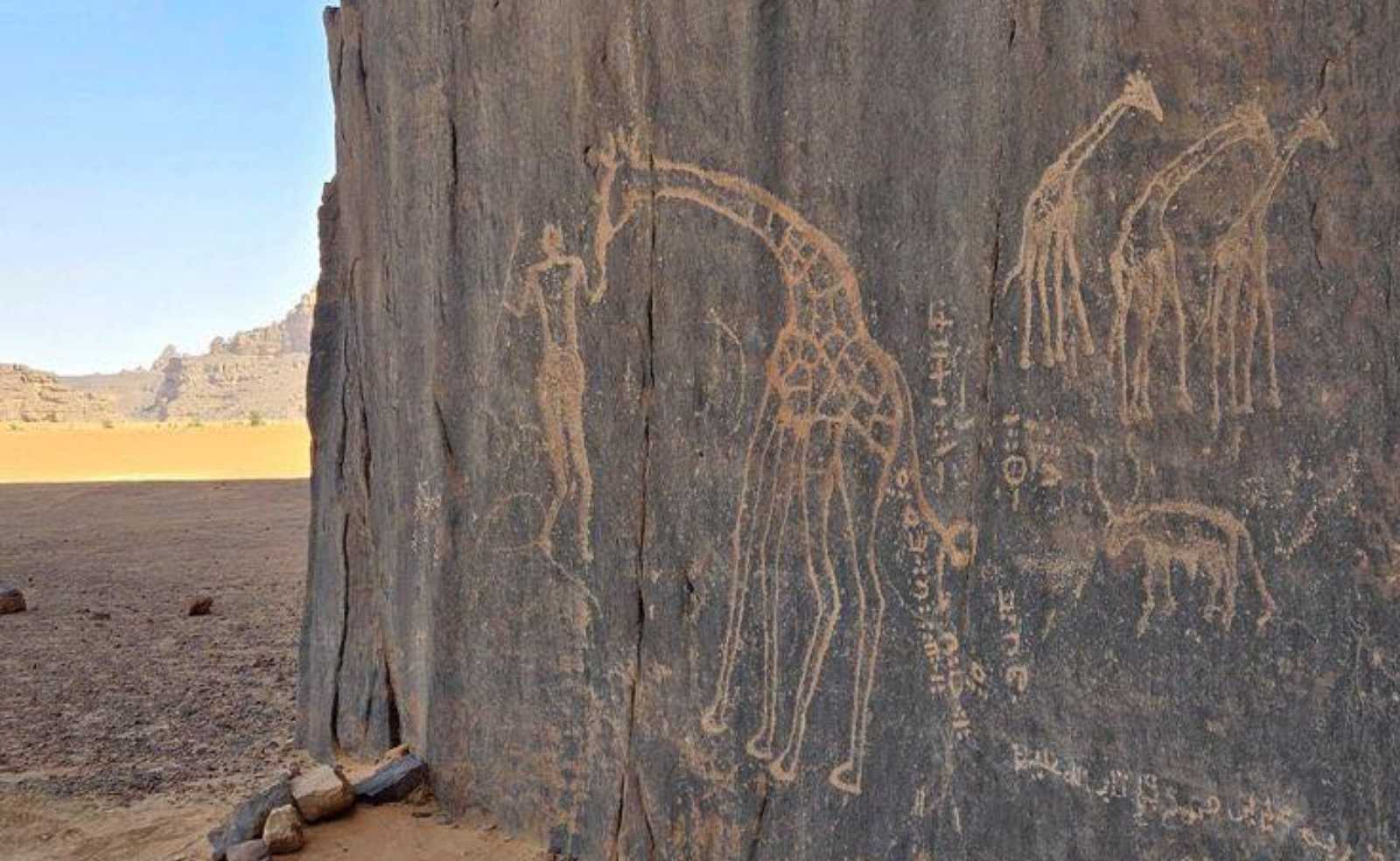
Every year, between October and March, adventurers close to home and those hailing from the far reaches of the earth descend on the sandstone forests of Algeria’s Sahara Desert. With the nomadic tribe of Tuareg guiding them up a path that begins in Djanet—a small oasis town that feels suspended between time and sand—they make their way up a plateau, dunes and rocky passes unfolding beneath the wheels of their four-wheel drive, until they stop at a cliff face. There, emerging from the rock, is a giraffe.
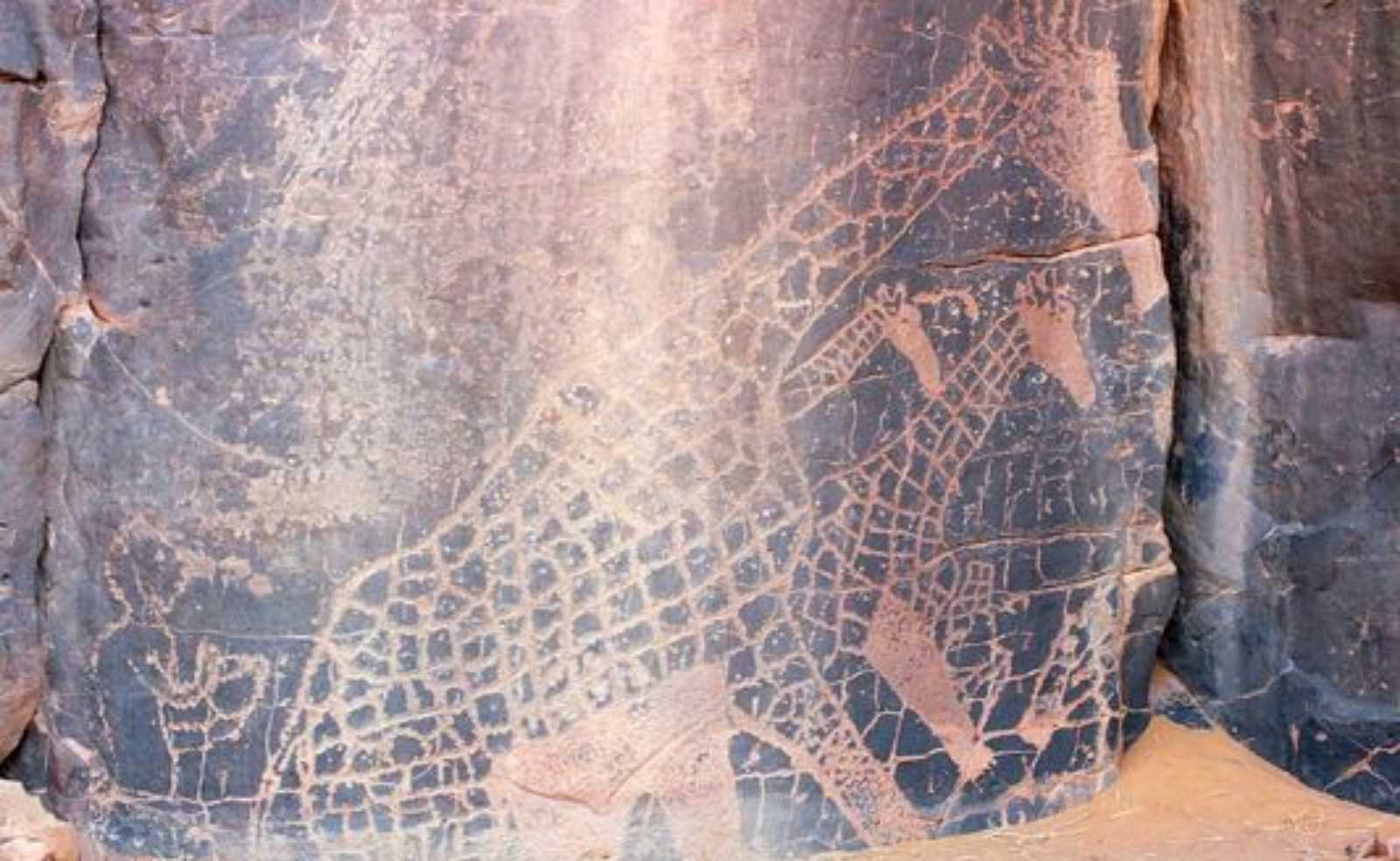 Not a real one, obviously, but a painted one. Yet the effect is the same: a jolt of wrongness, followed by confusion. Giraffes do not live here. Nothing lives here, really, except the wind and the occasional Barbary sheep. And yet the giraffe is unmistakable, striding across the stone with long, measured steps as though it owns the walls on which it is immortalized. Nearby, an elephant gathers in a heavy silhouette. Further along, a crocodile slides through painted water that evaporated thousands of years before the first pyramid went up in Egypt.
This is Tassili n'Ajjer, a 72,000 square kilometre UNESCO World Heritage Site in southeastern Algeria. Here, caves and cliffs hold one of the densest collections of prehistoric rock art on the planet. An open-air gallery in every sense, Tassili n'Ajjer holds more than 15,000 drawings and engravings dating back to 10,000 BCE, scattered across a landscape so alien that you keep expecting to see astronauts. 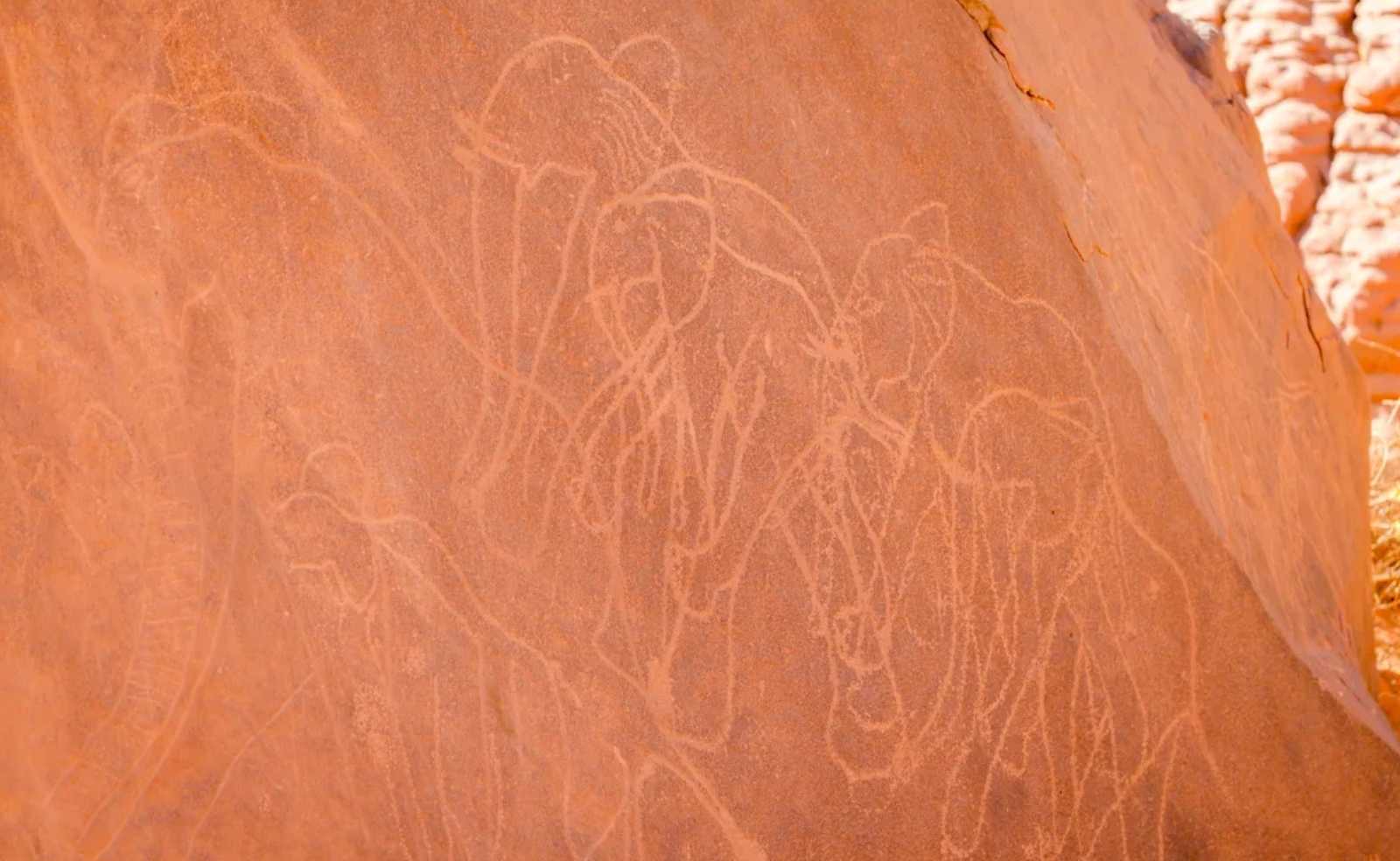 The name itself tells you something important. In the language of the Tuareg, who have lived here for millennia, Tassili n'Ajjer means "Plateau of the Rivers." Stand here today and you'll see sandstone pillars, wind-carved arches, and a silence so complete you can hear your own heartbeat. What you won't see is water, but its long-lived presence is etched in the stone.
Thousands of years ago, this corner of the Sahara was not desert at all. Rain travelled further north, lakes filled the lowlands, and grasslands spread across a landscape that would now seem unrecognisable. People lived among rivers and animals that roamed freely through what was once a green and open world. They recorded what they saw around them, grinding pigment from the earth and pressing it carefully into the rock. What remains is a quiet record of a life that unfolded here long before the sand arrived.
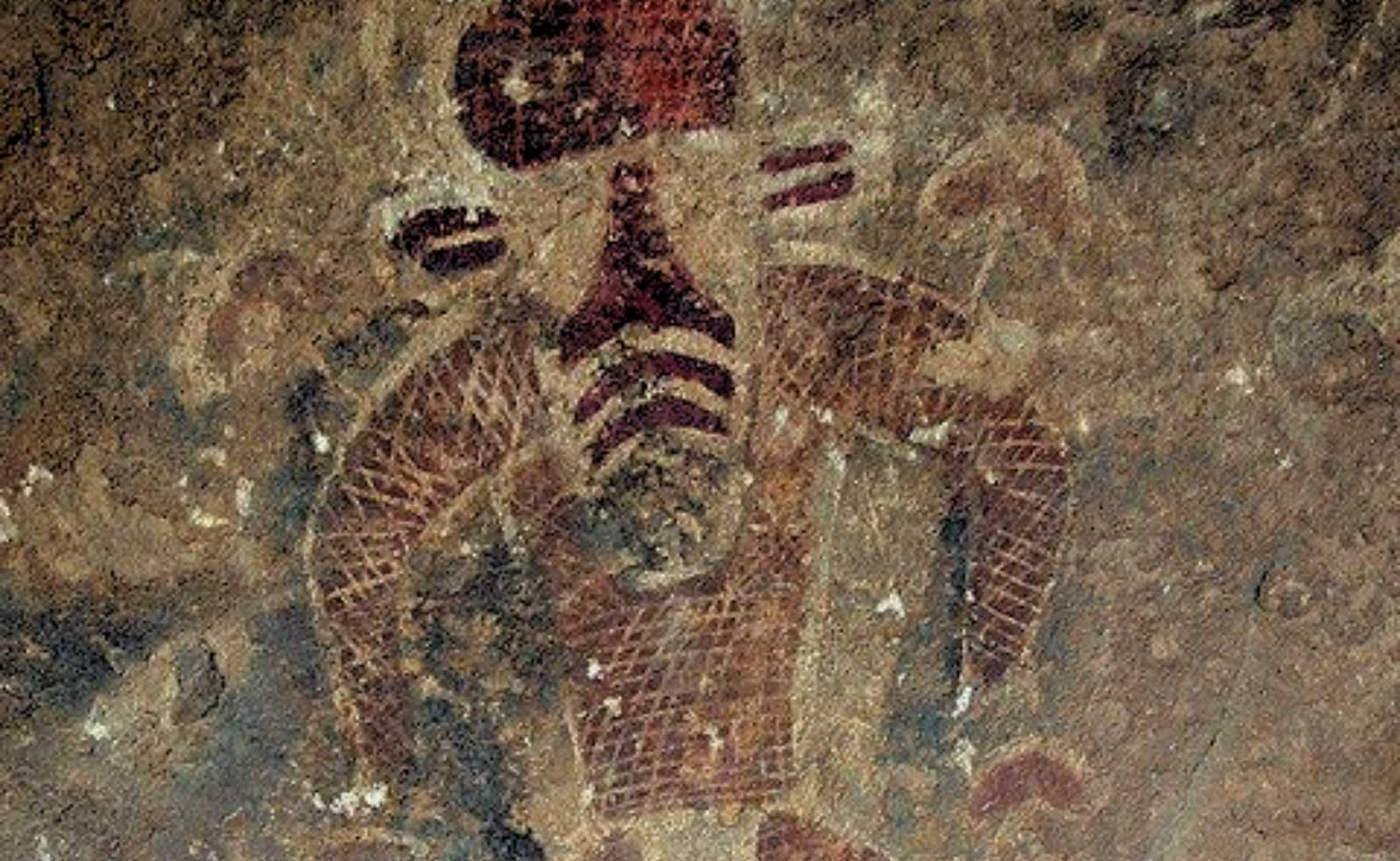 The earliest painted figures feel almost otherworldly. Bodies stretched across the stone with large, rounded heads and limbs that seem to drift. Some hover across entire walls, suspended in gestures that feel closer to ritual. One towering figure, often referred to as ‘The Great God of Sefar,’ spreads across the rock face like a patient presence that has been waiting for someone to notice it once more. These are the Round Heads, dating back to around 8,000 BCE or possibly earlier. They are specific to the Tassili and the neighbouring Acacus mountain in Libya, and scholars have been arguing about them for decades.
 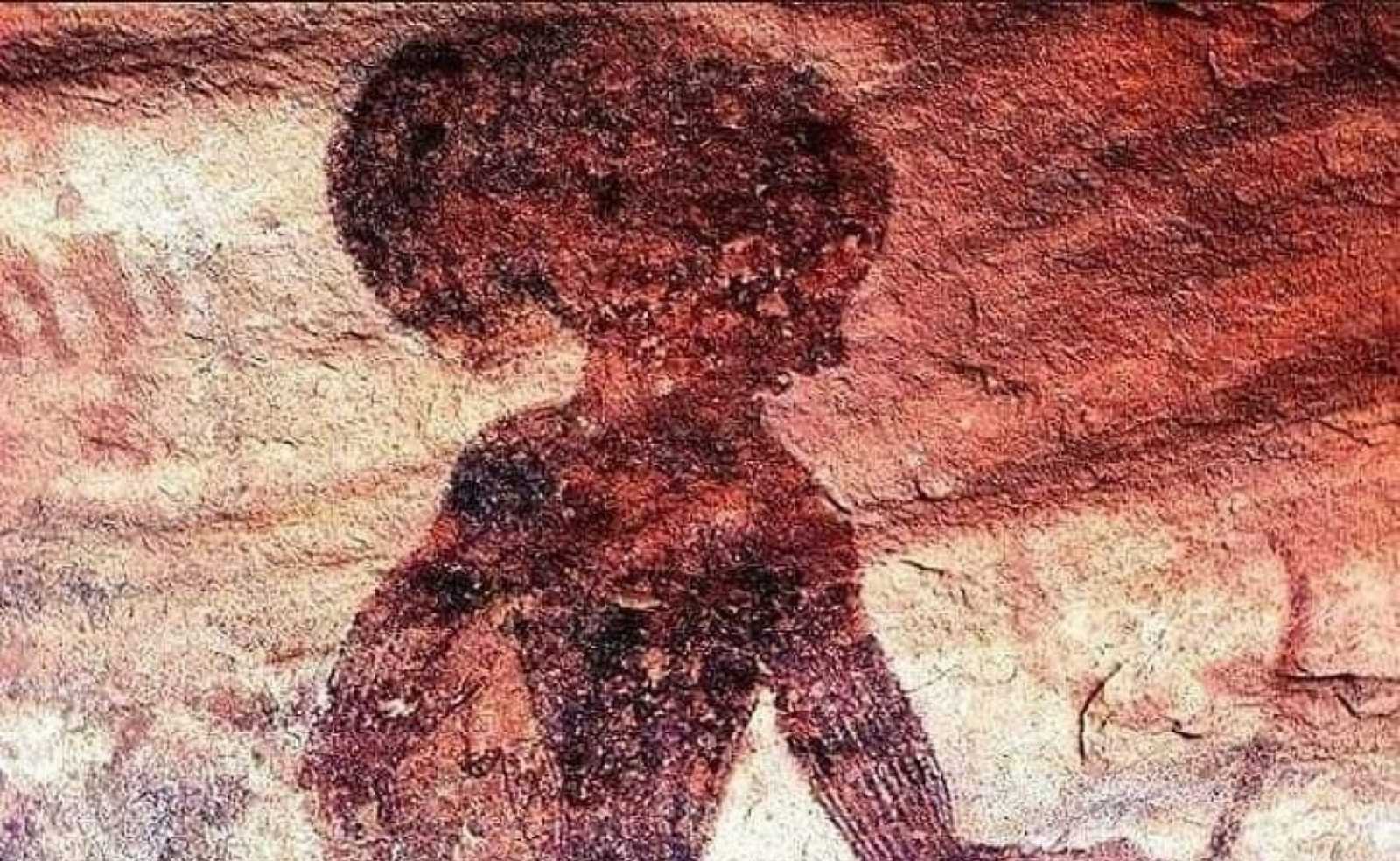 Some see shamans in the midst of trance, bodies sprouting mushrooms, minds travelling elsewhere. Certain figures appear to hold objects that look suspiciously like psychedelic fungi, which has led to Tassili becoming something of a pilgrimage site for people with strong opinions about ancient consciousness. Others see gods or spirits, beings from a realm beyond the ordinary. And then there's the theory that the round heads are actually helmets—which has led a certain subset of true believers to conclude that these are the world's oldest depictions of extraterrestrial visitors. Whatever the explanation, one thing is clear: not every mystery is meant to be solved.
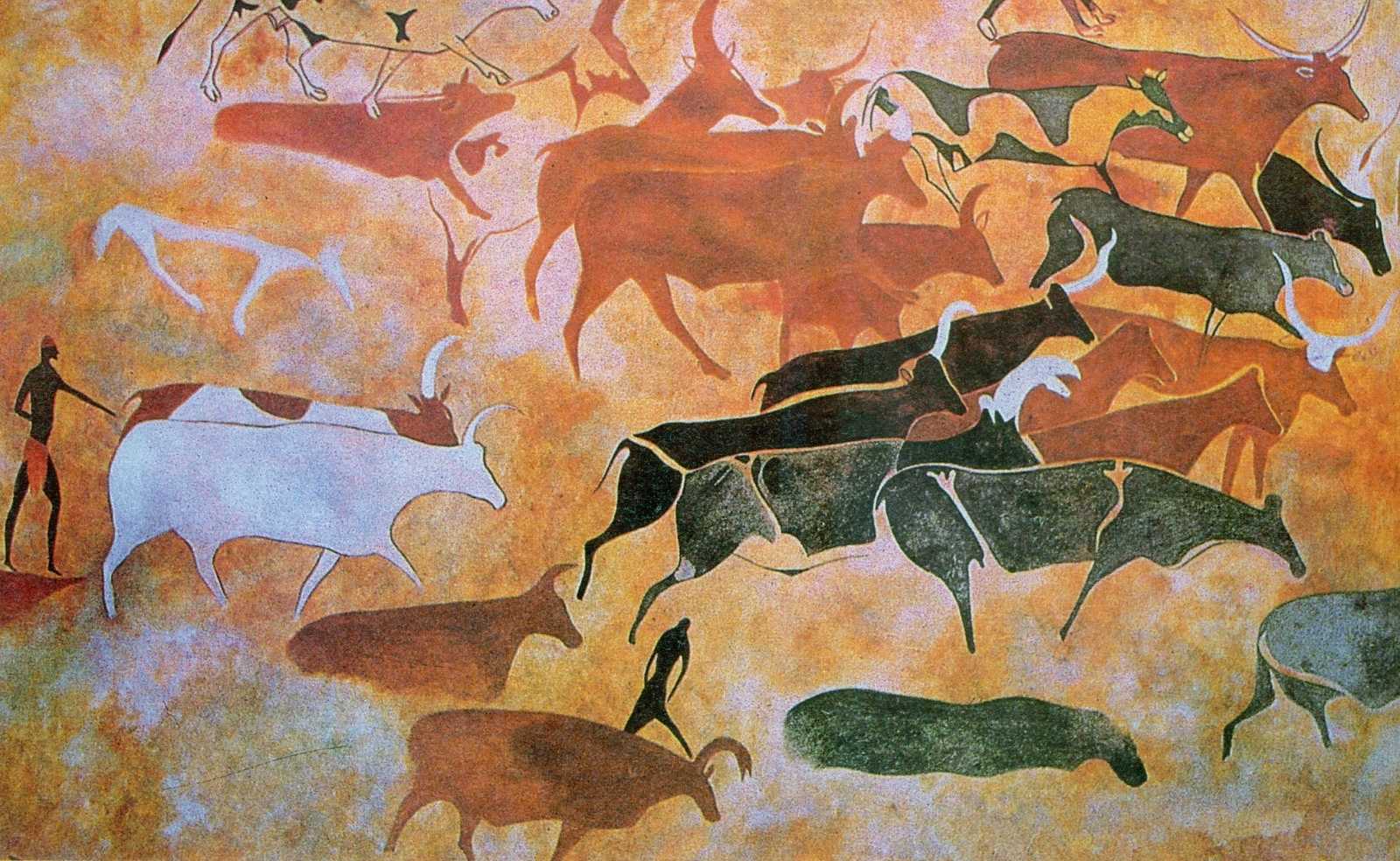 Moving deeper into the plateau, the scenes begin to settle into something more familiar. Around 4,500 to 4,000 BCE cattle started to appear in long lines, their sweeping horns curved like crescents against the stone. This is the Bovidian period, also called the Pastoral period, and it documents a fundamental change in how people lived. Across the stone, herders walk beside cattle, families gather, dancers bend in motion. Eventually, around 2,000 BCE, horses arrive, then chariots cutting across the rock in swift lines that hint at movement through a widening world. By the time camels appear, the land has already begun to dry, the desert slowly reclaiming what was once pasture.
Walking through Tassili n’Ajjer, it’s clear that the paintings are only part of the story. The plateau itself feels almost like the desert decided to experiment with form and never quite stopped. Sandstone rises into towering pillars and arches cast shadows across the ground. Narrow passages twist between the rocks, opening suddenly into valleys of warm stone and quiet air. In the early morning the cliffs glow amber, and by late afternoon they deepen into shades of rust and rose. And beneath that same sky, the hunters, dancers, and animals remain where they were first placed, watching as, decade after decade, travellers wander through their ancient gallery of stone.
Moving deeper into the plateau, the scenes begin to settle into something more familiar. Around 4,500 to 4,000 BCE cattle started to appear in long lines, their sweeping horns curved like crescents against the stone. This is the Bovidian period, also called the Pastoral period, and it documents a fundamental change in how people lived. Across the stone, herders walk beside cattle, families gather, dancers bend in motion. Eventually, around 2,000 BCE, horses arrive, then chariots cutting across the rock in swift lines that hint at movement through a widening world. By the time camels appear, the land has already begun to dry, the desert slowly reclaiming what was once pasture.
Walking through Tassili n’Ajjer, it’s clear that the paintings are only part of the story. The plateau itself feels almost like the desert decided to experiment with form and never quite stopped. Sandstone rises into towering pillars and arches cast shadows across the ground. Narrow passages twist between the rocks, opening suddenly into valleys of warm stone and quiet air. In the early morning the cliffs glow amber, and by late afternoon they deepen into shades of rust and rose. And beneath that same sky, the hunters, dancers, and animals remain where they were first placed, watching as, decade after decade, travellers wander through their ancient gallery of stone.
- Previous Article Mo Salah’s Record-Breaking Liverpool Legacy in Numbers
- Next Article Two Million Cubic Metres of Rainwater Collected in South Sinai