





Mo Amer Is Looking for His Joy in Front of 6,000 People at Radio City
Mo Amer headlines Radio City Music Hall on Friday, still looking for the joy the last two years took from him.
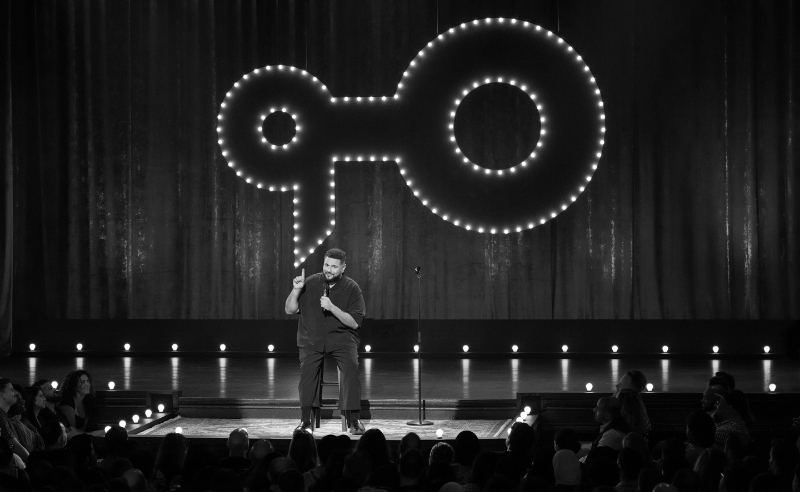
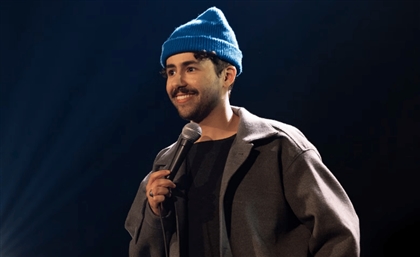
Mo Amer is set to walk out at Radio City Music Hall on Friday night, beneath an arch built to look like a setting sun, in front of 6,000 people. He is billed as the first Arab stand-up to headline the room.
The phones will be locked away at the door, at his request. He wants everyone present, the whole hall held inside the same few hours, a bubble with the city waiting outside.
It is a headline in every sense, and he is also bringing a private project to a very public stage. After two years in which loss arrived faster than he could make sense of it, Mo Amer is reclaiming his joy, and he intends to do it the way he has done everything else, in front of a room.
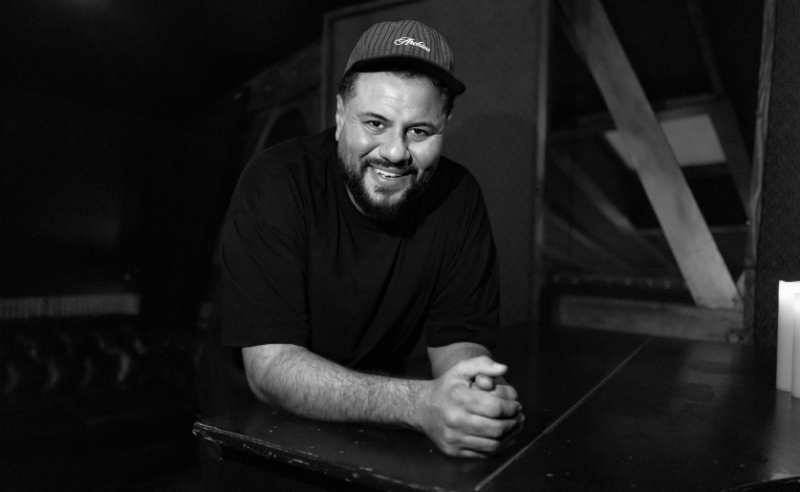
"There's a level of distance that I feel from the joy," he says. "I don't feel it. I'm exhausted."
"This is an act of defiance," Amer says. "Through all the layers of anger, frustration, catastrophe, I'm choosing to get on stage in the biggest metropolitan city in America, and I'm choosing to be a truth teller. I'm forcing my own hand. I don't want to sell Palestinians short."
"I want to create a euphoric, protected space for authenticity to thrive," he says. "In a world of censorship, I want everybody in that room to revel in the freedom."
He calls it a diasporic show, and he means the audience as much as himself. "It's a huge moment, and people should celebrate it. It's not only for me, but for everybody."
The rest of his autumn is a great deal smaller: Zanies in Nashville, the Irvine Improv, the San Jose Improv, rooms holding a couple of hundred people. The night is billed Mo Amer: One Night Only, promoted by Live Nation Comedy, which is the shape a special taping usually takes. His last three specials all went to Netflix, and nothing has been announced about whether this one is being filmed.
The city outside has been loud. Benjamin Netanyahu addressed the UN General Assembly across Midtown a week ago while protesters filled the streets and dozens of delegates walked out of the chamber. The third anniversary of October 7th falls five days after the show.
Palestinian work has had a harder three years in American venues. Festivals moved online, talks were cancelled and bookers grew careful.
The National Coalition Against Censorship logged 22 cases of Israel-Gaza-related artistic censorship in the US in the seven months after October 7th, 2023. The Palestinian artist Saint Levant postponed a 41-date North American tour to spring 2027 last month, after an approved US visa was reopened for additional background checks.
Filling a 6,000-seat hall for a Palestinian comic says something before he has said a word.
He has been building rooms like this for years. Mo, the semi-autobiographical series he made from his own family's history, was Netflix's first Palestinian scripted series. The most consequential decision he made on it came in the writers' room for its second and final season.
The writers had been back from the Hollywood strikes barely a week when October 7th happened. Some around him wanted the story restarted from that morning, the show rebuilt as a post-October 7th series. He refused.
"It made it sound like this is when everything started, and everything was perfect before it, which was bulls**t," he says. "I didn't want to obscure history in that way. I wanted to give more context of how we got here. And if October 7th happens, the family can't go to Palestine. You lose the Palestine episode."
That pain had been packed in his family's luggage since before he was old enough to carry a bag of his own. The episode stayed, and with it the chance to send a Palestinian family home on a global streaming platform.
The season closed on Mo smiling into everything trying to take his humanity from him, a set cut short with the room still laughing.
"No matter how much they try to rob you of your humanity, smile," Amer says. "It's the most perfect ending you could ever have."
The road to that writers' room started on a pavement in Houston. A veteran comic named Danny Martinez hauled a 17-year-old Amer off the stage of the Comedy Showcase 28 years ago, the moment his set ended, walked him outside and mapped out his career for him.
"It's going to take you twenty years for overnight success," Martinez told him. "If you're in, great. If you're not, don't waste my f***ing time."
He was in. He had been in since he was 9, when his family fled the Gulf War from Kuwait to Houston and, a few months shy of his 10th birthday, he watched stand-up for the first time. "This is why I came here," he says. "This is what I'm here to do."
He buried his father at 14 and was on a stage within the month. He toured the world from 18 without a passport, and kept at it for a decade before he became a citizen.
A young Arab comic in Texas after 9/11 had to decide between being "a dancing monkey" and being himself. He chose himself, "a much longer road".
"Despite the backlash, despite the dissolution of my identity in public discourse, I made peace with who I was at a young age," he says. "I fought those battles early on so that I'd never waver, I'd never sell out, I'd never lose my ability to consume the world around me in a purposeful way and find my distinct place in it."
Then, of the ground he has covered since: "Before there was a road, I paved it so that other people can walk on it. For all those that come after me."
The business he climbed into is built to package a man and price his edges, and Amer clocked the machinery early. "When art meets commerce, it becomes entertainment," he says.
He has watched the Palestinian story copied out by hand too many times, each version passing through what he calls "filtration systems" and landing further from the original, until "the Palestinian voice itself is being lost".
"I know when I need to be in the forefront," he says, "and when I need to remove myself and propel somebody forward."
The cost of the climb arrived all at once. The second season came out on January 30th, 2025 and he was on tour two days later, playing close to 30 countries before November that year. "I was losing my mind," he says.
Underneath it ran a line of loss he had not spoken about publicly before. His brother died before the first season aired. An aunt and uncle who had been a second mother and father to him followed, and his sister died a month before he filmed his third special, Wild World.
 "I never really got to process what I accomplished," he says. "I lost an appetite for everything."
So, for the first time in more than 20 years, he walked away from stand-up. "I needed to miss it," he says. "I needed to be away from it."
The itch came back the way it always does, as agitation, and when he returned to the clubs he found his material had grown heavy.
"You're so focused on just being serious. You're a comedian, man. You gotta make them laugh. You can be silly. You can be outrageous. That's what I mean by reclaiming the art, reclaiming the joy. You have to be free of all those things to fully realise yourself on stage."
The stage, for its part, seemed pleased to see him. "Like a little embrace," he says. "Welcome back."
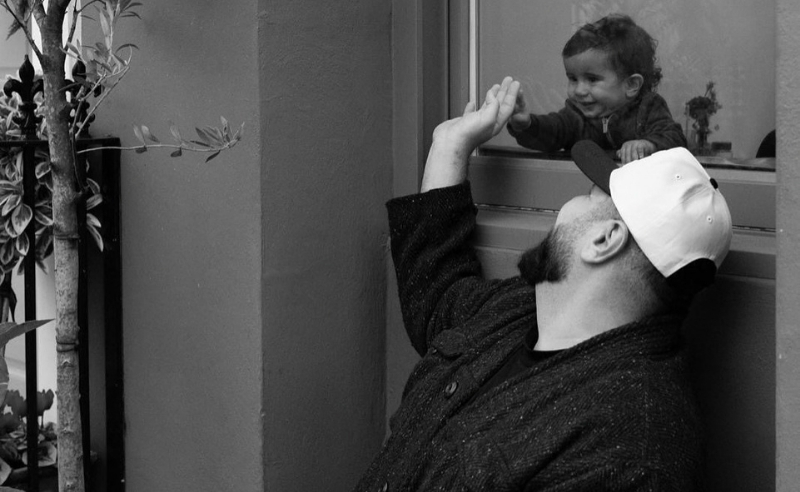
His son arrived in the middle of all of it, and he is the one subject that undoes him. "After so much loss, God gives you this gift, this child that just comes in and breathes life into your whole thing," he says. "There's nothing saving me more than my son."
The way he writes has barely moved since Martinez caught him with a notebook on stage at 18, tapped the side of his head and told him to leave it at home. He still builds his jokes on stage, in front of the people they are for.
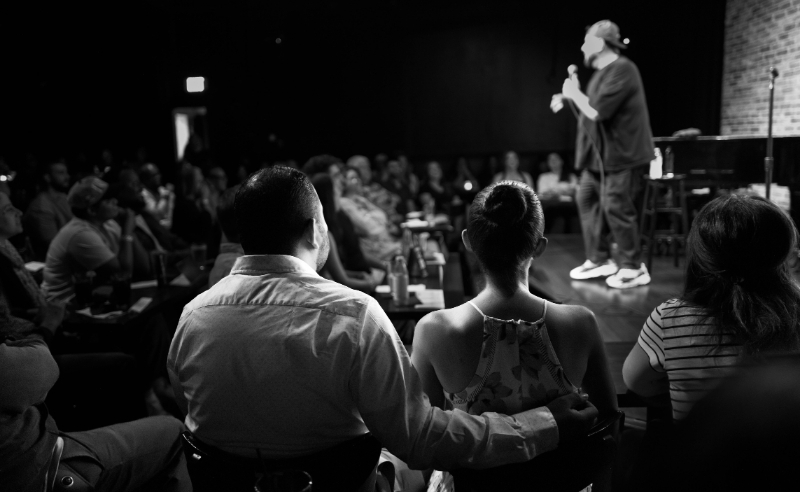 "You ever seen A Beautiful Mind? That's how it is for me on stage," he says. "I'm talking, but I'm seeing all these ways that I could take a particular story. Everything really slows down."
He was taught early that some comedians make you feel you are in a stadium and others make you feel you are in their living room, and he picked the living room decades ago.
"Effort is lost in modern day stand-up," he says. "You have to go everywhere, you have to diversify your audiences as much as you can to make sure your material is universal. I'm not trying to just get a clip or trying to curate something consumable for a 30-second social media bit."
What has moved is the load each joke is asked to carry. "The great stand-up comedians make you laugh and think," he says. "Joking, not joking. It's the only way to communicate such pain sometimes. There's a reason why when you laugh so much, you start crying."
Happiness he treats with suspicion. "I'm too Palestinian for it," he says. "If you laugh too much, you start getting scared. Like, oh my God, something terrible's about to happen."
Joy at 17 was the freedom to say anything to anyone. Now it is a room full of people carrying something heavy and setting it down together. "It looks like collectivity," he says. "A communal effort. Build it and they shall come."
Night after night, fans have queued to hand him their losses along with their thanks. Children from Gaza, some without limbs and still laughing, left him feeling silly for ever feeling sorry for himself.
His best review came from a Palestinian man restocking Frito-Lay crisps in a New York shop, who saw him, burst into tears and kissed him like a cousin. "That's my Oscar," Amer says. "That's better than anything you could ever receive in a statue."
"I don't see them as fans. I see them as my family," he says, before adding a caveat. "Unless they ask for money."
Radio City is that living room scaled up to 6,000, and he means to keep it as close as a kitchen table. He has stood firm through a post-9/11 South and a post-October 7th West, and run an open-door policy since his very first open mic. "I led with my heart."
📸 @lizvig on Instagram
- Previous Article Egypt’s First Kiteboarding Brand Arrow Launches in El Gouna
- Next Article PepsiCo Turns food Into an Art Form at Tamara Haus