





New Initiative in Egypt Teaches Students to Build (Not Just Use) AI
Cairo-based AI community, People of Data, thinks that Egypt's AI future is sitting in today's classrooms.

As artificial intelligence reshapes industries around the world, a fundamental question is emerging for countries like Egypt: who will build the next generation of AI-powered businesses, products and solutions?
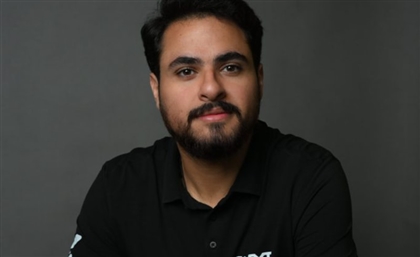
For Magdi Moussa and Youssef Kamal, the answer starts much earlier than university.
The co-founders of Cairo-based AI community People of Data believe the country's future competitiveness depends on introducing students to AI while they are still in school. Early exposure, they argue, will create a generation of builders capable of turning technology into businesses, products and solutions that address real-world challenges.
"The real transformation only happens if the next generation is equipped with AI while they're still young, while they're still in school," says Moussa. "Early exposure to entrepreneurship and AI-building skills will produce a whole generation of builders who can transform this country."
The idea is rooted in both demographics and opportunity. Egypt is one of the youngest countries in the world, with nearly 60% of its population under the age of 30 and around a third under the age of 14. At the same time, Egypt's National AI Strategy is targeting AI to contribute 7% of GDP by 2030 and aims to support the establishment of more than 250 successful AI companies.
"Someone has to build those companies," says Kamal. "And we'd rather it be our students solving Egyptian problems than a solution imported from abroad."
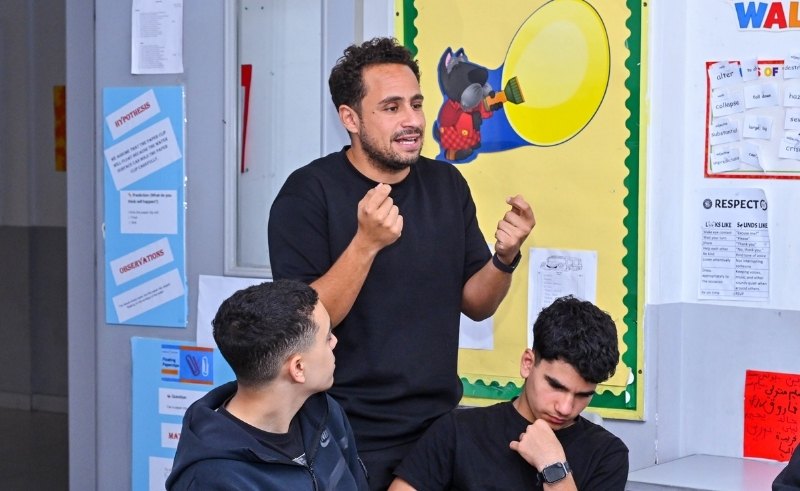
That belief led to the creation of The AI School, an initiative launched by People of Data and AI education platform, Skillz.ai, to bring practical AI education into schools across Egypt. The programme was built around one belief: AI should be taught as a practical skillset, not a memorised subject.
Rather than teaching students to master tools that may be obsolete within a few years, the programme focuses on helping them identify problems, validate ideas, build solutions and understand whether those solutions can become sustainable businesses.
"We're not teaching them to memorise tools that'll be obsolete in a year," he says. "We're teaching them to move from a problem, to a product, to a business, which is the one skill that doesn't expire."
For Kamal, that approach reflects the reality of the AI era. While the technology itself is becoming increasingly accessible, the challenge now is understanding where and how to apply it.
"Today it's all about go-to-market, because the technology barrier has basically collapsed," he says. "So what we do is upskill students to look at the problems right in front of them: their own communities, schools, universities, neighbourhoods. Real problems they live with everyday."
That local focus is intentional. Kamal believes Egypt's greatest opportunity lies not in importing solutions but in creating them.
"There's a local edge here that outsiders can't replicate," he says. "The National AI Strategy itself notes that Egypt has a distinct advantage in AI built for Egyptian and Arabic dialects, with room to close the market gap in public services, education and healthcare. That's the gap our students are being trained to walk straight into."
The founders see their role as helping students become problem-solvers and entrepreneurs who understand those challenges first-hand.
"Youssef and I are street guys, we've been grounded, working with our hands for the last ten years," says Moussa. "That's why we understand the locality, and why we know how our generation actually thinks. We know the pain points because we've lived them, and we've solved them at scale before through education. This time we're doing it with AI so it scales even faster."
The first major test of that philosophy came through a pilot programme delivered in partnership with Edge Education and Kaumeya Language School.
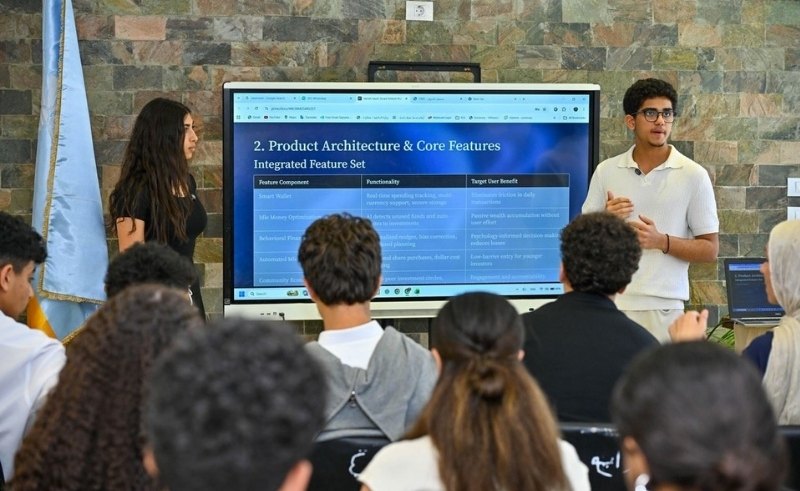
Through the AI for Students upskilling path, 50 students aged between 14 and 21 participated in a three-week programme designed to take them from idea to prototype. Students participated free of charge, with the school covering programme costs.
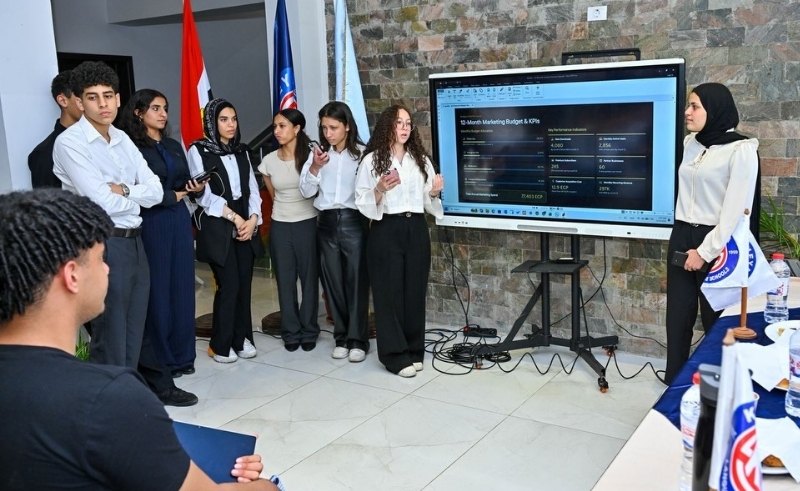
The results exceeded expectations.
In just 10 hours of combined instruction and development time, students built 10 viable AI-powered solutions, taking projects from idea to design and development before pitching them to a high-profile judging panel led by entrepreneur and investor Ahmed Tarek Khalil.
For the founders, the experience reinforced what they had already begun to observe.
"The truth is, they're smarter than us," says Moussa. "They have more energy, more vision, and fewer of the limits we grew up with. That's exactly why we built this programme around schools, because that's where the impact compounds."
Yet despite the success of the pilot, the founders say their biggest challenge has not been the students or even the technology itself.
"Honestly, the biggest challenge is us, keeping up with how fast these students move," says Moussa. "They adopt and build faster than we expect, and that's a beautiful problem to have."
The harder challenge, he says, is convincing the broader education ecosystem to embrace a different model of learning.
"The entire system around them, universities, teachers, parents, was built for an old model of education and upskilling. When we find an environment that trusts us, that believes this will genuinely change their kids' futures, we fly."
That trust, Moussa says, was a key factor behind the success of the Kaumeya Language School programme. "That's exactly what happened with KLS and EDGE. When we don't find that trust, our job becomes cracking the system open just enough for people to see the change for themselves."
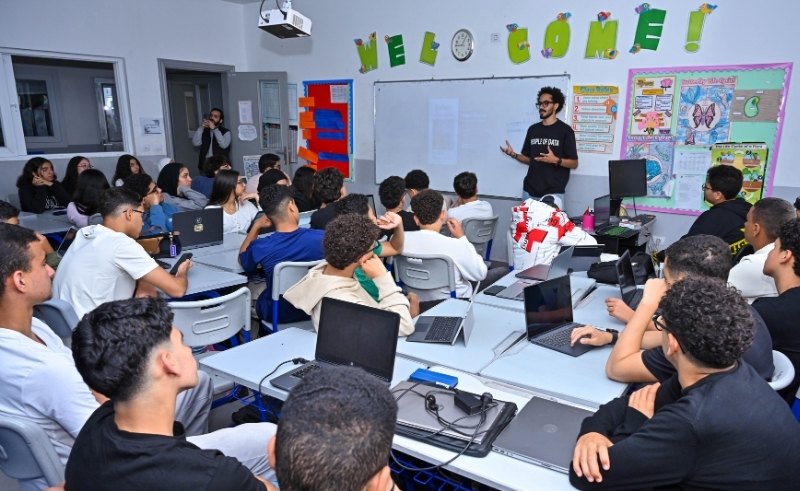
Importantly, the programme is designed to continue beyond the classroom. After the judging phase, selected students receive incentives and internship opportunities, while some projects are given the chance to move from prototype to implementation inside schools themselves.
Following the success of the pilot, The AI School is now preparing to expand across Egypt, partnering with more schools and introducing more tailored programmes for students. Rather than relying on static course material, the programme is designed to evolve alongside the technology itself.
"The same speed that makes AI hard to keep up with is the speed we've turned into our advantage," says Moussa. "The curriculum isn't a fixed textbook that's outdated the day it prints. It's a living system that refreshes itself."
For young Egyptians interested in entering the field, his advice is simple.
"Start now. Today. Open YouTube, watch the simple videos, and then execute, build, fail, build again, and keep going until it clicks. Don't wait for permission or the perfect course."
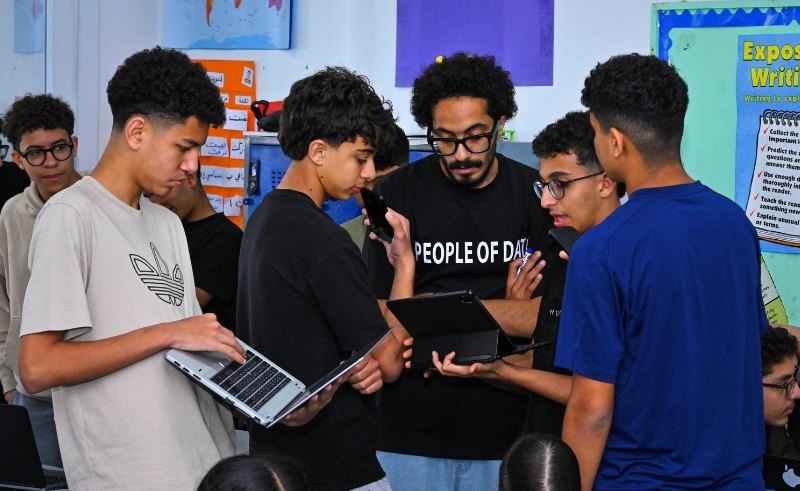
This philosophy taps into the broader mission behind The AI School. Students are not being taught what artificial intelligence is. They are learning how to use it, build with it and think through it. In a country whose future will be shaped by a young population and an increasingly digital economy, that distinction may prove far more important than any lesson found in a textbook.
- Previous Article SceneNoise x Amsterdam Dance Event Present CROSSFADE: Egypt
- Next Article Rap of the Week | June 9 - June 15