





Fifth Century Monastic Building Discovered in Beheira
The 13-room structure at Al Qalaye in Hosh Issa features hospitality halls, a prayer niche with a limestone cross, and early Coptic wall paintings.

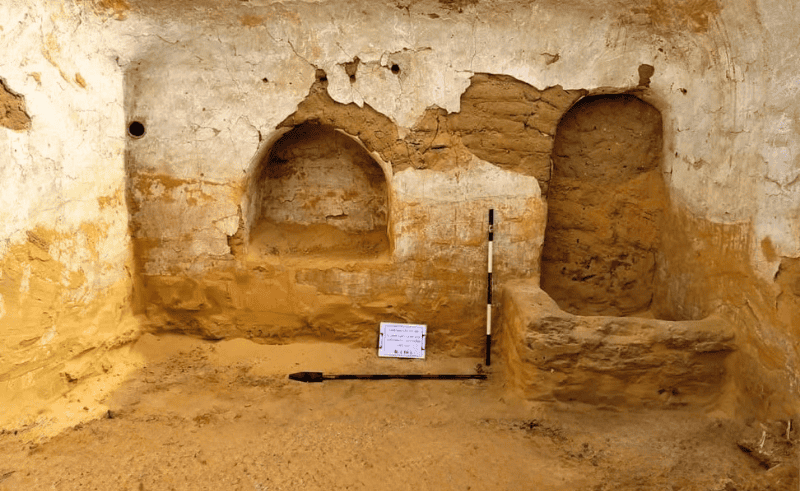
A fifth century AD building believed to have functioned as a monastic guesthouse has been uncovered at the Al Qalaye site. The structure was found in the Al Ruba’iyat area and is thought to reflect a shift from isolated ascetic practices to more organised forms of monastic life during the early Coptic period.
The building comprises 13 multi-purpose rooms, including individual and communal living spaces for monks, as well as larger halls used for hospitality and teaching.
The layout is divided by architectural arches and supported by service areas such as kitchens and storage facilities. In the northern section, a large hall with stone benches decorated with plant motifs was identified, likely used to receive visitors.
A central prayer area includes an east-facing niche preceded by a limestone cross. The structure extends along a north–south axis and shows evidence of multiple architectural phases.
Wall paintings within the building depict monastic figures alongside plant-based decorative motifs in red, white and black, as well as eight-petalled floral designs. One mural features two gazelles surrounded by vegetal patterns within a double circular composition.
Additional finds include a two-metre-long marble column, column capitals and bases, pottery vessels and ceramic fragments bearing plant and geometric motifs, as well as Coptic inscriptions. Remains of animal and bird bones, along with seashells, were also uncovered, providing insight into diet and daily life at the site.
Among the notable discoveries is a limestone slab inscribed in Coptic, believed to be a tombstone. Preliminary readings suggest it commemorates “Apa Kyr, son of Shenouda.”
Excavations at Al Qalaye began in 2023, with earlier seasons revealing clusters of monastic cells, additional service buildings and pottery used for food preparation and storage, further highlighting the site’s role as an early monastic settlement.
- Previous Article Grand Egyptian Museum Lights Up Blue for Global Autism Campaign