Dubai Design Week returns to d3 for its 12th edition, 3-8 November. Here’s what’s on, from Downtown Design to the Marketplace.
Over the past 12 years, Dubai Design Week has become a fixture on the region’s cultural calendar, bringing together architects, designers, makers and audiences to take stock of what is happening across the creative landscape. Returning to Dubai Design District (d3) from 3–8 November 2026, the festival turns its attention to connection, asking how design can bring people closer as the ways we live, work and communicate continue to change.
For Natasha Carella, Director of Dubai Design Week, this means looking beyond the objects and spaces produced by designers to consider their wider place in society. “Design has always responded to the world around us, but the conditions we are navigating today are increasingly complex and interconnected,” she says. The idea runs through this year’s programme, from large-scale outdoor installations that transform d3’s public realm to commissions examining the relationship between language, architecture and collective experience.
Held under the patronage of HH Sheikha Latifa bint Mohammed bin Rashid Al Maktoum, Chairperson of Dubai Culture and Arts Authority, and in strategic partnership with d3, this year’s programme unfolds across the district through exhibitions, installations, commissions, talks and workshops. Spanning architecture, craft, technology and material experimentation, the programme offers different perspectives on the role of design in bringing people and ideas together. Here’s what to look out for.
Downtown Design
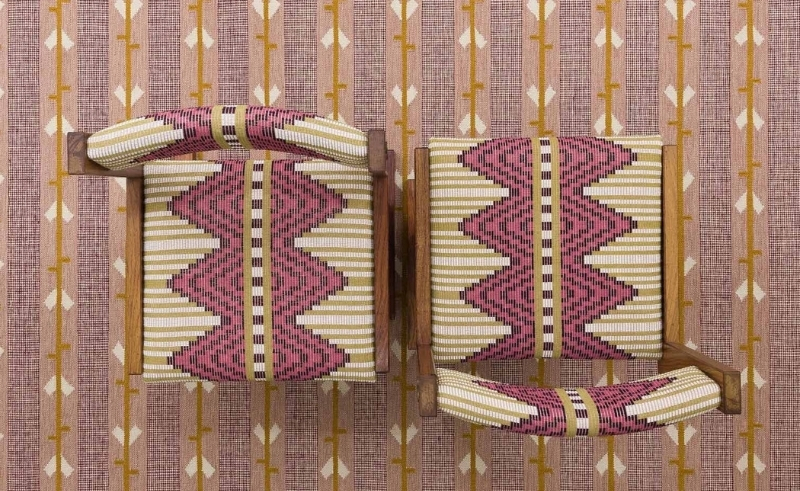
The week’s main design fair, Downtown Design brings established international brands into conversation with regional studios, independent designers and emerging talent.
German luxury kitchen appliance brand Gaggenau, Italian glassmaker Venini and outdoor furniture brand Ethimo are among the international names taking part. Kohler will present a design-led collaboration with Dubai-based architect and designer Agata Kurzela, while regional participation includes Tashkeel’s Tanween Design Programme, an intensive development programme for emerging designers working in the UAE, and Abu Dhabi’s Athath Fellowship, which will showcase market-ready furniture prototypes by its 2026 cohort.
Sharjah-based 1971-Design Space will collaborate with SILA Collective on an interactive spatial experience, while Iwan Maktabi, the family business specialising in rare carpets, textiles and collectible design, will present new works by UAE-based designers Nadine Kanso and Omar Al Gurg. Kanso draws on Arabic calligraphy and symbols of the UAE, while Al Gurg looks to memories of the traditional majlis.
New participants include Dubai-based ceramic studio Slō, UAE-based sourcing and procurement platform Trika Arabia, and Contemporary Spaces, a furniture studio founded by siblings Alya, Maitha and Obaid Al Suwaidi.
Beyond the exhibition stands, a series of pop-ups and creative experiences brings other disciplines into the fair. A dedicated Memphis Milano exhibition, presented by HMA Living, revisits the design movement's graphic patterns, bold colours and unconventional forms. Buccellati will present a pop-up created with British designer Luke Edward Hall, drawing on the mythology and symbolism of water, while British-Nigerian artist and designer Yinka Ilori will create the annual Veuve Clicquot Lounge through a concept rooted in colour, optimism and storytelling. Dubai-based design studio Etereo will also design a new lounge, reflecting its approach to material, form and space.
Urban Commissions
A space is experienced through more than its physical form. Light, temperature, sound and materials all influence how people feel and interact within it. These sensory dimensions inform Urban Commissions, Dubai Design Week’s annual competition, which explores how architecture can shape civic life and shared space. For its 2026 edition, the programme takes ‘Atmospheres’ as its theme, looking at how the qualities of a place are felt as much as they are seen.
The winning proposal, ‘Three Gardens and a Room’, comes from Dubai-based NAO Architects, founded by architect Reem Nassour. The installation brings together three interconnected gardens arranged around a shared central space. Foliage, colour, shade, thermal comfort and filtered light create distinct environments to move between, while the space formed between the gardens becomes a room for gathering, pausing and observing.
The proposal explores four fundamental architectural conditions: the roof, mound, hearth and enclosure. Through walls, thresholds, vegetation and light, it considers how relatively simple elements can shape different experiences of the public realm.
The winning project was selected by a jury comprising architects and urban strategists Dr Ahmed Al Mulla and Fatma Al Khayat, co-founders of ARKAT; architect, curator and cultural strategist Dominique Petit-Frère, founder and director of Limbo Museum; architecture curator and educator Manijeh Verghese, CEO of Open City and a Mayor of London Design Advocate; and curator, consultant and writer Vanessa Norwood.
Abwab
One of Dubai Design Week’s longest-running commissioning programmes, Abwab supports practitioners from West, Southeast and East Asia and the African continent, offering a platform for perspectives shaped by different cultural and regional contexts. For 2026, it moves away from individual pavilions towards a group exhibition, bringing multiple practitioners and contributors into a shared environment.
Under the theme ‘In Other Words’, the exhibition considers language as something that extends beyond the written or spoken word. Signage, symbols, interfaces, gestures and oral histories all become ways of communicating, carrying memories and negotiating meaning. The programme also considers how communication can be translated, reinterpreted or misunderstood, and how these processes can find expression through visual, spatial and sonic design.
Large-Scale Installations
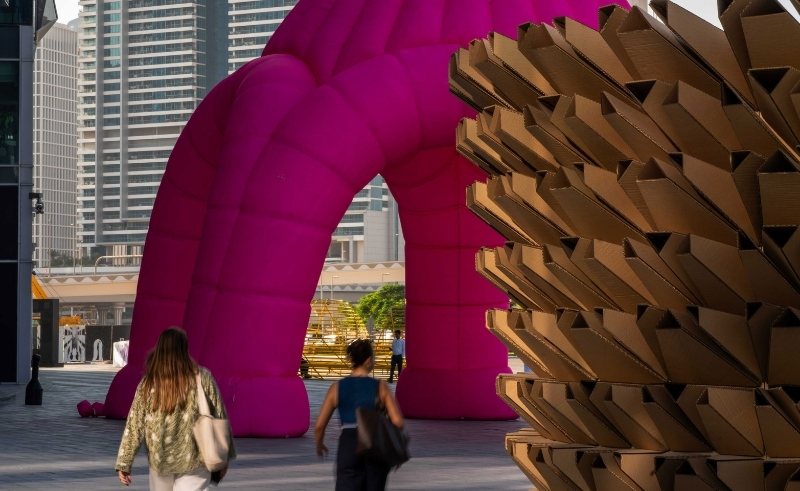
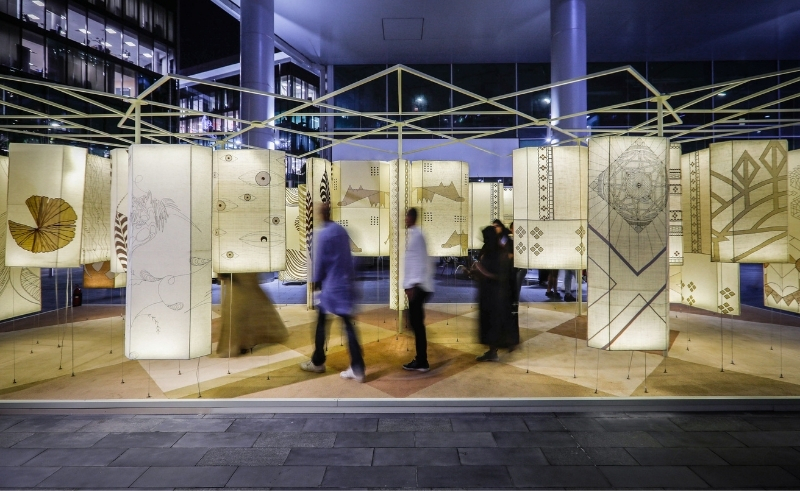
Throughout the week, d3's outdoor spaces will host large-scale installations and site-specific interventions by regional and international architecture and design practices.
International architecture practice Arquitectonica will present a participatory installation centred on collective interaction and play, while Nordic Office Architects will explore the relationship between light and shadow through a modular structure. Japan’s Nikken Sekkei and SOBOKUYA will introduce ‘CHATAI 2.0’, an expanded timber structure that combines traditional Japanese craftsmanship with spaces for gathering and communal making.
Other projects draw on material reuse and familiar forms of social interaction. Palestinian-Turkish practice aestudio will present ‘InBetween What Was and What Will Be’, transforming reclaimed concrete rubble into new architectural forms. Indian practice ALTER will reinterpret Ludo as an interactive setting for connection and shared play, while Bahrain-based Palm and Palazzo will explore the relationship between privacy and social connection in the traditional Bahraini home through ‘BAYN’.
The programme also includes ‘Herding the Unheard: Traces of an Unwritten Language’, presented by Avid Learning ME and Dakhnii Diaries. The project explores pastoral communication through sound, material, visual and interactive experiences rooted in cultural memory.
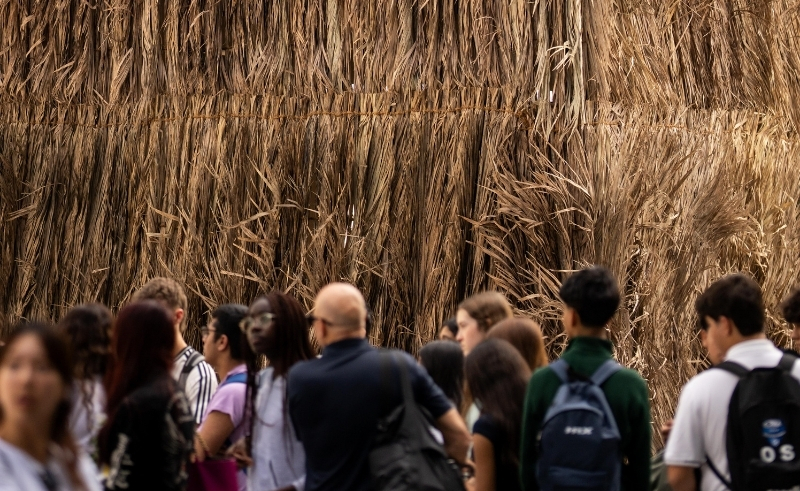
Returning to the festival, Duette Studio will present a new installation alongside Duette+, its cultural platform connecting design, culture and community through conversations, workshops and creative exchange. Emirati architect Rasha Saffarini will present ‘Taqleem’, a contemporary communal space informed by the traditional practice of palm-tree trimming, drawing on Emirati craft, culture and collective memory.
The UAE Designer Exhibition
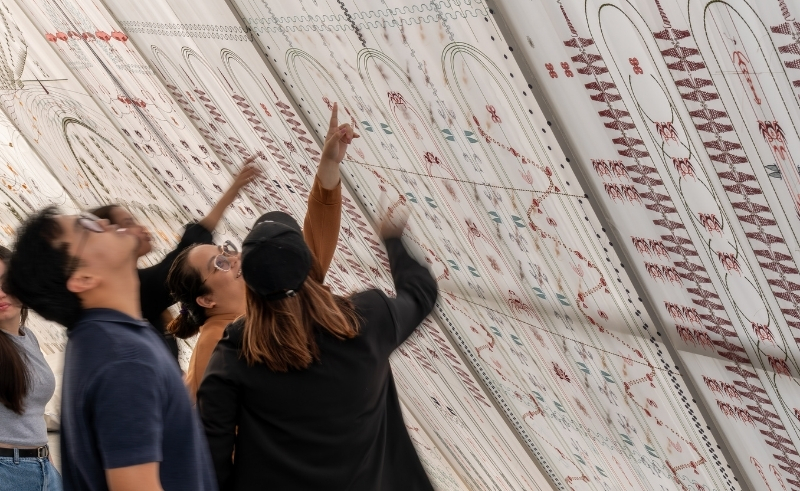
Supported by Dubai Culture, the UAE Designer Exhibition returns under the theme ‘Inherited Futures’, with architect and designer AlZaina Lootah as its 2026 Design Collaborator. The exhibition brings together UAE-based designers to explore how inherited materials, rituals, technologies and ways of making can inform contemporary practice.
The theme places cultural inheritance in an ongoing conversation with the present, asking how established knowledge can be reinterpreted and carried forward rather than preserved as something fixed in the past. It also gives local designers a platform to consider how their work can draw on the UAE's cultural context while engaging with contemporary approaches to making and design.
Exhibitions
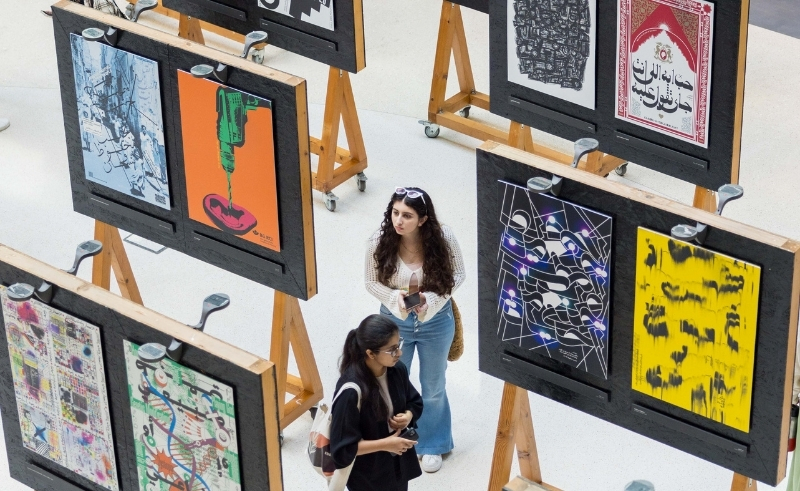
Beyond the main commissions, Dubai Design Week's exhibition programme spans architecture, craft, cultural research, material exploration and contemporary design, bringing together institutions and practitioners working across different disciplines.
‘Worlds Ahead: 25 Years of Design, Place and Impact in the Middle East’, presented by Woods Bagot in partnership with d3, reflects on the architecture practice's 25 years in the region while looking towards the future of cities, design and quality of life.
L'ÉCOLE, School of Jewelry Arts, supported by Van Cleef & Arpels, will present an exhibition revealing experimental archaeological research into lost goldsmithing techniques used by craftspeople during the Second Iron Age. The project shifts attention from jewellery as a finished object to the techniques and knowledge behind its making.
Al Jalila Cultural Centre for Children will return with an exhibition exploring material, making and creative expression through ceramics by young practitioners, bringing a younger generation's engagement with craft into the wider programme.
Activations

Pinterest makes its Dubai Design Week debut with an activation that brings its world of online inspiration and discovery into a physical setting. Through collaborations with designers and artists who use the platform as part of their creative process, the project explores how visual references and digital ideas can be translated into tangible work.
IQOS and new-media studio Ouchhh Collective will present ‘CURIOUS STUDIO’, a new global platform debuting at the festival. The project brings together regional practitioners Karrouhat, HiFi, Cheb Moha and Abrar Zenkawi to explore what emerges at the intersection of creative practice, culture and technology.
Ethr will make its Dubai debut with ‘Desert Dweller’, a contemporary interpretation of the khaima, or Bedouin tent. Designed by architect Omar Darwish and curated by Shaheer Akbar, the project draws on research into traditional tent forms and their role as spaces for gathering and exchange.
Dubai Design Week's automotive sponsor, BMW Middle East, will also return with a design-led activation commissioned exclusively for the festival.
Workshops and Talks
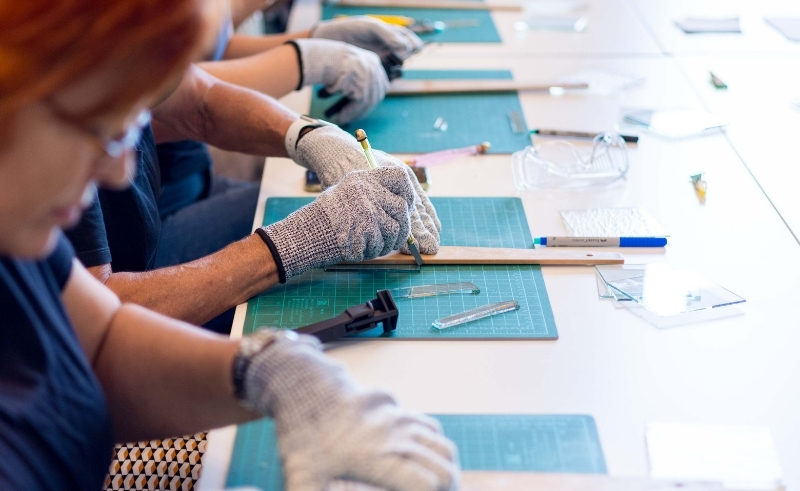
For visitors interested in how design ideas develop, the festival's workshops and talks offer opportunities to engage directly with practitioners, explore different disciplines and hear from people working across architecture, interiors and the creative industries.
A dedicated Maker Space will host hands-on workshops led by professors from the University of the Arts London (UAL) and SAE University College, alongside practitioners from award-winning architecture firm HKS Architects and German camera manufacturer Leica Camera. Independent makers, design collectives and cultural organisations will also contribute sessions, with opportunities open to professionals, aspiring creatives and curious participants of different ages and experience levels.
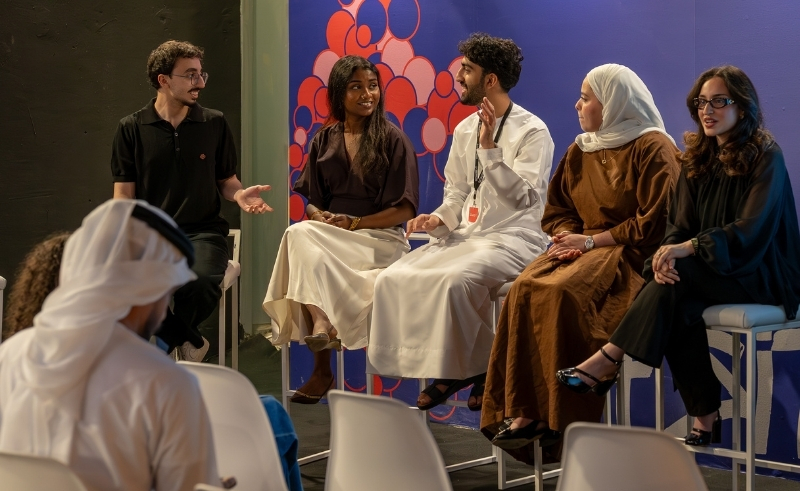
At Downtown Design, The Forum returns with live talks, keynotes and conversations featuring figures from across the region's design and architecture communities and the wider creative industries. French interior architect and designer Tristan Auer will be among the keynote speakers. The programme will take place in a space redesigned annually, with this year's setting under the creative direction of architecture and interior studio BONE.
Marketplace
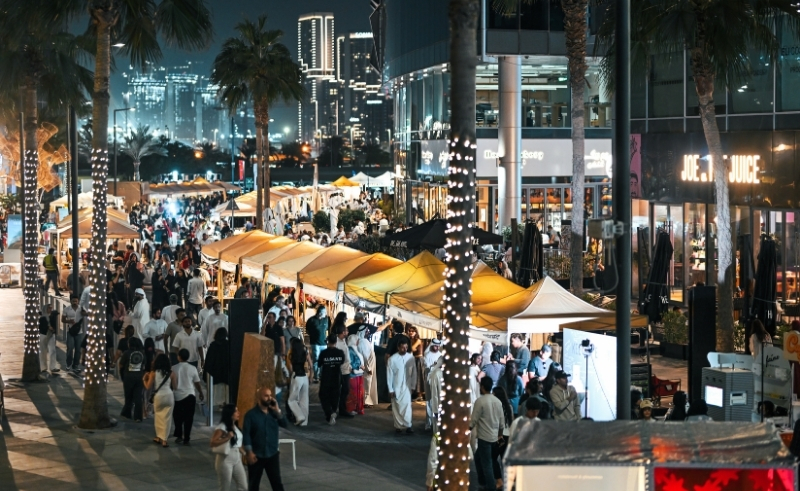
Taking place over the final weekend, Dubai Design Week's outdoor Marketplace brings together homegrown businesses and independent makers from the UAE and the wider region. The curated retail experience spans handmade homeware, jewellery, fashion, lifestyle products and sustainably made goods, giving visitors an opportunity to encounter the work of smaller creative businesses alongside the festival's exhibitions and installations.
The Marketplace also incorporates culinary experiences, children's activities and live performances, creating a more informal gathering space around independent design and craft. It offers a different way to engage with the region's creative community, through the objects people make, the businesses they build and the traditions they reinterpret.