





HH Sheikha Bodour & Jaipur Rugs Unveil Desert-Inspired Carpets
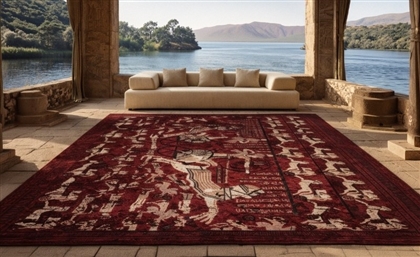
HH Sheikha Bodour and Jaipur Rugs unveil 'Whispers of the Desert', carpets inspired by Sharjah’s ancient landscapes.

Carpet weaving has long been a means of recording landscape, culture and time. In Sharjah, Bait Elowal - a restored heritage house overlooking the creek - hosted the unveiling of 'Whispers of the Desert', a collection of handwoven carpets created by Jaipur Rugs under the vision of Her Highness Sheikha Bodour bint Sultan Al Qasimi. The house, with thick walls, flat roofs and carved wooden doors, provides a setting where craft, landscape and human experience converge.
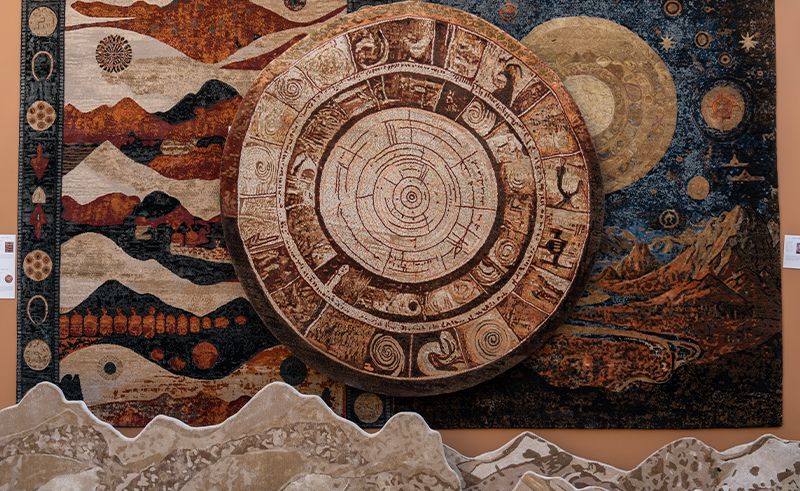
The collection draws from the ancient terrains of Mleiha and Faya, regions that have hosted human activity for more than 200,000 years. The carpets treat these landscapes as living records, translating geological forms, shifting light and the endurance of desert environments into woven narratives. Each of the ten pieces traces a rhythm of material and time, reflecting continuity in human engagement with place.
Jaipur artisans used traditional hand-knotting techniques refined over generations to render the textures, tones and subtle cadences of the desert. Stone, sand, dawn light and night sky are expressed through wool and silk, where colour and pattern emerge through careful labour. As Nand Kishore Chaudhury, the founder of Jaipur Rugs, explains, "Whispers of the Desert reflects everything Jaipur Rugs stands for: respect for craft, patience in creation and the belief that every woven piece tells a story."
The collaboration brings together two UNESCO-recognised contexts - Sharjah, celebrated for its cultural stewardship, and Jaipur Rugs, renowned for preserving artisanal traditions while advancing contemporary design. As Her Highness Sheikha Bodour says, "Landscapes such as Mleiha and Faya are timeless witnesses to human creativity and continuity."
Situated at Bait Elowal, the collection resonates with the house’s history. Overlooking the creek, the heritage building has long been a site of exchange where cultures, ideas and goods converged. The central courtyard, with a fountain and Zellige tiles, frames the carpets in a spatial narrative of reflection and presence.