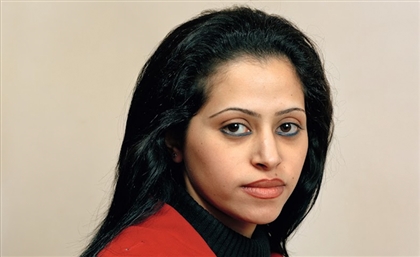






Hadil Alkhatib Designs Collectible Furniture Shaped By Time & Pressure
Working between Beirut and Los Angeles, Syrian designer Hadil Alkhatib explores how pressure, movement and time shape materials, letting the making process guide her sculptural furniture.
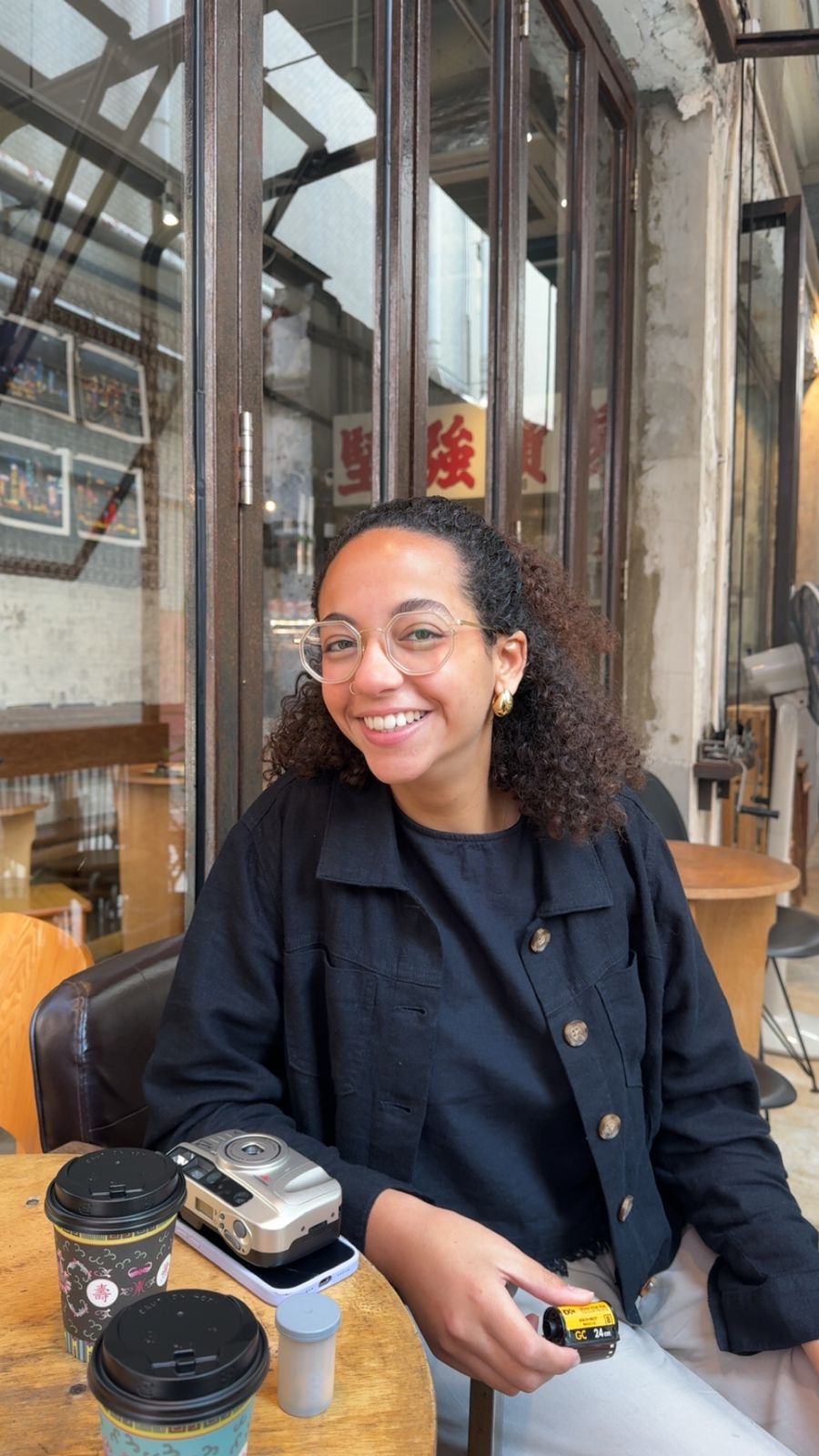
Hadil Alkhatib doesn't fight a piece when it stops behaving. If brass wants to oxidise, she lets it. If aluminium wants to stay raw, she keeps it that way too. A design changes once it meets the material, and she's fine with that.
"I don't want it to behave obediently and perfectly," she says. "I just want the material and the process to lead the way."
In May 2026, Alkhatib launched her debut furniture collection, Edge of Shore, in New York. The nine-piece collection, which includes a console, tables and lamps, is now in storage in Los Angeles while she talks to galleries about where it will land next.
Alkhatib is a Syrian Collectible Designer now based in Los Angeles, developing her work between there and Beirut, though the path between those cities wasn't a straight one. She left Syria around the age of 22, when the war began, and moved to Lebanon, where she stayed for more than a decade. As the region kept escalating, she eventually decided to move to the United States, starting a Master's in Design for Sustainability in 2021.
-8d0e8603-d4a9-48bf-9021-7bd3097f9347.png) "Growing up in Syria, I was always drawn to places where time has left its mark," she says. "Ancient forms, weathered surfaces, traces of the human hand. I didn't have the word for it then, but those details shaped the way I see materials."
"Growing up in Syria, I was always drawn to places where time has left its mark," she says. "Ancient forms, weathered surfaces, traces of the human hand. I didn't have the word for it then, but those details shaped the way I see materials."
Beirut turned that intrigue into something closer to a worldview. "It's a city where history, craftsmanship and resilience exist side by side," she says. "Being immersed in that environment taught me that beauty doesn't come from perfection, but from the stories materials carry, and the transformations they go through."
Years later as a practicing interior designer, she noticed she was more drawn to the objects inside a space than the space itself. That interest prompted her debut furniture collection, Edge of Shore.
Alkhatib began with a question: "What if I focus on the conditions that produce form, rather than focusing on the forms themselves?"
The shoreline became her way in, a place where pressure, movement, time and materials never stop shaping one another. Living in Los Angeles meant she could return to the same stretch of coast again and again, watching rather than swimming. "The more I observe, the less interested I become in the sea itself, and the more fascinated I become by the forces constantly shaping what happens at the edge," she says.
-45adb822-c7fa-41a9-ad33-b8475b43ba7b.png) If Los Angeles is where the looking happens, Beirut is where it becomes an object. Alkhatib stays close to every stage there, trading ideas with the artisans in real time and letting the material have a say in how a piece turns out. That closeness, she says, has shaped the collection as much as the original sketches did.
If Los Angeles is where the looking happens, Beirut is where it becomes an object. Alkhatib stays close to every stage there, trading ideas with the artisans in real time and letting the material have a say in how a piece turns out. That closeness, she says, has shaped the collection as much as the original sketches did.
She's not precious about the outcome either. Plenty of pieces started as one thing and ended up as another, because she let the brass or aluminium oxidise and find its own beauty instead of forcing a fixed result. "You never have the final object right away," she says. "You just count on the process and the materials to lead you."
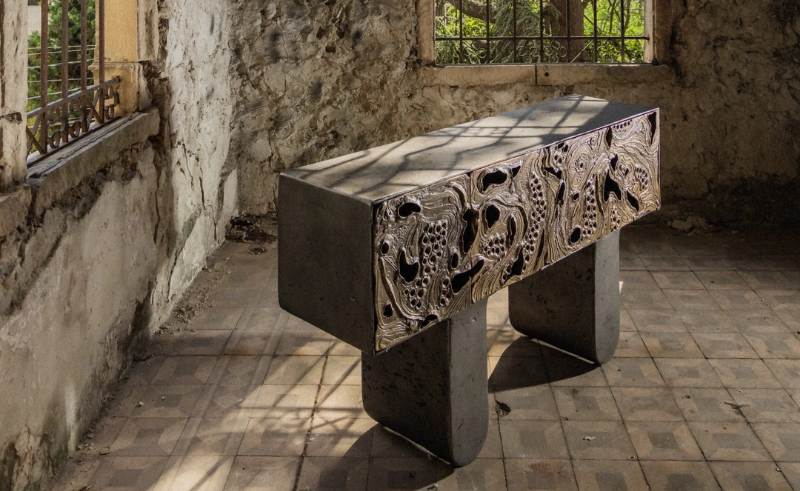
Most of the collection is cast brass, with two pieces in aluminium, a touch of bronze here and there, and one piece that blends brass with resin. Each material gets treated differently depending on what a piece calls for. The Rift table for example is cast aluminium, left raw, because sometimes the roughness is meant to dominate rather than hide.
-3706d07d-82fd-423f-8200-cf0e47e0be36.png) Everything is produced in Beirut with local artisans, then shipped to Los Angeles. The process stays stubbornly hands-on throughout. Alkhatib avoids laser cutting and heavy machinery, hand-assembling and hand-polishing each piece, building the moulds herself. The Coraline console alone went through a wax cast mould that was modified and re-tried more times than she can easily count. "Even the failed attempts have a beauty to them," she says.
Everything is produced in Beirut with local artisans, then shipped to Los Angeles. The process stays stubbornly hands-on throughout. Alkhatib avoids laser cutting and heavy machinery, hand-assembling and hand-polishing each piece, building the moulds herself. The Coraline console alone went through a wax cast mould that was modified and re-tried more times than she can easily count. "Even the failed attempts have a beauty to them," she says.
That patience shapes how she runs the whole practice. She works in small editions rather than scaling up, uses reclaimed metal when she can, and treats a single order, which can take months to complete, as worth the wait. It's a deliberate stand against how fast the design world tends to move. "For me, success is having the freedom to stay honest to the work. The design world moves quickly and there's always pressure to produce more, move faster or repeat what has already been done well. And I think the real challenge is protecting your curiosity and continuing to make work that asks new questions rather than repeating the old answers," she says.
-007fa07a-4605-423f-b9f4-397aa7b22ffc.png) Her process starts with a single image, often somewhere far from a studio, drawn from things like snorkelling trips or rock worn down by the ocean. Only once that observation settles does she start filling notebooks, most of the ideas destined to be abandoned rather than kept. She recently began sharing some of that unfinished material in a new journal section on her website, and at the May 2026 New York launch, she pinned her hand sketches beside the furniture so people could trace how each piece came together from paper.
Her process starts with a single image, often somewhere far from a studio, drawn from things like snorkelling trips or rock worn down by the ocean. Only once that observation settles does she start filling notebooks, most of the ideas destined to be abandoned rather than kept. She recently began sharing some of that unfinished material in a new journal section on her website, and at the May 2026 New York launch, she pinned her hand sketches beside the furniture so people could trace how each piece came together from paper.
Knowing when something is finished comes down to matching what she pictured against what the material actually gave back. Sometimes brass oxidises into a finish she didn't plan for, and that becomes the answer. "This is how I envisioned it, and this is how the materials responded," she says. "So I stop based on that."
She's most attached to the Coraline console, admittedly out of bias. It took longer than anything else to get right, cycling through discoveries and dead ends before settling into its final shape. Its cast brass doors and magnetic locks are also where her interior design instincts show through most, since function matters to her as much as feeling does. "I want people to emotionally connect to a piece," she says, "but I also want it to last forever, not just because it's beautiful, but because it's functional."
-c429661f-3616-4ae6-b382-1c27dd6af36d.png) What she hopes people notice goes beyond the shape of a piece. Over time, she wants them to pick up on the traces of the making itself: the surfaces, the decisions, the hours built into the object. At the New York launch, several visitors told her the pieces felt alive, that they could sense motion held inside them. It was exactly what she'd hoped to hear.
What she hopes people notice goes beyond the shape of a piece. Over time, she wants them to pick up on the traces of the making itself: the surfaces, the decisions, the hours built into the object. At the New York launch, several visitors told her the pieces felt alive, that they could sense motion held inside them. It was exactly what she'd hoped to hear.
To Alkhatib, the work was never really a series of separate collections. It's one long conversation. “Every collection should leave me seeing the world a little differently than when I began. If it doesn't, then it probably hasn't asked the right question," she says.
- Previous Article Vodafone Business Egypt Announces AI Infrastructure Partnerships
- Next Article Registration Opens for Ithra Design Challenges 2026
Related Articles

Trending This Week
-
-
 Oct 15, 2026
 -

-