




How Architects Reframe Cairo Through Photography at Photopia
Architects are trained to think spatially. At Photopia, this architectural gaze is curated to bridge the gap between the buildings we inhabit and the stories we tell about them.
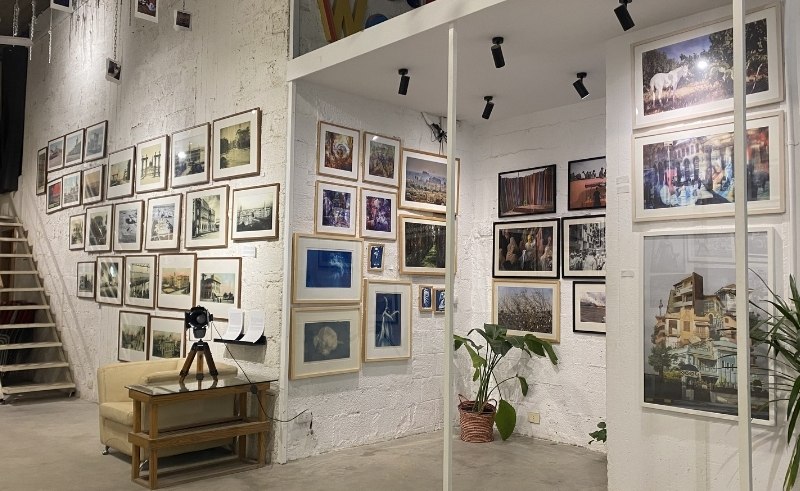
This intersection of design and photography is the core of the professional discourse found at the ecosystem offered by Photopia, a Cairo-based school, studio and gallery focused on elevating photography across the nation.
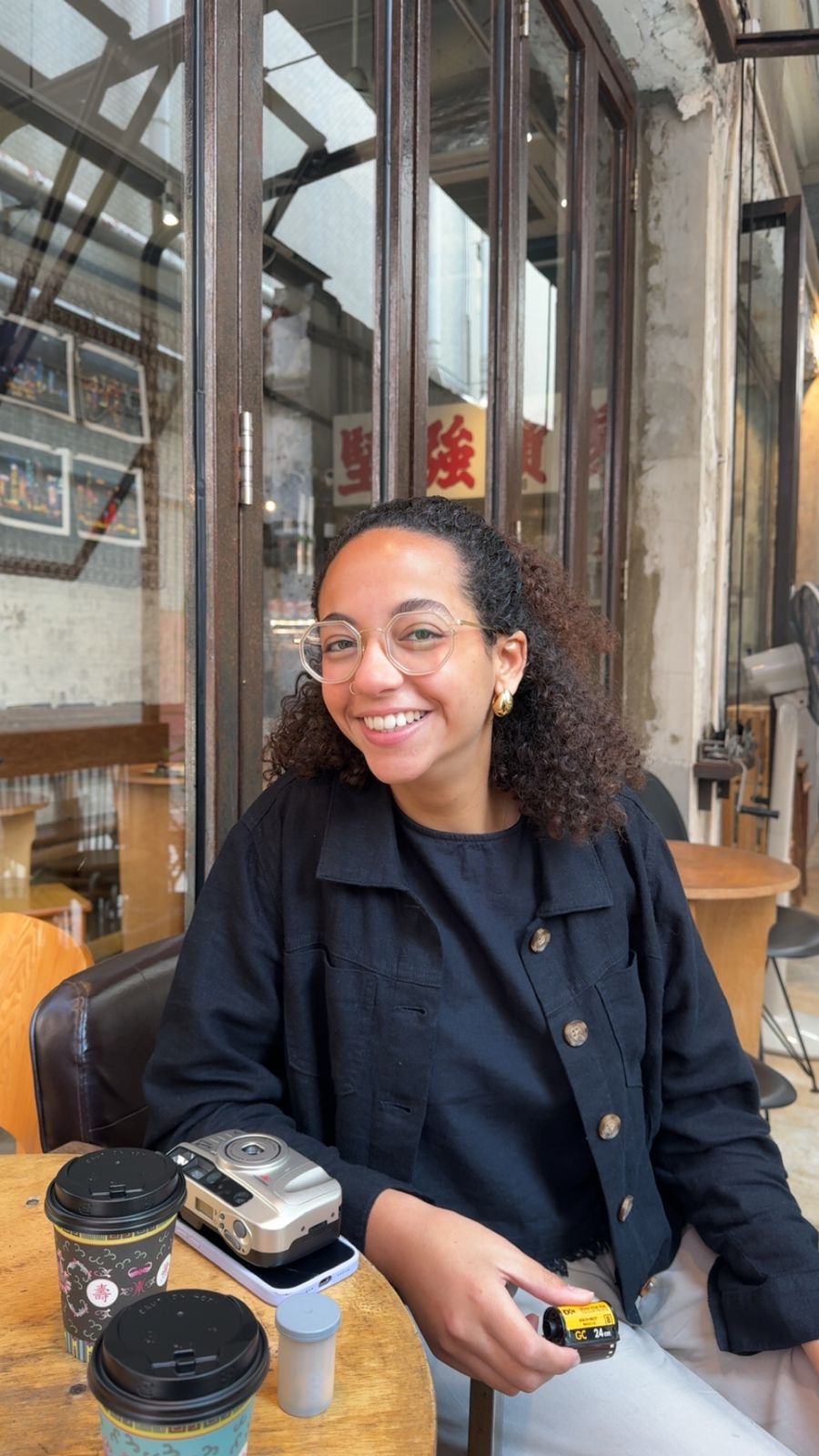
To explore this overlap, we sat down with two figures who speak the languages of both design and photography fluently: Karim El Hayawan and Nelly El Sharkawy. For them, photography is a way of dissecting the visual logic of a city. Their architectural background shapes everything from the way they frame a facade to the details they isolate, shifting buildings from static objects to materials for storytelling.
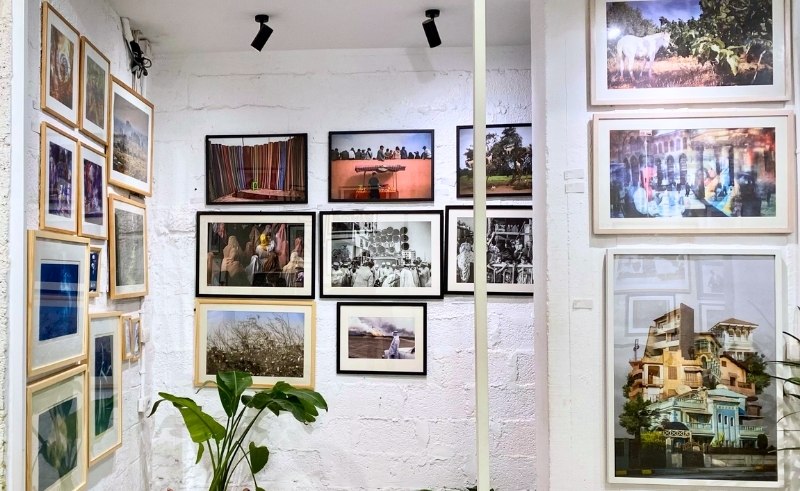
It is this specific "designer-to-designer" language that Photopia seeks to curate. According to Marwa Abo Leila, Co-founder and Managing Partner of Photopia, “The work is curated based on themes, photography styles, topics or by photographer to make it easier for people to find what they are looking for.” This curation is strategic; it creates an immersive experience where other designers can find visual work that matches their own creative approach, eventually building entire interior spaces around these photographic narratives.
Architects are taught to master the third dimension. They think in volumes, floor plans and structural depth. But for El Hayawan, the true challenge began when he decided to throw all of that away. “I discovered that all the photography I do after graduating as an architect is two-dimensional, not three-dimensional,” El Hayawan tells SceneHome. What started as an instinct later became a conscious rebellion against the logic of his architectural training itself. “I know how to draw in 3D and I will be able to photograph it well and adjust its proportions because I already know how to draw it, so I always felt that I wanted to photograph something that is the opposite of what I do.”
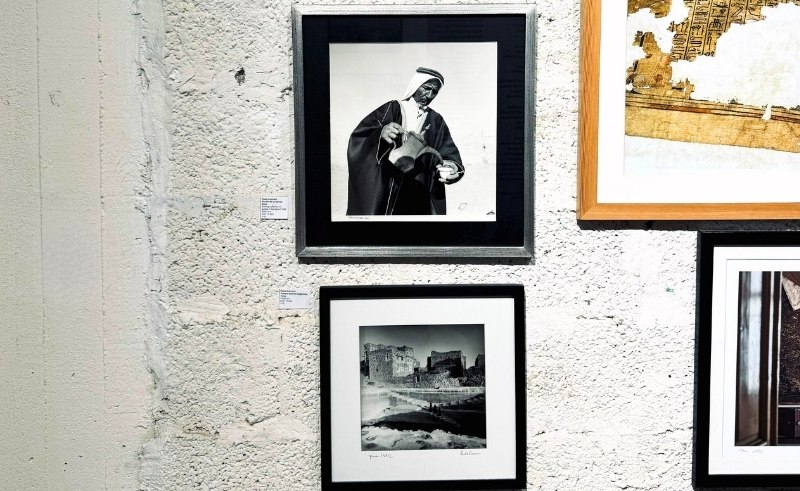
Rather than chasing dramatic perspectives or spatial depth, Karim El Hayawan became obsessed with photographing buildings head-on, flattening them into surfaces where smaller details begin to take over. “The building is flat,” he explains. “The shadow and what is inside the window on the other side tells the story.” His images are about what unfolds on the surface: a passing figure, an unexpected object, or a strange alignment of shadows and textures.
This fixation on flatness is not purely aesthetic. It is also deeply tied to his interest in displacement, surreality, and the unwritten logic of cities. El Hayawan is drawn to moments that feel slightly “off”: a chair hanging from a ceiling, five people balancing on a motorcycle, or objects occupying spaces they were never meant to occupy. For him, photography becomes a way of questioning who decides what is normal in the urban environment and whose perspective defines order.
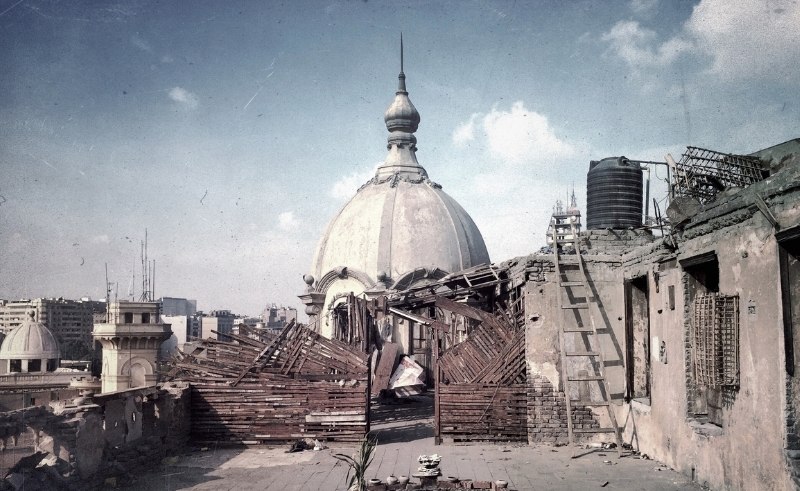
For Nelly El Sharkawy, the relationship between architecture and photography unfolded in the opposite direction. Photography entered her life long before architecture school did. What began with an old film camera and self-portraits, slowly evolved into a much larger investigation into cities, buildings, and visual memory.
“Architecture completely changed the way I photograph and the way I look at everything,” she says. Her attention shifted away from photographing people and toward photographing the built environment itself. But unlike conventional architectural photographers, El Sharkawy was not interested in documenting buildings as they are. She wanted to reconstruct them.
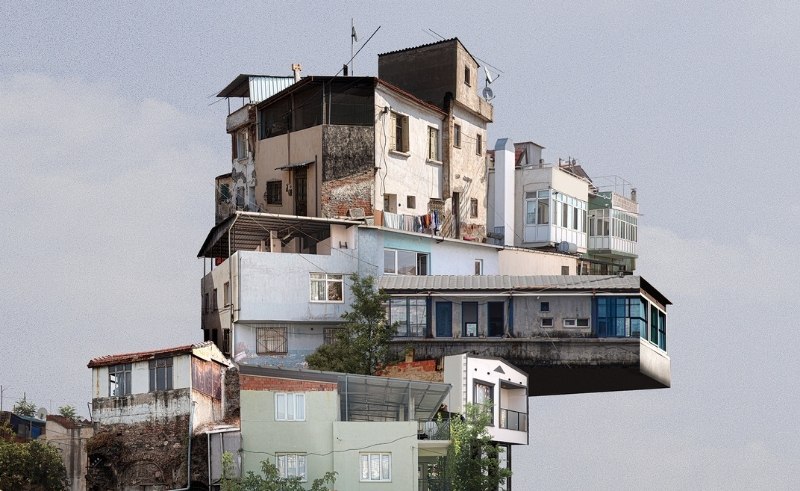
This impulse eventually turned into 'Le Carnaval', an ongoing project she began in 2017 as a way of understanding Cairo’s architectural identity. At the time, she felt lost within architecture school, unsure of what qualified as “good” architecture or what kind of spaces she was personally drawn to. Her response was radical documentation. “I decided to photograph all the buildings that I would see on my way, regardless of whether I like them or not,” she explains.
She divided Cairo district by district, photographing everything before digitally collaging fragments together into fictional structures that somehow still capture the emotional truth of each neighbourhood. “When you look at it for example, you should feel that you see Zamalek combined in all its styles, in all its ways,” she says.
For El Sharkawy, the photograph itself is never the final artwork. Instead, it functions as raw material for reconstruction. Collage became her way of actively building an image rather than simply capturing one. What makes her work particularly striking is that the manipulations are almost invisible. She carefully assembles entirely new architectural realities using only her own photographs, while making the final image appear believable enough to exist. “I like that whoever sees it thinks that this composition actually exists,” she says, “but then they ask themselves, where is this building?”
While their individual practices offer distinctive viewpoints, they find a common ground in the community Photopia provides. “Photopia is a support system that gives you freedom to express yourself in different ways, whether through documentary, a conceptual story, or architecture," El Hayawan says. "Whenever there’s image making, they’re ready to talk about it and support it.”
“We curate photography mainly from some of the most prominent photographers in Egypt, both established artists and emerging talents,” Abo Leila adds. “Through these connections, we’ve brought together a wide network of photographers offering prints that are truly worth owning.” By bridging the gap between the buildings we inhabit and the stories we tell about them, Photopia seeks to sustain a cycle where the architect’s gaze is not only seen, but experienced once again.
- Previous Article SceneNoise x Amsterdam Dance Event Present CROSSFADE: Egypt
- Next Article The Abandoned Architecture of Villa Badran by Gamal Bakry