





Lebanese Architect Zein Daouk is Building a Fungi Kingdom in Ceramics
A forest of fungi, a mind trained in architecture, and clay that grows into strange beings. Zein Daouk turns mushrooms, memory and Beirut’s resilience into ceramics that feel alive.
Somewhere in the half-billion-year-old space between extinction and possibility, between the last ice age and the first green thing that dared to grow on land, Zein Daouk built a kingdom. It exists in that moment when algae met fungus and decided, against all odds, to cooperate. The algae would photosynthesise, make sugar, and share. The fungus would mine the rock for minerals and pass them up. Together they became something neither could be alone. Together they made the whole thing possible. The whole thing being everything. Life. Us.
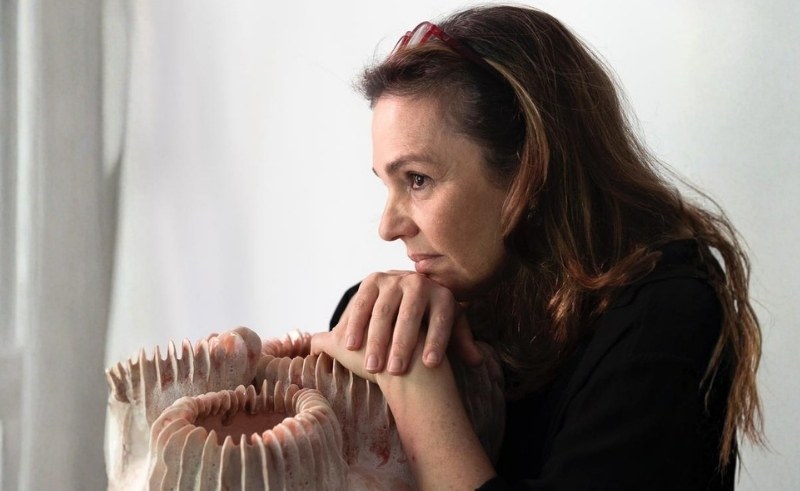
This is the story Lebanese architect–turned–ceramicist Zein Daouk tells: “I am an architect first and foremost. It's a way of life. Today, I am an architect that tells stories in clay." She tells the story through clay: vessels that could be vases or sculptures. Through lamps that sleep as fungi by day and wake as light by night. "There is always a dance between form and function," she says. "Nothing is static. Everything flows."
She created a taxonomy for the beings she invented and named them in Latin. She is after all an architect and architects love to classify things, and there is no greater classification than taxonomy. The naming structure is architectural: Series | Genus Species Size (e.g., TTK | Calvatia Aurea Maxi).
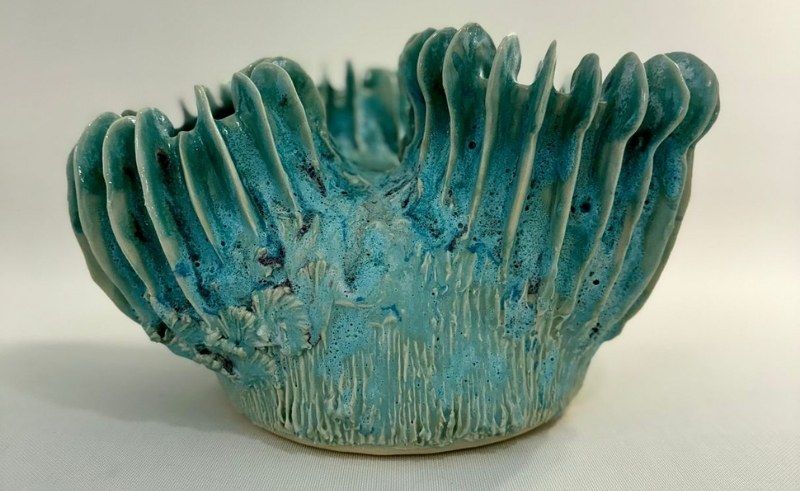
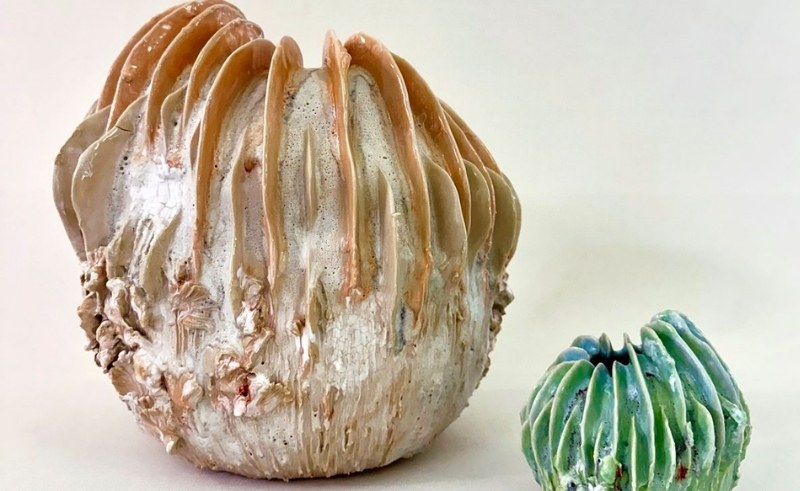
Zein calls it The Third Kingdom. Funga. A world she invented and then populated with beings that have names, personalities and purposes. Ten shapes. Eight vessels and two murals. The Calvatia is nurturing, big-bellied, and devoted. The Coprinus is cerebral, elaborate, whispering wisdom from somewhere ancient. The Polyporus is curious, with multiple heads that sprout in different directions like someone who cannot stop asking questions.
"The shape that you pick is mostly the shape that matches your personality. I love the Polyporus. I'm a very curious human being."
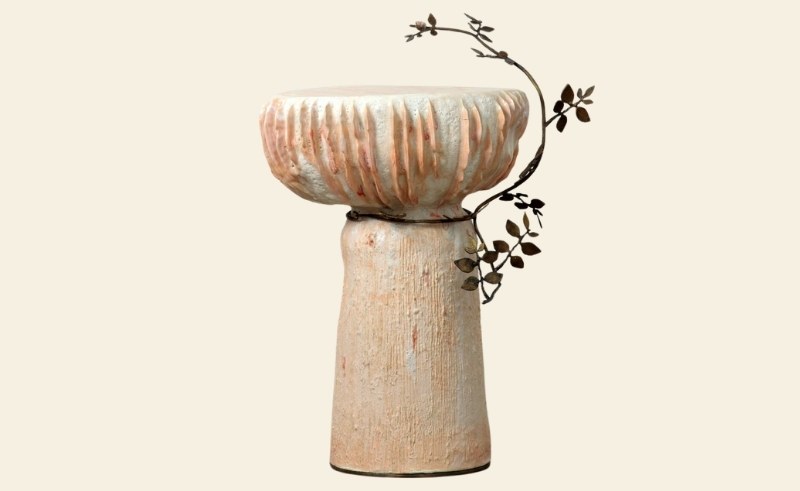
She gave them colours of sky, rose and gold. Roseum. Aurea. Coelum. Soft colours, that work together and apart, like any good family. The beings have sizes: Mini, Midi, Magna, Maxi. They have interiors glazed in gloss that flow outward to meet the matte at the rim. They have lava craters that catch light, textured surfaces that want to be touched. They can function as vessels or tables or lamps or nothing at all. They can just sit there, being themselves, and that is enough.
Zein fires each piece multiple times. "In clay, you work with the four elements: earth, water, air, and then the foundation becomes fire. I can control everything up until fire, and then I have to surrender to the kiln. That's when it decides whether my piece will stand, whether there's a crack, whether the glaze melts the way I wanted." She loses pieces to cracks and air bubbles, and she keeps them anyway, lined up on shelves, because there is no piece more precious than a broken one that has been put back together.
The logic of this world moves like an architect's pencil across tracing paper. Structures, flows, connections. Zein draws relationships between things the way the mycelium draws nutrients through soil. Nothing grows alone. Nothing in her kingdom is meant to.
Her personal story with clay began in 1999, a year after her first daughter was born. "I needed a moment for myself, to be able to create. I went from a working woman to a mother. My daughter was born prematurely at seven months, and I think it caught me by surprise. So I started going to ceramics classes every Saturday just to get a moment to breathe, to think, to be myself." She threw on the wheel, meditative, requiring power, concentrating everything she had into the tips of her fingers, and very quickly “fell in love with clay. It's a magic material." She realised that "there's a language between my brain and my hands that I speak fluently. I understand what my hands are saying."
She never wanted to sell anything. She gave pieces away. For twenty years, she would create, release, and walk away. "I never needed to own a wheel," she says. "I never needed my own studio. I would go, use whatever clay was there, and leave it all behind." The protection of a hobby is a kind of wisdom; if something is only for you, it cannot be taken away nor can it fail. It cannot become another job, another demand, another thing that asks you to perform. For two decades, Zein kept ceramics as a secret garden. She watched her architectural career rise and shift, raised her daughters, lived in the house her great-grandfather built, the same house she designed as her final architecture project, the same house where she now sits, showing me the cracked pieces on her shelf.
When 2019 arrived, Lebanon began to break. “I created a series called The Screaming Headlights. They were table lamps very much based on the screams of the people. They had open mouths from which a light stems." Zein made fifteen of them in the months after the financial crash, when work stopped and she went to the studio every day, when clay became a daily refuge. They were angry things. They had to be. She was angry.
Then 2020 arrived, and the port exploded, and her studio in Gemmayzeh was inside the blast radius. After the explosion, after she emptied what was left of the studio from a building that was collapsing, after she carried everything back to the old house and set up her first real workspace, she tried to return to them. She stood in front of the five that remained and could not touch them.
"I was very broken," she says. "And I couldn't."
The screaming headlights sat there, mouths open, waiting. Zein turned away and remembered something else: a series of small mushroom sculptures she had made in 2014, for a mantelpiece, for herself. She remembered that she had once been curious about fungus, so she went back to reading again. Zein read about the symbiotic relationships and thought about the world outside her window, a world becoming more polarised, more separate, more certain of its differences. She thought about how easy it is to forget what makes us the same, and the story she needed to tell.
Zein's studio is full of these golden histories. She showed me, turning her laptop camera toward the shelves. A screaming headlight, blue. Cast bronze experiments. The Primogenitus cluster, seven small beings that were the first-born. And everywhere, everywhere, the pieces that cracked, the tests, the almost-weres, the ones that refused to surrender to the fire.
In 2021, Zein exhibited The Third Kingdom at Saleh Barakat's gallery in Beirut. It was October, near the end of COVID, and people were hungry for something that was not fear.
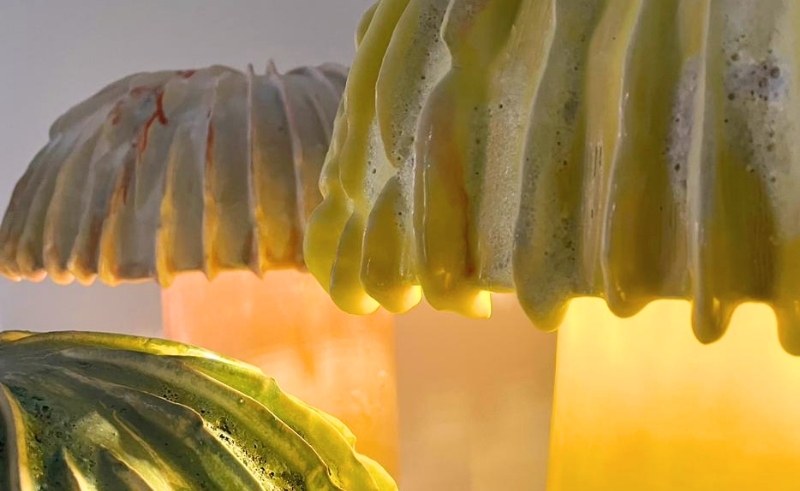
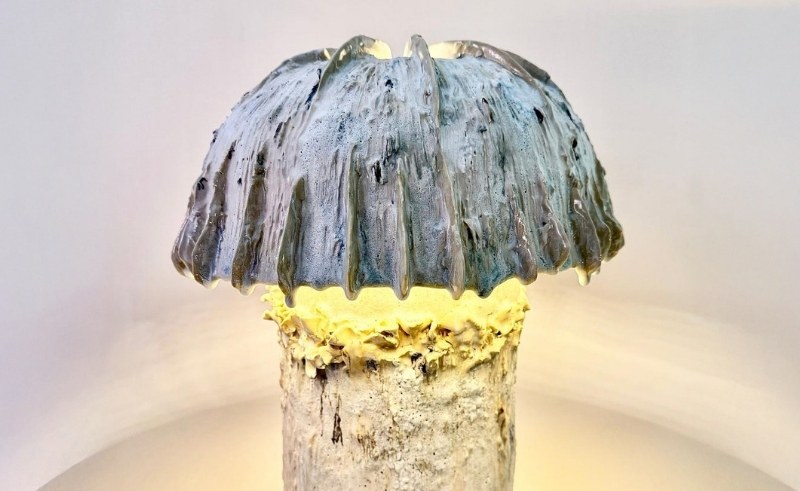
The Shining Shiitake came from the same research, the same obsession, the same need to tell the story differently. They are lamps, but they are also sculptures. By day, they sit on walls or tables, textured and coloured, mushroom-formed, playful. By night, they glow. The light is amber, warm, contained. It emanates from the underside, from the gills, from the places you would not expect.
“Light is something very interesting as a designer because it's intangible. You cannot touch it, but it can change your world.”
Zein’s path has led to galleries in New York and Philadelphia, London and Paris. It has led to Design Miami and the Salon and the Collect art fair. It has led to a call from a gallerist in Philadelphia who read an interview and cold-called her, not knowing who she was, not knowing that her daughter was graduating from Penn that same week, not knowing that she would be in the city anyway.
Zein believes in karma. She believes in a global consciousness. She believes that things converge at the right time if you are open to them.
"The only constant is change. Nothing is permanent. Not architecture, not ceramics, not you and me. Nothing. We are all in constant motion. There's magic in that. If you understand change and accept it and work with it, there's nothing more magical."
Related Articles
Trending This Week
-
 Oct 06, 2026
 -
-
-