






May Elghandour's Love Story With Light, Colour & Glass
In the reception of her parents’ house, May Elghandour used to hide at sunset, waiting for the exact moment when the chandelier would turn the entire space into a rainbow - a moment of pure joy.
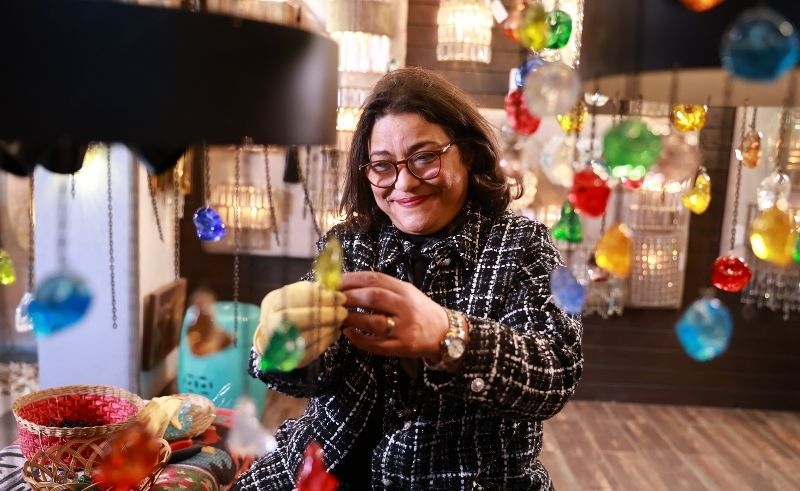
Egyptian lighting designer May Elghandour traces her lifelong fascination with light back to childhood, when her mother would buy her Ramadan lanterns. She would turn off the lights, light the lantern, and watch as the coloured glass reflection danced across the room, on the walls and the ceiling. That moment filled her with indescribable happiness.
As she grew older, whenever she felt upset, she would escape to Khan El-Khalili and return feeling refreshed and genuinely happy. One day, she stopped and asked herself, “What exactly makes me feel happy there?” The answer was clear: the light.
“That’s when I realised this was my true passion,” Elghandour tells SceneHome. “And from there, I started thinking about what I wanted to do.”
Leaving behind over 20 years of success in her corporate career, Elghandour decided to create Beit El Saad – the Home of Happiness – a place where she could finally release the artistic energy that had been trapped inside her for years. “It needed to come out so badly that when I design something, I already see it in my imagination before I even touch it with my hands,” she explains. “I wanted my entire time to be spent doing something I’m passionate about, where work itself brings happiness.”
Determined to succeed and to prove everyone who doubted her decision wrong, Elghandour took to the streets, especially those of Old Cairo. She observed craftsmen and learned their techniques, starting with how Egyptian Ramadan lanterns are made and moving on to more complex processes, until she reached very modern production methods.
“If I found a skilled craftsman, I would sit next to him all day, talk to him, and become friends,” she says. “To this day, I have so many friendships there. Whenever I go back, everyone knows me, and everyone loves me.”
In her search for a unique artistic language, Elghandour sought to create lighting rooted in Egyptian identity, but interpreted in a modern way. “Not the traditional designs we’ve been seeing for decades or even centuries,” she explains. “I wanted to evolve that language.”
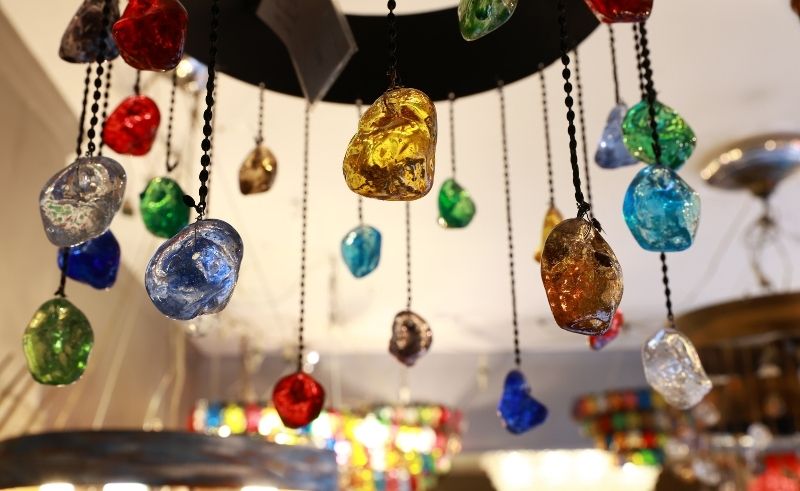
To achieve this vision, working with Egyptian materials was essential. “I told myself, if I could reach 95% Egyptian materials in my products, I would be happy,” she says. “And thank God, I achieved that.”
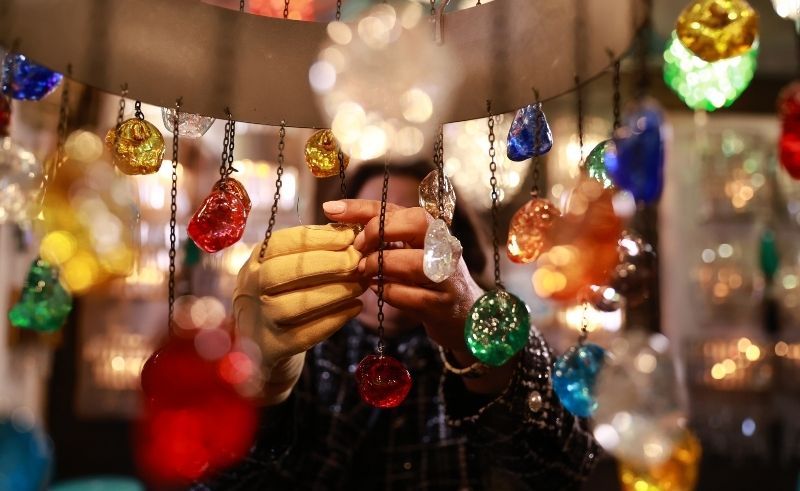
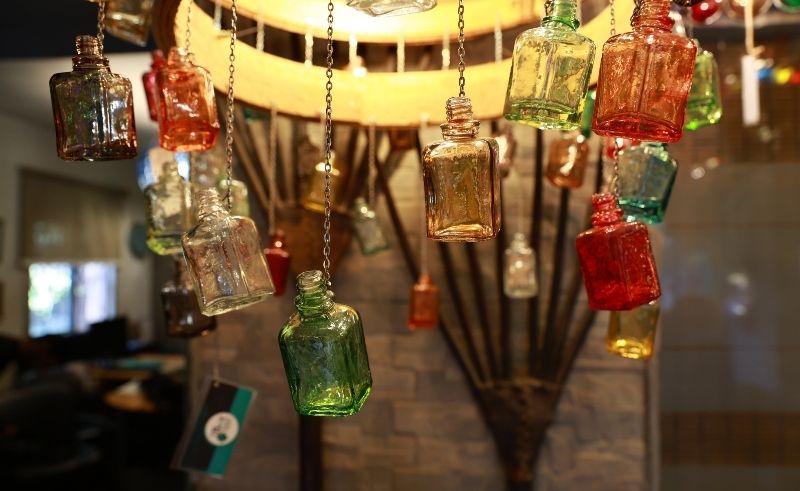
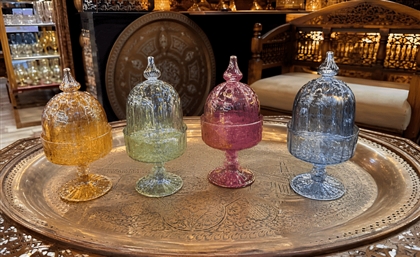
One of the most important materials Elghandour was keen to work with was blown glass. “As Egyptians, we were the first to use it,” she explains. “It’s even depicted on temple walls.” While exploring the craft, she discovered that blown glass is a dying craft, with only a handful of artisans left in Egypt. “This is something we must preserve as a country,” she says. “It has huge export potential, it’s beautiful, soulful, handmade work and it uses recycled glass, which also helps the environment.”
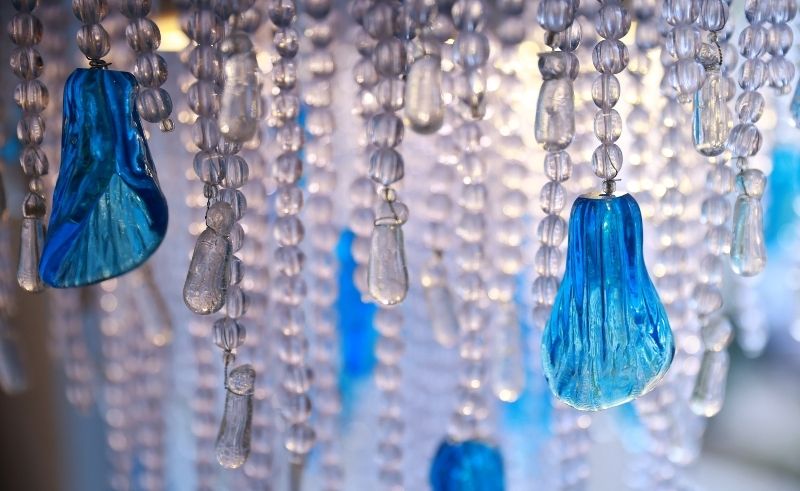
Elghandour believes many people don’t understand the value of handmade products. In a world dominated by automation, she feels that mass-produced pieces all look the same. “After a while, your eye gets used to them, and they lose their beauty because they have no soul,” she says. “Anything handmade is never identical. A handmade chandelier looks different from every angle – you’ll never get bored of it, even if it stays with you for a hundred years. Your eye keeps discovering it again and again.”
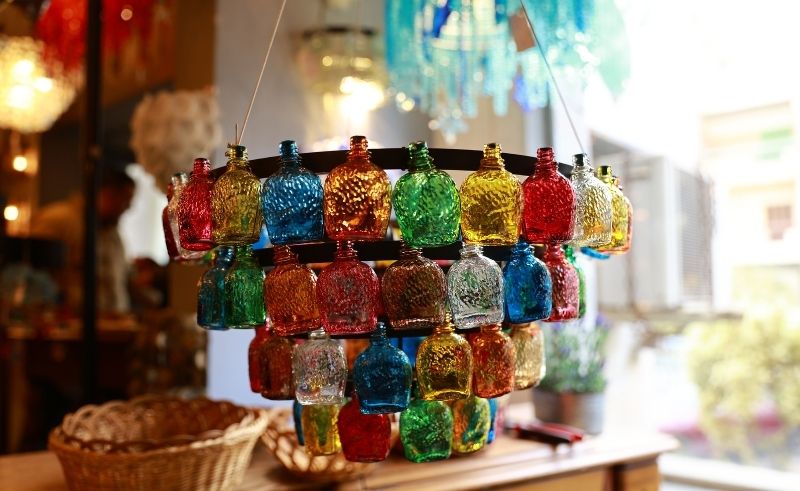
One of the greatest “open treasures” Elghandour discovered during her Beit El Saad journey is upcycling. With the rapid construction of modern towers, especially in the New Capital, large amounts of glass from façades and windows are discarded. Elghandour collects these pieces, cuts them into smaller units, and transforms them into unique designs. That’s how the disco ball collection was created. “We simply take materials people throw away and give them new life.”
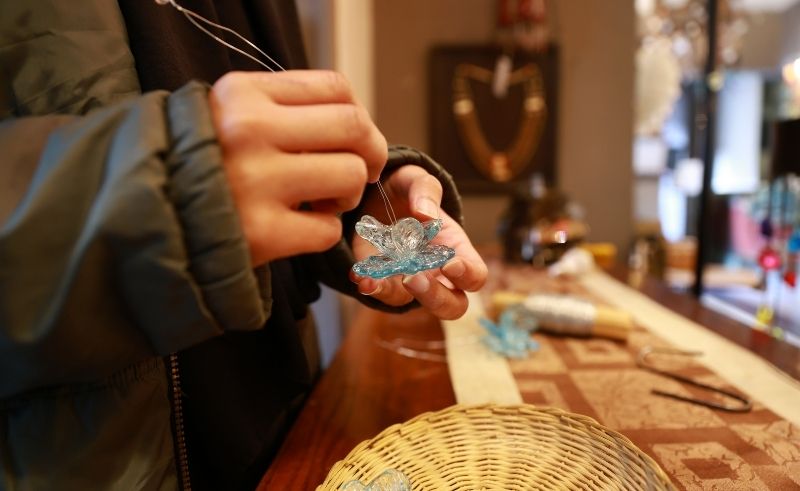
When it comes to inspiration, Elghandour believes it can come from anywhere. “Sometimes I’m walking and something catches my eye, like a bird’s nest. Its structure makes me want to create a chandelier inspired by it.” Other times, it’s the material itself that sparks an idea. And sometimes, a design simply begins with a sketch on a blank page.
“I sketch it, draw it, then start figuring out what materials would suit it,” she says. “That’s why I always keep a sketchbook and pen next to me – an idea can strike at any moment.”
One of the pieces closest to her heart was created for her daughter’s wedding, who lives in Canada. With many foreigners attending the wedding, “I wanted to create something deeply Egyptian."
She went to buy the traditional 'Badra' - the coins Egyptians throw over the bride as part of wedding traditions. “When I brought the materials and looked at them, I suddenly felt they could become a chandelier.” The result was 'El-Kerdan', a piece created especially for the wedding décor, showcasing Egyptian identity to an international audience. “After she got married, I sent one to her,” Elghandour says. “I told her, ‘So you always remember me and Egypt.’”
Today, with a dream of reaching a global audience, Elghandour continues to grow Beit El Saad – showcasing a unique Egyptian identity through contemporary design, creating jobs, and doing what she can to help bring prosperity to Egypt. “That’s my true dream."
- Previous Article Is Hamza AbdelKarim’s Barcelona Move a Shift For Egyptian Footballers?
- Next Article Ne’ma Expands Ramadan Food Rescue Campaign Nationwide
Related Articles

Trending This Week
-
-
 Oct 15, 2026
 -
-