





Ramy Elgazar Wants You to Know He’s Not Just a Fat Man in a Loincloth
The Egyptian sumo wrestler was the first Arab and African US Sumo Open Champion.

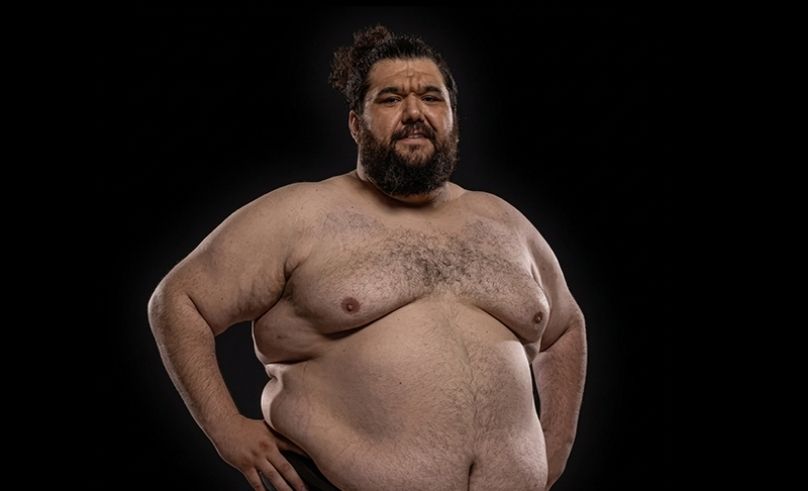
Four thousand people, sitting at the Walter Pyramid Arena in Long Beach, California and not a single one of them cheering for Ramy Elgazar.
It was 2015, and the Egyptian sumo wrestler - still relatively unknown - was on the verge of shocking the world. Btamajav Ulambayar, the Mongolian mountain standing across from him, was an eight-time defending heavyweight gold medallist and four-time world champion. The crowd at the US Sumo Open knew what they were looking at. So did Elgazar. He'd lost to this man before, at the World Championship in Taiwan, around a year prior — and the memory hadn't exactly faded gracefully.
-4abc798d-9e63-4275-8df9-c33453aa5451.jpg) "After the competition, they had a party," Elgazar tells SceneSports. “So, I go there and told him, 'Today you beat me by luck because my leg got stuck.' He said, 'No, I'm stronger than you.'" Ramy pauses, laughs. "This made me really angry."
Anger, as it turns out, is excellent fuel. Elgazar went looking for the next competition, found an email from the US Sumo Open in his inbox, and booked the flight. When he walked into that arena in Southern California and heard 4,000 voices calling another man's name, he didn't shrink. "This made me really happy," he recalls. "Oh, 4,000 people — you are wrong about me." He beat Ulambayar that day, becoming the first US Open Sumo Wrestling Champion in the history of Egypt, Africa, and the Arab world. He's beaten him plenty of times since. But that one, he'll tell you, is still the special one.
"After the competition, they had a party," Elgazar tells SceneSports. “So, I go there and told him, 'Today you beat me by luck because my leg got stuck.' He said, 'No, I'm stronger than you.'" Ramy pauses, laughs. "This made me really angry."
Anger, as it turns out, is excellent fuel. Elgazar went looking for the next competition, found an email from the US Sumo Open in his inbox, and booked the flight. When he walked into that arena in Southern California and heard 4,000 voices calling another man's name, he didn't shrink. "This made me really happy," he recalls. "Oh, 4,000 people — you are wrong about me." He beat Ulambayar that day, becoming the first US Open Sumo Wrestling Champion in the history of Egypt, Africa, and the Arab world. He's beaten him plenty of times since. But that one, he'll tell you, is still the special one.-bcbb609d-a621-472e-936d-5dce397cea34.jpg) Ramy Elgazar is not a man who does things quietly. He came to sumo in 2006, but the foundation was laid much earlier. He practiced Greco-Roman wrestling at age seven, and then went into judo, where he became a black belt and an Arab-African champion. When he made the shift to sumo, he wasn't even allowed onto Egypt's national sumo team at first. He was already committed to the judo squad. He found his way in regardless.
What followed was a career that took him around the world and eventually into the orbit of USA Sumo, an organisation that both competed with him and educated him.
"They told me more information about sumo, taught me more about it," he says. "So, I found myself needing to talk about sumo, to explain it for the people who speak Arabic."
And talk he does. His YouTube channel, Sumo Bel Araby — 'Sumo in Arabic' — is Elgazar's ongoing attempt to bring the sport home, as something with genuine roots worth understanding. He's particularly focused on young people, and even more specifically, on a subset of young people who know something about being underestimated.
Ramy Elgazar is not a man who does things quietly. He came to sumo in 2006, but the foundation was laid much earlier. He practiced Greco-Roman wrestling at age seven, and then went into judo, where he became a black belt and an Arab-African champion. When he made the shift to sumo, he wasn't even allowed onto Egypt's national sumo team at first. He was already committed to the judo squad. He found his way in regardless.
What followed was a career that took him around the world and eventually into the orbit of USA Sumo, an organisation that both competed with him and educated him.
"They told me more information about sumo, taught me more about it," he says. "So, I found myself needing to talk about sumo, to explain it for the people who speak Arabic."
And talk he does. His YouTube channel, Sumo Bel Araby — 'Sumo in Arabic' — is Elgazar's ongoing attempt to bring the sport home, as something with genuine roots worth understanding. He's particularly focused on young people, and even more specifically, on a subset of young people who know something about being underestimated.
-b529a7e1-a9fe-4c96-b43f-12f3d635b6e1.jpg) "Fat kids in school, they get a lot of hate for being this size," he says, with the directness of someone who has thought about this for a long time. "Maybe it's genetic. Maybe they have a health problem. Maybe they don't have a proper schedule, to eat, train, walk. So, they get this size."
Elgazar’s vision is straightforward. He wants to bring sumo to Egypt, to Saudi Arabia, and to the Arab world as a whole while giving those kids a structure, a discipline.
There is, he is aware, a perception problem to contend with. Sumo reads to the uninitiated as spectacle — large men in small garments, collision and chaos. Ramy has heard the jokes. He doesn't find them particularly funny, but he understands where they come from, and he has a response ready.
"We are not in sumo just to show people our ass," he says, with the measured delivery of a man who has said this before and expects he'll say it again. "It's tradition. A long time ago, when the samurai wanted to fight in sumo, the judges try to make sure they don't hide any weapons that they could kill the opponent with."
Beneath the theatre, in other words, is a ritual. Beneath the ritual, history. "It's very physically demanding. It's mentally demanding. There's a lot of tradition. That message is what I hold inside me."
He'll talk about sumo the way someone else might talk about a religion, which isn’t entirely a metaphor. In Japan, sumo is bound to Shinto — the wrestlers themselves considered something like sons of gods, their presence a source of good fortune.
The salt thrown before a match isn't just theatre; it's ceremony, each gesture carrying centuries of meaning behind it.
"Fat kids in school, they get a lot of hate for being this size," he says, with the directness of someone who has thought about this for a long time. "Maybe it's genetic. Maybe they have a health problem. Maybe they don't have a proper schedule, to eat, train, walk. So, they get this size."
Elgazar’s vision is straightforward. He wants to bring sumo to Egypt, to Saudi Arabia, and to the Arab world as a whole while giving those kids a structure, a discipline.
There is, he is aware, a perception problem to contend with. Sumo reads to the uninitiated as spectacle — large men in small garments, collision and chaos. Ramy has heard the jokes. He doesn't find them particularly funny, but he understands where they come from, and he has a response ready.
"We are not in sumo just to show people our ass," he says, with the measured delivery of a man who has said this before and expects he'll say it again. "It's tradition. A long time ago, when the samurai wanted to fight in sumo, the judges try to make sure they don't hide any weapons that they could kill the opponent with."
Beneath the theatre, in other words, is a ritual. Beneath the ritual, history. "It's very physically demanding. It's mentally demanding. There's a lot of tradition. That message is what I hold inside me."
He'll talk about sumo the way someone else might talk about a religion, which isn’t entirely a metaphor. In Japan, sumo is bound to Shinto — the wrestlers themselves considered something like sons of gods, their presence a source of good fortune.
The salt thrown before a match isn't just theatre; it's ceremony, each gesture carrying centuries of meaning behind it.
-d9a5ecfd-7d38-4152-a8ef-cde225b748c8.jpg) "When you read manga or watch animation — there are tons of gods inside, tons of fights," Elgazar says. "This is legit for sumo. Sumo for Japanese is similar, conceptually, to religion.”
It's a lot to carry into a YouTube channel. But then, Ramy Elgazar has never been the type to travel light. He's still competing. Still talking. Still explaining, in Arabic, to anyone who will listen, that sumo is not a punchline. It it is, in fact, one of the oldest and most demanding athletic traditions on Earth. That big kid from Egypt who once stood in a California arena with 4,000 strangers chanting against him is living proof of what it can make you.
"I hope I can keep talking about sumo," Elgazar says. "Because it's really rich in history." Four thousand people were wrong about him once. He's making it his business to make sure nothing like that ever happens again.
"When you read manga or watch animation — there are tons of gods inside, tons of fights," Elgazar says. "This is legit for sumo. Sumo for Japanese is similar, conceptually, to religion.”
It's a lot to carry into a YouTube channel. But then, Ramy Elgazar has never been the type to travel light. He's still competing. Still talking. Still explaining, in Arabic, to anyone who will listen, that sumo is not a punchline. It it is, in fact, one of the oldest and most demanding athletic traditions on Earth. That big kid from Egypt who once stood in a California arena with 4,000 strangers chanting against him is living proof of what it can make you.
"I hope I can keep talking about sumo," Elgazar says. "Because it's really rich in history." Four thousand people were wrong about him once. He's making it his business to make sure nothing like that ever happens again.