





Egyptian-German Photographer Tarek Mawad is Possessed by Light
In this conversation with SceneStyled, Mawad shares his obsession with statuesque silhouettes, his appreciation for film photography, and the way he pursues the perfect shot.
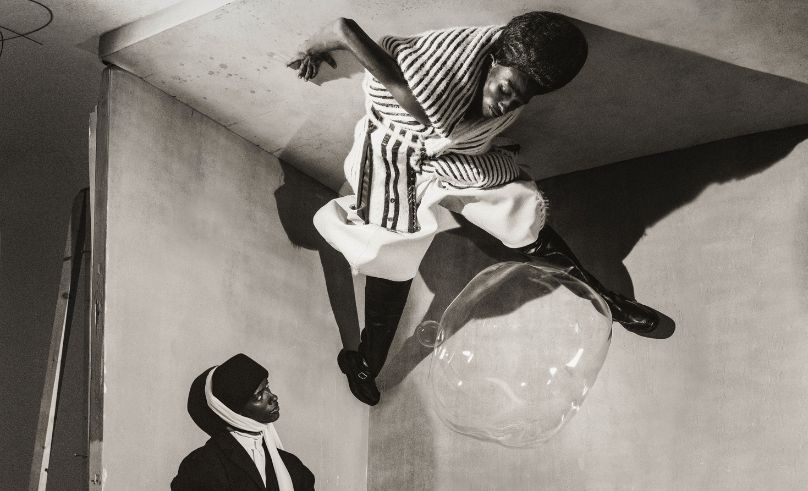
Like the master sculptors of antiquity, who carved stone for hours and hours to preserve beauty and the power of Gods, Mawad carves his subjects through light and shadow. The camera becomes his chisel; light, his marble. His images have a distinctly Caravaggesque drama, transforming the subject into something timeless—almost divine.
Starting off as a 3D animation and visual effects artist, Mawad spent years building light inside digital space, shaping entire scenes from scratch and studying how illumination defines form, texture, and atmosphere. Wanting to understand light more deeply, he started to take his camera with him into the street, photographing different situations and observing the way light falls on a face or transforms a street. Back at his computer, he would then recreate these scenes in 3D; then go back outside again. It was through this exchange between the real and the rendered that photography finally took hold.
In this Scene Styled feature, Mawad speaks in more detail about his obsession with statuesque silhouettes, his appreciation for the slow, meticulous process of film photography, and the way he pursues the perfect shot.
 How do you define light in your photography?
Light is an elementary key in my photography. Understanding light is also about understanding shadow, which means it all comes together. I look through everything in a more technical perspective as well. How does the camera function? It is always about reinventing the way to capture light.
I see a lot of statuesque silhouettes in how you frame bodies and your general composition. Why are you drawn to this type of visual language?
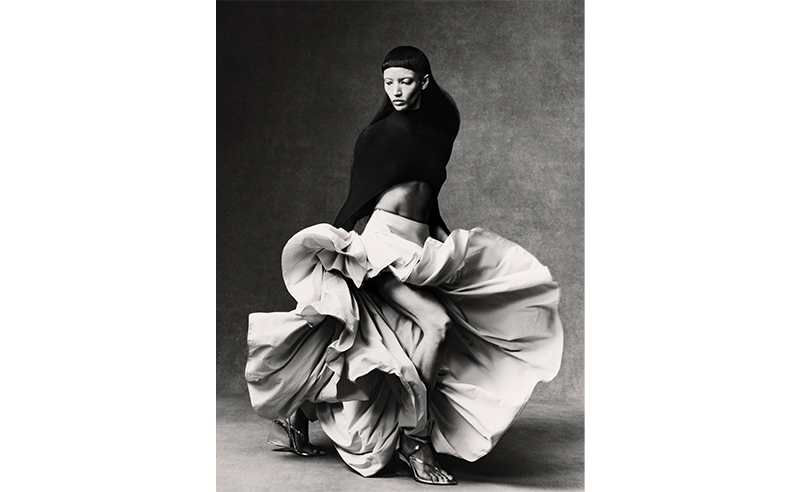
I think I’m very inspired by sculptures. I’m always going to museums and looking at sculptures. I’m inspired by anatomy too. I have tons of anatomy books at my place. I see the human body as this organic, weird sort of mechanism that functions in layers: skin, muscles, bones. Everything kind of works harmoniously together. I’ve always found it so beautiful to observe how the body moves and how it functions. And I think sculptures were inspired by that same thing.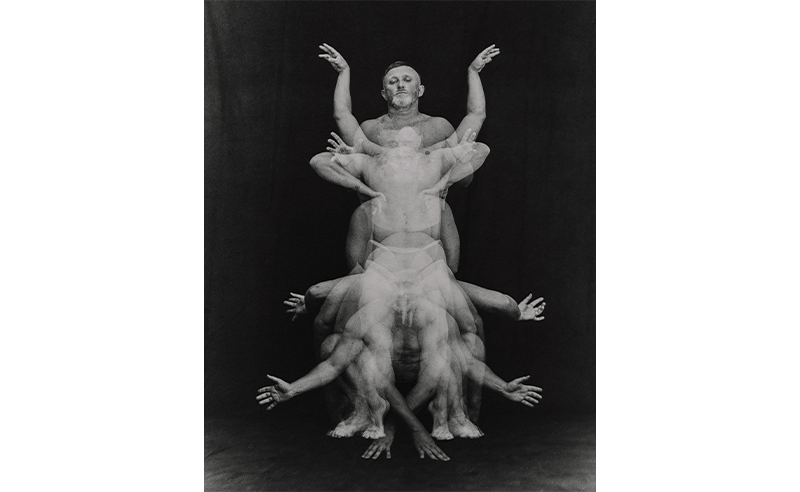 It’s also a reminder of the way the old masters created, from photography to building sculptures—everything was so much more focused on detail and perfectionism. They would sit there for hours, days, months, just working on a single detail. I see that, and I feel so connected to it in the way that I approach photography.
That’s where light becomes such a big part of it. I’m shaping the light around the models I have and thinking about what it is that I want to say. Do I want to highlight the skin a little bit more? Do I want to highlight the face, or the shape? It really depends on the story I want to tell.
Tell me more why you choose to shoot predominantly on film?
With editorials in person, I always shoot on film. Even after the shoot, there are so many ways of processing it in the darkroom, of printing it, of making it perfect.Digitally, it just doesn’t work for me. It always frustrates me—it looks too clean, too flat.
I like taking time. Especially in this industry, everything is about rushing and fast consumption. So I love this kind of process, where you build an entire team around you and have that concept in mind. And the team is there with you because they believe in the concept. Then you’re on set, you’re shooting, and afterwards you develop.
And also, the way you shoot is different. Coming back to the sculpture thing, you really take your time. You’re designing the frame until you feel it’s right, and then you click at that moment when you think, well, this was the right moment, or this is the perfect one. It’s not like you have a thousand pictures for one look and then decide later. It’s less just clicking, clicking, clicking.
What are some of your favourite shoots?
*Numero Netherlands ‘Fantasy’ with Samuel Elie -522b46b6-8b71-446b-9565-46c1d9a478f0.jpg) It was a shoot inspired by a dream I had. At first, it was so difficult to figure out how to recreate a dream that has so many layers. You wake up, then you go back into the dream, and suddenly you’re in a different scene. So it was like, how do I put all of this together into one story?
It was a shoot inspired by a dream I had. At first, it was so difficult to figure out how to recreate a dream that has so many layers. You wake up, then you go back into the dream, and suddenly you’re in a different scene. So it was like, how do I put all of this together into one story?
I started by researching how a dream is structured. There’s a point where you don’t remember that you’re dreaming. Another phase is when the dream collapses. Then the state where you’re half asleep and half awake. Dreams are incredible because there are situations we experience daily, or thoughts we have, and everything just comes together randomly.
In my dream, I was sitting on a cliff and looking into the horizon. Everything was this blue marble, and there was a huge mosque on the horizon. I was standing on the cliff, and then the cliff suddenly crashed and I fell into this abyss.
The cover shot was made from two different shots that we captured as a negative. So there’s one picture and then another picture, but we had to change the light accordingly. Every scene has a different meaning, so I created different lighting for each one.
*Dapper Dan 32 ‘Daily Routines’ Maaike Klassen -6247fc7b-cd18-4449-9a9c-9e02a8543043.jpg) The story behind this shoot was our different daily routines, translated into a fashion story. The way you wake up in the morning, have a coffee, go to your job, maybe fight with your boss or the people you work with. Then you go home and work out. It was very simple, but the whole story gave so much possibility for the model to express herself.
The story behind this shoot was our different daily routines, translated into a fashion story. The way you wake up in the morning, have a coffee, go to your job, maybe fight with your boss or the people you work with. Then you go home and work out. It was very simple, but the whole story gave so much possibility for the model to express herself.
She was incredible. She’s so impressive and expressive in her mimics and gestures that she was the right person for that story.
What’s your approach on directing on set?
Sometimes I create a story. Sometimes it's finding lines and angles and the right geometry that composes the picture. Sometimes I just step back and let the model do what she feels. Then I can adapt. I just love creating beautiful pictures and having a little bit of a guide. But at the end of the day, what counts for me is creating timeless pictures.
You’ve worked all across the world from Dubai, Paris, to the US, how do you describe the different creative ecosystems?
Paris is the fashion hotspot. Nowadays, I feel like everyone is moving to Paris because there’s such a struggle and lack of jobs in Berlin. Aesthetically as well, I think there’s so much difference in the way they do commercial work and the way they see art in Paris.
For example, a few years ago, no agency would take me because I was too artistic for them. That got me down a little bit. It was like, I can’t be that bad. That’s not possible. Someone told me, no, no, you just have to try it in London. And then I found an agency in London that took me directly.
You have to find where your place is with your [visual] language. Maybe you just don’t have many chances in Germany, but maybe you go to Paris or to London.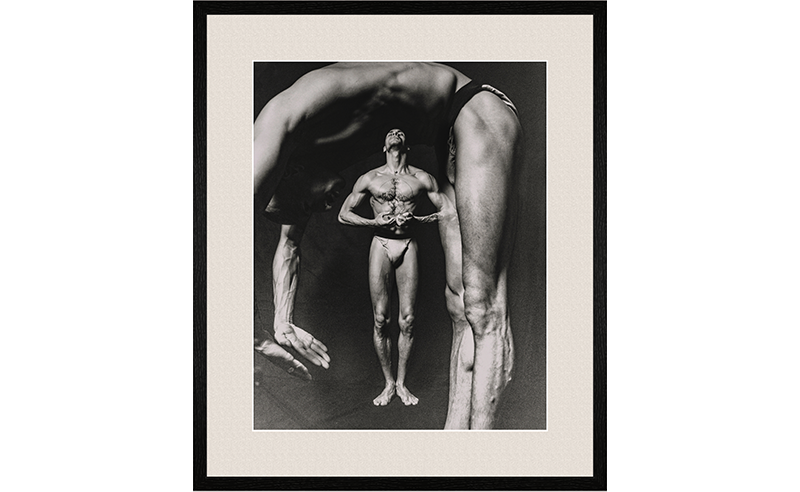 How have you navigated the changing media space?
I still work for print magazines and shoot for print magazines. I know there is less, but nowadays I think it has a different meaning than before. It's more an archive for a collection that you have for later. It's like, oh, you did a shoot and you have a shelf full of magazines.
What’s next?
I always have milestones that I want to achieve like this year. I want to focus more on niche artistic magazines. My dream is to shoot Tilda Swinton and Javier Bardem—people with personalities, interesting faces, that match my visual language.
- Previous Article SceneNoise x Amsterdam Dance Event Present CROSSFADE: Egypt
- Next Article Hekayyatna is Hosting an Ancient Egypt-Inspired Dinner in London
Related Articles
Trending This Week
-
-
 Oct 15, 2026
 -

-