




How Dubai-Based Traveller Dr. Sonia Haboub Ran Through 118 Countries
Dr. Sonia Haboub has ran across 118 countries; now she builds platforms that bring runners together from every corner of the map.
Running has existed for centuries, instinctually. Before it was a metric to be chased and a graph smoothed into a flat green line, before it was a lifestyle category with its own section in the Lululemon app, the legs simply went without waiting for a five minute warmup walk or a Spotify playlist. The ground was there, and someone needed to be somewhere else, fast. Hunger. Fear. The first runners jolted because staying put was the more expensive option; the soles of their feet learned the language of the terrain in a way no carbon-plated shoe could ever translate.
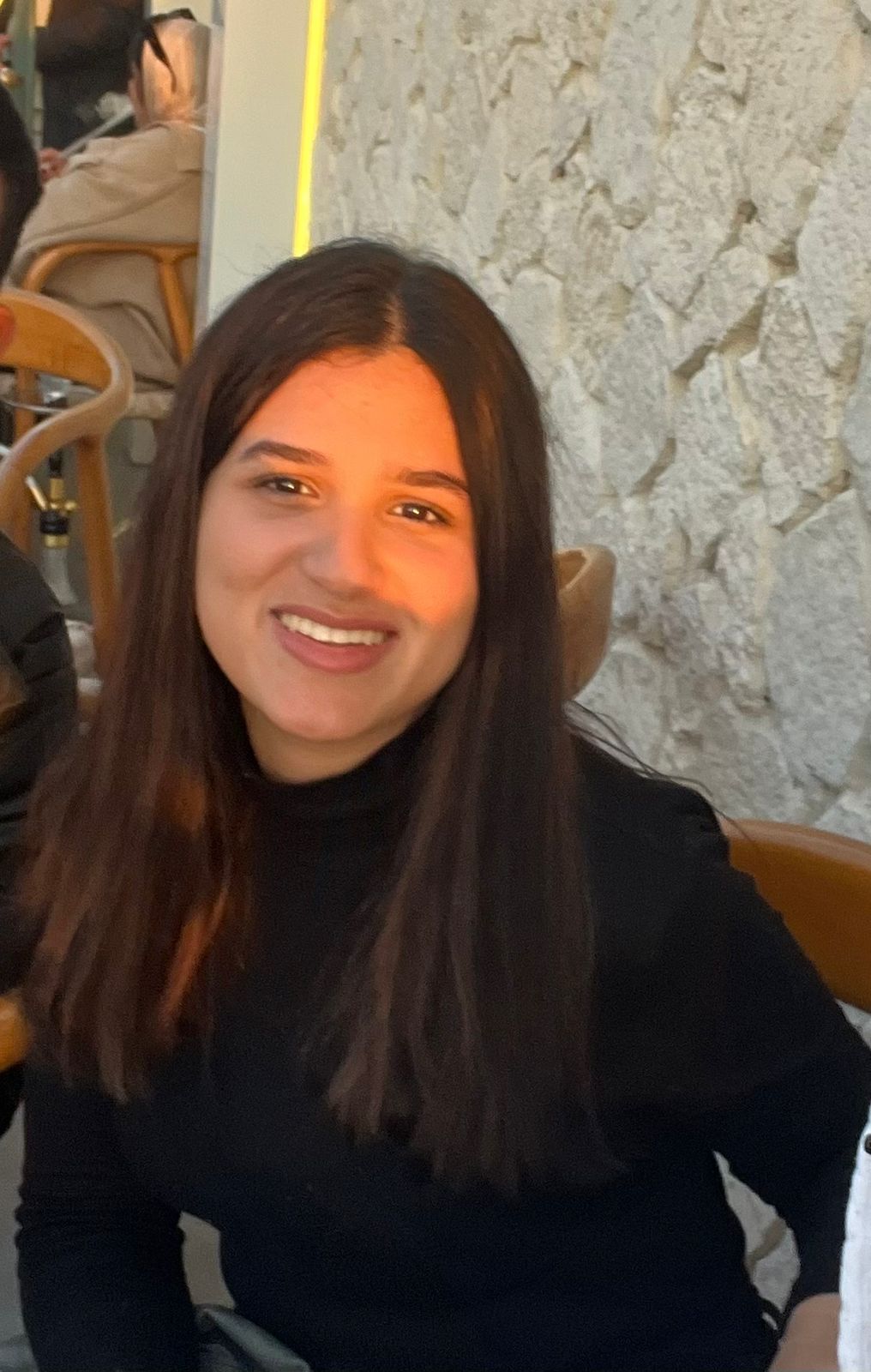
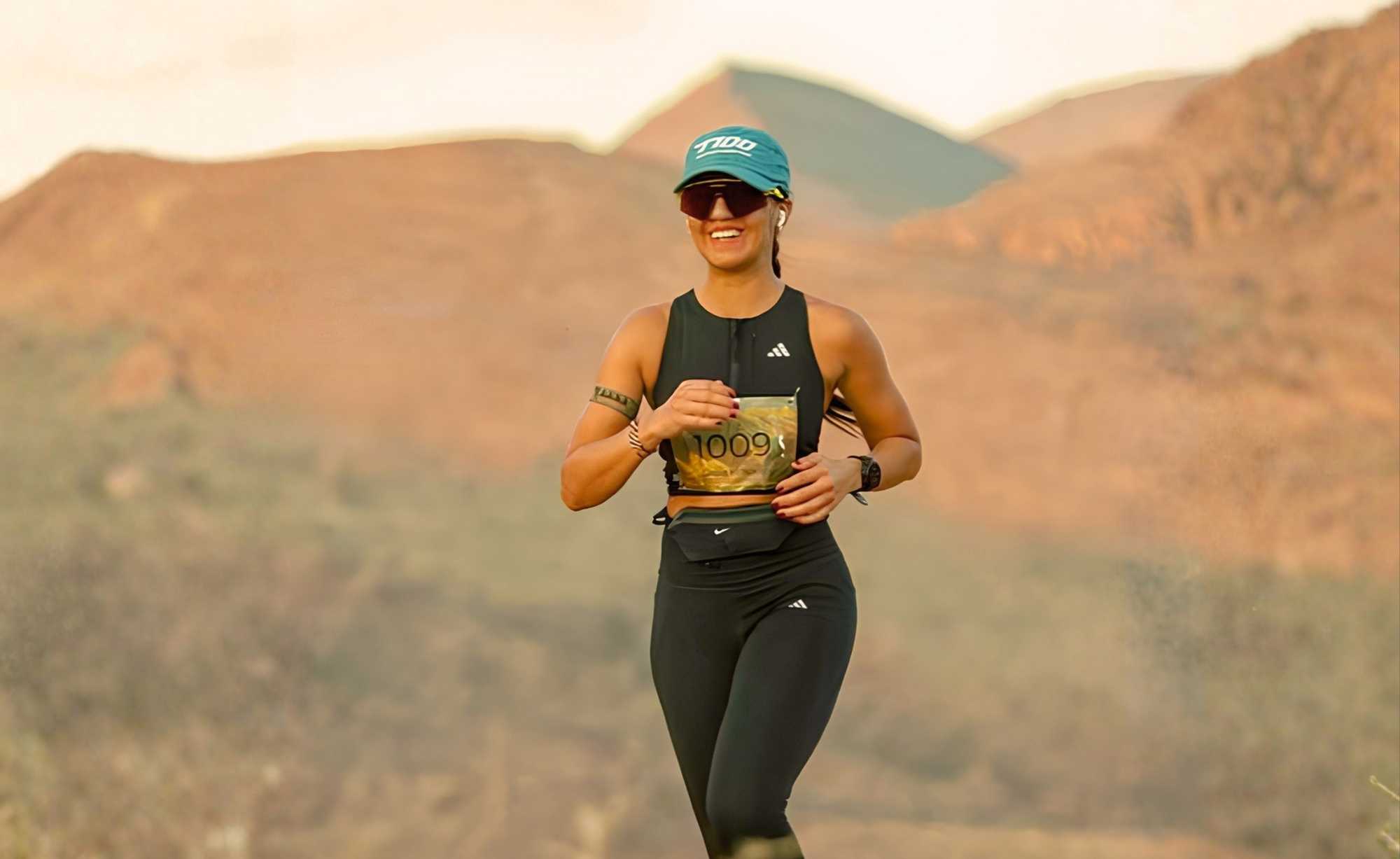
Dr. Sonia Haboub has been running forward—through life, across continents, at six miles an hour on roads that had no idea she was coming. She has crossed more borders at that pace than most diplomats do in a lifetime. One hundred and eighteen countries, each one earned with her own two feet. She runs marathons and ultramarathons and triathlons. A PhD professor of consumer behaviour, a CEO, and a speaker of eight languages, she has built companies and taught in universities and survived the kind of years that either break a person open or shut them down completely.
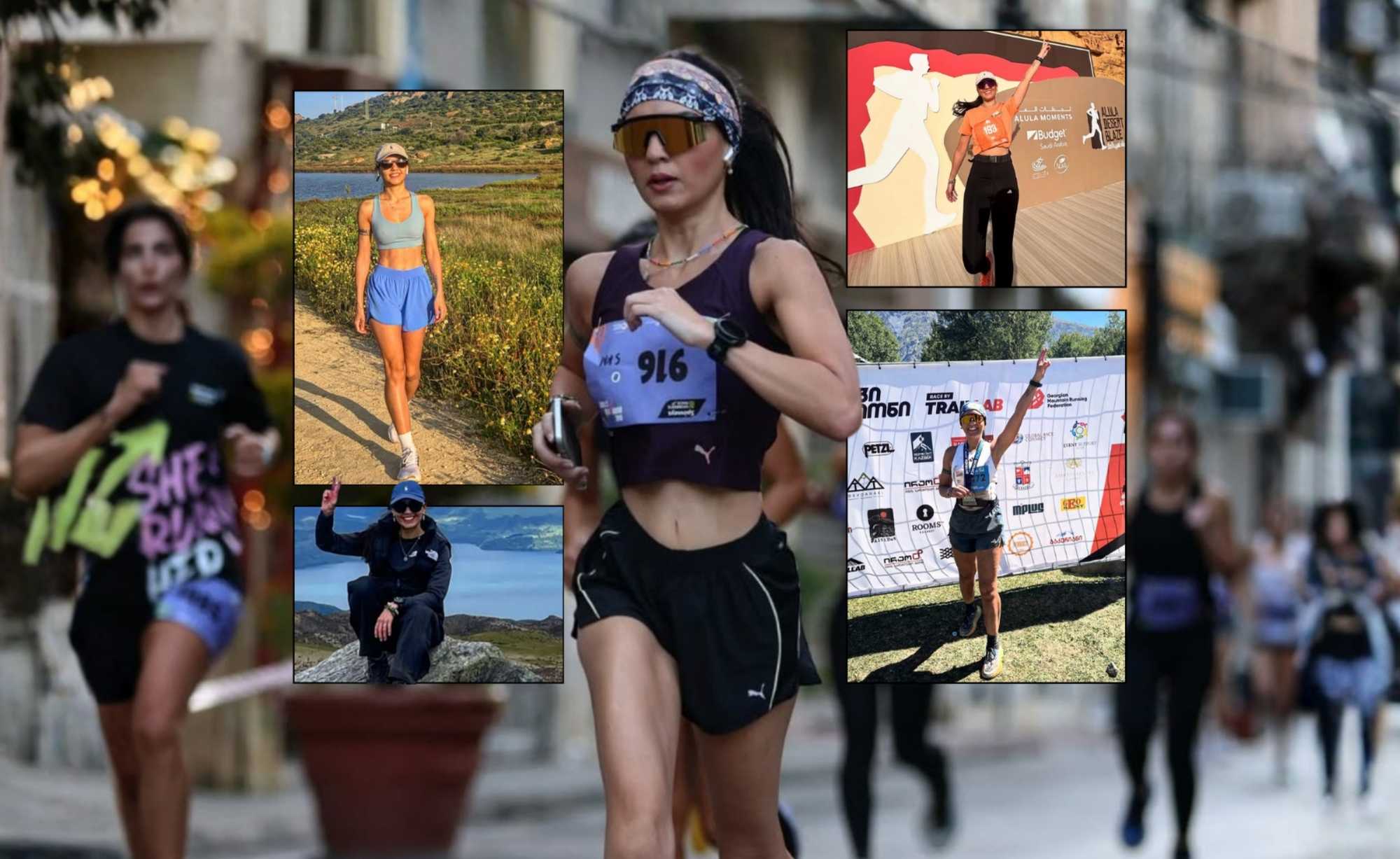 The titles exist, but when asked who she is without them, she answers differently. “I am simply a deeply curious human being,” she tells SceneTraveller. “Someone who has always been trying to understand the world and her place in it. I have never been very good at staying still in one version of life.” She grew up in the Italian Alps, in a household where four languages drifted through the rooms and movement was simply lived. By the time Dr. Sonia was three, she was already on trails, on skis, on a bicycle threading through forest paths. From then on, movement defined Dr. Sonia, through travel, through shifting places and perspectives, but she only came to running later, the very same way the first runners did. She was twenty-five, and she was trying to stay alive.
“When I say that running saved me, I do not mean it in a romantic way. In the early days it was messy, painful, and often very lonely. When you are sick and afraid, when your body feels like something that has betrayed you, the idea of moving forward one step at a time can feel almost impossible.”
While working in fashion in London, during what was meant to be a routine check-up, a doctor paused. She was diagnosed with early-stage uterine cancer. She had been building a life. Degrees across continents. Languages accumulating. A future that felt, if not certain, at least legible. All of sudden she had a surgery scheduled within days. She walked out of her job the same afternoon. She went through the operation alone, and when she woke, the body she had trusted to carry her through alpine winters now seemed like a stranger's.
The titles exist, but when asked who she is without them, she answers differently. “I am simply a deeply curious human being,” she tells SceneTraveller. “Someone who has always been trying to understand the world and her place in it. I have never been very good at staying still in one version of life.” She grew up in the Italian Alps, in a household where four languages drifted through the rooms and movement was simply lived. By the time Dr. Sonia was three, she was already on trails, on skis, on a bicycle threading through forest paths. From then on, movement defined Dr. Sonia, through travel, through shifting places and perspectives, but she only came to running later, the very same way the first runners did. She was twenty-five, and she was trying to stay alive.
“When I say that running saved me, I do not mean it in a romantic way. In the early days it was messy, painful, and often very lonely. When you are sick and afraid, when your body feels like something that has betrayed you, the idea of moving forward one step at a time can feel almost impossible.”
While working in fashion in London, during what was meant to be a routine check-up, a doctor paused. She was diagnosed with early-stage uterine cancer. She had been building a life. Degrees across continents. Languages accumulating. A future that felt, if not certain, at least legible. All of sudden she had a surgery scheduled within days. She walked out of her job the same afternoon. She went through the operation alone, and when she woke, the body she had trusted to carry her through alpine winters now seemed like a stranger's.
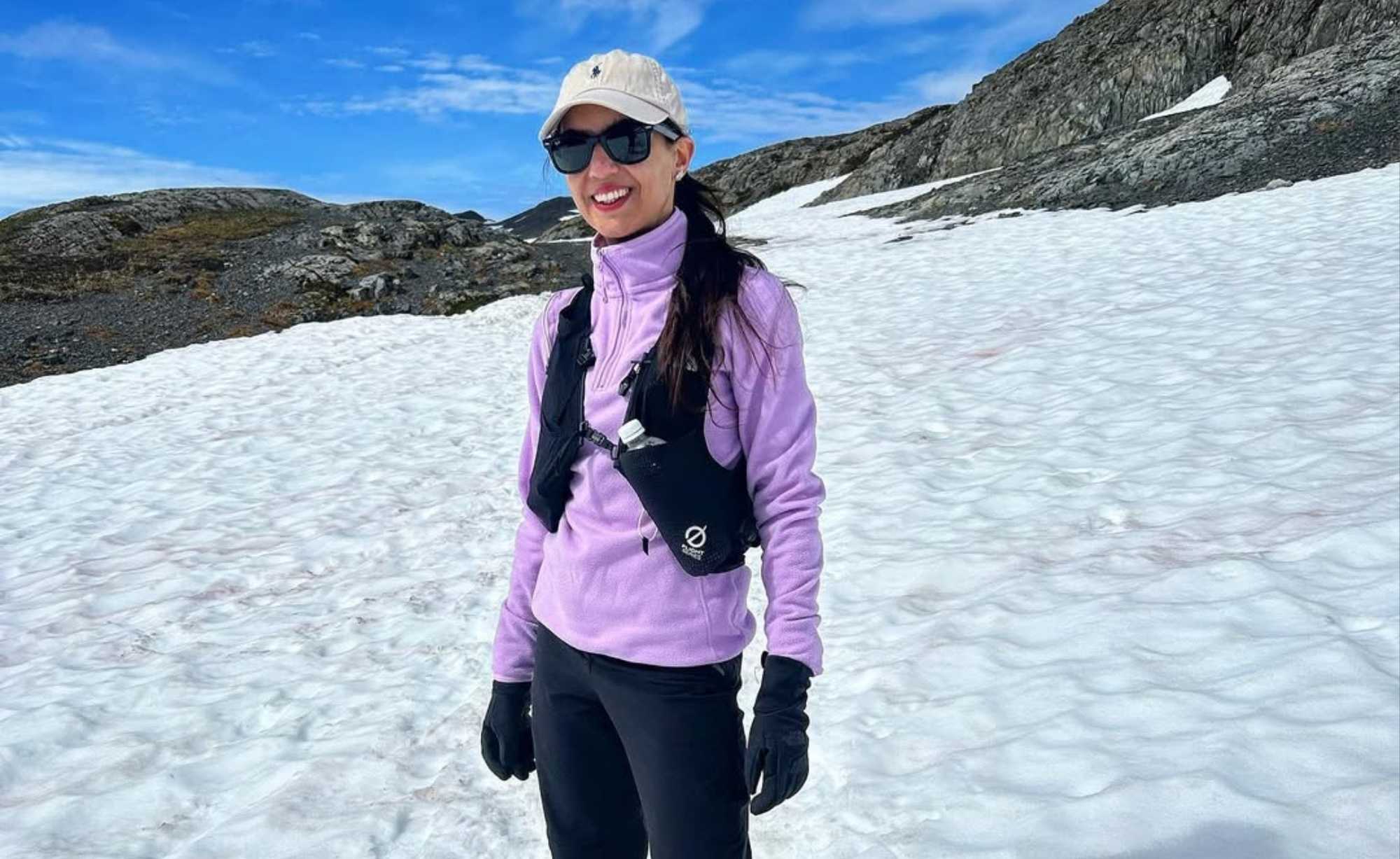 And then, one day in need of oxygen, she stepped outside and ran. “In the beginning the runs were about breathing, about reminding myself that I was still alive, that my body was still capable of movement.” A kilometre, then two. But within that small distance, something reordered itself. “Running gave me a sense of control when everything else in my life felt uncertain.”
Then she did what looked, from the outside, like running away. She packed a single bag and for seven months she moved through countries; waking up in cities whose names she had only ever seen on maps. Each morning she laced her shoes and ran. For the simple, astonishing fact of forward motion, the rhythm of her own feet on unfamiliar pavement and the proof that her body was still capable of carrying her. Soon, what began as a way to endure became her way of moving through the world. Countries understood through the slow accumulation of steps. “Running is one of the most honest ways to discover a place. When you run, you feel the terrain, the climate, the rhythm of the land.”
And then, one day in need of oxygen, she stepped outside and ran. “In the beginning the runs were about breathing, about reminding myself that I was still alive, that my body was still capable of movement.” A kilometre, then two. But within that small distance, something reordered itself. “Running gave me a sense of control when everything else in my life felt uncertain.”
Then she did what looked, from the outside, like running away. She packed a single bag and for seven months she moved through countries; waking up in cities whose names she had only ever seen on maps. Each morning she laced her shoes and ran. For the simple, astonishing fact of forward motion, the rhythm of her own feet on unfamiliar pavement and the proof that her body was still capable of carrying her. Soon, what began as a way to endure became her way of moving through the world. Countries understood through the slow accumulation of steps. “Running is one of the most honest ways to discover a place. When you run, you feel the terrain, the climate, the rhythm of the land.”
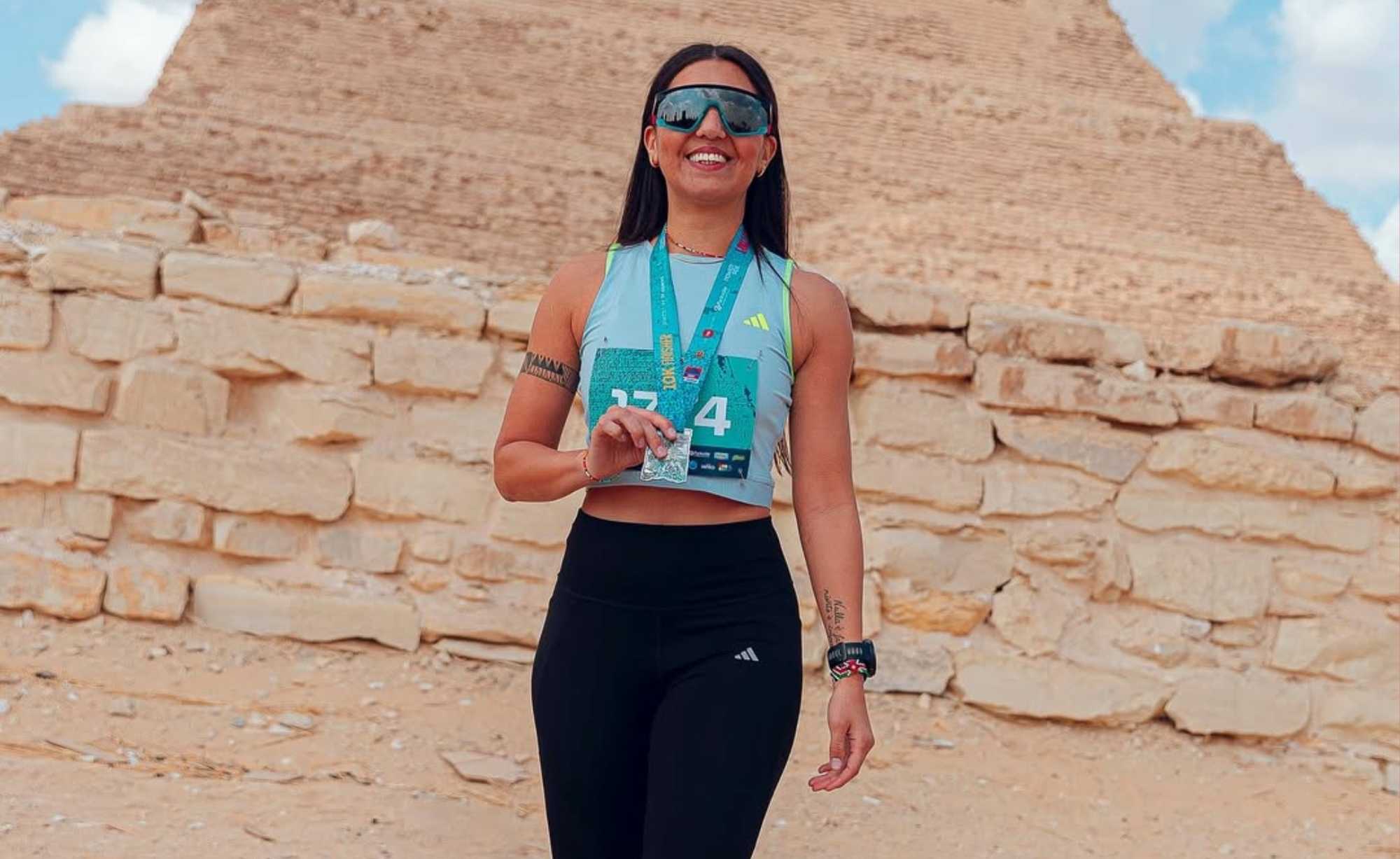 Certain places return unbidden—Kyrgyzstan, remote stretches of Polynesia, Kenya, Namibia—because of how they made her feel: "stripped of everything, very present, almost confronted with myself.” A city, no less than a desert, reveals itself differently when approached at that pace, its edges softening, its details sharpening. “You see how a city wakes up in the early morning. You hear the sounds of daily life beginning. You smell the food being prepared in the streets. You see the expressions of the people who are standing along the road. Those moments create a connection that is very human and very real.”
In certain parts of Africa, running shed its familiar shape. It became something she had no language for until she was inside it. "The rhythm of running felt collective, not individual. You don't run against time, you run with people, with the land, with something older than performance." What she had understood as a private act of endurance revealed itself as a shared one—a tongue spoken in Polynesia, in the highlands of Jamaica, in Vietnam, wherever bodies fall into step and the clock loosens its hold. Running, she learned, was a language. She had only just begun to hear it.
Certain places return unbidden—Kyrgyzstan, remote stretches of Polynesia, Kenya, Namibia—because of how they made her feel: "stripped of everything, very present, almost confronted with myself.” A city, no less than a desert, reveals itself differently when approached at that pace, its edges softening, its details sharpening. “You see how a city wakes up in the early morning. You hear the sounds of daily life beginning. You smell the food being prepared in the streets. You see the expressions of the people who are standing along the road. Those moments create a connection that is very human and very real.”
In certain parts of Africa, running shed its familiar shape. It became something she had no language for until she was inside it. "The rhythm of running felt collective, not individual. You don't run against time, you run with people, with the land, with something older than performance." What she had understood as a private act of endurance revealed itself as a shared one—a tongue spoken in Polynesia, in the highlands of Jamaica, in Vietnam, wherever bodies fall into step and the clock loosens its hold. Running, she learned, was a language. She had only just begun to hear it.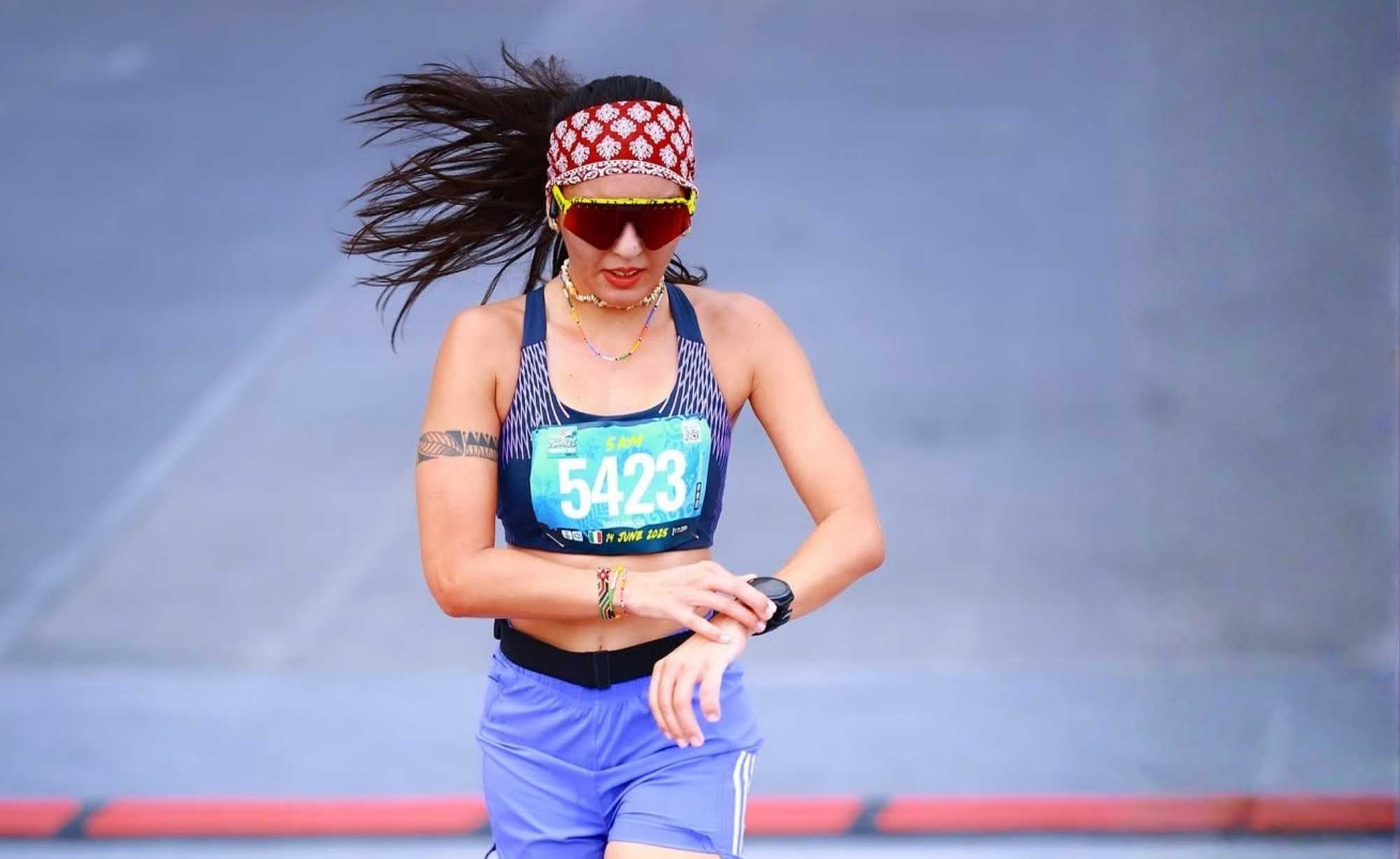 Over time, the movement that had once been solitary began drawing others into its current—into platforms, communities, and Global Race Connect, where—as CEO—she helps race organisers from Kinshasa to Dubai attract runners, secure sponsors, and turn starting lines into points of convergence for a scattered world. She has witnessed what running signifies in places where no one calls it a lifestyle. The Maasai and Kalenjin in Kenya. The Berbers in the Atlas. The Ethiopians in Arba Minch. The Marquesas. The Indigenous communities of Amazonas. "There's a clarity there," she says, "a directness in how life and movement are approached. It strips away the noise." What she builds now carries that clarity forward—spaces where running remains what it was before the metrics arrived, before the graph demanded smoothing. She calls herself the Global Runner Scholar. The phrase sounds assembled, a container for a life that refuses a single category. But in practice, the parts operate in parallel, each one feeding the other.
Today, Dr. Sonia is still teaching. Still researching. Still running through landscapes and across communities, where there are roads that have not yet been run. She is fueled by a desire to see more women, more girls, find their freedom through running. "In the Middle East, I am seeing more and more women embracing movement, discovering what their bodies are capable of, and seeing the world open up in the process. That is incredibly powerful to witness."
Over time, the movement that had once been solitary began drawing others into its current—into platforms, communities, and Global Race Connect, where—as CEO—she helps race organisers from Kinshasa to Dubai attract runners, secure sponsors, and turn starting lines into points of convergence for a scattered world. She has witnessed what running signifies in places where no one calls it a lifestyle. The Maasai and Kalenjin in Kenya. The Berbers in the Atlas. The Ethiopians in Arba Minch. The Marquesas. The Indigenous communities of Amazonas. "There's a clarity there," she says, "a directness in how life and movement are approached. It strips away the noise." What she builds now carries that clarity forward—spaces where running remains what it was before the metrics arrived, before the graph demanded smoothing. She calls herself the Global Runner Scholar. The phrase sounds assembled, a container for a life that refuses a single category. But in practice, the parts operate in parallel, each one feeding the other.
Today, Dr. Sonia is still teaching. Still researching. Still running through landscapes and across communities, where there are roads that have not yet been run. She is fueled by a desire to see more women, more girls, find their freedom through running. "In the Middle East, I am seeing more and more women embracing movement, discovering what their bodies are capable of, and seeing the world open up in the process. That is incredibly powerful to witness."
- Previous Article Agricultural Exports Reach 3.7 Million Tonnes Since Start of 2026
- Next Article This Alexandrian Cook Thinks Cairenes Aren't Spicy Enough
Related Articles
Trending This Week
-
-
 May 03, 2026
 -

-