





Layers of Lived Realities: Reimagining Cairo Through its Communities
Margherita Vargiu's Al-Darb al-Ahmar residency gathered Egyptian, Sudanese, Palestinian, Indonesian, Yemeni, and Bangladeshi voices into one exhibition on how a neighbourhood gets lived in.
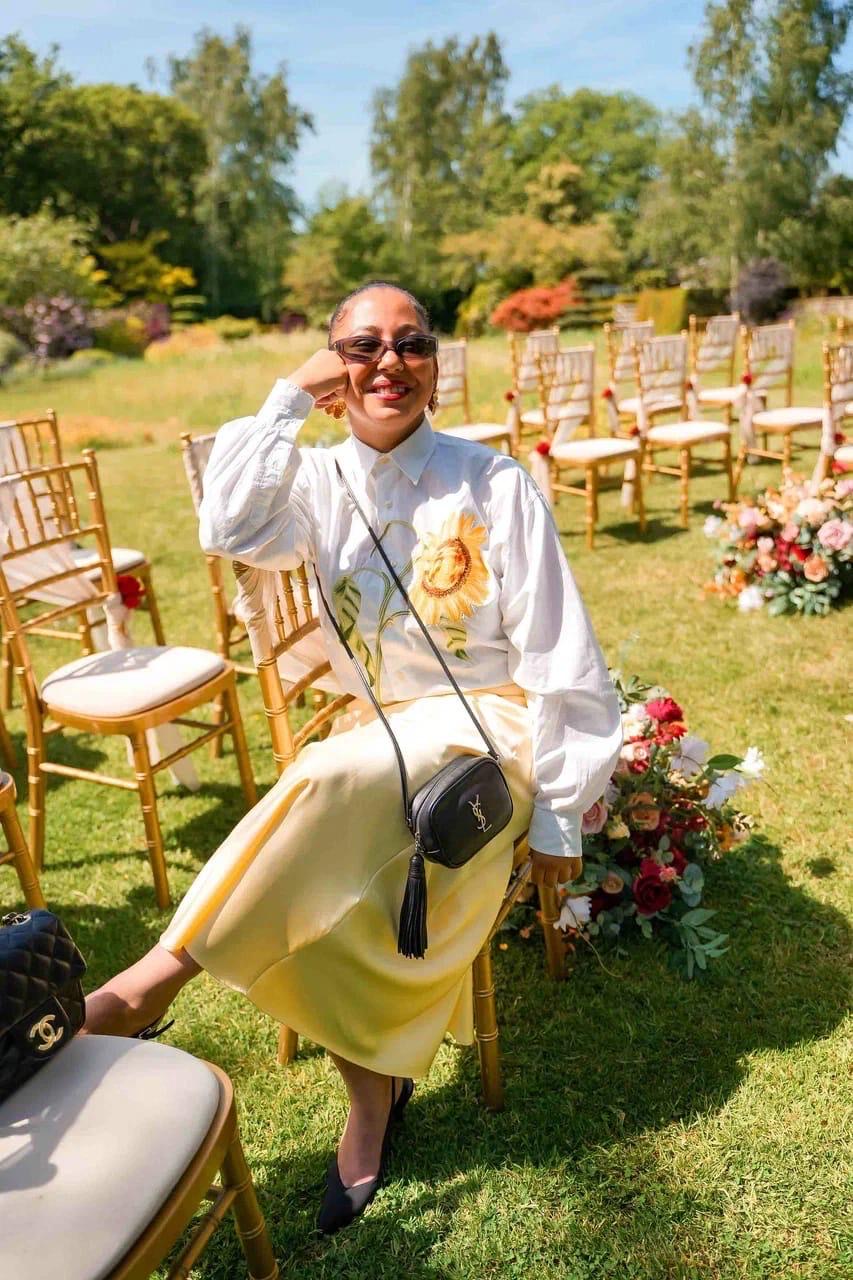
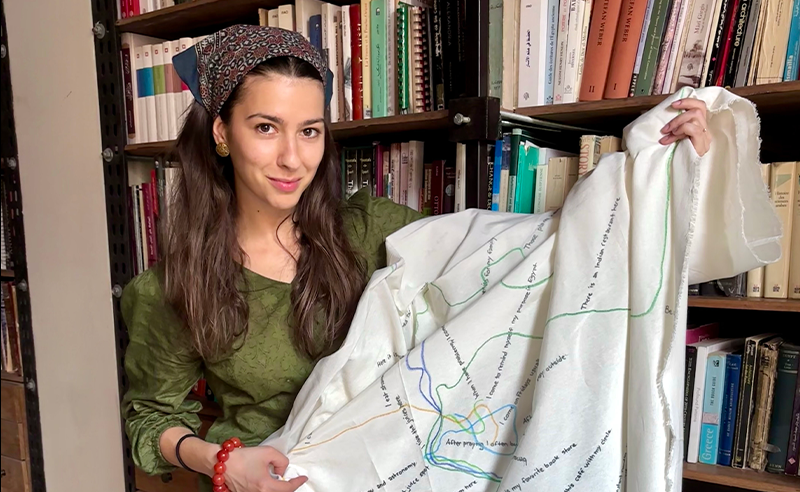
For one month, Italian architect Margherita Vargiu lived inside Historic Cairo’s Al-Darb al-Ahmar district, studying how the people who live there shape it, and are shaped by it in turn.
Her residency was part of the Les Ateliers du Nil programme. It was organised by the French Institute of Egypt and supported by La Fabrique des Résidences, in partnership with Bayt Yakan.
The work culminated in a one-day exhibition on 28 June 2026. Titled Layers of Lived Realities, it brought together Egyptian, Sudanese, Palestinian, Indonesian, Yemeni, and Bangladeshi voices, along with drawings and photographs made by local children.
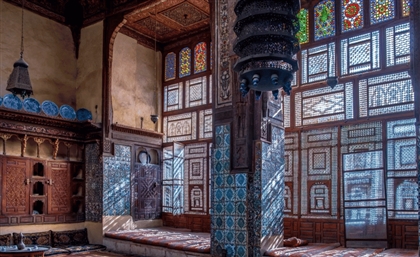
In the courtyard of Bayt Yakan, paintings and collages by Egyptian children hung from ropes strung between the walls. Beside them were photographs taken by Indonesian and Bangladeshi students from Al-Azhar University. Inside the historic house itself, drawings, paintings and video works by Sudanese, Palestinian and Yemeni artists explored displacement and belonging.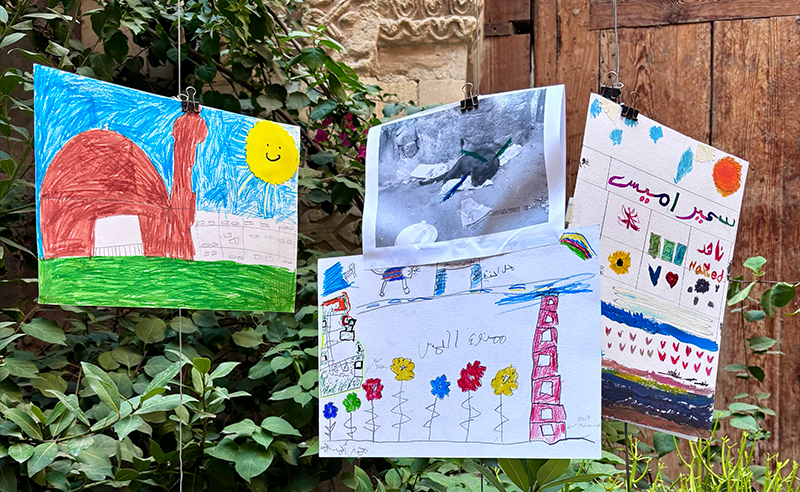 The exhibition treated architecture as something felt as much as built, organisers said. It framed the city as a place read differently depending on memory, identity and where a person stands in it.
“Cities are often described through the perspective of urban planners, historians, architects or institutions, but they tend to produce a top-down understanding,” Vargiu said. “My interest lies in complementing these narratives by also looking at the city through the eyes of the people who really experience it in everyday situations.”
Marginalised communities carry practical knowledge, Vargiu said, ways of building, patching and reviving space that shape a city’s physical character over time. That knowledge is a real source of understanding how cities work, she said.
Vargiu’s research treats architecture as relational, built from ties between people, heritage and environment. She worked with artists, students and children using photography, mapping, sound, drawing and workshops. The same street, she said, can feel welcoming, suffocating, nostalgic or hostile, depending on who walks through it.
Children became central to the project almost by accident. Vargiu began including them after watching them play in the courtyard of Bayt Yakan. Their understanding of Historic Cairo, especially its heritage buildings, turned out to run deeper than she expected.
Given cameras and asked to photograph what they liked and disliked, the children gravitated toward condition. Buildings that were well kept got photographed often. Buildings that were crumbling got avoided, a sign, Vargiu said, of how closely the children tracked decay in places they cared about.
Nature came up again and again in the children’s work. The district has little green space. Trees, gardens and glimpses of Al-Azhar Park still appeared repeatedly in their photographs and drawings. Their drawings also imagined things that were not there: the sea, flowers, open space, room to move.
Vargiu’s earlier research took her through other parts of Cairo, including Ard El Lewa, Boulaq, Faisal and 6th of October City. There she worked mostly with Sudanese and Palestinian migrants living through forced displacement.
She lives outside Al-Darb al-Ahmar. She included work by Sudanese, Palestinian and Yemeni artists in the exhibition anyway, saying their histories remained part of the project’s wider emotional and spatial geography. The artists used collage, drawing, painting and video to explore memory, belonging, beauty and daily life.
“Many artworks established a connection between Historic Cairo and their places of origin,” Vargiu said.
In Al-Darb al-Ahmar, her research expanded to include other migrant communities, particularly Indonesian and Bangladeshi students at Al-Azhar University. Using photography, they documented their own readings of the neighbourhood.
In interviews, Vargiu found the students filtered Historic Cairo through the cities they had left behind, noticing food, sound, religious rhythm and street atmosphere. For them, the neighbourhood functioned as one node in a wider network of memory.
The project’s goal was to let different views sit side by side, Vargiu said, without folding them into a single narrative.
The result, organisers said, is a portrait of Historic Cairo as a living constellation of perceptions, rewritten by the people who inhabit it.
- Previous Article SceneNoise x Amsterdam Dance Event Present CROSSFADE: Egypt
- Next Article The Intricate Beauty of Ben Youssef Madrasa
Related Articles
Trending This Week
-
 Oct 06, 2026
 -
-
-