






Review: Sex Work & Life at the Margins of Lagos in ‘Lady’
‘Lady’, competing at the World Cinema Dramatic Competition in Sundance 2026, is an intimate character study.

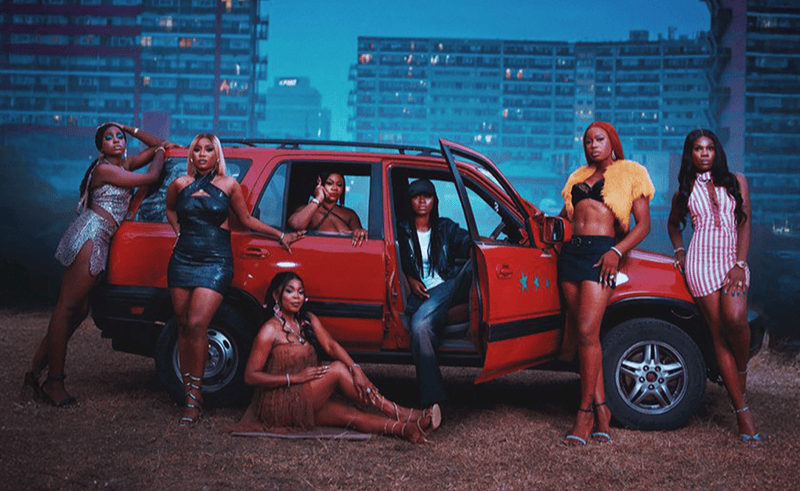
Olive Nwosu’s ‘Lady’ drops us straight into the restless streets of Lagos. Crawling traffic, honking horns, and beggars can be seen darting between cars. Everyone seems to be hustling for a quick buck before the light turns green. The radio hums with DJ Revolution’s voice who is calling out the city’s corruption. “Most of us choose between breakfast and lunch,” he says, “and now the president just spat in our dinner.” The line lands as a direct response to the recent rise in fuel prices and the ripple effect it has on daily survival. His underground broadcast tries to awaken the city and get everyone to rise up against the powers that be. The music, intercut with his calls to action, is a clear reference to Samuel L. Jackson’s radio host appearance in Spike Lee’s “Do the Right Thing”, only DJ Revolution is tuned to Lagos’s own frequency. At the centre of the traffic jam sits our protagonist, a taxi driver nicknamed Lady because she is one of the city’s few female taxi drivers.
Nwosu’s debut is an intimate character study. Lady dreams of leaving Lagos for Freetown, where she believes she can begin again and reclaim a life of dignity. Lady spends most of her time counting her earnings. She believes discipline will lead to escape. Then Pinky returns and her plan derails. Pinky is her childhood friend turned sex worker. She convinces Lady to moonlight as a chauffeur for sex workers to make ends meet. Lady agrees, but her decision is driven more by necessity than choice. Through Pinky, we are introduced to a circle of women who own the night, practicing the world’s oldest profession.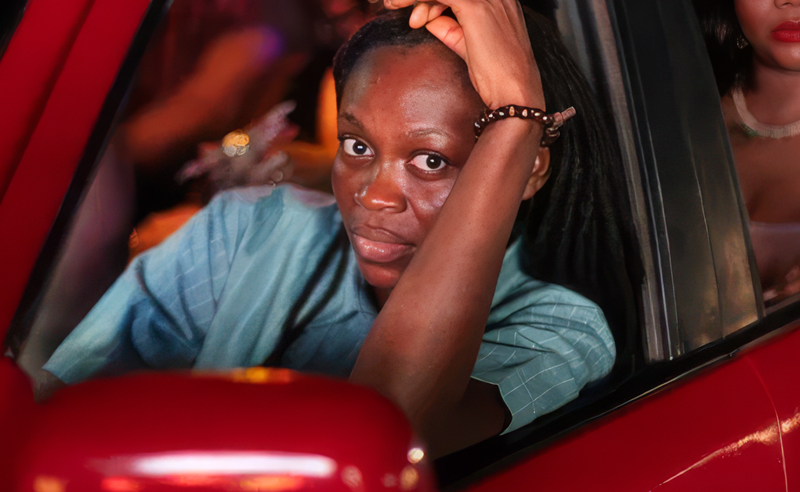 As the film unfolds, we learn that Lady’s mother was also once a sex worker. Fragmented memories surface. We see brief unsettling flashes of men pressing themselves against her mother. The scenes are witnessed from the margins of a child’s perspective. Growing up in this environment clearly left deep emotional scars on Lady’s childhood. It also helps explain her complicated relationship with men and intimacy. The film subtly hints that her interests may be outside heteronormative desire, without ever attempting to neatly define or box her in.
At one point, one of the sex workers calls her out as a virgin. This prompts laughter at the irony that the only virgin in Lagos is the one driving sex workers around the city. Despite the weight of her past, Lady emerges as a resilient, self-aware woman who is determined to define herself on her own terms. She is not someone you would want to cross on a bad day. In fact, as Lady grows closer to the sex workers, who gradually come to resemble a chosen family, she becomes a protective presence in their lives.
As we follow her dropping the women off at mansions filled with wealthy men, the film lays bare a stark contrast of class. DJ Revolution’s call for revolt grows louder and more insistent. The divide is unmistakable. The rich drain the poor to the last drop. We sense there’s a constant tension hanging over the city. It’s as if it is on the verge of bursting, and this simmering unrest mirrors Lady’s own state of mind. Just as the city feels ready to erupt, so does she. Eventually she reaches a breaking point and all hell breaks loose.
What “Lady” understands, more so than most films, is how life operates at the margins of society. The women are not locked in a state of constant misery. Instead, they exist in a space where hardship and humour coexist as survival strategies. In other words, the film refuses to portray them as tragic figures defined solely by suffering. Humour becomes a way of reclaiming agency in a world structured to exploit and overlook them. There is a genuine sense of camaraderie between the characters on screen. It’s rooted in shared experience.
Filmmakers from across the West African nation and its expansive diaspora have increasingly appeared on the international festival circuit in recent years. Much like the dissatisfied masses who inhabit Nwosu’s film, she herself seems determined to bring change to Africa. The film emerges as an unmistakable declaration that the old ways no longer suffice. This rupture is made possible in large part through the work of cinematographer Alana Mejia Gonzalez, whose images ignite the city with a neo-noir intensity.
Yet perhaps the film’s true gravitational force is Jessica Gabriel’s Ujah. She commands the screen at every moment. The screenplay charts her transformation with clarity. What begins with a woman who dismisses those calling for revolution ends with her standing at the heart of that anger. By the final movement, Ujah has merged with the restless pulse of the city itself. The film leaves us suspended in a moment where neither she nor the city can return to the uneasy stability that once passed for survival.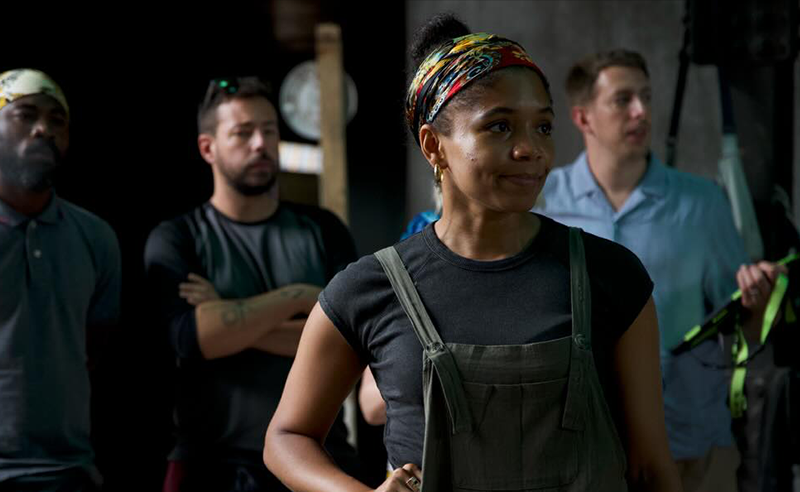 At times, the film struggles to fully bridge Lady’s inner journey with the broader political landscape that surrounds her. The shift at the end feels abrupt in its closing moments. While this leap from personal endurance to political rupture is thematically earned, it unfolds with less grace than the film’s earlier acts. Still, “Lady” remains an impressive achievement for a first-time feature film director. What ultimately emerges is a film about sacrifice, generational trauma, and the resilience required to endure and to resist.
“Lady” competes at the World Cinema Dramatic Competition at this year’s Sundance Film Festival.
- Previous Article Halfpipes Under Siege: The Skateboarding Scene in Gaza & the West Bank
- Next Article How a 1970s Villa Became Dubai’s Go-To Curated Space
Related Articles
Trending This Week
-
 Oct 06, 2026
 -

-
-