






Sufra AI Digitises Dining Systems in Qatar to End the Amnesia Economy
The Doha startup is building a memory layer for restaurants, capturing guest preferences, habits and history in real time and helping operators deliver more consistent service.

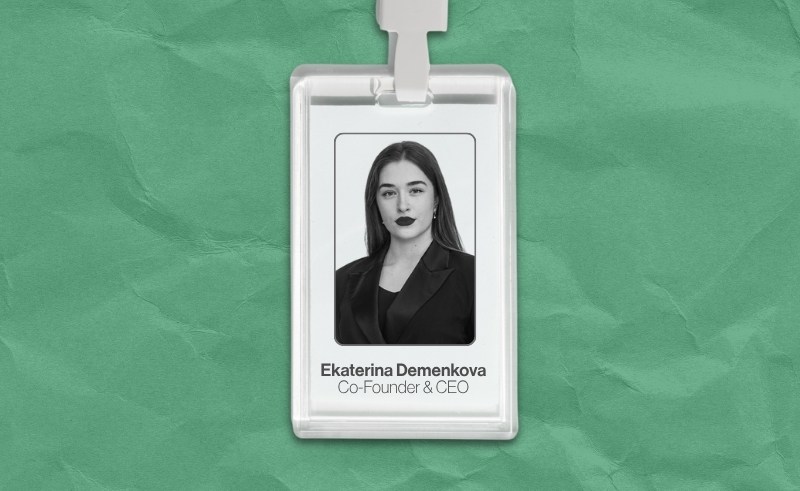
A lady enters a restaurant she has frequented for the last three years, takes her seat at her favourite place, and yet again proceeds to tell a courteous waiter - with a smile on his face and thoughts revolving around table seven - about her allergy to shellfish. "She then came back after three weeks," Ekaterina Demenkova tells us. "It's a new shift, and no-one remembers anything, so every transaction starts from zero."
Demenkova is 22 years old and, as of last week, a graduate of Carnegie Mellon University in Qatar, where she studied information systems and data science. Her co-founder, Jemal Velihanova, who trained in biological sciences at the same institution, graduated alongside her. Both have spent the better part of their final undergraduate year building Sufra AI, a Doha-based restaurant technology start-up that has already secured a $100,000 pre-seed round from Snoonu, Qatar's dominant delivery super-app, as the first investment under Snoonu's newly launched Startup Factory programme. The product description they favour is that Sufra is a "memory layer" for restaurants.
"Every restaurant has a soul," Demenkova says. "We just gave it a brain."
In order to understand exactly what Sufra is doing, it is important to understand what they are not trying to create. Restaurant technologies are far from lacking in incumbents—be it a Point-of-Sale (POS) system, reservation platform, loyalty programme, kitchen displays, or QR-code digital menus. All these have been digitised in the past decade or so, and none of them, the founders say, have helped the restaurant understand its clientele any better.
This has been dubbed the 'Amnesia Economy'. "Billions of dollars were invested in making restaurants serve the food, take payments and process orders quicker," Demenkova explains, "almost nothing went into giving them the ability to recognise their customers better. The intelligence was already there, held by the senior waiter who knows that the couple by the window always shares dessert, or that the businessman who arrives on Thursday evenings wants his coffee before he asks for it. But that knowledge was treated as soft, unscalable, not worth building infrastructure around." And so, every time a staff member quit, that knowledge walked out the door with them. "We think it's the whole game," she says. "A restaurant's brain is its most valuable asset."
And yet, getting the restaurant industry to accept such a perspective proves to be extremely difficult. The challenge Sufra faces is epistemological: convincing an entire sector—one that has spent the better part of a decade being sold on the language of data and personalisation—that what it has been building is not the thing it actually needs. "Data is what you collect," she says. "Memory is what you act on."
Sufra's answer is a platform that sits beyond a restaurant's existing technology stack - beyond its POS, its reservation system, and its informal WhatsApp groups. Functionally, the platform acts as a vital piece of operational infrastructure, drawing those systems into a single, persistent record of each guest. Allergies, regular orders, preferred tables, last visits, special occasions, and customisation preferences are all made available to every waiter, on every shift, before the guest has even been seated.
The starting point is a QR code on the table that each guest scans. While there are nuances to distinguishing data and memory, Sufra captures the difference precisely. "Most restaurant software has buried the floor under dashboards nobody has time to read during a rush," Demenkova explains. The operator who logs into a tablet at midnight to study a bar chart of Tuesday's average spend per cover is, in Sufra's framing, already lost; by then, the decision that mattered was already made on the floor, in the ten seconds between the door opening and the first greeting. "The floor knows things the dashboard doesn't," she says.
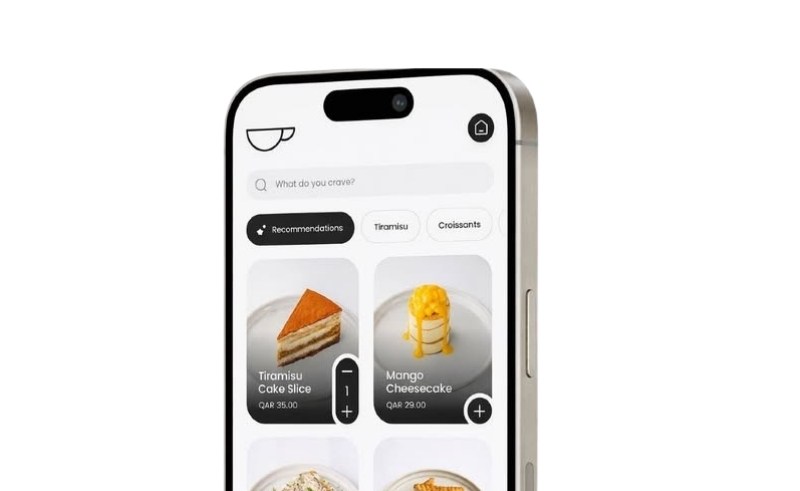
"We're not a bundle," Demenkova explains. "Bundling features is what the last generation of restaurant software did, and it's how you end up with dashboards nobody reads." What shifted behaviour in early deployments was a moment where an owner, watching the system, recognised a returning guest and surfaced her last order, her allergy, and the fact that it was her daughter's birthday - all before the waiter reached the table. "Every owner we've shown that moment to has leaned forward," Demenkova says. "None of them asked about the CRM."
Sufra charges restaurants a flat monthly subscription, tiered by size and location count, with no per-transaction fee. "We wanted a model that feels like infrastructure, not a tax on growth," Demenkova tells StartupScene, "something a restaurant can build on, not something that compounds against them as they scale." The displacement strategy, where Sufra eventually replaces existing tools, reveals itself gradually. Restaurants retire the systems they no longer need once Sufra has absorbed the job, and the founders prefer to let the redundancy surface on its own. "We layer," Demenkova says simply. "Restaurants are not looking for more systems to install. They're looking for fewer systems to think about."
The early adopters who have skewed most strongly toward the platform have been cafés, a result the founders admit surprised them. Cafés run on repeat business, small ticket sizes, and an enormous rate of customisation, which makes the memory layer particularly legible in commercial terms. "A regular walks in," Demenkova says, "her drink is already half-built in the system before she orders, the barista knows she switched to oat milk last month, and the menu adapts to what she's actually ordered before."
Sufra's website declares that it was built "in Qatar, for Qatar" and that the Qatari F&B market deserves tools that understand "mansaf, majlis service, and why dinner starts at 9 pm."
"The tools most Qatari restaurants use today were designed for a market where the average guest visits once, leaves a Google review, and doesn't come back," she says. "Doha doesn't work like that. The same family eats at the same restaurant every Friday for a decade. The owner knows them, the waiter knows them - and then the software treats them like strangers, every single week, for ten years."
The first reason for choosing Snoonu as an investor is the pre-existing relationship between the start-up and the majority of restaurants in Qatar. Secondly, by using the operational infrastructure, the founders can jump-start the legal, compliance, and HR aspects that a two-person team would normally take a year to implement. Third is credibility in a market that, as she puts it, "takes Qatari-backed companies seriously." Where Snoonu has built its core around delivery and digital commerce, Sufra occupies the in-restaurant layer; together they begin to describe an almost complete picture of how a guest discovers, books, orders, eats, and pays in a single F&B ecosystem.
"The product decisions, the positioning, the voice, the vision—all of it stays with the founders," Demenkova says. "That was the deal, and it's held."
Looking toward a five-year vision, Demenkova expects the Amnesia Economy to become a recognised issue in the industry, where restaurant owners feel a sense of professional shame regarding a lack of knowledge about their own customers. "Expansions into the Saudi Arabian and UAE markets are already planned. We expect that the infrastructure laid out with Qatar's World Cup hospitality programme will provide us with advantages in penetrating the market." However, geographical expansion is deliberately on hold until Sufra proves itself in Doha. "We're not going to plant a flag in four countries without being loved in one."
- Previous Article SceneNoise x Amsterdam Dance Event Present CROSSFADE: Egypt
- Next Article The Abandoned Architecture of Villa Badran by Gamal Bakry
Related Articles

Trending This Week
-
-
-
-
 Oct 15, 2026