




Diryah's Grand Mosque Links the City to Riyadh's Historic Valley
X Architects’ Grand Mosque at Diriyah draws on Najdi architecture and open courtyards, linking Riyadh to Wadi Hanifah.
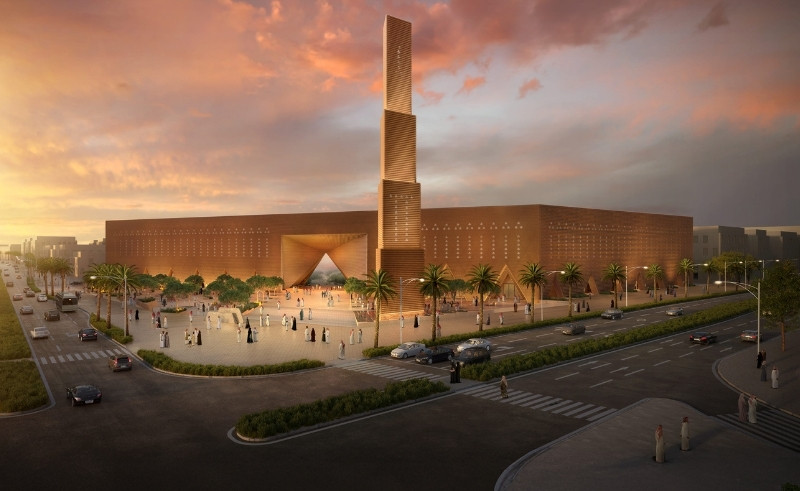
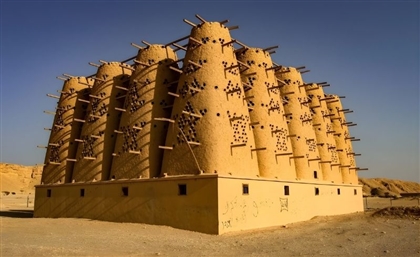
Historically, people have learned to live within extreme climates, and architecture has followed closely behind. In Saudi Arabia’s Najdi architecture, this comes through in thick mud-brick walls, shaded courtyards, narrow openings, and careful control of light and heat. In Diriyah, the experience unfolds through meandering alleyways and shifting levels that create a steady rhythm between compression and release. X Architects’ Grand Mosque at Diriyah Gate II draws on this same spatial language, extending it into a contemporary, larger-scale setting.
Diriyah, the 300-year-old birthplace of the first Saudi state, carries this architectural legacy across its urban fabric and is now being developed into a 14 sq km cultural district that brings together museums, civic institutions, residential neighbourhoods and public spaces, with the Grand Mosque positioned at a key intersection between Riyadh’s main boulevard and the historic Wadi Hanifah, linking city life to the valley.
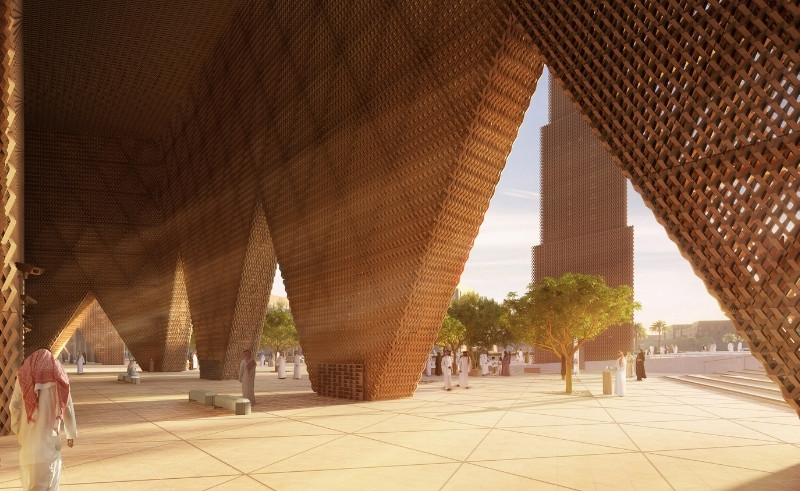
Occupying a 21,690 sqm site with a built-up area of 12,300 sqm, the mosque accommodates up to 11,400 worshippers, serving both residents and visitors passing through this gateway into Diriyah. The building sits within a wider civic landscape, where a sequence of plazas, shaded walkways, and landscaped terraces guides movement from the boulevard down toward the wadi. A triangular, stepped entrance portal gathers visitors into a shaded forecourt before leading into the prayer halls, setting up a gradual transition from the scale of the city to spaces of worship.
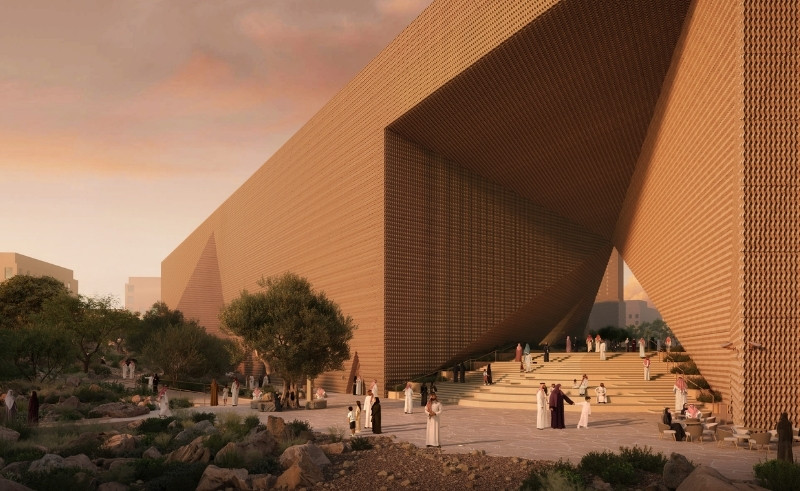
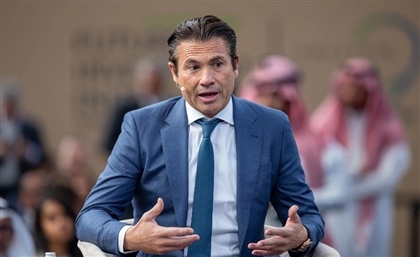
“We were interested in how the poetics of everyday movement, arriving from the city, descending towards the wadi, entering into prayer, could be held together in a single spatial sequence," says Ahmed Al Ali, co-founder of X Architects. "In Diriyah, that sequence becomes a way of restitching the historic valley into the contemporary life of Riyadh.”
The central plaza is where activities that bring the community together happen, equipped to host Eid prayers, community events, and weekend markets, while colonnaded walkways and planted courts create a porous edge where people can move through, pause or stay, blurring the line between mosque and city.
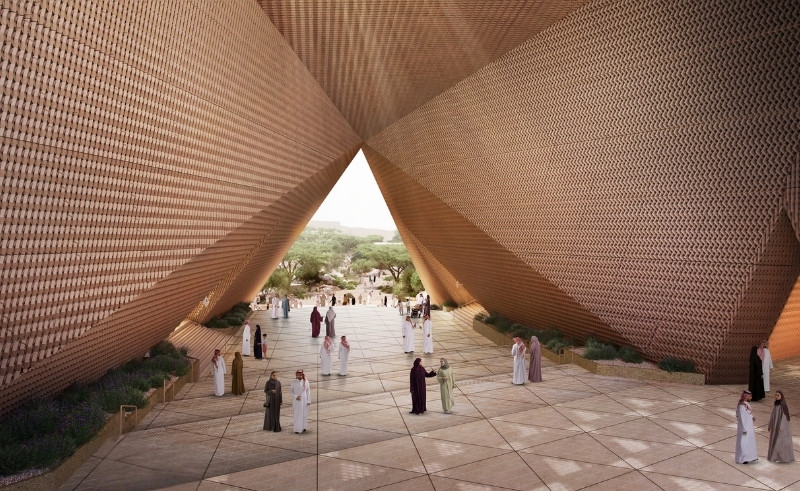
“The mosque is shaped by Diriyah itself, its mud-brick heritage, the scale of the boulevard, the topography of Wadi Hanifah, and the daily patterns of the people who will use it,” says Farid Esmaeil, co-founder of X Architects.
The mosque draws from Najdi architecture with thick walls, layered façades, and shaded courtyards. A three-dimensional lattice of prefabricated panels wraps the exterior, filtering light and air and recalling traditional mud-brick patterns. Large openings puncture the façade, marking transitions from the exterior plazas into the central courtyard and creating a gradual shift from public to more intimate spaces. Inside, sloped surfaces and the lattice guide daylight toward the qibla, creating calm spaces for prayer. Classrooms, the library, and women’s areas open onto planted courtyards, forming small pockets of quiet within the larger complex. Ablution spaces are naturally ventilated, with streams of daylight filling the interiors.
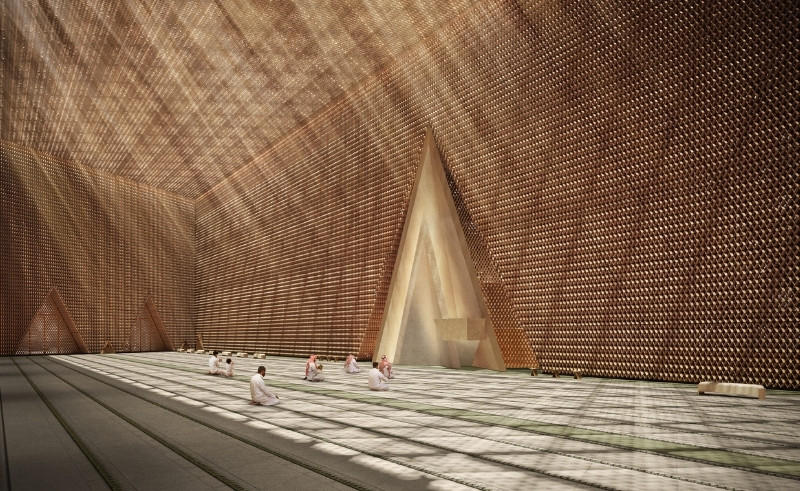
Environmental performance is embedded in the design, targeting LEED and MOSTADAM Gold certifications. Orientation, shading, thermal mass, and natural ventilation are integrated into the building envelope, while the surrounding wadi landscape contributes to cooling through planting, water features, and topography.
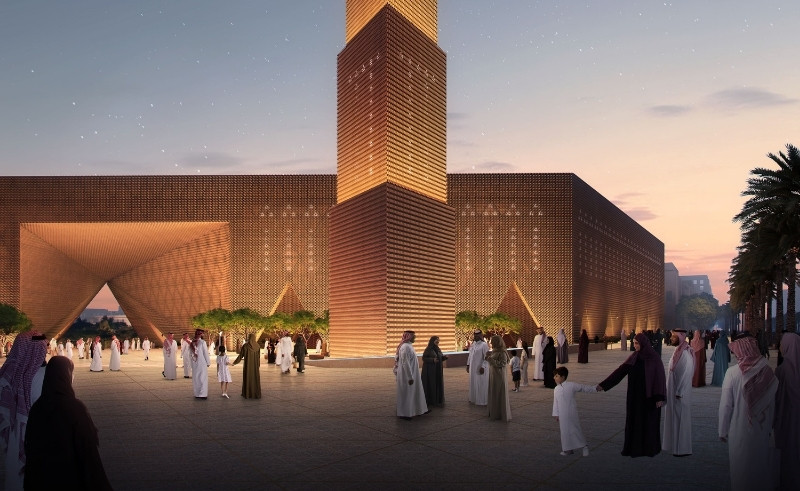
The mosque brings together male and female prayer halls, ablution areas, a sahn, crèche, classrooms, offices, a library, café, and a minaret, all arranged with step-free access. Positioned along the boulevard, it welcomes both residents and visitors, serving as a place of daily worship and a point of arrival into the wider cultural district. At night, light filters through the façade, spilling into the surrounding public spaces.
- Previous Article Central Bank of Egypt Moves to Regulate Digital Banking Content
- Next Article SceneNoise x XP Conversations: THE DO