





Trading Glass Iconography For Climate Logic in Gulf Architecture
Towers built for prestige ignored the desert. Projects like the Terra Pavilion show architecture can work with the climate and its people rather than against them.
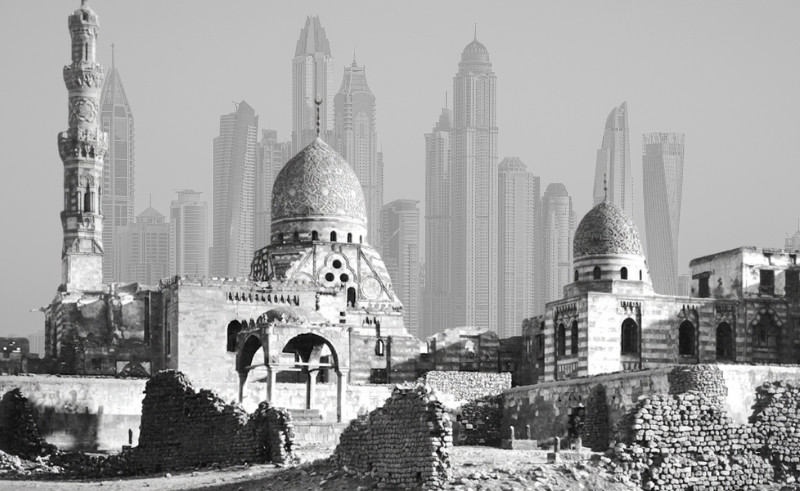
The late 1990s and early 2000s were defined by a desire for prominent, globally recognisable skylines as symbols of economic revolution in the Gulf.
Oil wealth surged. Masterplans multiplied with the intention of solidifying the GCC as an epicentre of tourism and finance. Its skylines began to rise, wrapped in steel and floor-to-ceiling glass. Glass became shorthand for three things: wealth, luxury, and modernity. Between ambition and imitation, little attention was paid to the restrictions of the climate.
Imported Skylines
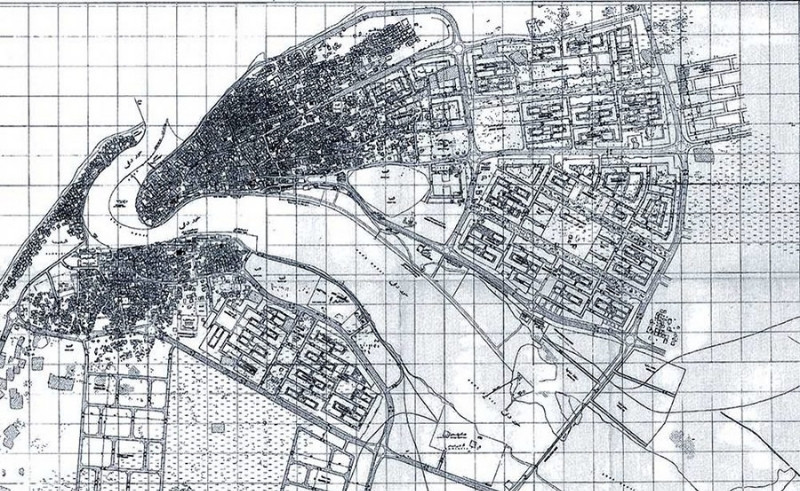 John Harris's Masterplan of Dubai, 1971
The importance of compatibility in design goes back centuries. Vitruvius, a first-century BC Roman architect, noted the importance of ensuring comfort and durability in design. The tension between aesthetics versus logic have existed through time.
Transplanted skylines constructed in the desert created a juxtaposition, an attempt to proximate prosperity against incompatibility. This begs the question: why have glass façades and skyscrapers become synonymous with prestige and globalisation?
Architecture became a medium of communication. Think New York City. Its skyline epitomises global reach, financial power, political pull, and cultural dominance. Replicating this image acts as a way of projecting prestige.
However, these buildings ignored environmental logic that shaped traditional desert architecture for centuries. Critics point to the region’s structures as iconic, grand, and influential, but poorly suited to its arid climate.
Climate Mismatch
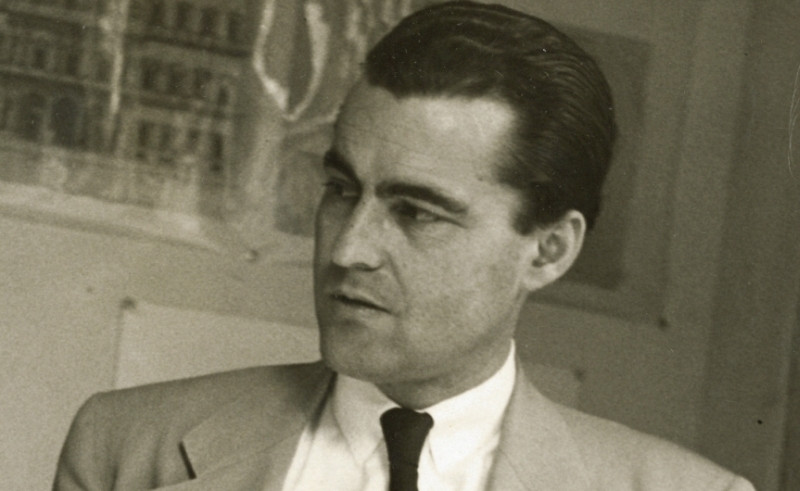 Victor Olgyay, Bioclimatic Architect
Hungarian Architect Victor Olgyay, a specialist in bioclimatic design, argued that modern architecture must respond to its region and climate. He stated that climate data should dictate building form, orientation, design, and passive cooling strategies to ensure comfort while minimizing reliance on mechanical systems.
On the contrary, large glass facades expose interiors to intense solar radiation, increasing indoor temperatures and adding excess pressure to cooling systems.
The impact extends far beyond individual buildings. Areas with concentrated glass and steel structures contribute significantly to the heat island effect, a concept pioneered by British chemist Luke Howard, where surfaces exacerbate temperature increases in surrounding areas. As cities continue to develop, microclimatic shifts escalate the need for mechanical cooling at an unsustainable rate.
It also raises the question of embodied energy. Glass and steel are carbon-intensive materials, requiring significant energy for production and transport. Impacts of manufacturing and maintenance make the lifecycle energy use of towers difficult to ignore.
The Gulf is one of the most heat-vulnerable regions in the world. Current and projected temperature increases make energy-intensive architecture untenable. Structures that rely heavily on active cooling are not just cost-ineffective and environmentally irresponsible, they are fragile.
Research on arid climate design emphasises the importance of integrating passive measures: shading, thermal mass, and orientation to reduce energy demands, strategies that are far from new. They draw on centuries of practical knowledge rooted in understanding.
Completed in 2007 for the 15th Asian Games in Doha, Aspire Tower was constructed as the event’s centrepiece, its 300-metre facade shaped like a torch visible across the city. It was developed as a landmark first and foremost, rooted in iconography. The structure is wrapped in glass and steel, supported by concrete and surrounded by a mesh skin embedded with LED lighting.
In practice, Aspire Tower works in conflict with its environment. Though the façade incorporates energy-efficient glazing systems, the building remains fundamentally reliant on mechanical cooling to maintain comfort in Doha’s extreme climate. Its fully enclosed, high-rise form offers limited opportunities for passive shading or natural ventilation, exhibiting a design approach in which symbolism and event spectacle took precedence.
Rediscovering Passive Design
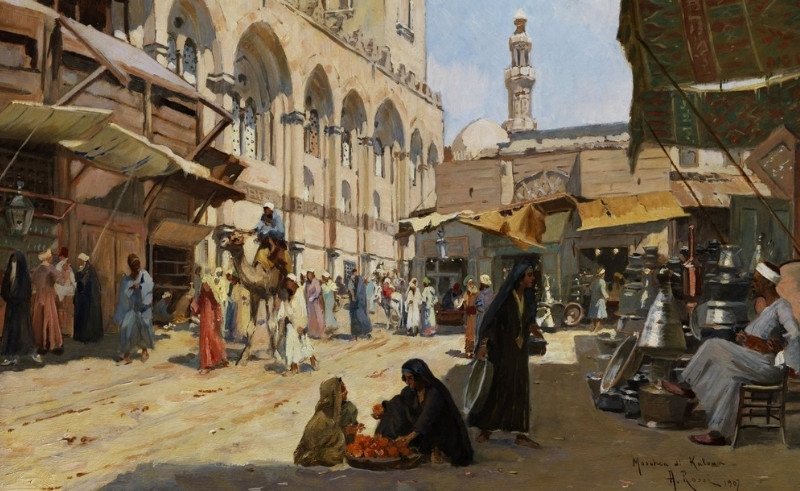 Arabischer Markt in Kaloun, Alberto Rossa, 1899
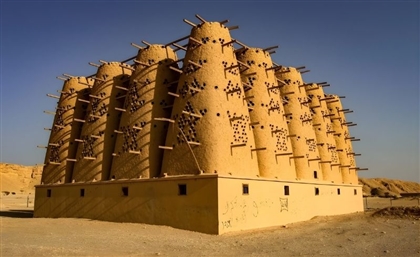
Vernacular architecture across MENA mastered passive cooling long before the term existed. Courtyards, wind towers, mashrabiyas, thick walls, and earth integration were used as survival strategies.
Shading devices reduce solar heat gain. Thermal mass stabilizes indoor temperatures. Natural ventilation cuts cooling loads. Earth-sheltered spaces harness the ground’s stable temperature. Every feature reduces dependence on mechanical systems, and with it, carbon emissions.
Today, passive design no longer manifests only as an expression of culture and tradition. It redefines modernity in a climate-necessary way. If glass towers represent resistance against the desert, the Terra Pavilion, designed by Grimshaw Architects, represents a reconciliation with it.
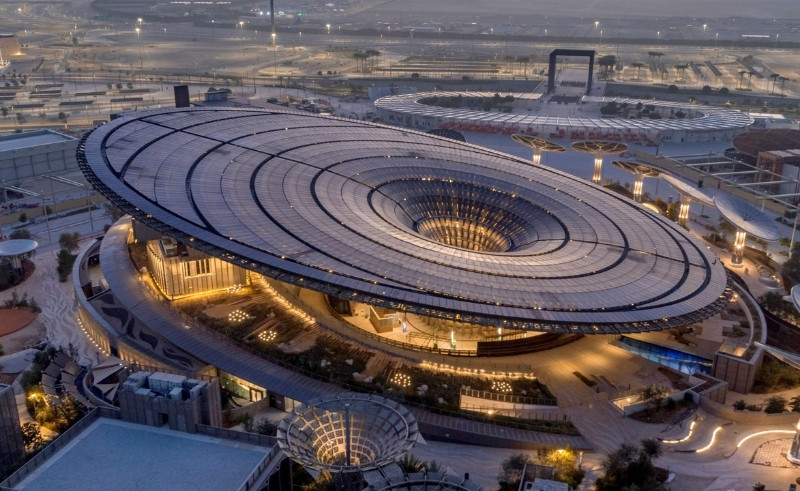
Integrating the climate-conscious principles that Olgyay advocated for, its facade stretches across a 130-metre solar canopy, hovering above the remaining structure below. Beneath it, much of the pavilion is set underground, reducing exposure to direct sunlight and leveraging cooler, more stable temperatures. Stone cladding with high thermal mass helps regulate interior temperatures by slowing the transfer of heat, preventing dramatic thermal fluctuations associated with glass facades.
Designed with the goal of producing as much energy as it consumes over the course of a year, the pavilion extended its solar infrastructure beyond the roof. A series of photovoltaic “energy trees” surround the building, tracking the movement of the sun while contributing to solar energy collection. Indigenous plant species suited to the desert climate were selected to minimise irrigation needs, while integrated water systems collect, filter, and reuse water across the site.
Courtyards have historically been at the heart of Islamic architecture, providing shade, temperate conditions, and an area for community. Anchoring the pavilion, a courtyard lies in the centre of the structure, offering a shade space as the canopy extends overhead. In this space, architecture, technology, and mindful design converge proving sustainable design is deliberate, not an afterthought.
Sharjah’s Khalid Bin Sultan City reflects a shift toward climate responsive design. Designed by Zaha Hadid Architects, the project relies on shaded streets, walkable neighbourhoods, and mid-rise blocks that reduce direct sun exposure. The city is structured as a network of seven neighbourhoods, each centred around public space and positioned within walking distance of one another.
At the centre of the development, a two kilometre shaded oasis acts as both a community space and climatic device used to cool the surrounding environment through vegetation and shading. Reinforced by tree-line pathways, recessed facades, and colonnades, they provide constant shade, reducing ground temperatures and allowing outdoor movement in peak heat.
The development takes cues from traditional planning, reinventing its elements for modern architecture. Rather than treating sustainability as a technological addition, climate consciousness is rooted into the form itself and prioritising spatial organisation over mechanical systems.
Beyond Iconography
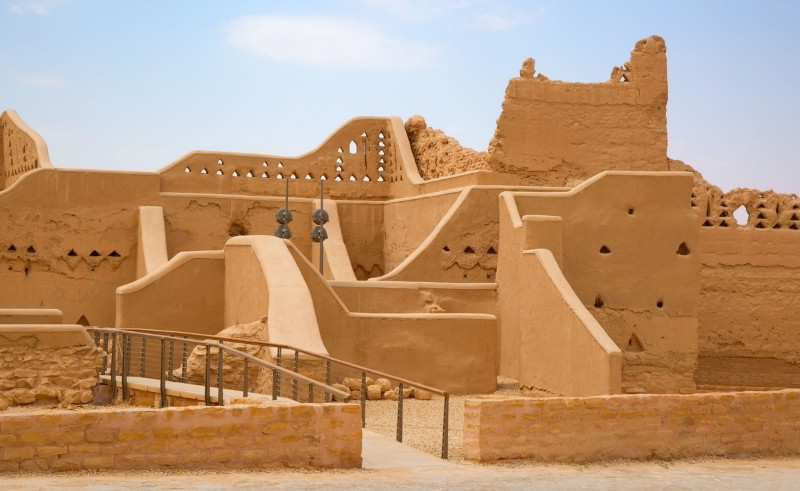
Contemporary projects are being shaped by their surroundings sharply contrasting emblematic glass towers. One sought global validation through mimicry, the other found relevance through responsiveness.
The retirement of the glass tower is less about aesthetics than ideology. For decades, Gulf skylines borrowed an image of progress from elsewhere. Climate reality is forcing a reconsideration. The next generation of GCC buildings may still be ambitious and monumental, but their defining feature will be adaptation.
- Previous Article 3ala Mazag: Nour [Curated Playlist]
- Next Article The Ancestral Resilience of Omar El Farouk’s Fayoum Home