


Libyan Streetwear Brand WLD NAS Makes a Case for the Good Boys
Designed in Libya, produced through Cairo and shot in Tunis, WLD NAS turns Salem Mezwghi’s background in graffiti and graphic design into North African streetwear.
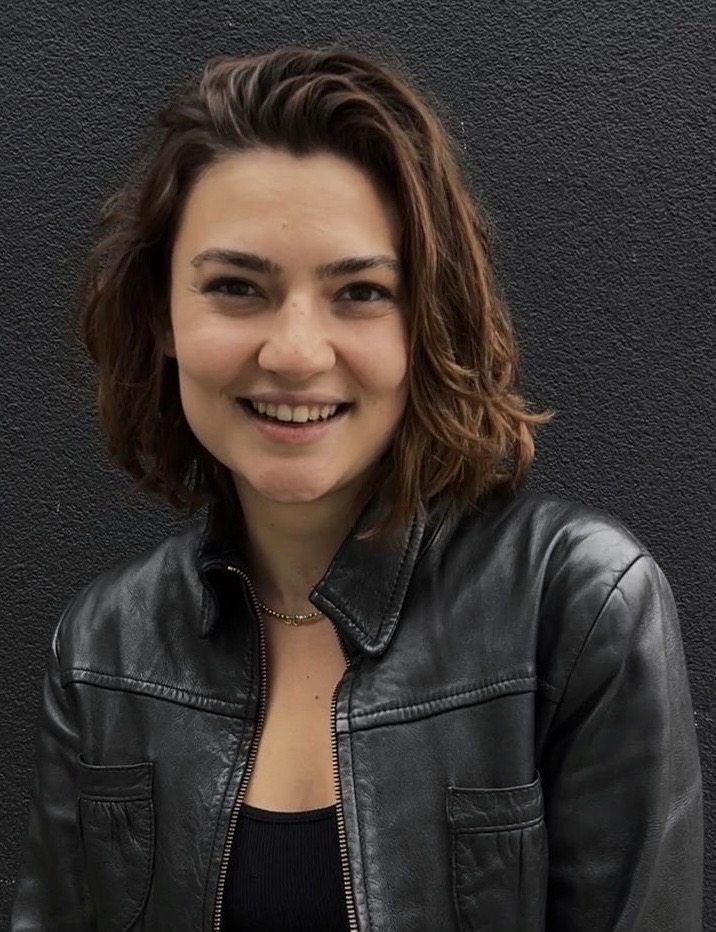
For Salem Mezwghi, clothing is a relatively new medium. The Libyan visual artist has spent years working across Arabic calligraphy, graphic design and street art. In 2025, ready for a new creative challenge, he decided he wanted that visual language to move beyond screens and city walls and onto something that could be worn.
The result was WLD NAS, a young Libyan streetwear label built around the visual codes of North African street culture. The design language of its first two drops leans into graffiti, hip-hop and forms of street culture that have not always been readily accepted around Mezwghi.
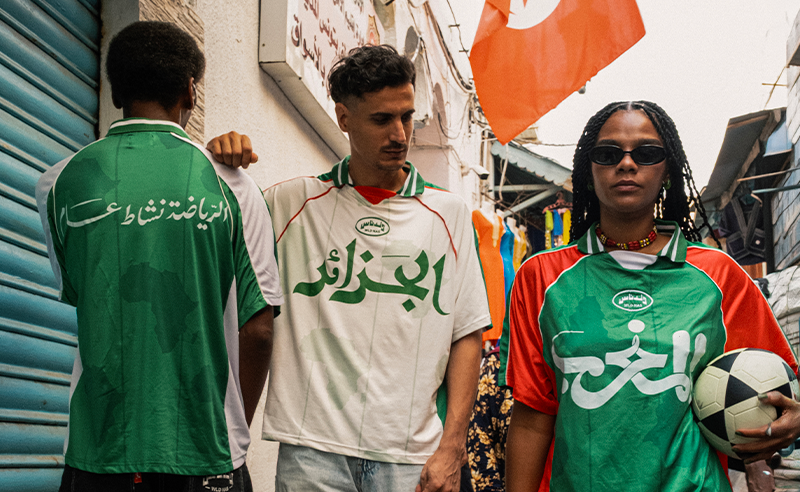 With limited access to the materials he wanted in Libya, Mezwghi began travelling to Cairo to develop the brand, eventually connecting with collaborators in Alexandria for sourcing and production. What began with long shorts inspired by a pair he wore as a child has since evolved into football jerseys drawing on references from across North Africa.
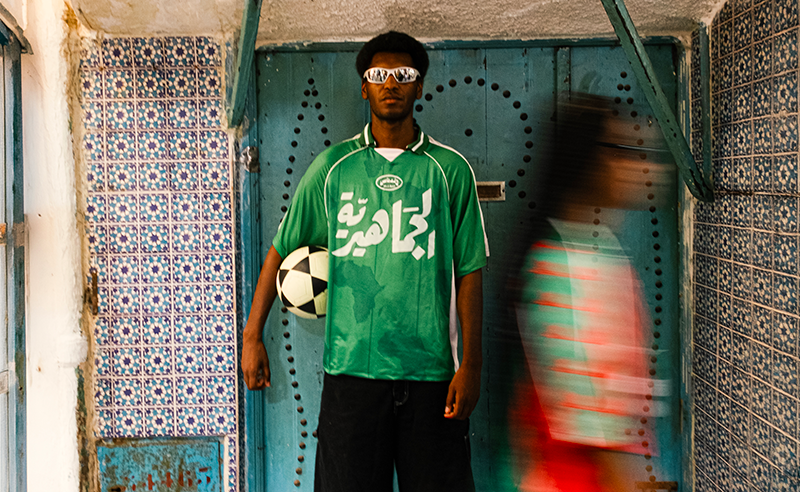
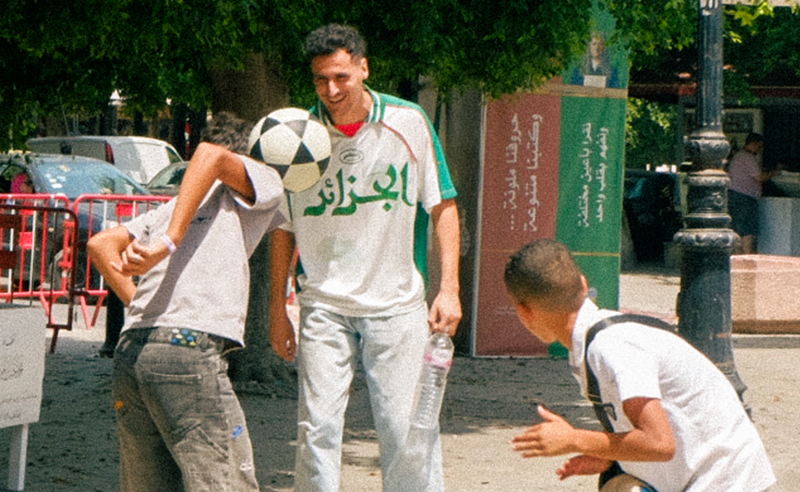
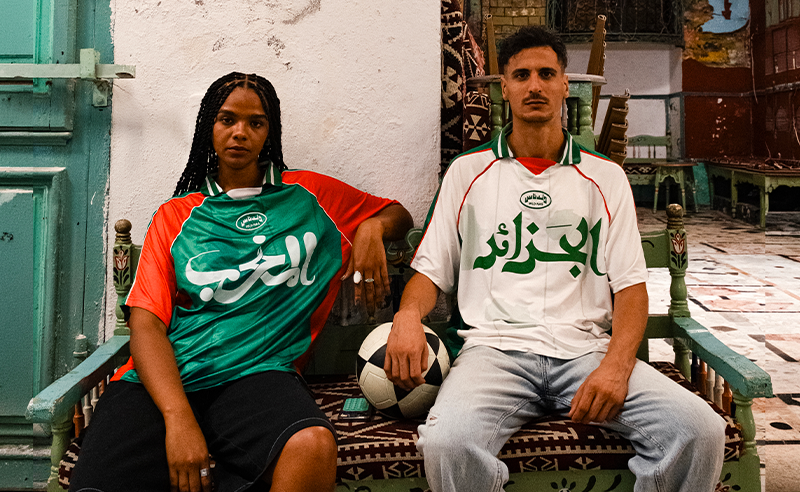
Since launching, Mezwghi has released two drops, both still available, built around North Africa’s deeply embedded football culture. Across four jerseys, he draws on the visual language of vintage football kits as a way into collective memory, revisiting colours, crests, typography and graphic details associated with teams across the region.
Among them is the Aljmahreya jersey, a reference to Libya’s 1986 national team, which came closer to qualifying for the World Cup than any Libyan side before or since, reaching the final round of African qualification.
Al-Jamahiriya was also the term adopted for the Libyan state under Muammar Gaddafi, lending the shirt political weight alongside its nostalgia for the colours and symbols of an earlier Libya.
Still in its early stages, WLD NAS is a brand Mezwghi is learning through as much as building. Its evolution runs alongside his own, with each collection another step in figuring out where the label fits and where he wants to take it next.
WLD NAS takes its name from a familiar North African expression. What did “wld nas” mean to you growing up, and why did you choose it for the brand?
WLD NAS (ولد ناس) is a phrase I grew up hearing in North Africa. The expression traditionally refers to someone who is “well-raised” or “from good people.” But the phrase also carried a very specific image in the street. Someone considered a “wldnas” was often expected to dress in a very conservative way and behave according to certain social expectations.
I started questioning that idea. I believed that someone who dresses boldly or differently can also be a “wldnas.” Clothing should not be used as a way to judge someone’s character or values. That became part of the meaning behind the brand. I wanted to take a familiar North African expression and put it into a streetwear context, where the idea of being “wldnas” is not defined by what you wear, but by who you are.
You travelled from Libya to Cairo to develop the collection. What were you looking for there, and how did you find the people and materials to make it?
My trip to Cairo was mainly driven by one thing: I wanted to make what I had in my head a reality, in the way I imagined it. I knew that Cairo had a much larger manufacturing ecosystem, with more factories, suppliers, materials and people experienced in garment production.
One of the biggest challenges for me was time and financing the project myself. I was trying to balance living in Cairo and covering my own living expenses while also funding and producing the collection. I had to make decisions quickly and be very careful with how I spent my resources.
 Finding the right materials and manufacturers was a process of trial and error. I had a very specific idea of how I wanted the pieces to look and feel, so I visited different places, looked at fabrics, developed samples and explained the details of the designs.
Cairo was intense but exciting. There is a huge network of people working in fashion and manufacturing, and the production ecosystem is much larger than what we currently have in Libya. Libya has a lot of talented people, but the production infrastructure is smaller and more limited.
You developed the clothes through Cairo, then shot the campaign in Tunis. Why did the Medina feel right for WLD NAS, and who did you work with there?
We shot in Medina, the old city in the center of Tunis filled with markets, neighborhoods and everyday spaces of Tunis. I wanted the campaign to feel documentary and authentic rather than like a traditional sports or fashion campaign.
I handled the creative direction and styling myself. The models were mostly friends of mine, and I chose them because I felt their looks and personalities naturally represented the North African identity I wanted for the campaign. Most of them are musicians and artists, while Jeje was the only professional model.
For the photography, I rented the camera and worked with my friend and photographer Mehdi Gafsia, who helped me with the shoot. I handled all the photo editing and post-production myself.
How has WLD NAS been received in Libya, particularly the Aljmahreya shirt?
The reception of WLD NAS in Libya has been interesting, especially around the Aljmahreya T-shirt. The T-shirt is primarily inspired by the Libyan national football team of 1986, which I see as one of the strongest versions of the Libyan national team historically.
The controversy around the design came mainly from the use of the word “Aljmahreya” instead of “Libya.” I deliberately used the same word that was used for Libya during that historical period. For me, it was not simply about the political meaning of the word; I was interested in its place in Libya’s visual memory.
The word “Aljmahreya” was part of everyday visual life at the time. It appeared prominently on Libyan license plates, using a very recognizable visual form. I wanted to bring that old visual language back and use it in a contemporary context.
The reaction was mixed, which I expected. Some people immediately connected with the design because of their memories of that period, while the use of “Aljmahreya” also opened up conversations because of its political and historical associations.
For me, that is one of the interesting things about clothing: one piece can carry memories and create conversations about identity, history and how people remember the past.
You came into WLD NAS from an art and design background. What has surprised you most about building an actual fashion business?
 Probably how much running a fashion brand has nothing to do with designing clothes. I come from an artistic and design background, so naturally I was initially focused on the creative side. But once you start producing and selling, you realize that manufacturing, payments, shipping, packaging, communication and logistics can be just as important as the design itself.
Another surprise has been seeing how emotionally people can connect with something that started as an idea in my head. When someone wears WLD NAS and tells me they connect with the identity behind it, that means more to me than simply selling a piece of clothing.
The first two drops lean heavily into football and street culture. Where do you want to take WLD NAS next?
The next collection is moving in a more athletic and utilitarian direction. I’m interested in tracksuits because they have a strong relationship with street culture, music and everyday life across North Africa.
I’m still developing the collection. The current inspiration comes from elements of an old Libyan cigarette called Riyadhi, which means sport, which creates an interesting play on words.
The collection is currently in development, and I’ll announce the release date once the pieces and production are finalized.
Related Articles
Trending This Week
-
 Oct 28, 2026
-

-

-