





This 1920s House in Amman Was Once the City’s First Post Office
Built in 1924, The Duke’s Diwan bridges old and modern Amman as a house museum and cultural space shaped by memory, art, and the people who pass through its rooms.

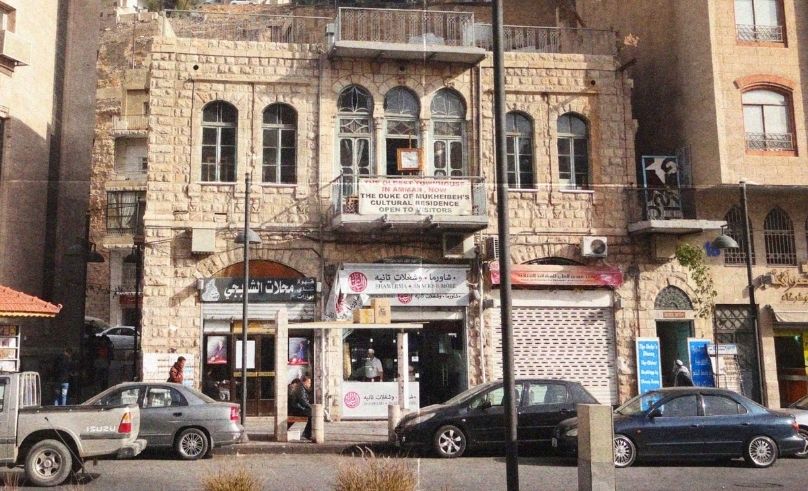
There’s a house in downtown Amman, set between stone façades on a narrow, sun-warmed street, that seems to whisper invitations rather than proclamations. This is The Duke’s Diwan, one of the city’s oldest preserved buildings and a place that represents more than bricks and mortar. Now functioning as a public house museum and cultural space, it stands as a rare thread between the Amman that once was and the Amman still unravelling, holding within its walls the memory of a city before glass towers, before widened roads, before modern haste rewrote the skyline.
-5ef570a4-a388-40fb-8ea3-818ace87e8a4.jpg) Originally built in 1924 as the city’s first post office, the house bore witness to the early pulse of the Emirate-era capital. It later served as an annex of the Ministry of Finance and then for more than half a century as the Haifa Hotel, where travellers from across the region rested their heads and traded stories. Walking up its weathered wooden stairs and through its blue-painted doors, you hear the echoes of these former voyagers as they mingle with those of the postal clerks, merchants, poets, painters, and caretakers that once walked its halls.
Originally built in 1924 as the city’s first post office, the house bore witness to the early pulse of the Emirate-era capital. It later served as an annex of the Ministry of Finance and then for more than half a century as the Haifa Hotel, where travellers from across the region rested their heads and traded stories. Walking up its weathered wooden stairs and through its blue-painted doors, you hear the echoes of these former voyagers as they mingle with those of the postal clerks, merchants, poets, painters, and caretakers that once walked its halls.
-f6fed28a-fc3b-4409-be0e-4a0e0b540a6a.jpg) Inside, each of the house’s rooms is furnished with pieces restored to their original 1920s splendour. A freestanding stove here, a vintage radio there. Pastel armchairs positioned as though expecting a guest. Visitors are free to wander from room to room, observing photographs, heirlooms, and fragments of old Amman carefully arranged as part of the museum’s living display.
Inside, each of the house’s rooms is furnished with pieces restored to their original 1920s splendour. A freestanding stove here, a vintage radio there. Pastel armchairs positioned as though expecting a guest. Visitors are free to wander from room to room, observing photographs, heirlooms, and fragments of old Amman carefully arranged as part of the museum’s living display.
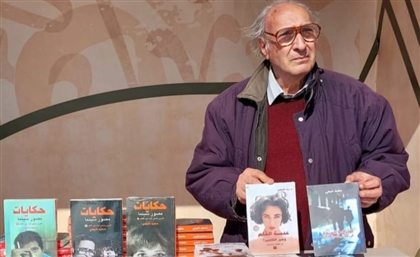
-df208261-5c69-48ed-a6b3-83e170e061de.jpg) But beyond its preserved rooms and carefully arranged fragments, the house owes its continued life to a story of deliberate preservation. In 2001, during a period of rapid urban development, Mamdouh Bisharat, known locally as the Duke of Mukheibeh, stepped in to save the building from demolition. A heritage conservationist by passion and vocation, Bisharat rented the property at twice its market value simply to keep it standing. What he created was not a museum in the static sense but a Diwan (Arabic for council chamber) where ideas mingle as freely as the steaming cups of tea offered in its living rooms.
But beyond its preserved rooms and carefully arranged fragments, the house owes its continued life to a story of deliberate preservation. In 2001, during a period of rapid urban development, Mamdouh Bisharat, known locally as the Duke of Mukheibeh, stepped in to save the building from demolition. A heritage conservationist by passion and vocation, Bisharat rented the property at twice its market value simply to keep it standing. What he created was not a museum in the static sense but a Diwan (Arabic for council chamber) where ideas mingle as freely as the steaming cups of tea offered in its living rooms.
-0a0ba961-ef5e-4b01-93ae-555d5dab5924.jpg) Even today, the house remains true to its creative origins. On any given afternoon there might be easels set up for painters, pages of poetry recited aloud in Arabic and English, or musicians improvising beneath the shade of arches that have seen more-than-a-century’s worth of footsteps. These events, informal yet deeply rooted in a sense of place, have made the Diwan a true haven for creative minds, becoming a home in the heart of Amman for storytellers and makers as much as for history lovers.
Even those whose visit is brief speak of an ineffable warmth in the diwan. A welcoming nod from a caretaker. The soft light through the balcony windows. The way laughter seems comfortably at home against the backdrop of old stone. And the unspoken familiarity of a house that has long been accustomed to receiving guests.
Even today, the house remains true to its creative origins. On any given afternoon there might be easels set up for painters, pages of poetry recited aloud in Arabic and English, or musicians improvising beneath the shade of arches that have seen more-than-a-century’s worth of footsteps. These events, informal yet deeply rooted in a sense of place, have made the Diwan a true haven for creative minds, becoming a home in the heart of Amman for storytellers and makers as much as for history lovers.
Even those whose visit is brief speak of an ineffable warmth in the diwan. A welcoming nod from a caretaker. The soft light through the balcony windows. The way laughter seems comfortably at home against the backdrop of old stone. And the unspoken familiarity of a house that has long been accustomed to receiving guests.
- Previous Article Delta Oil Delivers 25.5x Return for Falak Startups in Landmark Exit
- Next Article The Ancestral Resilience of Omar El Farouk’s Fayoum Home
Related Articles

Trending This Week
-
 Oct 15, 2026
 -
-

-