



Ancient Shark Graveyard Discovered in Egypt’s Western Desert
Fossilised teeth from at least seven shark species have been identified at Abu-Tartur in Egypt’s Western Desert.

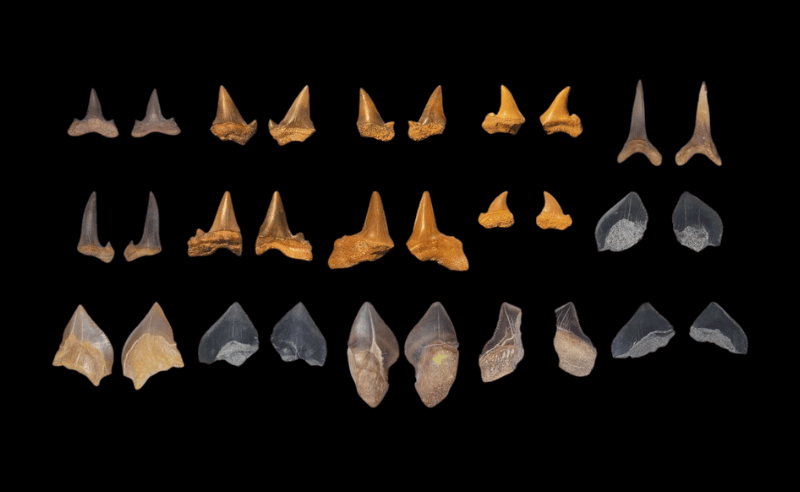
Fossilised shark teeth discovered at the Abu-Tartur Plateau in Egypt’s Western Desert are offering a new glimpse into the marine ecosystem that covered the region tens of millions of years ago.
Researchers led by Cairo University paleontologist Tarek Yassin reported 14 previously unrecorded shark teeth from phosphate-bearing layers of the Duwi Formation, identifying five species not previously known from the site. Combined with two species documented earlier, the findings indicate that at least seven shark species inhabited the area during the Cretaceous period.
At the time, northern Egypt lay beneath a warm, shallow sea. The Duwi Formation dates to the Late Cretaceous and contains extensive phosphate deposits associated with nutrient-rich marine conditions, with other research on the formation also documenting abundant shark teeth and fragmented fish remains.
The recovered teeth varied considerably in shape, including long, slender forms and broader serrated teeth suited to slicing, as well as sharply curved examples and teeth with smaller side projections known as cusplets. The differences offer clues to the range of feeding strategies and ecological niches occupied by sharks in the ancient sea.
Because shark skeletons are composed mostly of cartilage, they rarely fossilise intact. Teeth are therefore among the most important remains available to paleontologists reconstructing ancient shark diversity and feeding ecology. Fossil shark teeth are also widely used to track changes in shark communities across the Cretaceous and later periods.