





Maison Moushy Reworks Y2K Glamour Through Slow Fashion
Maison Moushy’s SS26 turns early-2000s it-girl nonchalance into slow fashion, with handmade, limited-edition pieces.

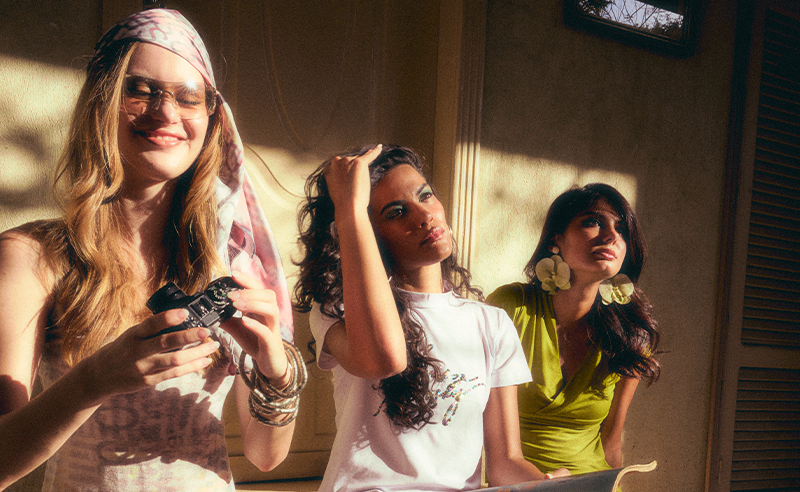
A Maison Moushy baby tee is designed to make a nonchalant impression, a piece an early-2000s it-girl can just put on without giving it any thought and still turn heads.
Paradoxically, at Maison Moushy, each one takes between six and eight hours to embroider by hand, working over a line of the designer's own handwriting printed onto the fabric to guide the artisans.
How effortless those clothes appear, and how much labour goes into them, is the animating principle of the young Egyptian label. Its 22-year-old founder, Sandy Atef, runs Maison Moushy as a slow-fashion house of handmade, limited-edition pieces. Its SS26 collection, out now, expresses this world at full.
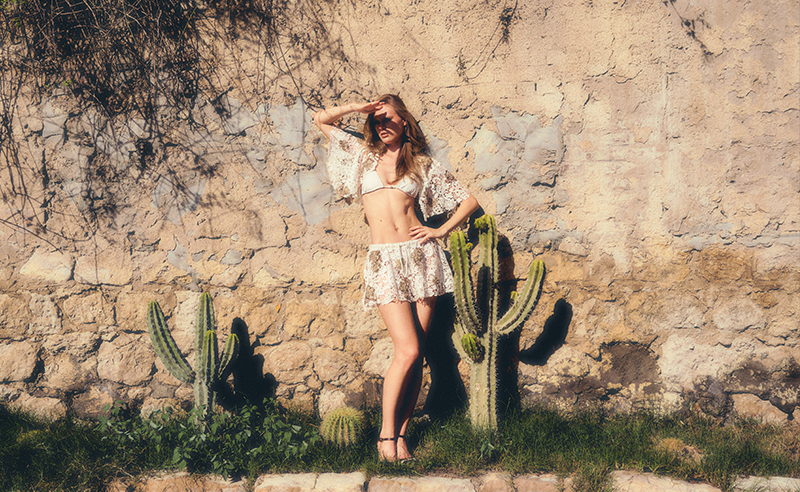 After four years studying fashion design and marketing at Istituto Marangoni in London, Atef returned to Egypt at 21 and began developing pieces she couldn't find on the local market. "I naturally found myself sketching and designing items that I was looking for but couldn't find available in the Egyptian market," she says. “I felt I could bring real value and something interesting to what seems like a saturated market, but actually isn’t.”
"Our society pushes people to go down more secure paths such as medicine and engineering," she says, "but my family made sure to give me space to express myself creatively."
The Maison Moushy woman, as described by the founder, "wears what she genuinely likes rather than what's trending, and she enjoys getting dressed," with the type of confidence "that's quite effortless."
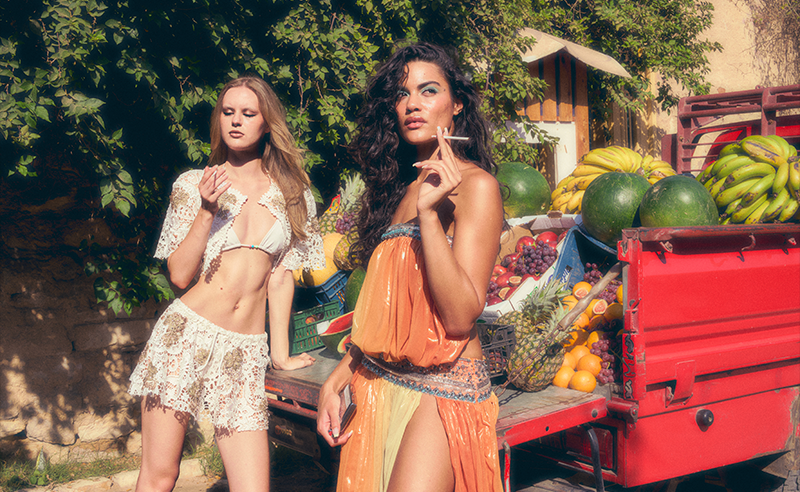 The reference points are unabashedly early-2000s, drawing inspiration across the supermodel and it-girl scene, as well as Galliano-era Dior, Gianni Versace, and Roberto Cavalli. "I admire their unapologetic 'brattiness' and their pursuit of glamour," she says.
At Maison Moushy, even the prints are drawn from scratch. The house's python set began as a black-and-white zebra she had shelved, until a hunt for palette names led her to look at the sun cycle and the colours of water at different hours.
Where the light reflected on the surface of the water suddenly read to her as scales. “ I immediately saw scales… and then python. I gathered all of this information and made several moodboards and over the next couple of days, we had digitally created our custom print,” Atef explains.
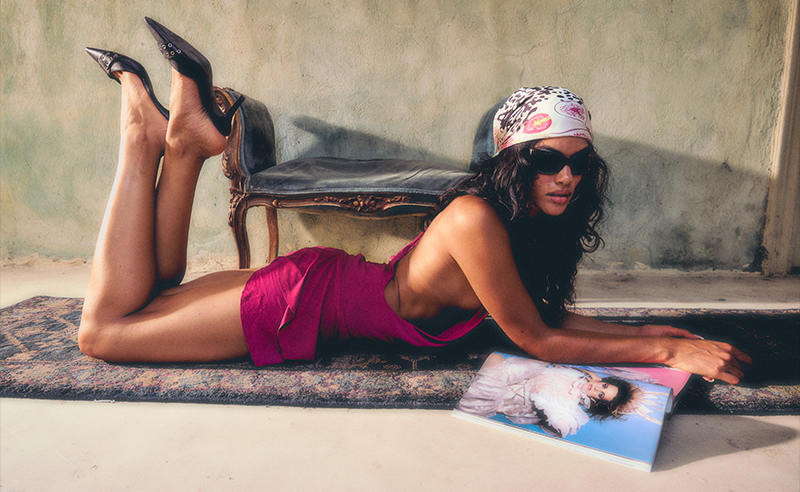 In SS26 that print appears as the teal Caicos Python set, one of the three house prints the collection is built around, joined by a fig motif and a newspaper design that show up across silk scarves, mini dresses, a chiffon cover-up and sequin tees in a palette of acid lime, magenta and hot mustard.
"All of the pieces are limited because they are all handmade by the pattern makers, seamsters and embroidery experts," Sandy says. She learns the histories of her fabrics from the people who sell them to her, and most of her designs come to her after her visits to fabric shops, since "truly nothing beats the in-person visual and tactile experience." And scarcity is both a creative choice and the fact of production for her. "I want owning a Maison Moushy piece to feel like you're part of a small group of people who have it," she says, "rather than one of thousands."
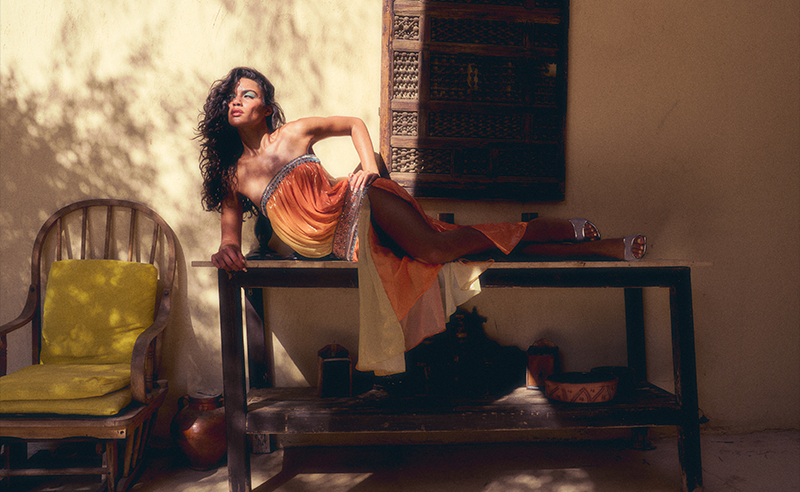 There is often an expectation that Egyptian designers should make works reflecting their heritage in some visible manner but Sandy does not feel particularly beholden to it. “To me, being made here is enough,” she says. “People can appreciate that being made in Egypt is already an ode to my heritage, without the pieces being directly inspired by traditionally Egyptian themes.”
When all is said and done, Sandy Atef is most interested in creating an instantly recognisable visual identity. She wants a piece to be recognisable as Maison Moushy "without needing to see the label.”
- Previous Article Egypt’s Ali Abdel-Radi Breaks World & African Weightlifting Records
- Next Article CairoScene Photo of the Week: Sara Younes