





'Josephine': A Sundance Breakthrough About Parenting & the Limits of P
The film suggests that care is not defined by protection or control, but by the difficult work of staying with another person’s pain.

Beth de Araújo’s “Josephine” has already emerged as the first true Sundance sensation of the year. Following its premiere, reports circulated of an auditorium in tears. That response feels fitting. “Josephine” is among the most personal and emotionally raw films to debut at the festival so far.
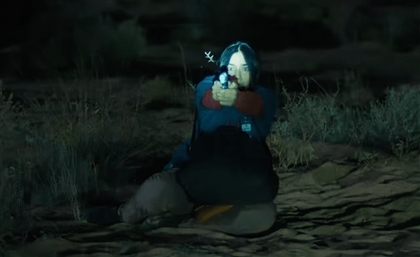
The film is rooted in a childhood memory from de Araújo’s own life. After witnessing a rape as a young girl, her father chased the attacker away. She remembers staying behind to comfort the naked traumatized woman. That moment becomes the film’s emotional backbone. After eight-year-old Josephine witnesses a violent crime in Golden Gate Park, she is consumed by fear and anger. She searches for ways to regain control as the adults around her prove unable to comfort her.
De Araújo crafts a devastating and profoundly empathetic portrait of a child confronting a world that has suddenly revealed its capacity for violence. Greta Zozula’s unsettling cinematography heightens the unease by anchoring us within Josephine’s vulnerable point of view from the opening scene. The film develops a distinctive visual language that captures how trauma lingers. Extended tracking shots follow the young girl through everyday spaces. Her gaze is repeatedly interrupted by the figure of her rapist. We see him sitting nearby, wandering around, or lingering at the edges of the frame at all times. Through sight and sound, the film shows how trauma settles into memory and perception. It remains in the body long after the violence has passed
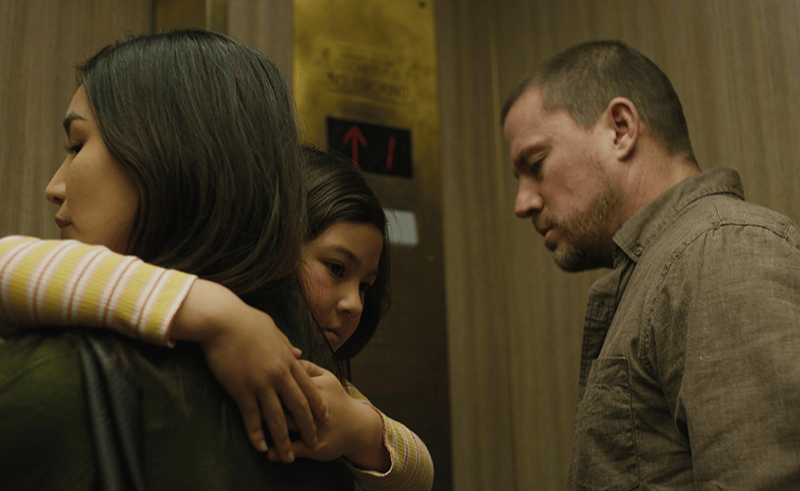
“Josephine” is also a film about parenting. Channing Tatum and Gemma Chan are deeply affecting as Josephine’s parents. They are fiercely loving and fully present at all times. However, they are also painfully unprepared for the task at hand. They want to protect their daughter, but simply do not know how to. Their instincts begin to diverge. The mother turns inward. She thinks about therapy and emotional care. About giving Josephine the language to process what she has witnessed. The father moves in the opposite direction. He leans toward physical action as defence mechanism. He believes strength can diffuse fear and suggests the daughter take self-defence lessons. He hopes control can replace terror.
What we end up seeing is how this traumatic incident is not only affecting the child, but the family as a unit. The parents are not failing their child, they are simply struggling beside her. The film refuses easy answers or clean solutions. Instead, it asks a more stimulating question. How are parents meant to guide a child through an experience they themselves cannot fully comprehend?
The dynamic between Josephine and her father felt uncomfortably close. His instinct to protect her is strong, but so is his helplessness. It reflects a fear that is hard to understand until you become a parent yourself. The film quietly acknowledges that love and presence are not always enough. In those moments, Josephine becomes more than a character on screen. She embodies the vulnerability that parents carry alongside their children.
Mason Reeves delivers a tender performance as Josephine. She shows an emotional intelligence far beyond her years. Syra McCarthy is equally striking as the rape survivor, despite her limited screen time. One late scene involving her is especially powerful, and it is difficult to imagine it leaving anyone without tearful eyes.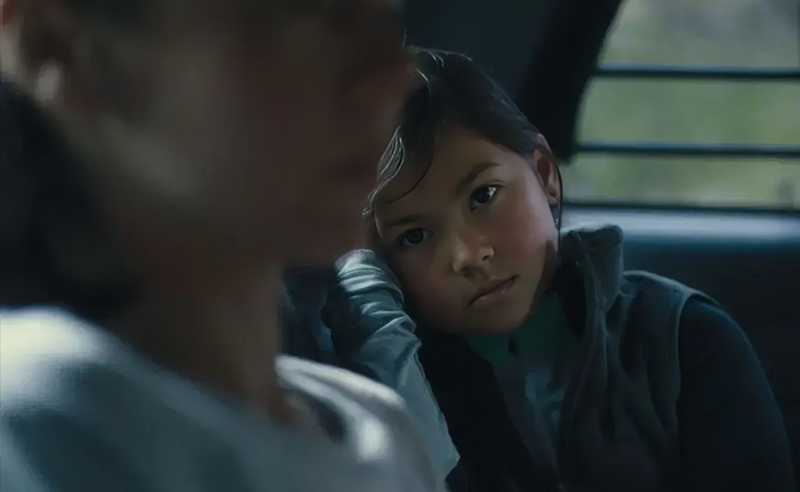 De Araújo’s film also raises questions about the ethics of witnessing. By aligning the camera so closely with Josephine’s perspective, it refuses distance. The result is a cinema of proximity. We simply forced to see the world through eyes. I like the fact that the film does not offer healing as resolution. Instead, it shows that it is an ongoing, fragile process. One shaped by the uneasy act of learning how to live alongside what can’t be undone.
“Josephine” shifts attention away from solutions and toward presence, attentiveness, and responsibility. The film suggests that care is not defined by protection or control, but by the difficult work of staying with another person’s pain. In this sense, the film treats vulnerability not as a failure of care, but as its very condition.
The film ends on a beautiful scene by the beach. The openness of the space and the tenacity of the ocean suggest endurance rather than healing. Care is not presented as an endpoint, but as a shared practice of remaining present in the aftermath of trauma. Within this stillness lies a quieter anxiety. It’s the fear a parent carries for a child’s future. This fear is shaped by the knowledge that safety can never be guaranteed. The final image holds that uncertainty without resolving it. It shows that love often means learning to live with what cannot be controlled. It’s only January and this is already one of the best of the year.
“Josephine” competes at the U.S Dramatic Competition at this year’s Sundance Film Festival.